FKA twigs and On Share Bring a New Pulse to Paris Fashion Week

January 22, 2026
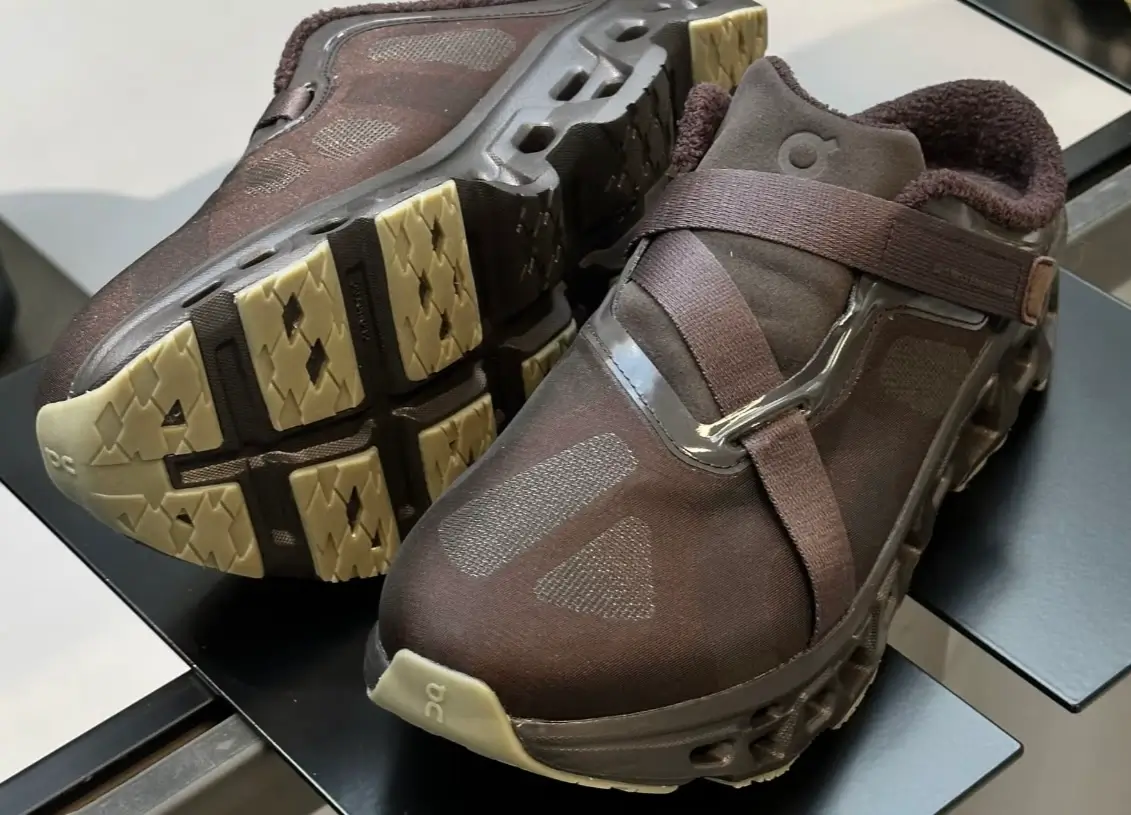
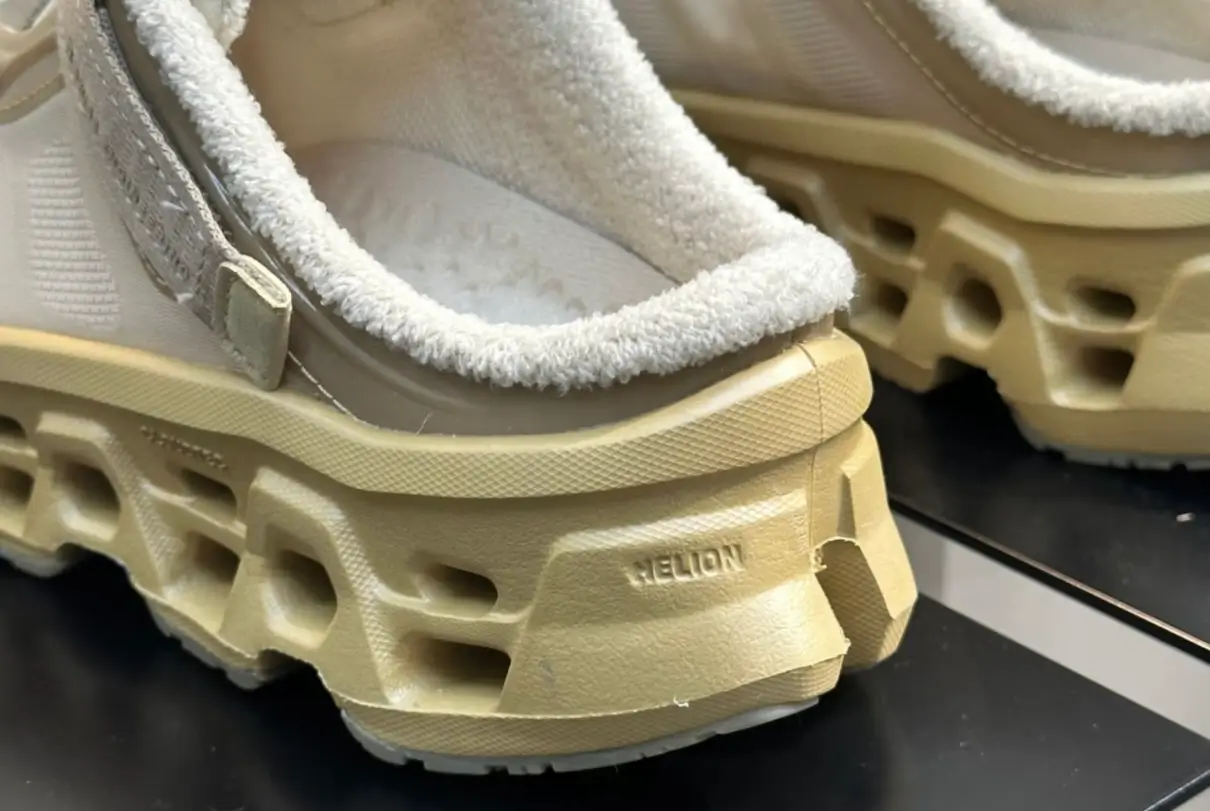
Paris Fashion Week is the world’s most magnetic stage for tomorrow’s creative currents. Each season, designers, artists, and cultural provocateurs converge to make statements that ripple well beyond the runway. In the Fall/Winter 2026 cycle, one of the most talked-about debuts was the collaboration between FKA twigs—artist, auteur, and rhythmic innovator—and On Share, the experimental design collective known for its fusion of performance, tech, and sculpture. Their joint presentation wasn’t just a collection: it was a live thesis on hybrid identity, embodiment, and future wearability.
Where many seasonal shows rely on spectacle alone, this one positioned movement as meaning. It was not enough to see the clothes; they had to be activated by bodies in motion, in dance, in disturbance. That choice underscores something fundamental about twigs’ artistry: she thinks in rhythm, not garments, and in gestures, not mannequins.
view
FKA twigs has always worked at the intersection of sound, movement, and visual metaphors. Her early EPs pulsed with alien cadences; her films refracted genre expectations; and her live performances have consistently blurred boundaries between concert, ritual, and choreography. On Share, for its part, has carved a reputation for questioning how wearables interact with architecture, tech, and performance. Its designers infuse sportwear logic with sculptural displacement.
That combination—twigs’ kinetic worldview and On Share’s structural inventiveness—set the tone for a collection that refuses to sit still. Rather than presenting rows of static looks, the duo treated the runway as a fluid apparatus, one that could be danced in, challenged, and even reshaped by movement.
style
At first glance, the collection offered a tension between organic silhouettes and engineered precision. Wool and silk were recontextualized through laser cutting and bonded seams; neoprene and memory fabrics were treated to hand-painted gradients and beadwork. The result was neither purely athletic nor strictly haute couture—it existed in a third spacewhere performance informs tailoring.
Certain pieces exemplified this synthesis. A sculpted jumpsuit with articulated joints seemed to anticipate the wearer’s every bend, split, and tilt. A corset-like harness composed of laminated mesh wires refracted light like circuitry wrapped around flesh. Even simple knitwear was engineered with variable density to stretch and contract along muscle groups.
The palette, too, was strategic. Rather than adhering to the somber tones often associated with winter collections, twigs and On Share favored iridescent grays, oxide greens, soot blacks, and washed cobalt—a palette that suggested twilight, storm systems, and bodies in motion rather than static surfaces. When paired with reflective trims and bioluminescent accents, these tones read like an urban nightscape come alive.
move
Rather than a conventional catwalk, the presentation unfolded as a sequence of movement vignettes. Dancers entered the space not in linear procession but in layered waves, looping, pivoting, and reframing the architecture of the room. Music—composed by twigs herself in collaboration with modular synth artists—filled the air with syncopated pulses that felt as visceral as bass in a cathedral.
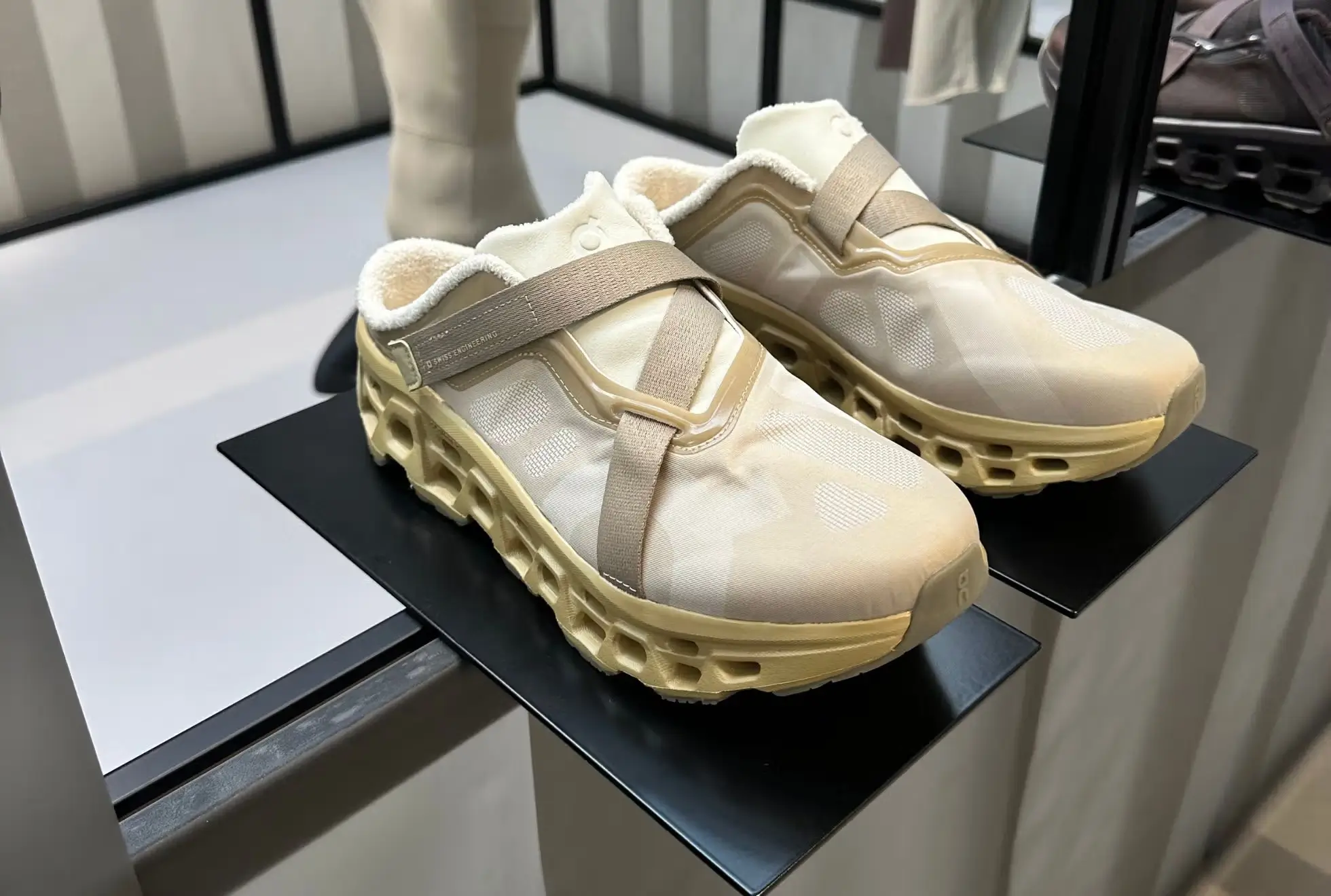
This emphasis on choreography was not window dressing. Each look was tested, toughened, and translated into motion. Sleeves were engineered to extend like second skin; trousers had hidden articulation points that expanded into capes; boots had segmented soles designed to roll and rebound like suspension systems. The garments weren’t just worn—they were activated.
By making movement integral to the presentation, twigs and On Share invited the audience to experience fashion as a temporal art form rather than a fixed object. The clothes were not merely displayed; they were performed.
idea
Technology in this collection was not a gimmick. There were no heads-up displays or obvious screens. Instead, tech was embedded as tactile logic. Smart textiles that responded to body heat, reactive pigments that changed under different lights, and seams engineered to flex and snap with kinetic pressure—all of this positioned the pieces as hybrids between garment and extension.
Despite that, the collection never felt cold or clinical. Hand-stitching, artisanal embroidery, and paintwork appeared alongside engineered knit. Twigs herself spoke during the after-show about wanting to “hold the human in the machine.” Her collaborators understood that tech should serve somatic expression, not flatten it.
culture
Paris Fashion Week is a stage layered with history, tradition, and invention. It is the city where haute couture was codified, but also where avant-gardists and subversives have always tested the limits of fashion orthodoxy. In this context, FKA twigs and On Share’s collection read as both homage and critique—a conversation with Paris’ sartorial past that simultaneously deconstructs it.
Rather than situating their work in direct opposition to historical silhouettes, the duo expanded the grammar of the language. There were flares and draping reminiscent of 1970s Parisian studios, though they were integrated into modular constructions. There were references to leatherwork and tailoring, though fragmented into futuristic panels. The collection felt like a palimpsest—strata of influences layered, erased, re-written, and then activated by motion.
anticip
Critics and attendees alike recognized this collection as a departure from commercial fashion narratives. It was not made for immediate consumption on digital feeds; it required presence, attention, and a willingness to engage with movement as meaning. Early responses noted that the pieces felt “alive”—a testament to how deeply performance informed the design logic.
Buyers in attendance expressed interest in modular elements—detachable components, transformable layers, and hybrid accessories. Designers and dancers spoke of the collection in terms of “kinetic utility,” a phrase that captures the essence of how the garments operate as tools for expression rather than static commodities.
Meanwhile, twigs has also signaled intent to continue exploring fashion as an extension of her interdisciplinary practice. For her, clothing becomes another instrument in an orchestra of body, sound, and space.
industry
The collab between FKA twigs and On Share arrives at a moment when fashion is wrestling with its own purpose. The industry is inundated with fast cycles, digital twins, and ephemeral trends. Yet here was a collection that insisted on embodied experience, material logic, and physical engagement.
In resisting spectacle for spectacle’s sake, the duo positioned this work as architectural fashion—not clothing as ornament, but clothing as infrastructure for movement, emotion, and performance. This approach challenges brands to rethink not only how garments are constructed but also how they are presented and activated.
It also speaks to the evolving role of artists in fashion discourse. Twigs is not a celebrity collaborator lending name recognition. She is a conceptual force whose involvement shapes the ontology of the collection itself.
sum
FKA twigs and On Share’s Paris Fashion Week collaboration was more than a runway show. It was a manifesto on the future of fashion as performance, texture as language, and garment as instrument.
At a time when fashion risks stagnation under the weight of virality and surface spectacle, this collection insisted that clothes must be lived in, moved through, and felt physically. It demands not just attention but participation. It invites wearers and viewers alike to ask: what if clothes weren’t objects we put on but environments we inhabit?
In that sense, the work belongs less to a season and more to a movement—one where clothing is an extension of the body’s expressive possibilities, where tech serves touch and emotion, and where fashion becomes another choreography in the ongoing dance of culture.