Gap x Awake NY: Back to ’90s New York Through Modern Streetwear

March 27, 2026

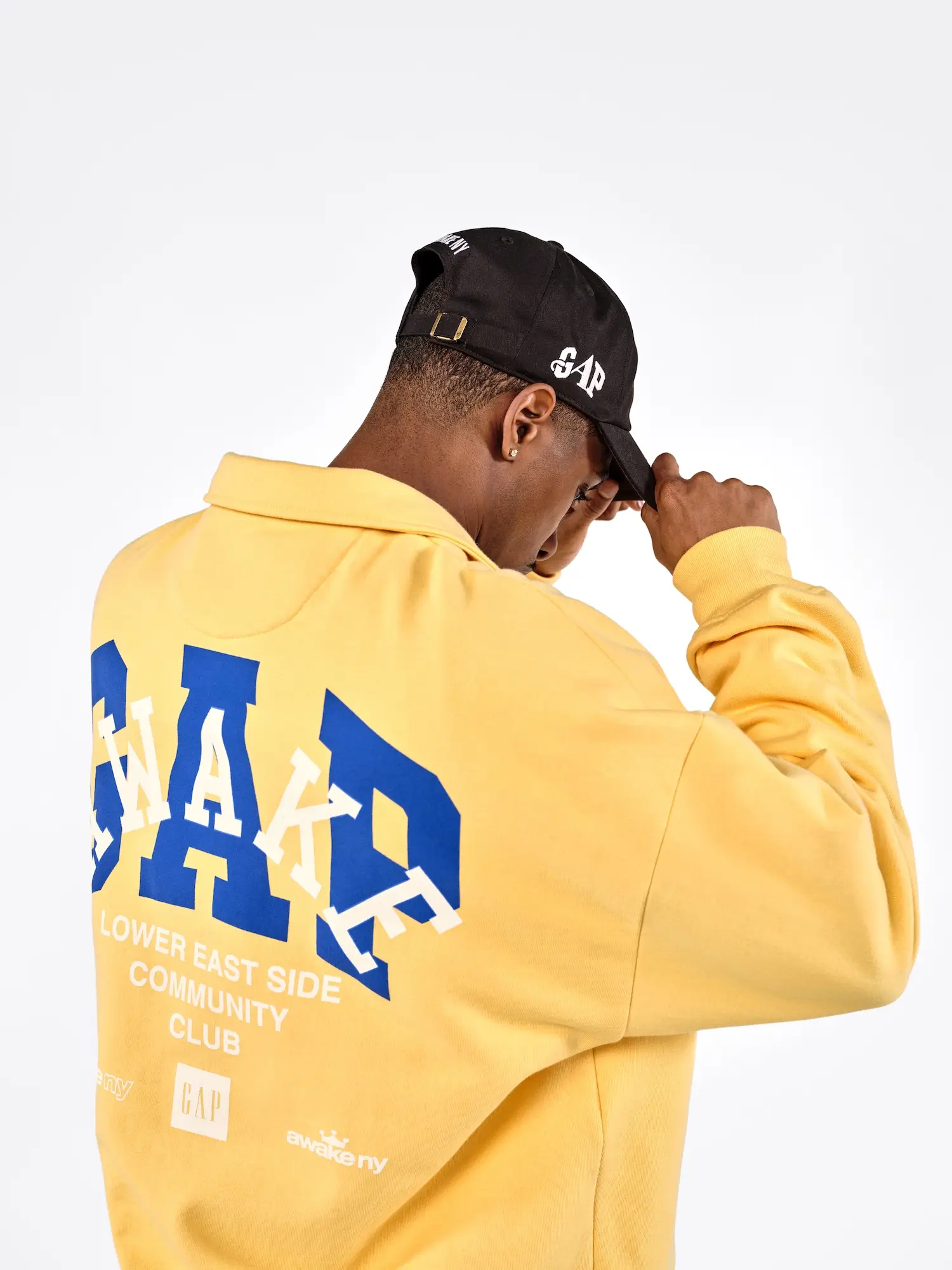


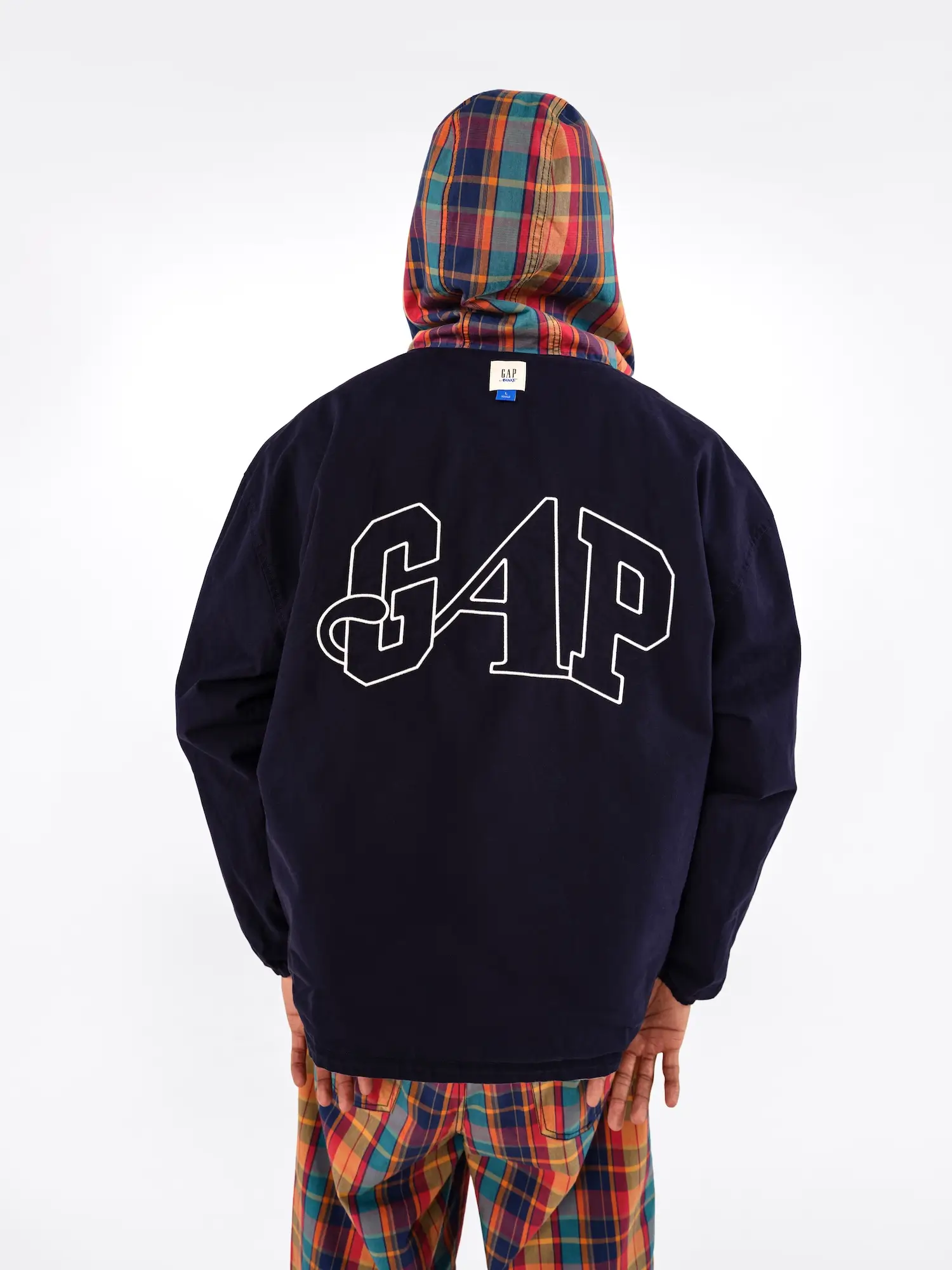
New York has always resisted simplification. Its viewable language—especially in the 1990s—was not constructed through singular movements, but through collisions. Uptown and downtown, hip-hop and minimalism, haute storefronts and corner delis, all existed within a compressed geography that demanded constant negotiation. Clothing, in that context, was less about trend and more about navigation. It was how one moved through the city, how one signaled belonging without necessarily declaring it.
The collide between Gap and Awake NY approaches this legacy with a measured hand. Rather than staging a direct revival of ’90s aesthetics, it reconstructs the underlying logic of that period—its emphasis on everyday uniform, its reliance on subtle codes, and its ability to hold contradiction without collapsing into noise.
The result is a collection that feels immediate but carries a longer memory. Sweats, denim, tees, and accessories—categories that once formed the backbone of Gap’s identity—are revisited through Awake NY’s graphic clarity and cultural specificity. What emerges is not a nostalgic exercise, but a reframing: a familiar vocabulary spoken with a different accent.
View this post on Instagram
consider
To comprehend the weight of this collab, it is necessary to revisit Gap’s position within the cultural fabric of the 1990s. Unlike brands that explicitly aligned themselves with subculture, Gap operated through neutrality. Its garments were intentionally unassuming—clean lines, accessible pricing, a focus on fit and material rather than overt branding.
This neutrality allowed Gap to function as a kind of cultural baseline. Its pieces could be absorbed into multiple identities without friction. A hoodie or pair of jeans from Gap did not dictate meaning; it provided a surface upon which meaning could be constructed.
In the present moment, that same neutrality becomes an asset of a different kind. It offers a stable framework for reinterpretation. By returning to its archive, Gap is not simply mining the past for visual cues; it is reactivating a system that was always designed to be adaptable.
Awake NY enters this system with intention. Founded by Angelo Baque, the brand has consistently drawn from New York’s layered cultural histories—its diasporic communities, its music scenes, its street-level aesthetics. Baque’s work is not archival in a literal sense, but it is deeply referential, informed by lived experience rather than distant observation.
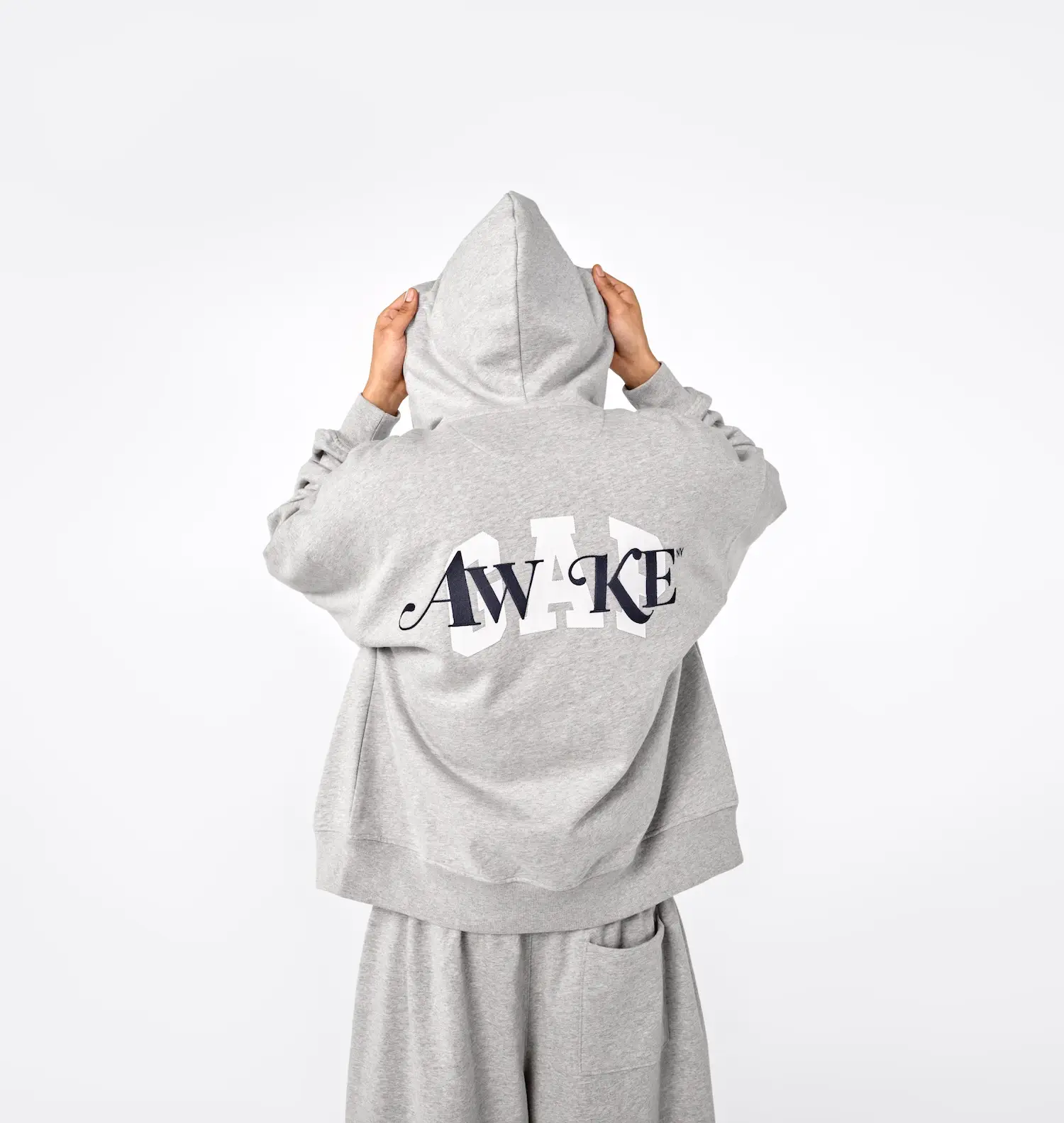
Within this collide, Awake NY does not overwrite Gap’s identity. Instead, it sharpens it. The garments remain grounded in their original purpose, but their articulation shifts. Logos become more declarative, proportions more considered, details more intentional.
show
Where Gap historically leaned toward restraint, Awake NY introduces a graphic language that feels both assertive and precise. Typography plays a central role, drawing from a range of references that are distinctly New York—storefront signage, transit lettering, institutional branding, and the improvised visuals of street culture.
These graphics do not function as decoration. They operate as markers, situating the garments within a specific cultural geography. A logo is no longer just a logo; it becomes a point of entry into a broader narrative about place, identity, and memory.
At the same time, the collection avoids excess. There is a discipline in how these elements are applied. A sweatshirt may carry a bold typographic treatment, but its silhouette remains clean. A tee may feature a reworked logo, but its construction is straightforward. This balance ensures that the pieces remain wearable, integrated into daily life rather than existing as isolated statements.
Denim, often resistant to overt graphic intervention, is handled with particular care. Subtle adjustments—whether in fit, wash, or detailing—allow it to sit comfortably alongside the more visibly branded pieces. The effect is cohesive rather than fragmented, each category reinforcing the others.
flow
The campaign, photographed by Elissa Salas in collaboration with HIDJI WORLD, extends the collection into a broader cultural framework. Rather than constructing an abstract or idealized vision of New York, it centers individuals who actively shape the city’s current landscape.
Baque appears alongside a cast of creatives spanning food, art, and fashion. This cross-disciplinary approach reflects the interconnected nature of New York’s cultural production. Boundaries between industries are porous, with influence moving fluidly between them.
The decision to include multiple generations is particularly resonant. It acknowledges that the ’90s are not a closed chapter, but part of an ongoing continuum. Older participants bring a sense of historical grounding, while younger voices introduce new perspectives. Together, they create a dialogue that resists simplification.
day
One of the defining characteristics of both Gap and Awake NY is their focus on the everyday. This collide leans into that shared sensibility, emphasizing garments that are designed to be worn repeatedly, across contexts, and over time.
Sweatshirts, for example, are treated not as seasonal items but as foundational pieces. Their weight, cut, and finish are considered in relation to how they will age—how they will soften, how they will carry the imprint of use. Tees operate similarly, functioning as both standalone items and layering components.
This emphasis on longevity aligns with a broader shift within fashion. There is a growing recognition of the value of garments that persist, that accrue meaning through wear rather than novelty. By focusing on staples, Gap and Awake NY position their collaboration within this evolving framework.
At the same time, the collection does not reject style. It understands that even the most basic garment carries aesthetic weight. The challenge lies in balancing that weight with functionality, ensuring that design enhances rather than obstructs use.
archive
The use of Gap’s archive is central to the collab, but it is approached with restraint. There is no attempt to replicate specific historical pieces in a literal sense. Instead, the archive serves as a foundation—a set of principles rather than a fixed set of references.
This distinction is important. It allows the collection to move forward rather than becoming trapped in retrospection. By focusing on underlying qualities—simplicity, accessibility, adaptability—the collaboration avoids the pitfalls of nostalgia.
Awake NY’s contribution lies in its ability to interpret these qualities through a contemporary lens. Its graphic interventions, its attention to cultural context, and its sensitivity to New York’s evolving identity all contribute to a collection that feels current without abandoning its roots.
spect
For Gap, this collab is part of a larger movement toward culture-led partnerships. In recent years, the brand has increasingly engaged with designers and creatives who bring distinct perspectives to its archive.
This strategy reflects a recognition that relevance cannot be sustained through heritage alone. It requires engagement with the present—an openness to reinterpretation, to dialogue, to change.
Awake NY represents a particularly compelling partner in this context. Its grounding in New York culture, combined with its ability to operate within a global framework, makes it uniquely positioned to bridge past and present.
loc
To invoke New York in the 1990s is to engage with a powerful set of images and associations. Yet the city itself resists being fixed in time. Its identity is constantly shifting, shaped by new communities, new economies, and new forms of cultural production.
This merge acknowledges that fluidity. It does not attempt to freeze New York in a particular moment. Instead, it draws from the past as a means of understanding the present.
The garments reflect this approach. They carry traces of earlier decades, but they are designed to exist within contemporary contexts. They are not costumes, but tools—adaptable, responsive, open to interpretation.
share
What ultimately defines the Gap x Awake NY connection is its ability to create a shared language. Gap provides the structure, the familiarity, the baseline. Awake NY introduces specificity, context, and voice.
Together, they produce a collection that feels both grounded and dynamic. It does not demand attention, but it rewards it. Its details reveal themselves over time, through wear, through movement, through interaction.
This approach aligns with a broader shift in how fashion is experienced. Increasingly, value is placed not on immediate impression, but on sustained engagement. Garments are expected to evolve alongside the people who wear them, to accumulate meaning rather than simply display it.
clue
There is a temptation, when engaging with the past, to seek resolution—to define, to categorize, to conclude. This collaboration resists that impulse. It leaves space for ambiguity, for interpretation, for ongoing dialogue.
In doing so, it reflects the nature of New York itself. A city that is never fully resolved, never entirely understood, but constantly in motion.
Gap and Awake NY do not attempt to capture that motion in its entirety. Instead, they offer a fragment—a set of garments, a series of images, a collection of references. It is enough to suggest a larger narrative without attempting to contain it.