Dior Names Guitarricadelafuente Ambassador – Toward Softer Masculinity

April 7, 2026
1 hour ago
Not an announcement so much as a reorientation.
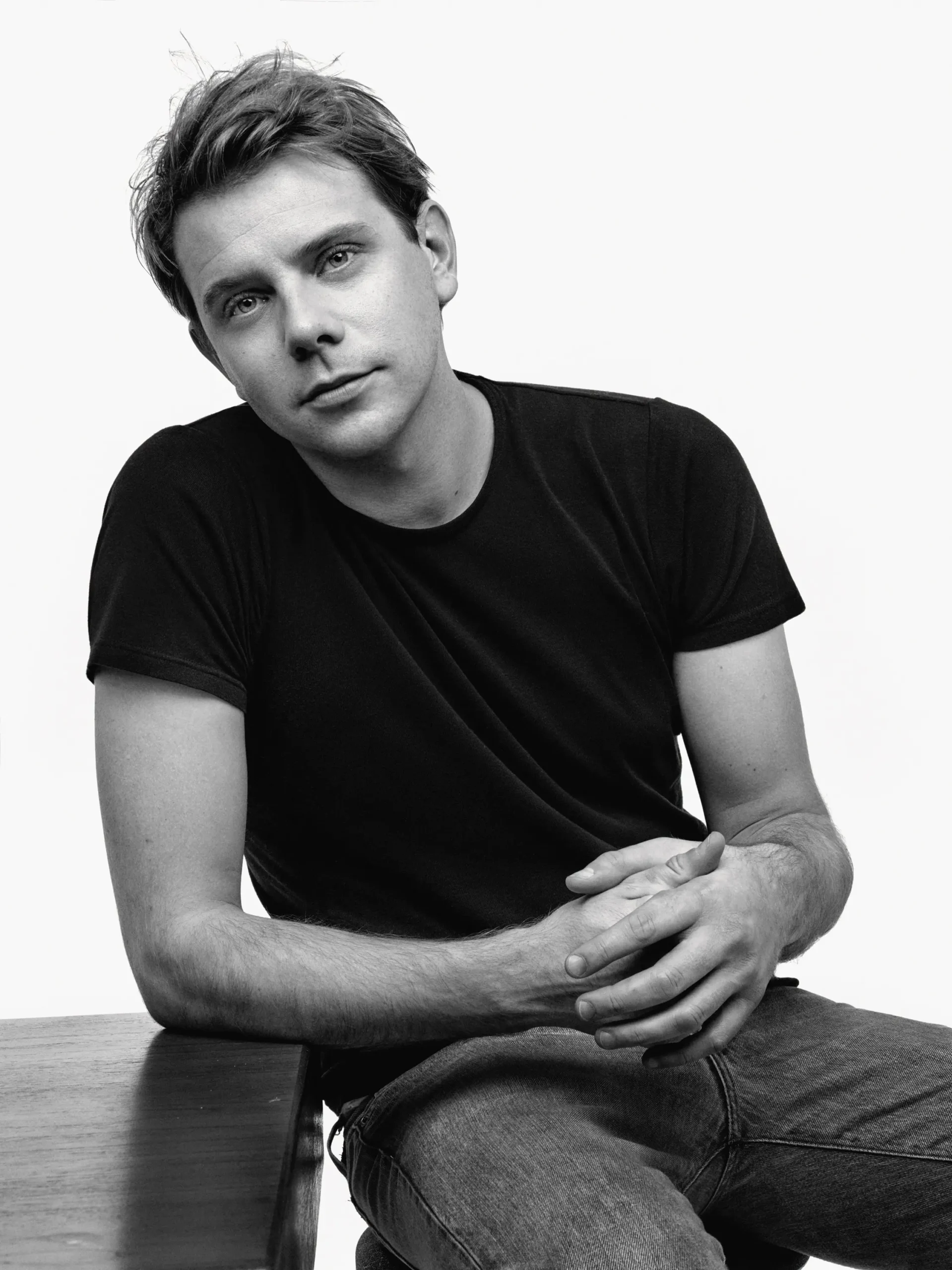
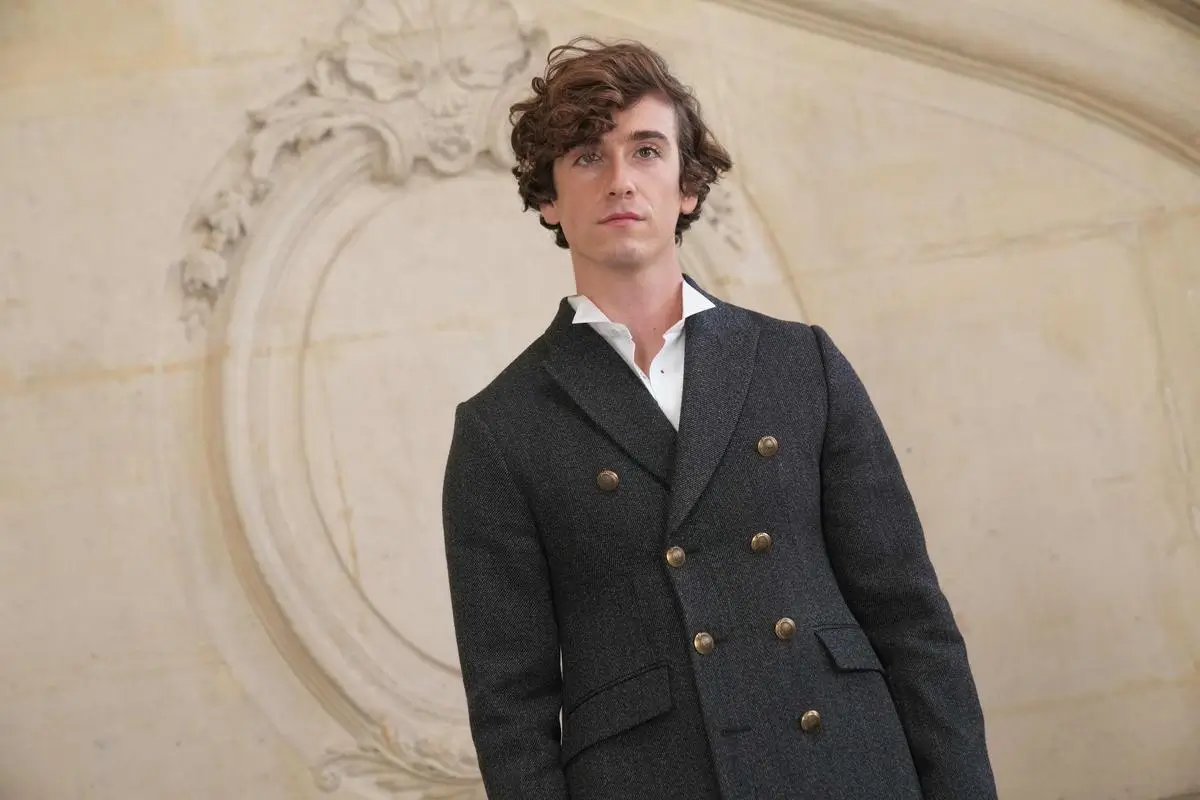
Dior naming Guitarricadelafuente as House ambassador doesn’t read like a conventional alignment—no sudden collision of celebrity and brand, no forced symmetry. It feels quieter than that. Almost inevitable, in hindsight. As if the figure already existed inside the idea of Dior, waiting to be named.
He doesn’t arrive as a frontman. He arrives as atmosphere.
And that, perhaps, is the shift.
stir
There is no urgency in the way Guitarricadelafuente sings. No demand to be heard. The voice sits low, textured, almost withheld—like it’s considering whether to stay or leave.
That restraint is the point.
His work folds into itself: fragments of Spanish folk, rural memory, guitar lines that feel closer to gesture than arrangement. The past is present, but not intact. It’s been softened, handled, rethought. You hear tradition not as a fixed inheritance, but as something porous—something you can pass through.
The album Spanish Leather lingers in this space. Not as a statement, but as a surface. Leather as metaphor, yes—but also as method. Worn, absorbent, carrying marks without announcing them.
There is no nostalgia here. Just residue.
And Dior, for all its history, has been moving in a similar direction. Not preserving legacy as spectacle, but dissolving it into something usable. Something lived in.
show
What makes this pairing feel precise is what it avoids.
Guitarricadelafuente does not perform masculinity in the conventional sense. There’s no amplification, no ironic detachment, no exaggerated posture. He stands in it lightly. Almost incidentally.
That absence reads as intention.
The Dior man—at least in this current articulation—is no longer constructed through opposition. Not strong versus soft, not classic versus contemporary. Those binaries have thinned out. What remains is something less legible but more exact: a kind of internal coherence.
Not loud. Not even visible at first.
But consistent.
Dior’s language—“freedom,” “high standards”—can sound abstract, but here it lands differently. Freedom becomes the ability to move without declaring movement. High standards become invisible discipline. The refusal to overstate.
There is a generation forming around this idea. One that doesn’t reject tradition, but also doesn’t feel obligated to carry it intact. They edit. They subtract. They leave space.
Guitarricadelafuente belongs to that space.
flow
There’s a temptation to read any ambassador through clothing first—what he wears, how it fits, how it photographs.
But here, the clothing feels secondary. Or rather, continuous.
Dior’s menswear, in its quieter moments, has been moving away from the idea of the outfit as statement. Toward something closer to atmosphere. Fabric that sits instead of asserts. Tailoring that follows rather than shapes.
On Guitarricadelafuente, this doesn’t register as styling. It reads as extension.
A jacket becomes a surface for the same kind of thinking that shapes his music: reduction, texture, proximity. Nothing added that doesn’t need to be there. Nothing removed that would break the line.
Even leather—so central to Dior’s material vocabulary—finds an echo in his work. Not polished, not rigid, but softened. Absorbing time rather than resisting it.
Clothing, then, is not costume. It’s continuation.
geo
There is something distinctly Spanish in Guitarricadelafuente’s work, but it doesn’t function as identity branding. It’s less about representation, more about orientation.
You hear it in the pacing. In the silences between phrases. In the way emotion is implied rather than declared.
But those references don’t stay contained. They move.
And that movement matters for Dior. A house historically rooted in Paris, yet increasingly uninterested in singular geography. The Dior man is not defined by where he is, but by how he carries where he’s been.
Guitarricadelafuente doesn’t translate Spain for an international audience. He brings it with him, intact but unannounced. It exists in the work without explanation.
That refusal to explain—to package identity for clarity—is what gives it weight.
palette
If there is a contradiction at the center of this appointment, it’s this: everything appears loose, but nothing is accidental.
His music feels improvised, but it isn’t. The phrasing, the restraint, the pacing—it’s all constructed with precision. You hear the discipline in what’s left out.
The same could be said of Dior at its most considered. The best pieces don’t insist. They don’t resolve themselves immediately. They hold tension.
This is not minimalism in the traditional sense—clean lines, reduced forms. It’s something more ambiguous. A kind of soft structure. One that allows movement without collapsing.
Guitarricadelafuente operates within that structure. He doesn’t fill space; he defines it.
envision
There is visibility, and then there is presence.
Most ambassador roles are built on the former—recognition, scale, amplification. But this feels closer to the latter. A quieter kind of influence. One that doesn’t expand outward so much as it deepens inward.
Guitarricadelafuente’s growing international reach—tours, audiences, critical attention—sits alongside a refusal to overexpose. He doesn’t flatten himself for accessibility. He allows opacity.
And Dior, in choosing him, seems to be leaning into that opacity rather than resolving it.
The Dior man, in this formulation, is not immediately knowable. He doesn’t need to be. What matters is coherence, not clarity.
idea
It would be easy to read this as part of a broader pattern—fashion aligning with musicians, cultural figures, artists. But that framing feels insufficient here.
This is less about crossover, more about alignment at the level of method.
Both operate through reduction. Through attention to texture. Through a refusal to overstate.
Both treat heritage not as archive, but as material.
And both seem increasingly uninterested in the idea of the finished statement. What matters is the ongoing line—the work as it continues, not as it concludes.
consider
So what does it mean to call Guitarricadelafuente “a new incarnation of the Dior man”?
Not a type. Not an image.
More like a condition.
A way of moving through references without announcing them. A way of holding history without being held by it. A way of being visible without insisting on visibility.
Less edge. More depth.
Less performance. More presence.
If earlier versions of the Dior man were defined by silhouette, by cut, by attitude, this one feels harder to pin down. And that seems intentional.
He is not there to be recognized immediately.
He is there to be understood over time.
fin
There will be campaigns, inevitably. Images, garments, frames that attempt to translate this alignment into something legible.
But the more interesting question is what doesn’t translate.
What remains unarticulated. What stays in between.
Guitarricadelafuente doesn’t resolve easily into fashion language. That’s precisely why it works. He introduces friction—not resistance, but subtle misalignment. Enough to keep things from becoming too smooth.
Dior, in turn, absorbs that friction. Allows it.
And in that exchange, something shifts.
Not dramatically. Not visibly at first.
But enough to change the way the next image will be read.