H. Moser & Cie. Streamliner Alpine — Formula 1 Precision, Imagined as a Dual-Watch System

March 18, 2026
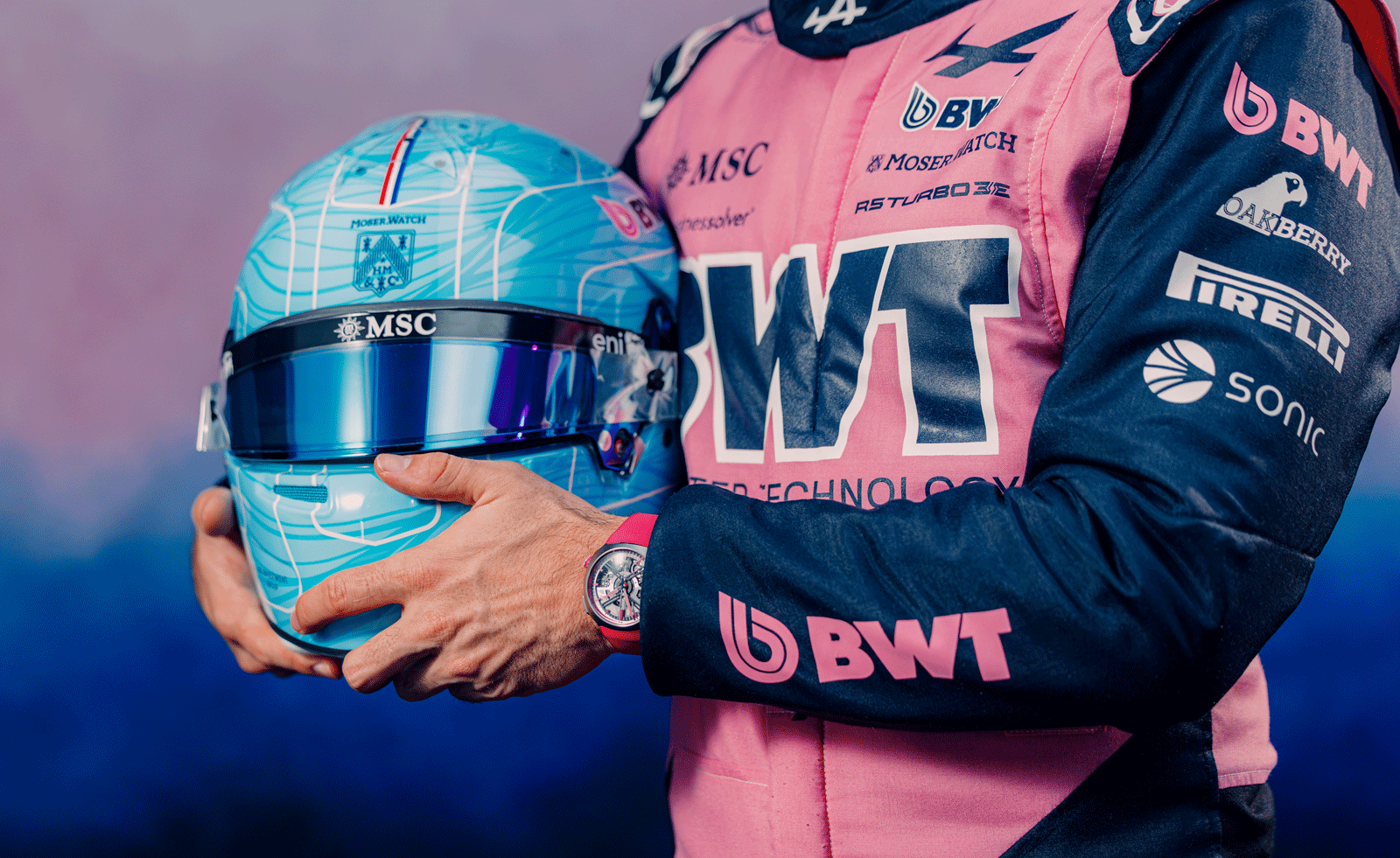

There is a moment in Formula 1 that rarely makes the broadcast. It happens not on the straight, not in the overtake, not even in the final lap. It happens in the milliseconds before action—the silent exchange between data and instinct, between a signal sent and a decision made.
It is here, in this invisible interval, that races are often decided.
H. Moser & Cie. builds its Streamliner Alpine Drivers and Mechanics Edition around that exact idea. Not the spectacle of speed, but the infrastructure beneath it. Not the mythology of racing, but the systems that allow it to exist at all.
This is not a watch about telling time. It is about negotiating it.
View this post on Instagram
flow
For decades, the haute sports watch has operated within a familiar language. Steel cases, integrated bracelets, legible dials, and narratives rooted in exploration—diving, aviation, endurance.
The Streamliner disrupted that language when it first appeared. Its cushion case flowed without lugs. Its bracelet moved like a continuous surface. Its dial often rejected even the presence of a logo. It did not reference the past—it refused it.
With the Alpine collaboration, H. Moser & Cie. pushes that disruption further. Instead of reinterpreting the sports watch, it reconstructs it entirely.
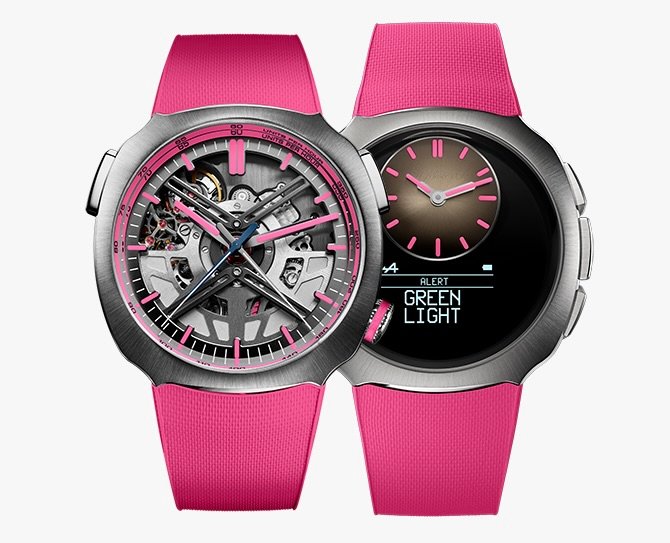
The result is not one watch, but two.
Not one identity, but a system.
stir
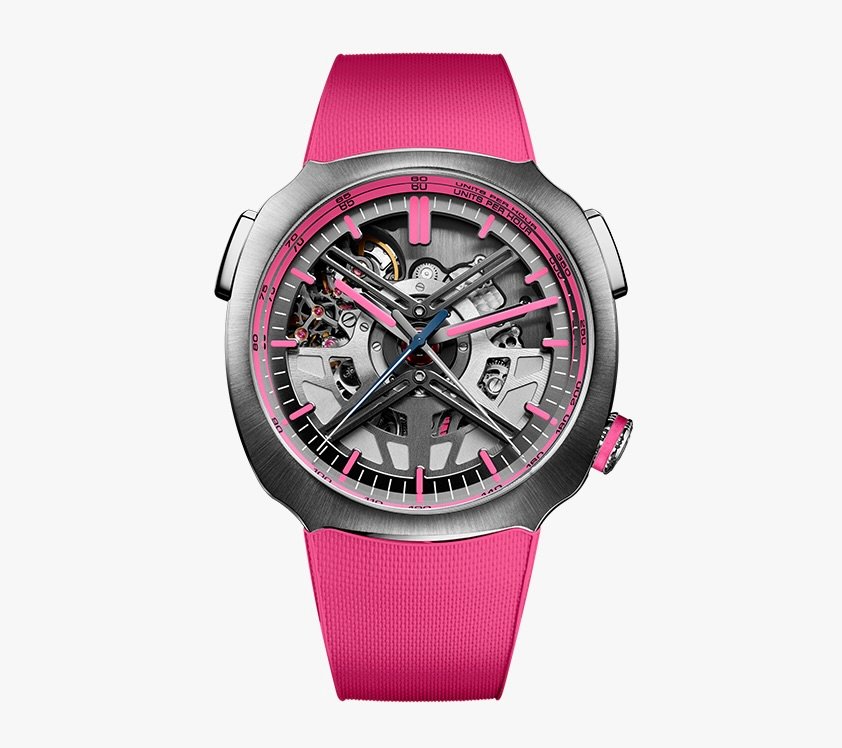
The Drivers Edition exists at the intersection of emotion and engineering. It is a mechanical chronograph, but one that feels less like an instrument panel and more like an exposed engine.
The HMC 700 calibre is not hidden beneath a dial—it becomes the dial itself. Bridges stretch across the face in sharp, structural lines, recalling the geometry of suspension arms or chassis frameworks. Nothing is decorative in the traditional sense. Every element feels necessary.
The central chronograph display reinforces that immediacy. Time is not segmented into subdials—it is experienced directly, through hands that sweep across a fully open landscape.
There is a clarity here that mirrors driving at speed. No distractions. No excess. Only the essential.
The case, finished in blue PVD-coated steel, maintains the Streamliner’s fluid identity. It does not sit on the wrist so much as wrap around it. The absence of lugs allows the watch to behave like a continuous form—closer to equipment than jewelry.
And yet, it is unmistakably luxurious.
This tension defines the Drivers Edition. It is precise, but not clinical. Technical, but not cold. It captures the sensation of control at the edge of instability—the exact feeling that defines motorsport itself.
mech
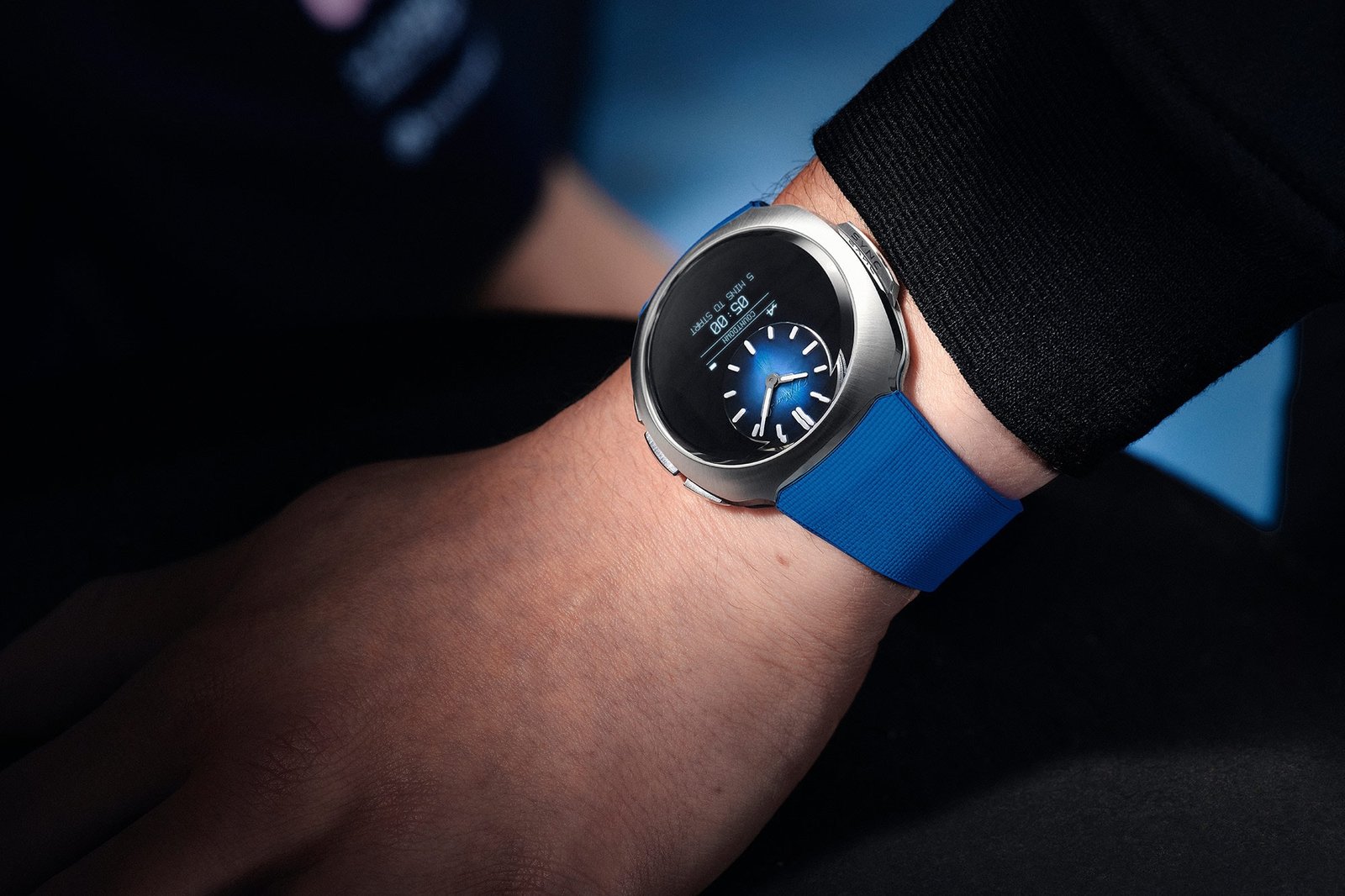
If the Drivers Edition represents instinct, the Mechanics Edition represents awareness.
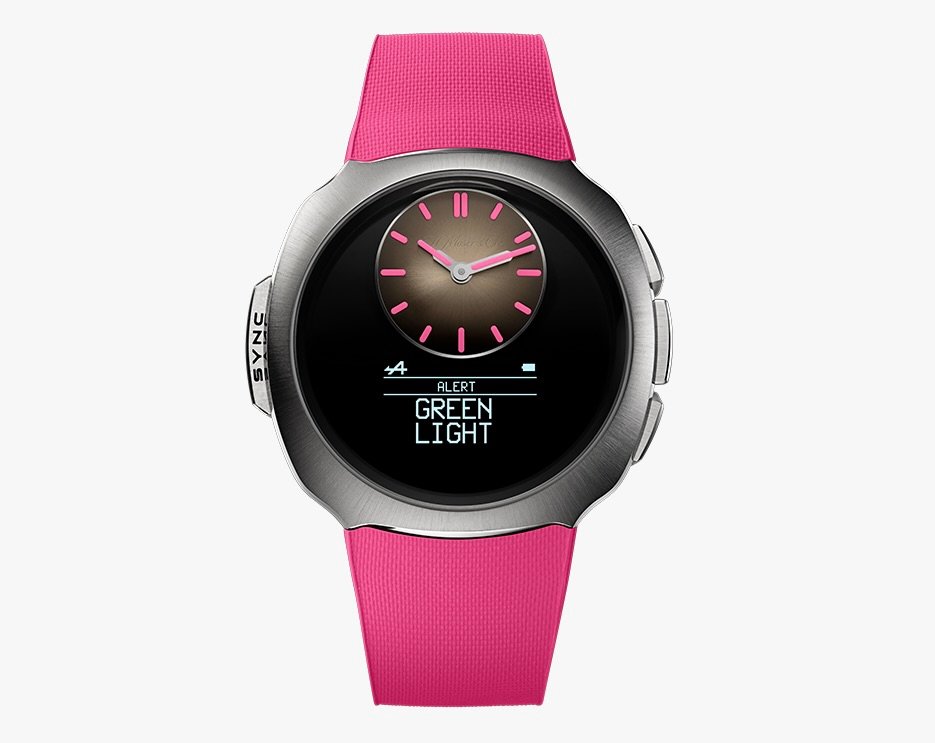
At first glance, it appears restrained. A dark fumé dial. Minimal markers. No indication that anything beyond traditional watchmaking is present.
But this is a façade.
Beneath the surface lies a digital interface designed specifically for Alpine’s Formula 1 team. Activated when needed, it transforms the watch into a communication hub—delivering timing data, alerts, and race-critical information directly to the wearer.
This is not a smartwatch in the consumer sense. There are no distractions here—no notifications, no lifestyle metrics. Every function is tied to performance.
Split-second timing. Countdown synchronization. Coordinated alerts across team members.
It is a watch built not for the individual, but for the collective.
This distinction is crucial. Where most connected devices emphasize personalization, the Mechanics Edition emphasizes alignment. It ensures that everyone involved in the race operates within the same temporal framework.
Time, in this context, becomes shared.
compare
The existence of these two watches side by side creates a tension that is rarely explored in horology.
Mechanical watchmaking has long positioned itself in opposition to digital technology. One represents tradition, craftsmanship, and permanence. The other represents progress, utility, and obsolescence.
H. Moser & Cie. refuses this binary.
Instead, it proposes that both can coexist—provided they are given distinct roles.
The Drivers Edition does not need digital augmentation. Its purpose is experiential. It connects the wearer to time in a tactile, emotional way.
The Mechanics Edition does not attempt to replicate mechanical beauty. Its purpose is functional. It delivers information with precision and clarity.
Together, they form a complete system.
Not competing, but complementary.
distinct
What distinguishes the Streamliner Alpine from other collaborations is its refusal to rely on superficial references.
There are no oversized logos. No overt branding cues. No attempt to translate racing into obvious visual motifs.
Instead, the design operates at a structural level.
The bridges of the movement echo mechanical components, but only subtly. The rotor references a wheel rim, but only in proportion and geometry. The case flows like aerodynamic bodywork, but without literal interpretation.
This approach demands more from the viewer. It asks for attention, for engagement, for interpretation.
In return, it offers depth.
show
The introduction of the Pink Edition in 2026 marks a shift in tone.
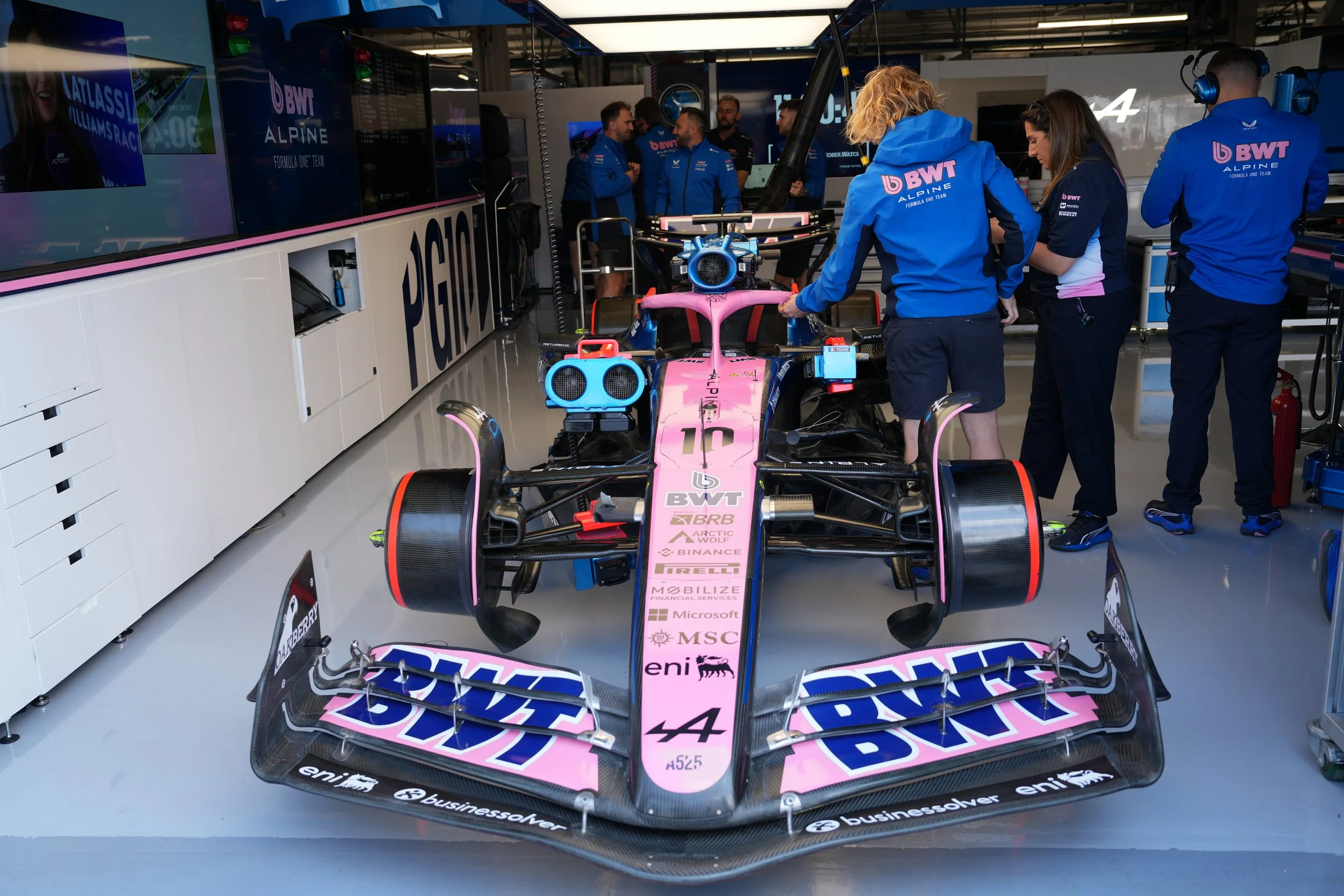
Where the original release emphasized cohesion and technical restraint, the pink iteration embraces visibility. Inspired by Alpine’s BWT livery, it introduces a bold chromatic identity that cannot be ignored.
This is not simply a color change. It is a recontextualization.
Pink, within the world of motorsport, is already disruptive. It challenges expectations, redefines presence, and creates immediate recognition. Applied to the Streamliner Alpine, it amplifies those qualities.
The watches become more than instruments. They become signals.
And yet, the underlying philosophy remains unchanged. Performance is still the priority. The color simply makes that performance impossible to overlook.
wear
Despite their conceptual ambition, both watches remain grounded in physical usability.
The Drivers Edition offers robustness suitable for active environments—water resistance, secure construction, and a form factor that prioritizes comfort over spectacle. Its integrated design ensures that it moves with the wrist rather than against it.
The Mechanics Edition, while more technologically complex, avoids the disposability often associated with connected devices. Its analog mode ensures longevity, allowing it to function as a traditional watch when its digital capabilities are not required.
This duality extends even to battery life. The watch is not constantly demanding attention. It activates when necessary, then recedes.
In this sense, it respects the wearer’s autonomy—a rare quality in modern connected devices.
shift
The Streamliner Alpine Drivers and Mechanics Edition arrives at a moment when luxury is being redefined.
No longer is it enough for an object to be rare or expensive. Increasingly, it must be relevant. It must justify its existence within a broader system.
Moser’s approach reflects this shift.
The watches are not designed to sit in isolation. They are designed to interact—with environments, with teams, with real-world processes.
This repositioning has broader implications for the industry. It suggests that the future of horology may lie not in preservation, but in integration.
Watches that do not merely measure time, but participate in it.
xp
To own the Streamliner Alpine set is to engage with a narrative that extends beyond the object itself.
It is to understand the relationship between driver and mechanic. Between visible performance and invisible coordination. Between instinct and calculation.
The watches invite the wearer to inhabit both roles—to experience time as both participant and observer.
This is a rare proposition.
Most watches offer a singular perspective. The Streamliner Alpine offers two.
fin
The H. Moser & Cie. Streamliner Alpine Drivers and Mechanics Edition is not easily categorized.
It is not purely mechanical, nor purely digital. Not purely emotional, nor purely functional. Not purely individual, nor purely collective.
It exists in the spaces between those definitions.
And in doing so, it reflects the reality of modern performance—where boundaries are increasingly fluid, where systems overlap, and where success depends on the ability to navigate complexity.
In the end, the watches do not attempt to simplify time.
They reveal it.
Layered, interconnected, and constantly in motion.
Just like the race itself.