HAVEN Exploration — Hand-Dyed GORE-TEX Technical Garments by Benjamin Fenton

March 5, 2026
intro
In contemporary design culture, the conversation between craft and technology has grown increasingly dynamic. Once considered opposing forces—one rooted in human tradition, the other in industrial precision—craft and advanced materials now frequently intersect in compelling ways. The project titled “HAVEN Exploration — Hand-Dyed GORE-TEX” represents precisely this intersection, bringing together performance textile engineering and a deeply tactile studio process.
At the center of the exploration is HAVEN, the Vancouver-based retailer and design platform recognized for its meticulous approach to technical apparel, global craftsmanship, and material innovation. Over the years, HAVEN has cultivated a reputation for bridging Japanese manufacturing expertise with modern outdoor functionality. Through collaborations and experimental capsules, the brand has continued to explore how traditional production methods can coexist with advanced performance materials.
This particular project began with a simple but compelling idea: what would happen if a highly engineered technical fabric—designed for durability, uniformity, and industrial efficiency—were subjected to the slow, imperfect, and expressive processes of handcraft?
To answer that question, HAVEN partnered with textile artist Benjamin Fenton, whose practice centers on experimentation with materials and the transformation of industrial surfaces through hand-driven techniques. The collaboration became an opportunity to investigate how a fabric like GORE-TEX PRO 3L, known for its waterproof performance and structural integrity, might respond to a more intuitive and craft-based process.
The result is not merely a limited capsule of outerwear but a material study—one that examines the boundaries between performance engineering and artistic intervention.
stir
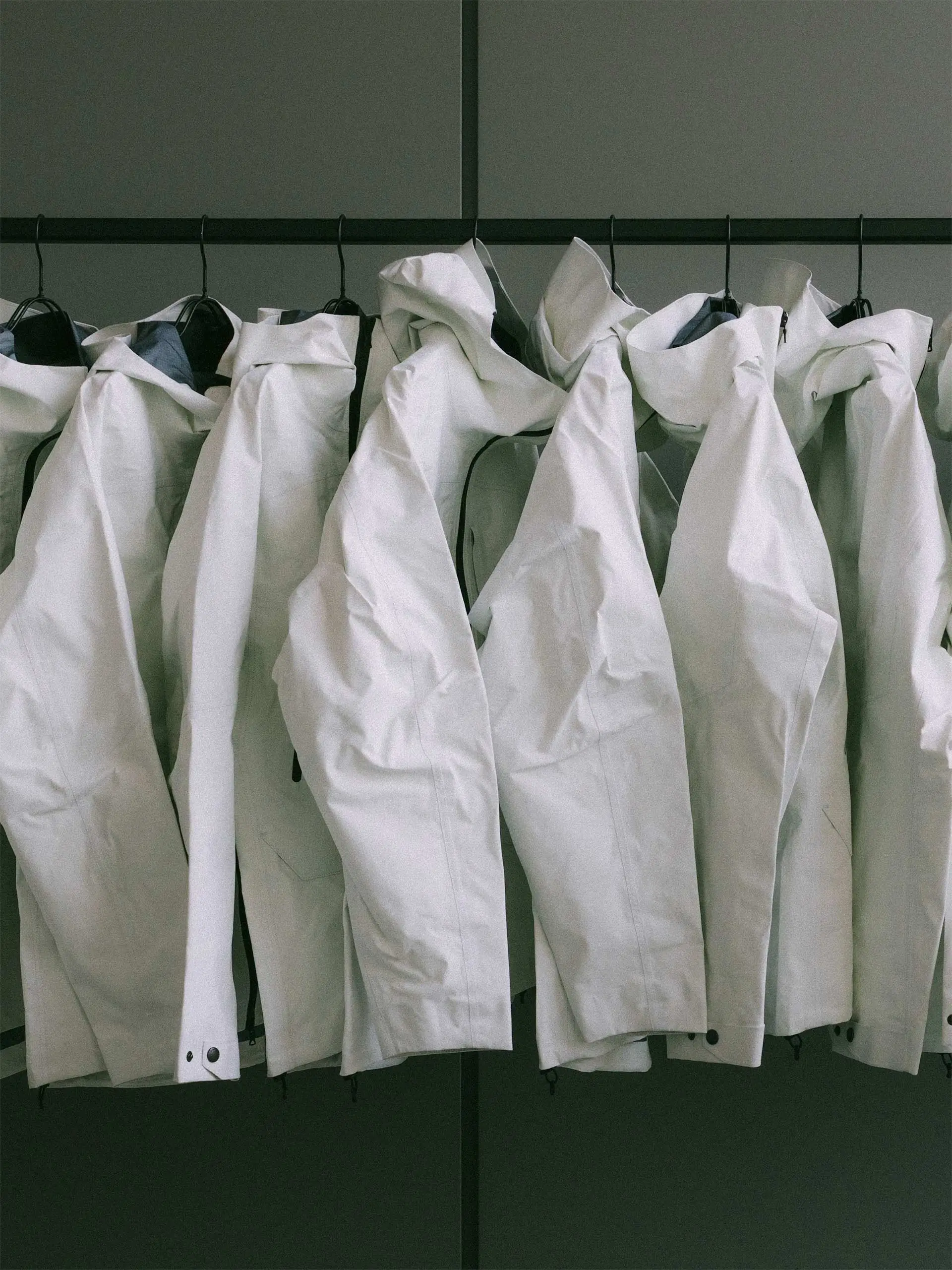
The starting point for the project was deadstock GORE-TEX PRO 3L fabric sourced from Okayama, Japan, a region internationally celebrated for its textile craftsmanship.
Deadstock materials—unused fabrics remaining after manufacturing cycles—have increasingly become central to progressive fashion production. Rather than generating new materials, designers can repurpose existing stock, extending the lifecycle of textiles that might otherwise remain dormant.
For HAVEN, working with deadstock was both a practical and philosophical decision. The limited quantity of available fabric immediately defined the scale of the project, while the act of repurposing aligned with broader conversations around responsible production and resourcefulness within contemporary design.
The choice of GORE-TEX PRO 3L was particularly significant. Known for its high performance in extreme weather conditions, the fabric consists of three bonded layers:
• an outer face fabric
• the waterproof and breathable GORE-TEX membrane
• a protective internal backing layer
This multilayer construction gives the material its durability and weatherproof capabilities but also makes it a challenging surface for creative manipulation.
Unlike natural textiles such as cotton or wool, technical fabrics are rarely treated through manual dye processes. Their structure and coatings are designed for consistency and performance rather than aesthetic variation.
For HAVEN and Fenton, this challenge was precisely the point.
mat
Benjamin Fenton’s practice is rooted in the belief that materials should not be treated as static components but as dynamic surfaces capable of transformation.
His work frequently examines how industrial materials—synthetic fabrics, treated surfaces, and manufactured textiles—can reveal unexpected characteristics when exposed to unconventional processes. Rather than forcing materials into predetermined results, Fenton’s approach invites experimentation and observation.
In the context of the HAVEN project, this philosophy translated into a careful exploration of hand dyeing GORE-TEX, an unusual undertaking given the technical nature of the fabric.
The collaboration emerged from a shared appreciation for process-driven design. Instead of beginning with a fixed visual outcome, the team focused on the act of making itself.
What would the dye do?
How would the material respond?
Where might the process lead?
These questions guided the studio experimentation.
stu
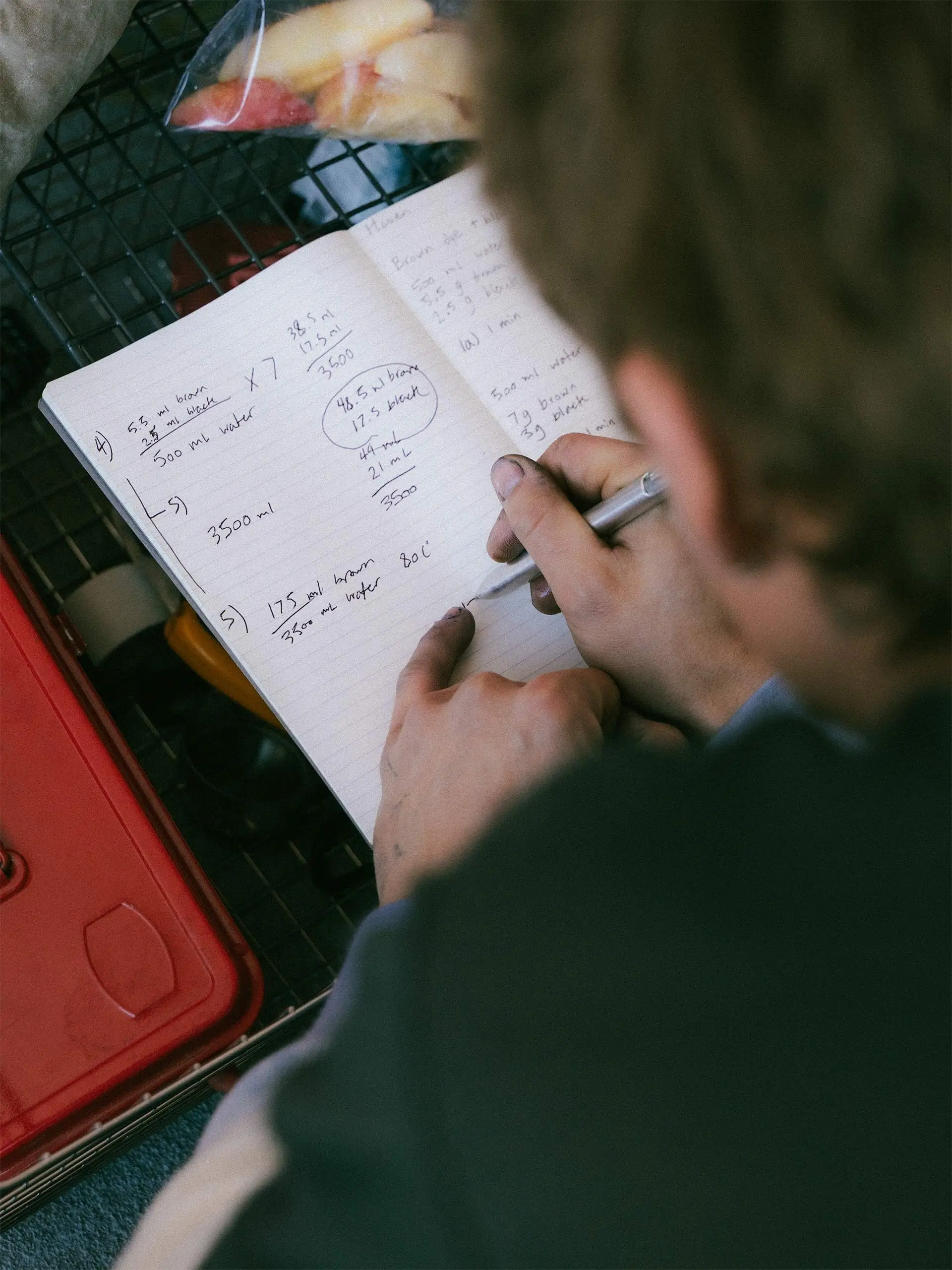
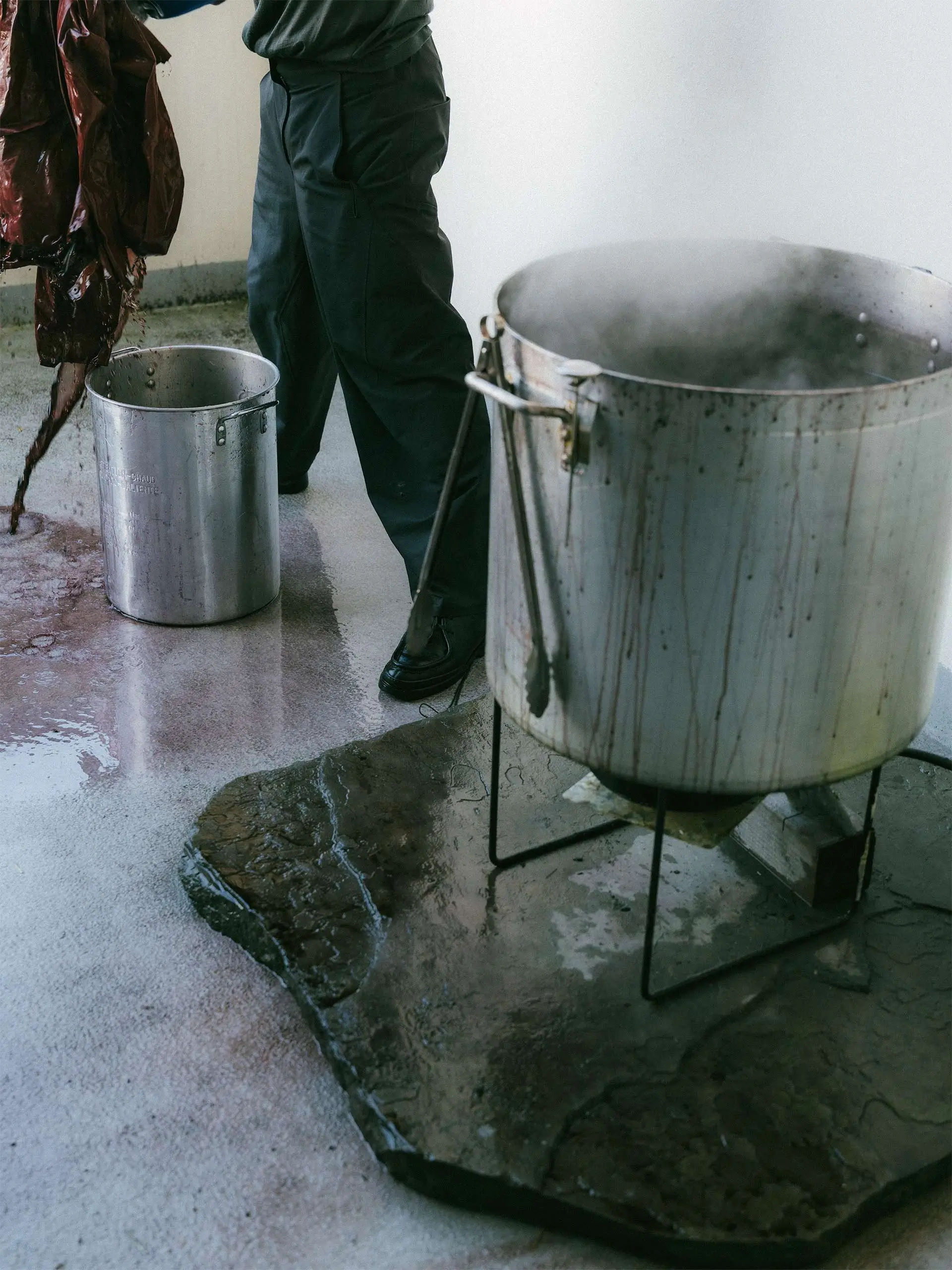
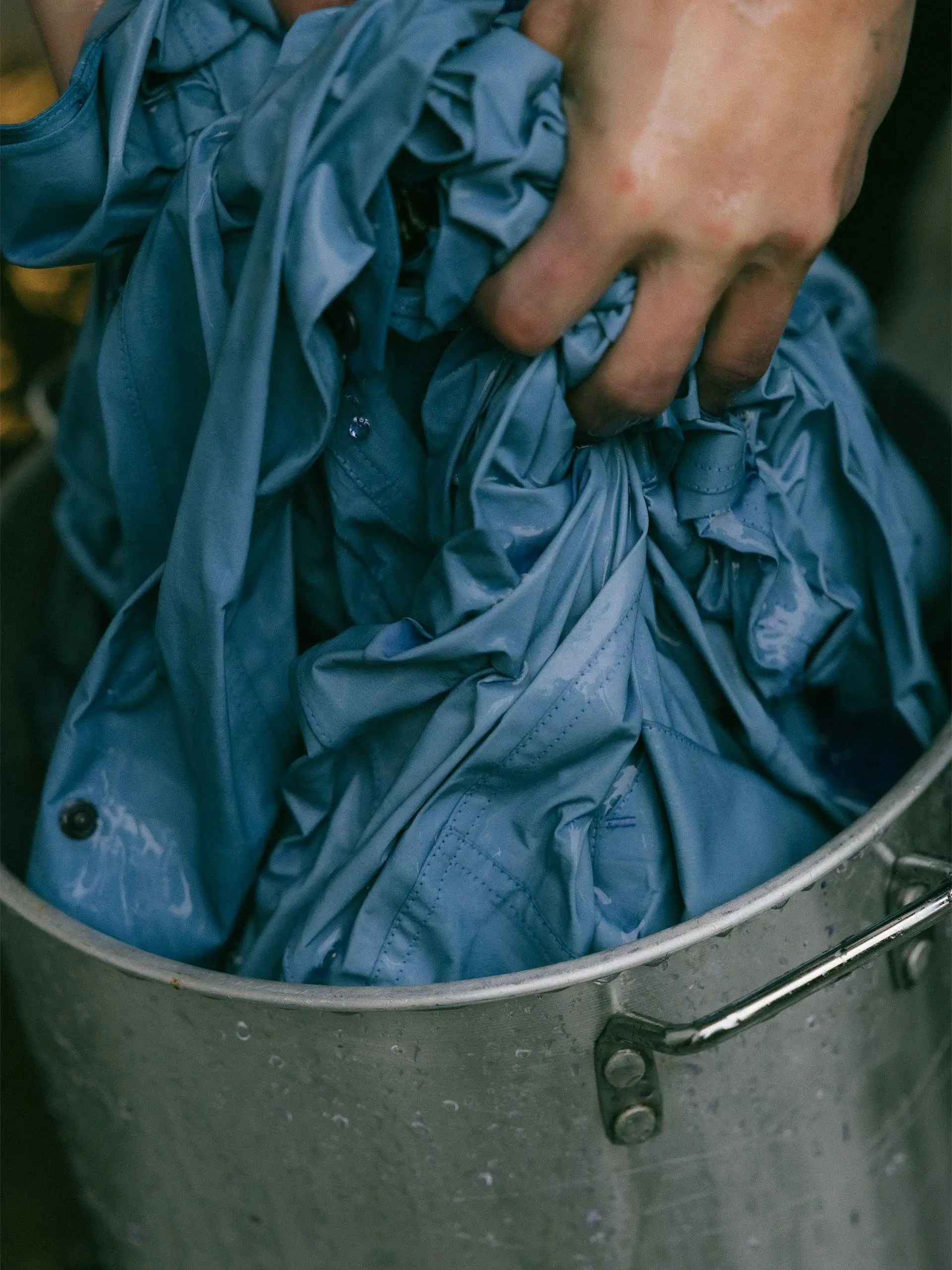
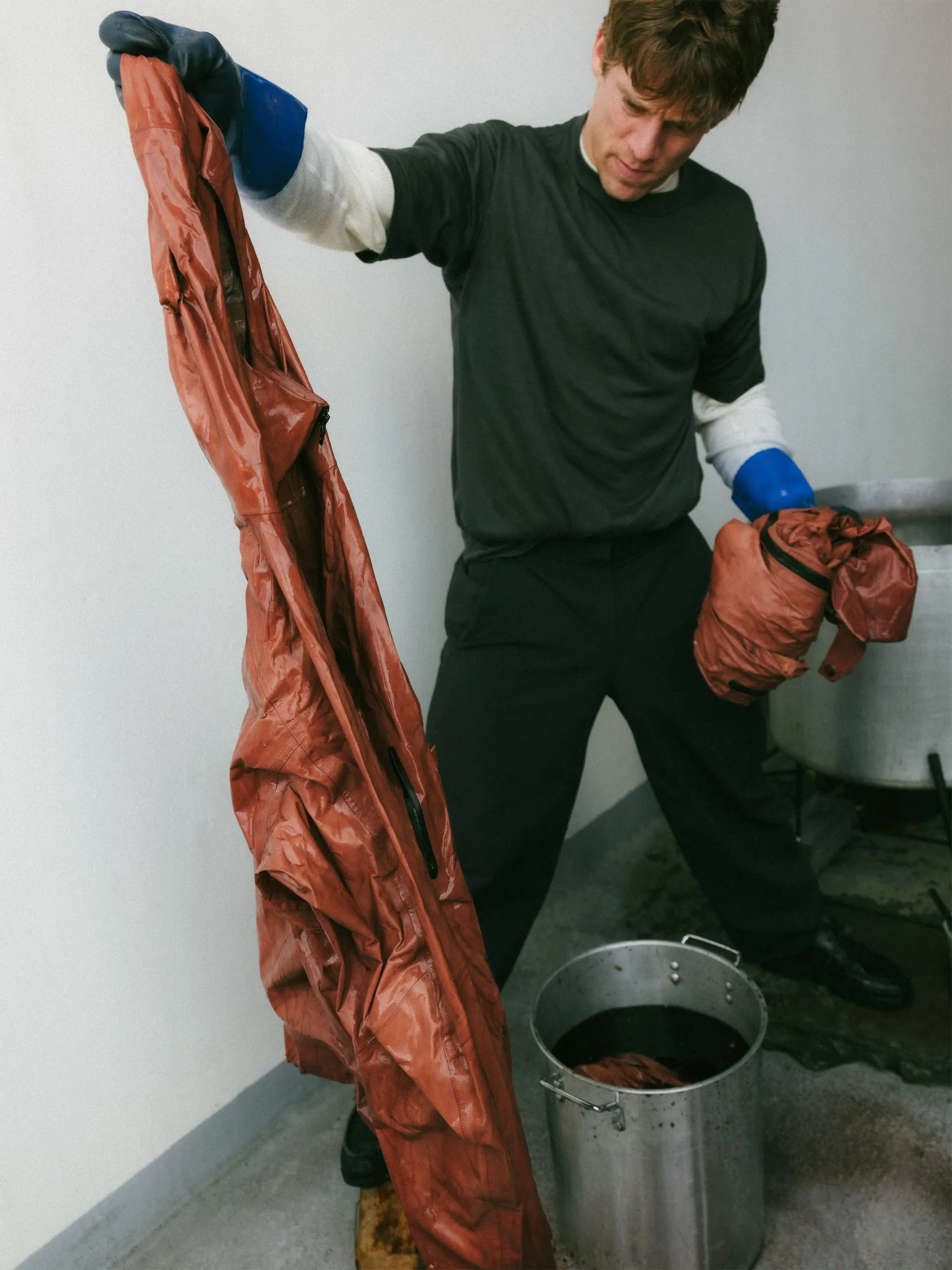
The garments were dyed individually in the studio over the course of two days, each piece treated as its own experiment.
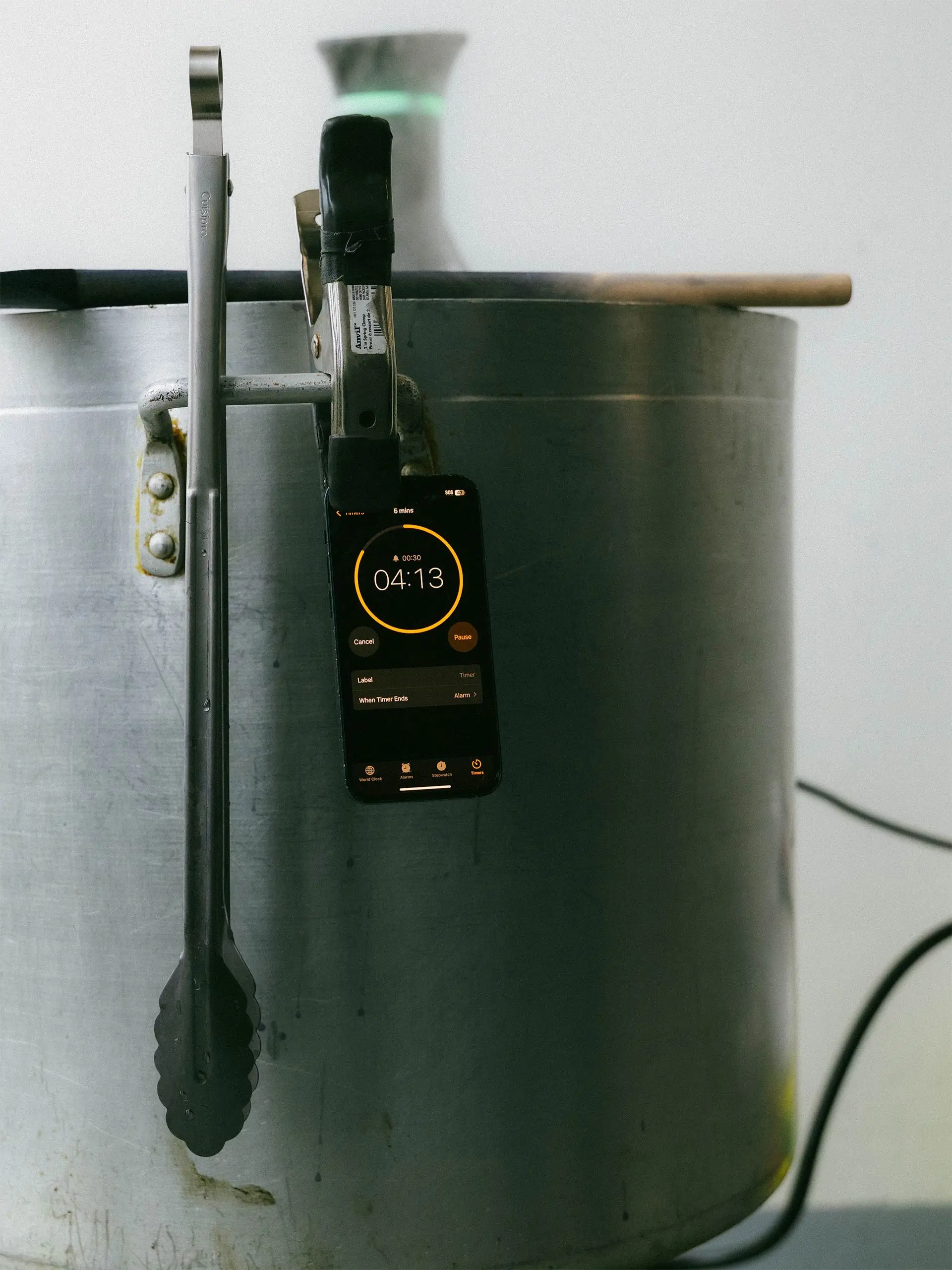
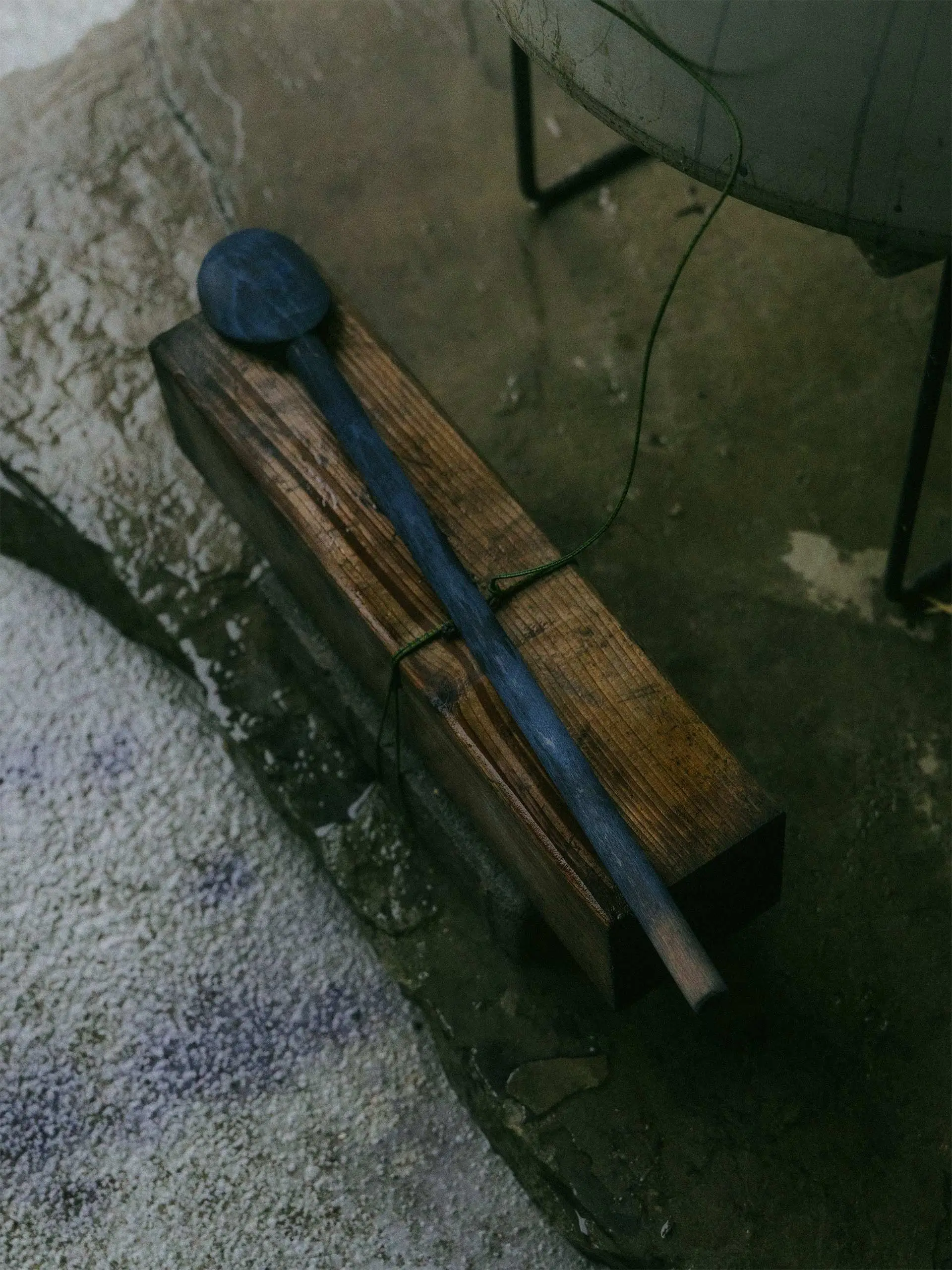
Rather than processing garments in batches—an approach typical of industrial dye houses—the team immersed one garment at a time into carefully prepared dye baths. This allowed the process to unfold slowly and organically.
During dyeing, garments were rotated, lifted, and repositioned repeatedly, allowing pigment to interact differently across seams, panels, and folds.
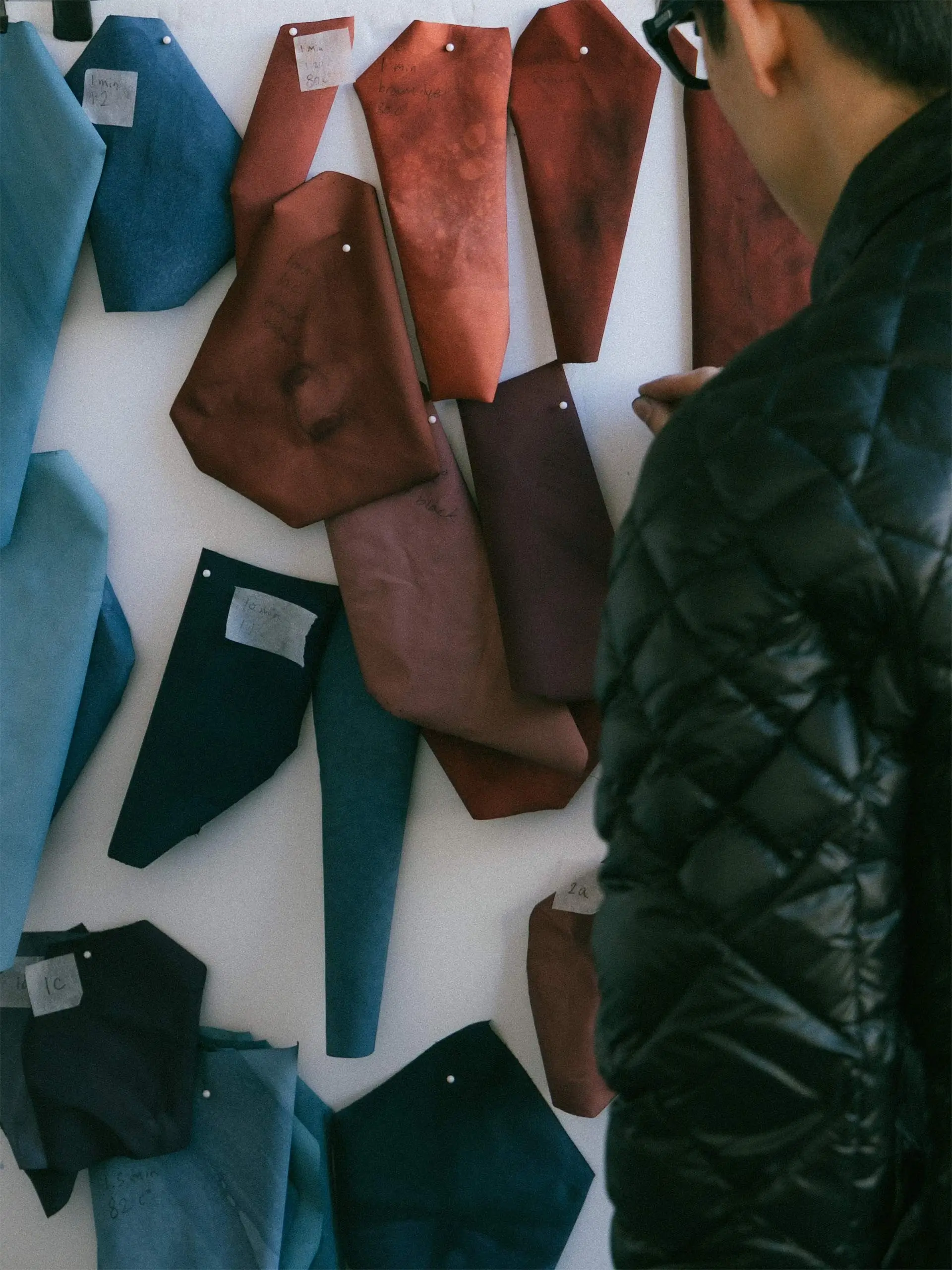
Subtle shifts in temperature, timing, and saturation influenced the way the dye adhered to the outer layer of the fabric. Some surfaces absorbed color more deeply, while others retained lighter tones.
These variations were not corrected or standardized. Instead, they were embraced as part of the project’s aesthetic identity.
The resulting garments reveal complex tonal textures that could never be achieved through automated manufacturing.
Each piece becomes a record of its own process.
compare
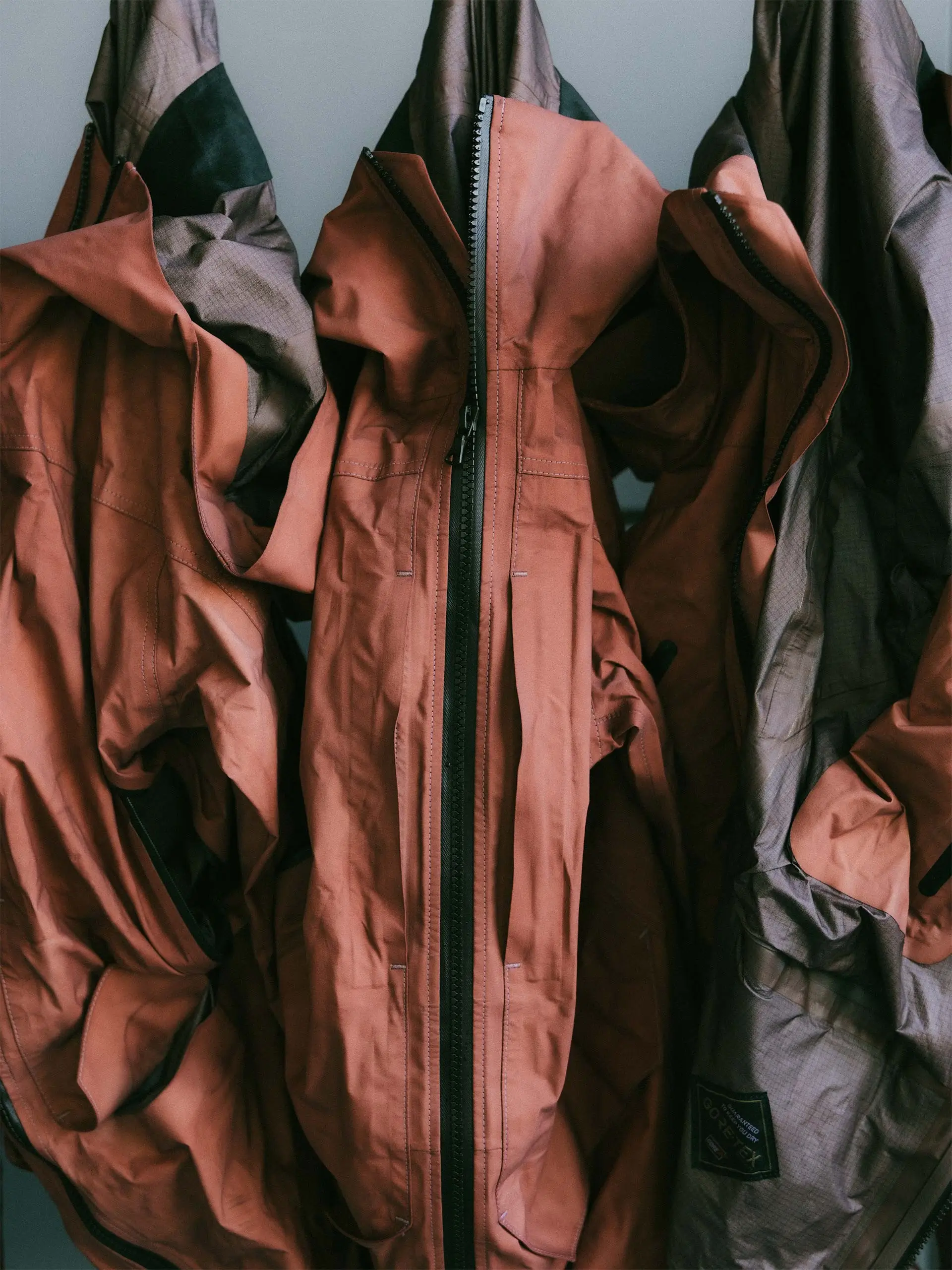
From the experimentation emerged two distinct colourways: Indigo and Rust.
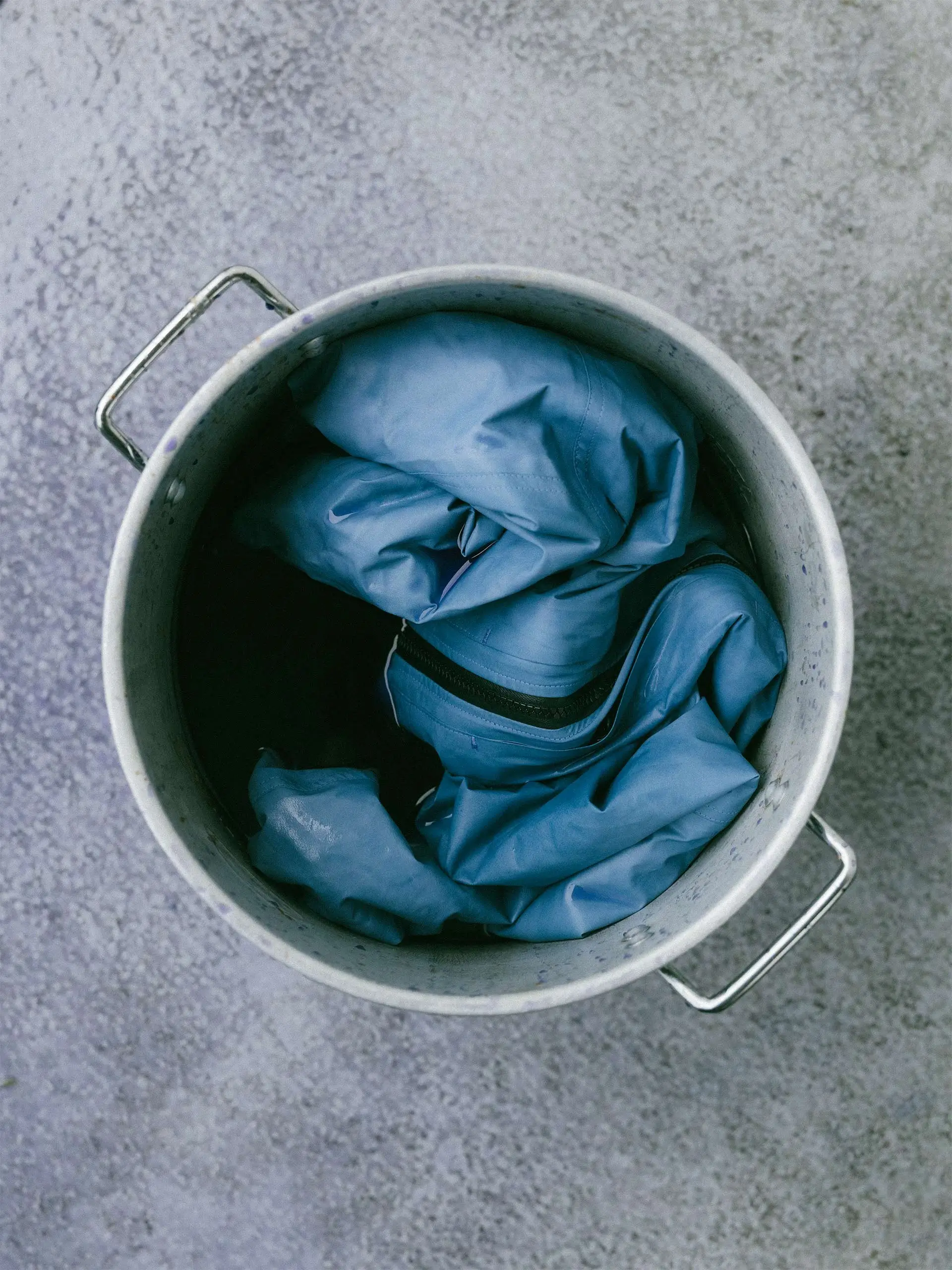
Indigo carries centuries of textile history. From Japanese shibori dyeing to traditional workwear fabrics, indigo has long been associated with craftsmanship and longevity. When applied to the technical surface of GORE-TEX, the pigment produces a deep atmospheric blue marked by gradients and tonal variations.
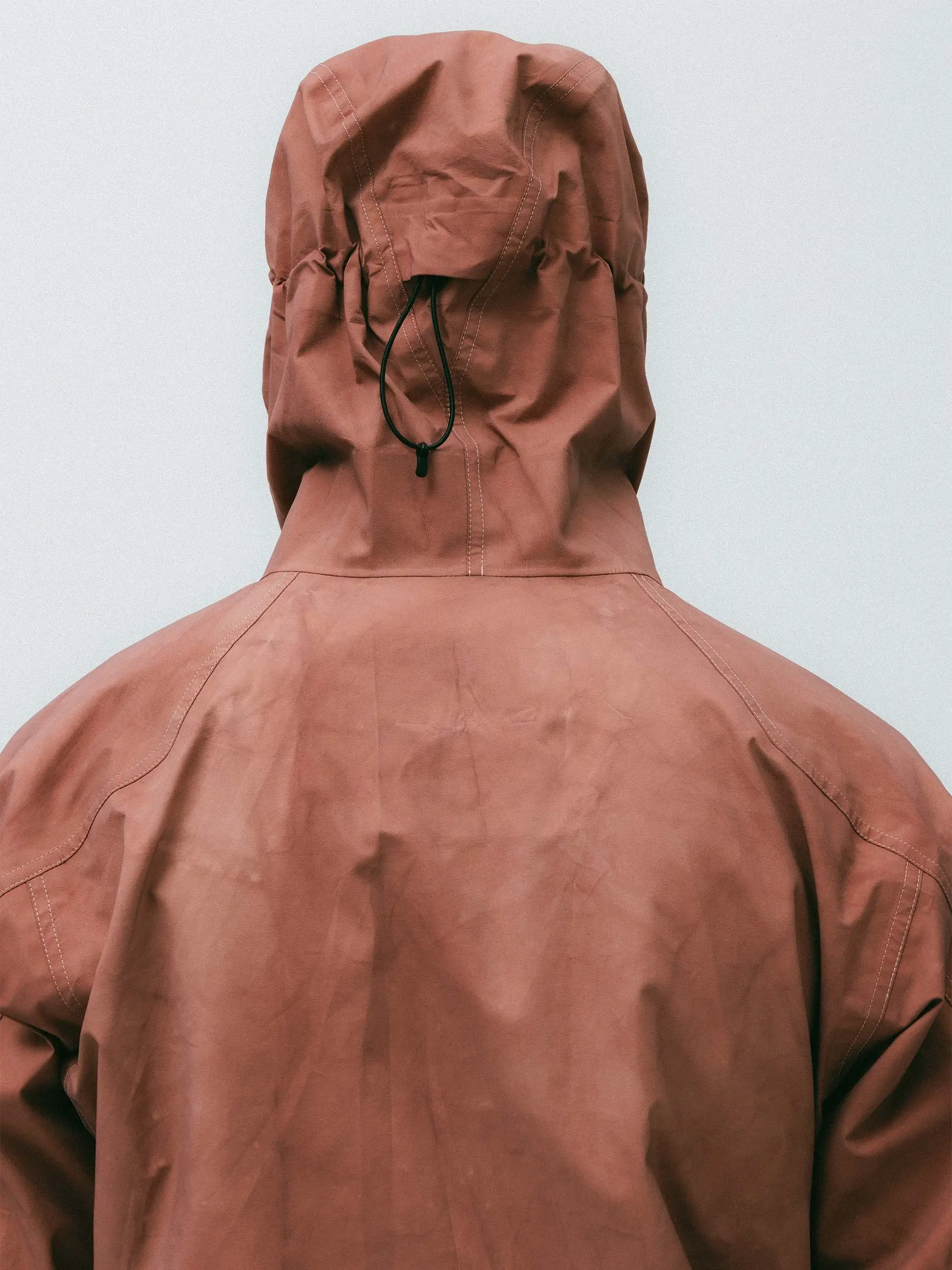
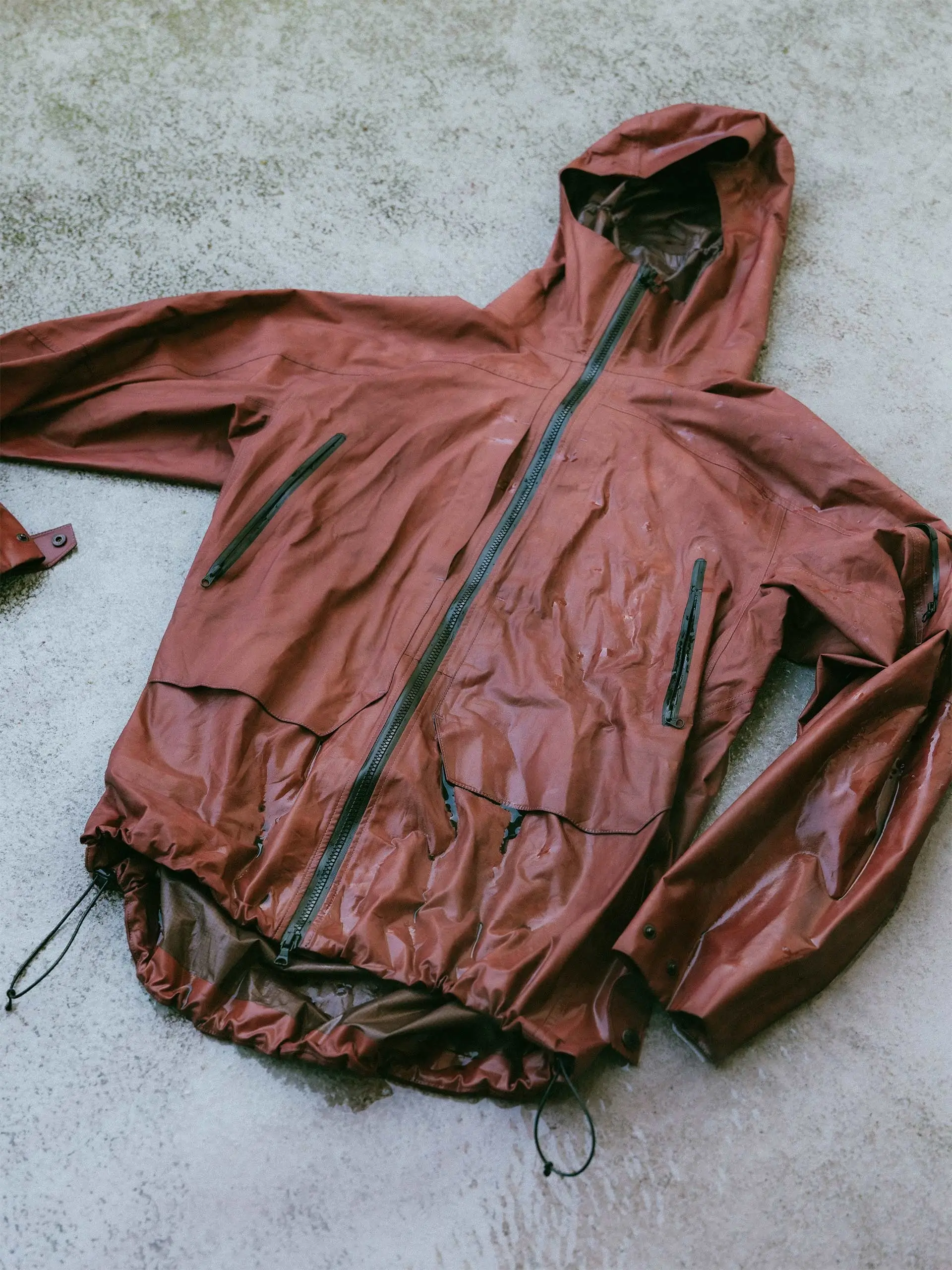
Rust introduces a contrasting warmth. The color evokes oxidized metal and natural earth pigments, producing a rich spectrum of tones ranging from copper to burnt orange.
Together, the two colourways reflect the balance between heritage craft and modern material science.
Because each garment is dyed individually, no two pieces share identical coloration. Slight irregularities, tonal shifts, and organic patterns become defining characteristics of the collection.
Variation is not a flaw but a feature.
craft
Technical garments are typically associated with precision engineering and uniform production. Outdoor apparel brands rely on strict quality control to ensure consistent performance across thousands of identical products.
The HAVEN Exploration project intentionally disrupts that model.
By introducing handcraft techniques into the production process, the collaboration challenges the assumption that performance wear must always appear standardized.
Instead, the garments exist somewhere between technical equipment and crafted objects.
This hybrid identity gives the collection a distinctive character. The garments retain their weather-resistant functionality while displaying the visual unpredictability associated with handmade textiles.
In effect, the project suggests that technical materials can carry aesthetic depth without compromising performance.
perform
After dyeing, each garment underwent a crucial finishing process: the reapplication of Durable Water Repellent (DWR)treatment.
DWR coatings allow water to bead on the surface of the fabric rather than soaking into it. This property is essential for maintaining breathability and waterproof performance.
Because the dyeing process can alter the surface characteristics of the outer layer, renewing the DWR treatment ensures that the garments continue to perform as intended in harsh weather conditions.
This step highlights the balance that defines the entire project.
While the dyeing process introduces craft-driven irregularities, the finishing process restores the fabric’s technical integrity.
Craft and performance coexist.
sig
Beyond the dyeing process itself, the garments feature subtle design elements that reinforce HAVEN’s design language.
Each piece is finished with signature leather zipper pullers, introducing an organic material contrast against the sleek synthetic surface of the GORE-TEX fabric.
Leather adds a tactile element and will gradually develop patina through wear, further personalizing the garment over time.
These details serve as small but meaningful reminders that the project is rooted in material awareness.
Every component has been considered.
collect
The labor-intensive nature of the dyeing process, combined with the finite supply of deadstock fabric, ultimately limited production to twenty garments.
Ten pieces were produced in Indigo.
Ten pieces were produced in Rust.
This extremely small production run reflects the philosophy behind the project. Rather than pursuing scale, HAVEN prioritized experimentation and craftsmanship.
Each garment represents hours of studio work and careful observation.
In a fashion landscape dominated by mass production, such scarcity reinforces the value of time and human involvement in the creative process.
fwd
The HAVEN Exploration project exists within a broader movement in contemporary fashion and design that seeks to reconnect industrial materials with craft traditions.
Across the industry, designers are increasingly experimenting with techniques that reveal the material story behind garments—natural dyeing, visible repair, textile manipulation, and small-batch production.
These approaches challenge the anonymity of industrial manufacturing and introduce a sense of individuality into products that might otherwise appear identical.
Technical fabrics like GORE-TEX are rarely part of this conversation. Their association with outdoor performance and industrial manufacturing often places them outside the realm of craft experimentation.
HAVEN’s collaboration with Benjamin Fenton suggests that this boundary is more flexible than previously assumed.
Even the most engineered materials can evolve through thoughtful intervention.
flow
Perhaps the most compelling aspect of the project is its emphasis on process as design.
Rather than treating the dyeing stage as a purely technical step within production, HAVEN and Fenton approached it as the central creative act.
Every immersion in the dye bath altered the surface of the garment. Every adjustment in timing or temperature influenced the final result.
The process itself became the design language.
This approach echoes the philosophy of many craft traditions in which the maker responds continuously to the material rather than imposing a rigid blueprint.
The garment emerges gradually through interaction.
rel
The HAVEN Exploration — Hand-Dyed GORE-TEX collection will release Friday, March 6 at 10am PT, available both online and in HAVEN stores.
Given the extremely limited quantity—only twenty garments worldwide—the release is expected to attract strong interest from collectors of experimental outerwear and technical apparel enthusiasts alike.
Subscribers will receive notifications ahead of the launch, ensuring early access to the collection.
fin
The HAVEN Exploration project offers a glimpse into the evolving relationship between performance apparel and studio craft.
By introducing hand dyeing into the world of GORE-TEX outerwear, the collaboration reveals new aesthetic possibilities within technical fabrics that are typically associated only with function.
More importantly, it demonstrates how innovation can emerge not only from new technologies but also from reconsidering how existing materials are used.
Through careful experimentation, patience, and respect for the material, HAVEN and Benjamin Fenton have created garments that operate simultaneously as functional outerwear and crafted artifacts.
Each piece carries the marks of its making—tonal shifts, subtle irregularities, and the quiet evidence of human intervention.
In an age increasingly defined by automation and speed, the project reminds us that the future of design may still belong to those willing to slow down, experiment, and let the material speak.

No comments yet.