Indigo Camping Trailer Four Corners Check L/S Shirt (visvim)

March 15, 2026
Within the quietly revered universe of Japanese craft-driven fashion, few projects embody the intersection of heritage technique and contemporary design quite like Indigo Camping Trailer (ICT). Conceived as an experimental extension of the Japanese label visvim, the ICT concept reflects designer Hiroki Nakamura’s ongoing exploration of material authenticity, artisanal processes, and historical narrative. The FOUR CORNERS CHECK L/S, item code 0226905011001, is a prime example of this philosophy in practice. At first glance it appears to be a simple long-sleeve check shirt, yet closer examination reveals a garment shaped by nuanced craftsmanship, deliberate fabric development, and the subtle storytelling that has become synonymous with the visvim ecosystem.
concept
To understand the significance of the FOUR CORNERS CHECK L/S, it is useful to consider the broader context of Indigo Camping Trailer. Rather than functioning as a conventional fashion line, ICT operates as an experimental laboratory within the visvim world. The project’s name references a literal trailer that once traveled between events and stores, showcasing garments dyed using traditional indigo processes. Over time, the concept evolved into a capsule label dedicated to exploring natural dyeing techniques, heritage textiles, and small-batch craft production.
Nakamura’s approach to ICT reflects a deep respect for historical garments. Rather than replicating vintage pieces exactly, he studies their construction, dyeing methods, and cultural origins. The results are garments that feel both familiar and subtly modern. Within this context, a shirt such as the FOUR CORNERS CHECK L/S becomes more than a wardrobe staple—it becomes a quiet dialogue between past and present.
view
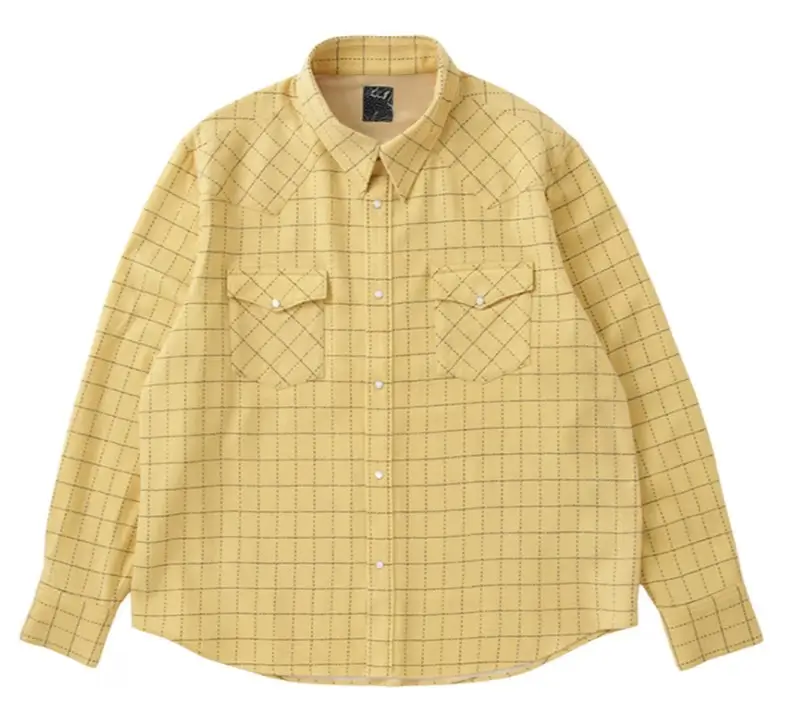
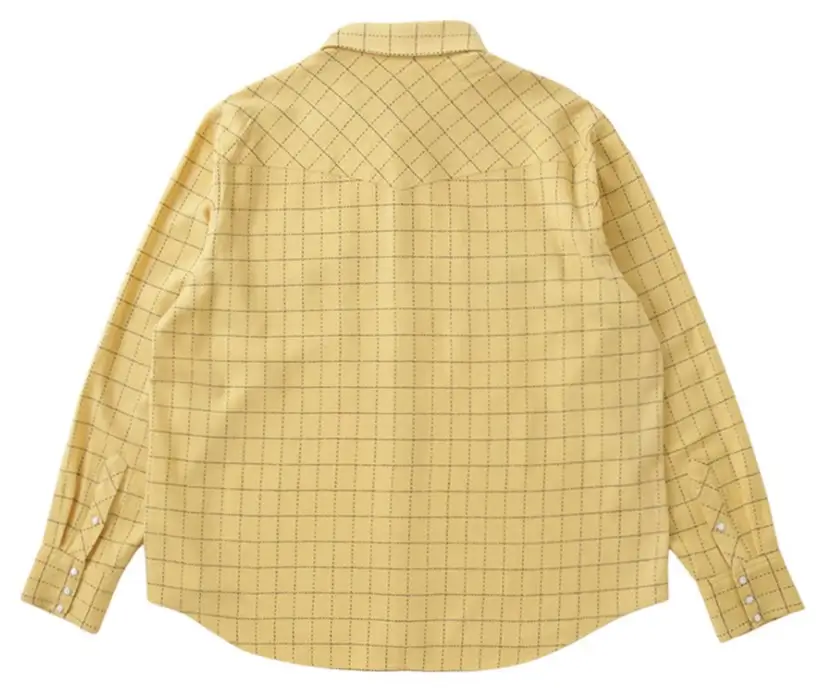
The first impression of the shirt is its distinctive yellow base fabric intersected by a grid of dotted lines, forming a delicate check pattern. Unlike conventional plaid shirts, which often rely on bold intersecting stripes, the FOUR CORNERS CHECK pattern is understated. The dotted lines resemble hand-stitched markings rather than printed graphics, giving the garment an organic rhythm.
This design choice reflects a broader tendency within Japanese heritage fashion: the preference for subtle complexity. The check pattern is not meant to dominate the garment but to reveal itself gradually through texture and distance. From afar, the shirt appears nearly solid in tone. Up close, the dotted grid emerges, adding visual depth.
The soft mustard-yellow base further enhances this effect. Yellow garments can easily appear loud, yet here the hue is muted, leaning toward a natural ochre shade reminiscent of vegetable dyeing traditions. This color choice aligns with ICT’s broader aesthetic language, which frequently references the earthy palette of traditional workwear and vintage outdoor garments.
flow
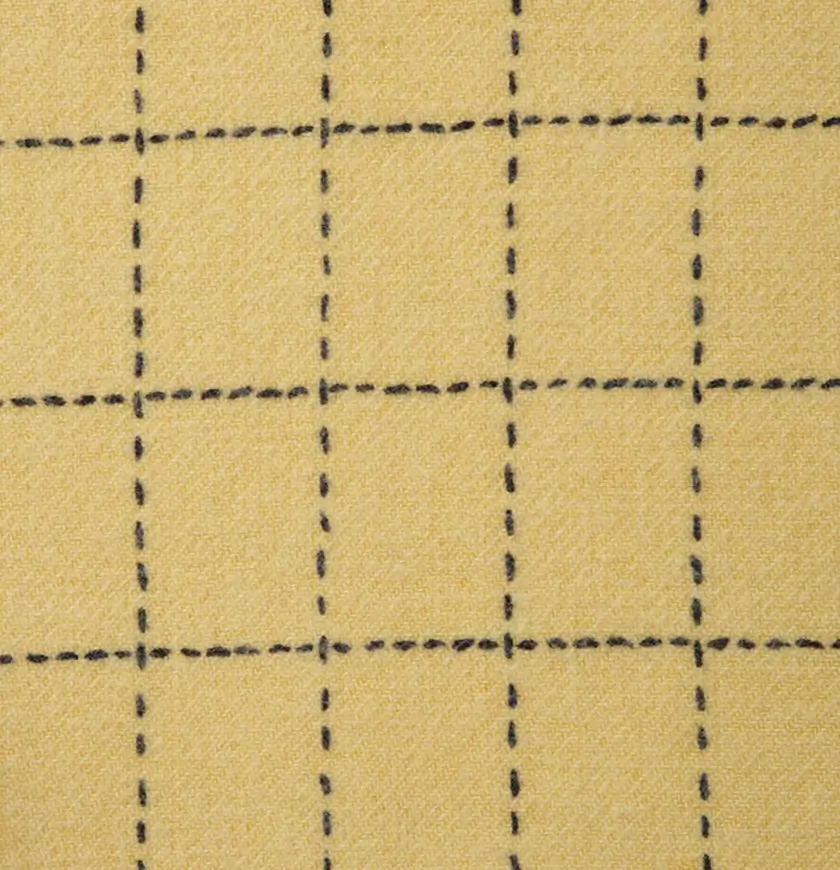
The shirt’s fabric texture plays an essential role in its character. The weave visible in the close-up image suggests a soft twill or brushed cotton, a material that balances durability with comfort. Twill weaves are historically associated with work shirts and utilitarian garments, prized for their resilience and ability to soften over time.
In the context of visvim and ICT, fabric development often involves meticulous experimentation. Even when a textile appears simple, it is usually the result of careful sourcing or custom production. The subtle diagonal structure visible in the weave hints at a fabric designed not merely for appearance but also for aging gracefully.
Over time, garments from the Indigo Camping Trailer project are known to develop a unique patina. Repeated wear and washing gradually soften the fabric and deepen the character of the dye. This process transforms the shirt into a personal artifact rather than a static fashion item.
struct
Looking at the rear view of the garment reveals thoughtful construction details. The back yoke features a diagonal alignment of the check pattern, creating a visual contrast against the straight grid across the body. This subtle shift demonstrates careful pattern placement during manufacturing. Aligning checks across multiple panels requires precision, particularly when the fabric pattern itself contains irregular dotted lines.
The shirt’s silhouette follows a relaxed yet structured cut, typical of visvim’s approach to shirting. It offers enough room for movement while maintaining a clean outline. The curved hem suggests versatility: the garment can be worn tucked in for a more refined appearance or left untucked for a casual aesthetic.
Sleeve cuffs feature multiple buttons, a detail that allows for adjustment and reinforces the workwear heritage of the piece. Such practical features echo the functional garments worn by craftsmen and outdoorsmen, garments designed to adapt to changing conditions.
stir
The name “FOUR CORNERS CHECK” itself invites interpretation. In many traditional textile traditions, geometric grids symbolize balance and structure. The “four corners” may reference the meeting points where horizontal and vertical lines intersect, creating a field of orderly geometry.
In a broader sense, the motif reflects the philosophy of balance within the visvim universe. Nakamura frequently draws inspiration from diverse cultural sources—Native American craft, Japanese dyeing traditions, and American workwear among them. The intersection of these influences forms the conceptual “corners” of his design language.
The grid pattern can thus be seen as a visual metaphor for the convergence of these influences, each line crossing another to create a unified structure.
wear
While rooted in heritage aesthetics, the FOUR CORNERS CHECK L/S is ultimately designed for contemporary wear. Its understated pattern and neutral color palette allow it to integrate easily into a modern wardrobe. Paired with denim, it evokes classic Americana. Combined with tailored trousers, it becomes a refined casual piece.
This adaptability is central to the enduring appeal of visvim and ICT garments. They are not defined by seasonal trends but by longevity. A well-constructed shirt such as this is intended to remain relevant for years, gradually becoming more personal as it ages.
In many ways, the garment reflects a philosophy of slow fashion—the idea that clothing should be thoughtfully designed, responsibly produced, and worn for extended periods rather than replaced each season.
sig
Indigo Camping Trailer’s broader mission extends beyond clothing itself. The project highlights traditional dyeing and textile techniques that might otherwise fade into obscurity. By incorporating these methods into contemporary garments, Nakamura ensures that they remain part of the living craft tradition.
Even when a garment does not feature indigo dyeing specifically, as appears to be the case with the FOUR CORNERS CHECK L/S, the ethos of craftsmanship remains central. The emphasis on natural color tones, textured fabrics, and meticulous construction all stem from this commitment.
In an industry increasingly dominated by rapid production cycles and synthetic materials, such attention to craft carries cultural significance. Each ICT piece becomes a small testament to the value of patience, skill, and historical awareness.
style
Perhaps the most compelling aspect of the FOUR CORNERS CHECK L/S is its restraint. In a fashion landscape often driven by bold logos and dramatic graphics, the shirt speaks in a softer voice. Its beauty lies in subtle details: the dotted grid pattern, the warm yellow tone, the precise alignment of fabric panels.
This quiet design language aligns with the broader philosophy of visvim, which often favors materials and craftsmanship over overt branding. The garments reveal their complexity gradually, rewarding those who take the time to examine them closely.
For enthusiasts of heritage fashion and artisanal clothing, such restraint represents a form of luxury—one defined not by spectacle but by depth.
end
The Indigo Camping Trailer FOUR CORNERS CHECK L/S embodies the values that have defined the visvim project for more than two decades. It merges traditional textile sensibilities with modern tailoring, creating a garment that feels both timeless and contemporary.
Its understated grid pattern reflects careful design thinking, while its fabric and construction hint at the meticulous craftsmanship behind every ICT release. Over time, the shirt will evolve with its wearer, softening and developing character through use.
In this sense, the FOUR CORNERS CHECK L/S is more than a shirt. It is a reminder that clothing can carry stories—of craft traditions, cultural influences, and the quiet artistry of thoughtful design.

No comments yet.