Inside Scottie Pippen’s Chicago Mansion: A Legendary Athlete’s Sanctuary Reimagined for the Cameras of Architectural Digest

December 5, 2025
legacy
Some homes are designed to impress; others are built to tell a story. Scottie Pippen’s Chicago mansion, immortalized through Architectural Digest’s Open Door series, belongs in a category of its own—part personal museum, part modern training facility, part family retreat, all bound together by the quiet confidence of a six-time NBA champion. Situated in the northern suburbs of Chicago, surrounded by manicured grounds and Midwestern stillness, the estate captures a rare synthesis of athletic history and domestic warmth. It reflects not the mythic persona of Pippen the Bulls dynasty co-architect, but the human beneath it—the father, the competitor, the collector, the man who found meaning in designing a home capable of holding the weight of a monumental career.
arrive
Approaching the property, the first impression is its privacy. The driveway curves through mature landscaping that shields the house from the road while revealing only glimpses of the façade: stone accents, generous windows, and a contemporary silhouette softened by earth-toned textures. It is at once stately and unpretentious, composed with the restraint of someone who understands that true haute is quiet.
Inside, the foyer opens into a cascading layout of interconnected spaces defined by clean lines, warm woods, and subtle metallic details. Natural light flows in through expansive glazing, reflecting off polished surfaces and creating a shifting choreography throughout the day. The entrance is unmistakably curated, but never sterile; every corner whispers about life lived rather than design imposed. It is here that visitors begin to understand the architecture not as a showpiece but as an ecosystem, calibrated around comfort, family, and performance.
live
The living room anchors the main floor with its soaring ceilings, pristine white walls, and oversized contemporary furnishings. While the decor leans into minimalism, there is nothing cold about it. Plush sofas in neutral tones soften the space, layered with textured throws and understated patterns that add depth without distraction. The room feels ready for hosting teammates, family gatherings, or reflective evenings by the fireplace.
One of the most striking elements is the selection of art—pieces that speak less to acclaim and more to personality. Subtle nods to basketball appear across the home, not through display-case memorabilia but through tasteful integrations: tonal silhouettes, stylized portraits, and sculptural gestures that interpret motion and discipline. The effect is sophistication without sentimentality, honoring the past through design rather than trophies.
kitchen
In the Open Door tour, Pippen lingers in the kitchen, a space grounded by its functional luxury. Wide countertops, an expansive island, and professional-grade appliances define its purpose: this is a home built for people who gather, eat, laugh, and live in clusters. The palette is a blend of white stone, matte cabinetry, and subtle metallic finishes, achieving an equilibrium between warmth and precision.
The space reveals how deeply lifestyle influenced the mansion’s design. Everything is oriented toward flow—one room connecting naturally to the next, encouraging conversation, movement, and communal ease. It is the opposite of a podium-like celebrity kitchen; instead, it feels like the culinary heart of a home that understands the rhythms of a large family.
den
Throughout the home, secondary lounges and family rooms demonstrate Pippen’s philosophy of quality lived-in design. These rooms feature generous seating, large-screen televisions, and shelves filled with books, photos, and personal artifacts. The scale remains luxurious, but the atmosphere is approachable. There are no untouchable surfaces, no inaccessible corners—only spaces designed to hold real life, from holidays to off-season rest days.
the indoor basketball court
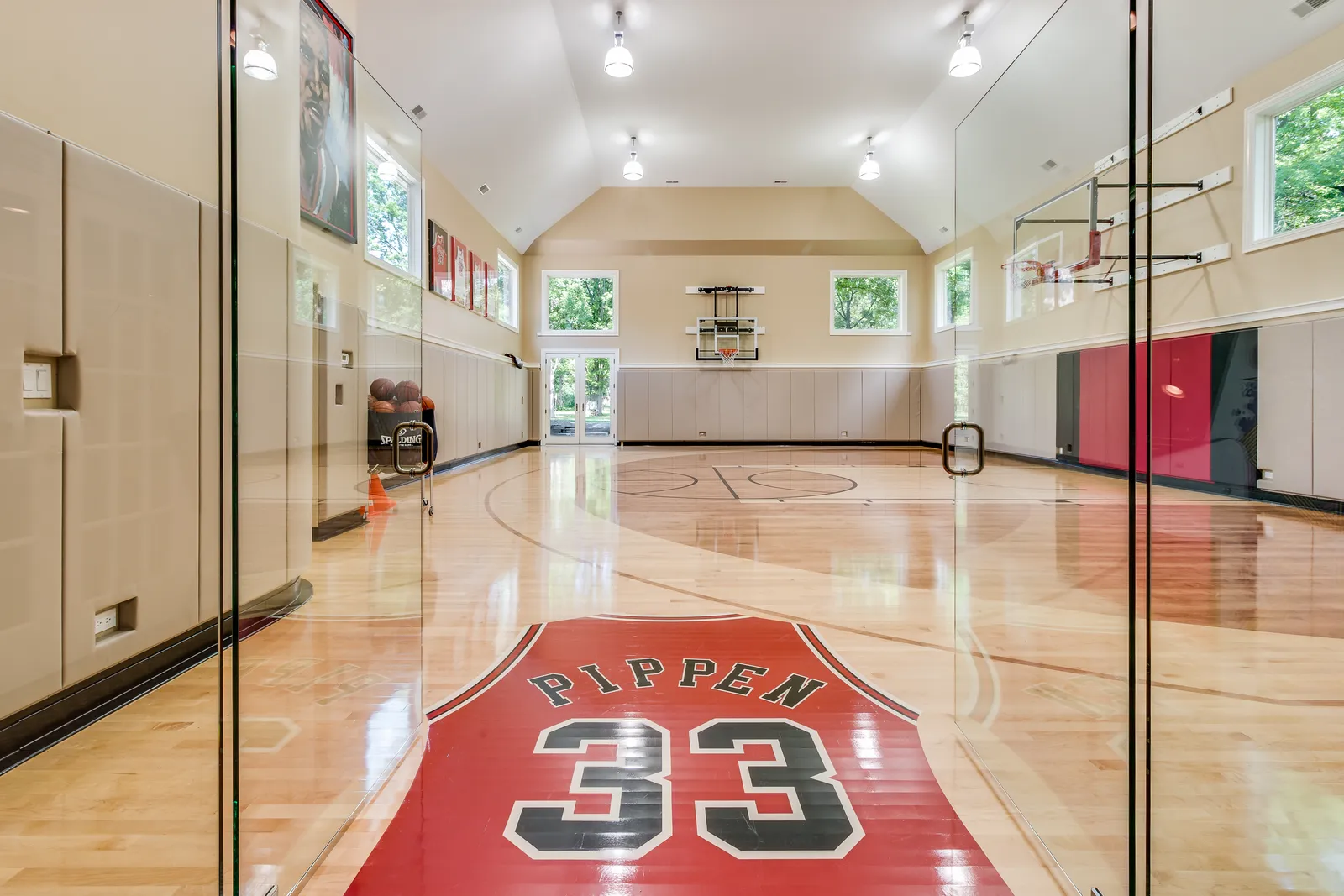
No element has captured public fascination quite like the indoor basketball court. Unlike the decorative courts that appear in many athlete homes, Pippen’s court is a fully functional training facility—regulation size, beautifully finished, echoing with the history of countless practice sessions. The polished hardwood floor shines under directional lighting, while the walls display measured nods to his career without overwhelming the eye.
This room reads not as a vanity project but as a workshop where excellence was shaped. Even now, it maintains a spiritual quality, a reminder that greatness is built in private long before it’s seen by millions. The court becomes the architectural thesis of the home: a space where life and legacy intersect, where the athlete and the individual become inseparable.
personal
Upstairs, the primary bedroom suite expands across a layout that blends calmness with tailored sophistication. The palette shifts to plush neutrals—charcoal grays, muted taupes, soft cream fabrics—creating a cocoon-like retreat. The bed is framed by a sculptural headboard, while floor-to-ceiling windows wash the room in natural light each morning.
Connected spaces—walk-in closets, a serene bathroom with a spa-like soaking tub, and a private lounge—extend the sense of sanctuary. Here, the narrative shifts from public icon to individual. These rooms remind us that even legends seek rest, space, and stillness, and the design accommodates that longing with generosity.
guest
The mansion includes multi-bedroom guest suites, each crafted to feel like boutique hotel quarters rather than spare rooms. Thoughtfully arranged textiles, clean-lined furnishings, and curated lighting create atmospheres that welcome visitors into the home’s aesthetic without ever overshadowing comfort.
Soft palettes define the rooms, and the architecture ensures privacy—an essential consideration in a home that has welcomed countless teammates, relatives, and friends over the years. Hospitality is woven into the structure itself, reflecting the importance Pippen places on connection.
leisure
Beyond the court, the mansion houses an array of amenities that extend the property’s narrative of balance and longevity. The entertainment room, outfitted with theater seating and immersive audiovisual systems, demonstrates how the home embraces moments of ease. The billiards area and wine storage blend function with refined materiality, offering adult-oriented gathering spots anchored in craftsmanship.
A home gym, strategically adjacent to the court, mirrors Pippen’s enduring commitment to health. With machines positioned against mirrored walls and rubber flooring grounding the space, the gym carries the utilitarian DNA of a professional training environment while maintaining residential elegance.
pool
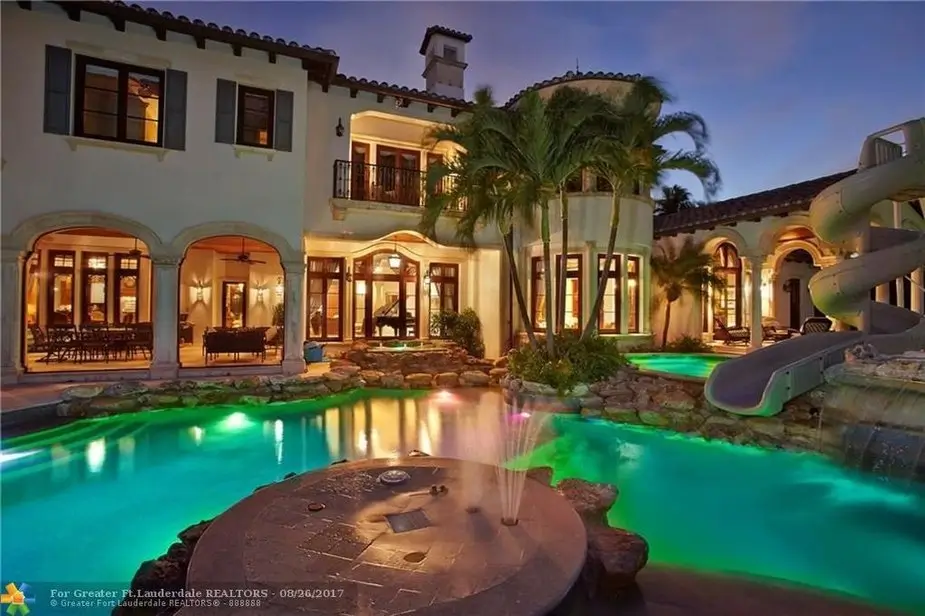
Stepping outside, the backyard becomes an extension of the home’s interior warmth. The pool glistens beneath Chicago’s seasonal sun, bordered by stone patios, manicured hedges, and lounge areas designed for slow afternoons. The design eschews ostentation, opting for clean geometry and organic landscaping that harmonizes with the architecture.
The outdoor kitchen and dining area encourage al fresco living when Midwestern weather allows, turning the yard into a fluid stage for family gatherings and summer celebrations. It is the antidote to the highly controlled training spaces inside—a natural, leisurely environment where structure gives way to spontaneity.
inter
What makes Pippen’s mansion so compelling is its refusal to lean into celebrity cliché. The home is undeniably grand, but its grandeur serves a purpose: to support a life rooted in family, legacy, and personal history. Each room carries the emotional residue of moments lived—birthdays, training sessions, victories, and contemplative mornings.
Architectural Digest’s Open Door often reveals homes that feel more like design galleries than residences. Pippen’s estate resists this trend. It is curated without being staged, luxurious without being showy, iconic without being frozen in time.
gen
The mansion’s most profound achievement lies in how it mirrors the duality of its owner. Pippen’s basketball reputation was built on balance—offense and defense, presence and restraint, boldness and subtlety. His home carries this same equilibrium. The design is muscular yet refined, ambitious yet grounded, confident yet approachable.
Spaces dedicated to peak performance coexist effortlessly with those meant for vulnerability and family life. The architecture respects the many layers of a man who has lived under global spotlight while continually carving out private spaces for reflection.
show
Inside Scottie Pippen’s Chicago mansion, one finds the blueprint of a life defined by excellence, transition, and intentionality. It is a home that remembers where it came from—the courts of Chicago, the championships, the camaraderie—and projects where life continues to go: toward depth, rootedness, and generational presence.
Architectural Digest’s cameras offer only a glimpse, but that glimpse is profound. It reveals not merely a beautiful home, but a living monument to discipline, identity, and evolution. A house where story lines converge: the athlete’s grit, the father’s tenderness, the man’s desire for serenity.
In capturing Pippen’s home, we witness architecture not as decoration but as autobiography—every room a chapter, every detail a confession, every space a reflection of the legend who lives within its walls.