a return
It had, by his own measure, been “a minute.”
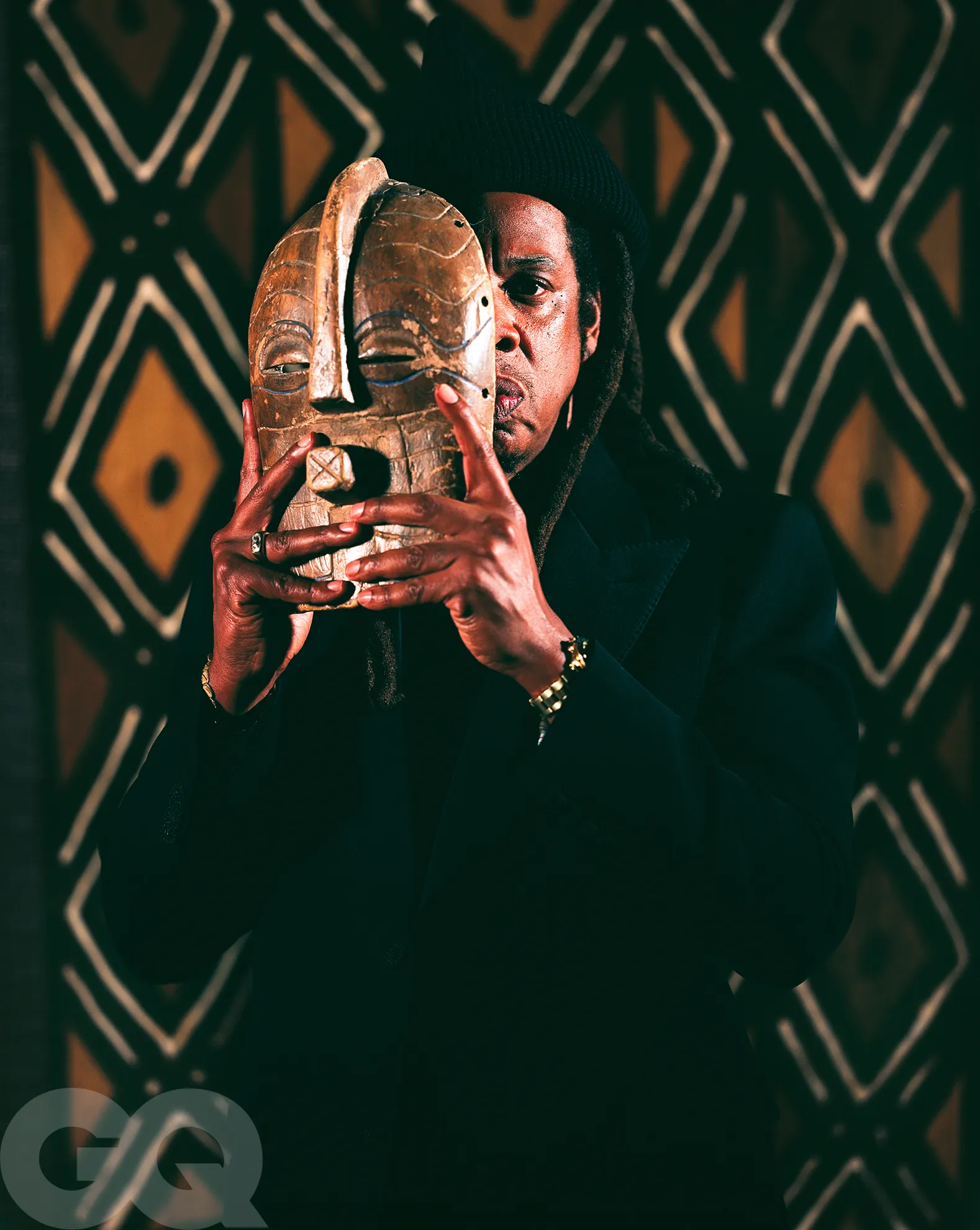
For Jay-Z, the decision to sit for an extended, in-depth interview—his first in years, conducted with GQ—was not framed as a return so much as a recalibration. There was no sense of reintroduction, no attempt to reclaim attention. Instead, the conversation unfolded with the awareness that attention had never meaningfully left him.
That distinction is central to understanding his current position. Jay-Z is not absent in the way public figures are typically absent. He is not out of circulation, nor disengaged. Rather, he operates from a distance that appears quiet but functions with continuity. His presence has shifted from visibility to structure—from what is seen to what persists.
The line he delivered in 2002 during a freestyle on Hot 97—“Even in my absence, my presence is felt”—has become less a reflection of confidence and more a description of method. Two decades later, it reads as a statement about design.
idea
The perception of absence stems largely from conventional expectations. It has been nine years since 4:44, his last solo album, and his musical output since then has been intermittent. A handful of features, a collective presence, and then extended silence. Within the standard logic of the music industry, such gaps suggest retreat.
But Jay-Z’s trajectory has never aligned neatly with those expectations.
His career has gradually detached from the cyclical demands of release culture. Where once output was a primary measure of relevance, he now treats it as one option among many. The absence of frequent releases does not indicate disengagement; it indicates a refusal to operate within a framework that no longer serves his position.
What appears as distance is, in effect, selectivity.
This selectivity is not arbitrary. It reflects a broader shift in how he understands influence. Early in his career, visibility was necessary to establish authority. Continuous output ensured recognition. Over time, that necessity diminished. Authority, once established, does not require constant reaffirmation. It can be maintained through other means—through systems, through associations, through decisions that shape environments rather than simply contribute to them.
In this sense, Jay-Z’s reduced musical presence is less a withdrawal than a redistribution of focus.
struct
The most significant transformation in his career has occurred not within music itself, but around it.
Through ventures such as Roc Nation, Jay-Z has moved from participant to architect. The company functions not merely as a label or management entity, but as a network that connects multiple sectors of culture—music, sports, media, and live events. Its influence is diffuse, extending through the careers it manages and the projects it oversees.
This structural positioning alters the nature of presence.
Instead of appearing directly within cultural output, Jay-Z’s influence is embedded in the conditions that produce it. Artists operate within systems he has helped shape. Events unfold within frameworks he has contributed to building. The result is a form of presence that does not depend on direct participation.
The Super Bowl halftime show offers a clear example. Since Roc Nation assumed a central role in its curation, the event has taken on renewed cultural weight. It is no longer simply a performance; it is a site of interpretation, anticipation, and debate. While Jay-Z does not appear on stage, his influence is evident in the structure of the event itself.
This is not absence. It is a repositioning from foreground to framework.
concern
Another aspect of Jay-Z’s recent public discourse has centered on valuation—specifically, how value is understood and communicated.
In discussing the sale of a stake in D’Ussé, he emphasized the importance of structural clarity. Public reporting had misrepresented the numbers, reducing a complex transaction to simplified figures. His response was not merely corrective; it highlighted a broader issue. Without understanding the structure of a deal, one cannot accurately assess its value.
This insistence on precision reflects a deeper concern with narrative control.
Financial outcomes, when detached from their underlying mechanisms, become abstractions. They can be misinterpreted, minimized, or exaggerated. By articulating the details, Jay-Z asserts control over how those outcomes are understood. He reframes valuation as a process rather than a headline.
This approach aligns with his broader philosophy. Business, for him, is not separate from cultural production. It is a means of shaping the conditions under which culture operates. Ownership, therefore, is not simply about accumulation. It is about influence—about determining how value is created and distributed.
flaw
The interview also addressed a more recent and more personal episode: a civil lawsuit filed against him in late 2024, which was subsequently dismissed with prejudice.
While the legal resolution was clear, the broader impression was less easily contained. Allegations of that nature exist not only within legal frameworks but within public perception. They generate narratives that persist even after formal dismissal.
Jay-Z’s response, as conveyed in the interview, was measured. He did not attempt to overstate or dramatize the situation. Instead, he acknowledged the mental and emotional toll such events can produce, even when one maintains their innocence.
This acknowledgment is significant. It introduces a dimension of vulnerability that is often absent from public discourse at his level of visibility. It also underscores the limits of control. While he has achieved a high degree of influence over his professional narrative, certain aspects of public life remain inherently unpredictable.
The key, in his account, lies in maintaining internal stability—remaining grounded in what is known to be true, rather than reacting to external fluctuations.
view
A recurring theme throughout the conversation is time—specifically, how its perception changes over the course of a long career.
In earlier phases, time is experienced as urgency. Progress is measured in rapid succession: releases, deals, appearances. Momentum is maintained through continuous activity. The present dominates.
In Jay-Z’s current position, time is understood more expansively. Past actions continue to produce effects. Decisions made years ago remain active. This continuity reduces the emphasis on immediacy and increases the importance of durability.
The shift from short-term output to long-term structure reflects this reorientation. It allows for a different pace, one that prioritizes sustainability over speed.
This perspective also informs his approach to legacy.
cont
Rather than viewing legacy as a retrospective evaluation, Jay-Z treats it as an ongoing process. It is not something that begins after a career ends; it is something that develops concurrently with it.
This conception avoids fixation on a singular image or achievement. Instead, it emphasizes adaptability. A legacy that remains relevant must be capable of evolving. It must accommodate new contexts without losing its foundational integrity.
In practical terms, this means that Jay-Z does not seek to preserve a fixed version of himself. He allows for transformation, both in his own role and in how his work is interpreted. His early music continues to resonate, but it does so within a broader framework that includes his business ventures and cultural influence.
Legacy, in this sense, is less about preservation than about continuation.
discip
One of the more subtle but significant aspects of his current approach is restraint.
In a media environment that rewards constant visibility, choosing not to appear carries its own implications. It requires confidence in the strength of existing structures. It also requires an understanding that overexposure can diminish impact.
Jay-Z’s limited public appearances and infrequent musical releases reflect this discipline. Each instance of visibility is deliberate. It is positioned to carry weight precisely because it is not constant.
This approach contrasts with earlier stages of his career, where frequent output was necessary. The shift indicates a maturation of strategy—a recognition that influence can be maintained, and even enhanced, through selective engagement.
fwd
When the subject of new music arises, the response remains open but noncommittal.
There is no declaration of retirement, nor any indication of an imminent release. Instead, the emphasis is on intention. Any future work would need to emerge from a place of genuine necessity rather than obligation.
This stance reinforces the broader pattern. Jay-Z no longer operates according to external timelines. His engagement with music is guided by internal criteria—by whether a contribution feels meaningful within his current context.
sum
By the conclusion of the interview, a consistent picture emerges.
Jay-Z’s current position cannot be accurately described using traditional categories of presence and absence. He is neither fully visible nor truly removed. Instead, he occupies a distributed form of presence, one that operates through systems, decisions, and long-term structures.
His influence is evident not in constant output, but in the conditions that shape output across the industry. His voice is heard not through frequency, but through impact.
The 2002 line remains relevant not because it predicted fame, but because it articulated a principle. Presence, at its highest level, does not require proximity. It requires durability.
In that sense, the “minute” he refers to is not a lapse. It is a span of time during which his presence has continued—quietly, persistently, and, by his own design, without interruption.