Review: Jason S. Wright’s Practice Across Urban

March 25, 2026
Jason S. Wright operates within a space where disciplines are not simply adjacent but actively intertwined. Based in Los Angeles, his studio functions less as a singular production site and more as a fluid system—one that allows photography, video, and design to coexist without hierarchy. The output is not segmented into categories; rather, it forms a continuum of visual thinking, where each medium informs the next.
Wright’s work resists the traditional boundaries that often separate fine art from commercial design. Instead, he approaches both with a unified sensibility—one that privileges materiality, composition, and temporal awareness. The result is a body of work that feels simultaneously precise and open-ended, grounded yet speculative. His studio is not defined by what it produces, but by how it produces: through a sustained engagement with image-making as a conceptual and tactile process.
stir
The studio of Jason S. Wright is best understood as an evolving framework. It is not merely a physical environment, but a methodology—one that allows for iteration, reconfiguration, and cross-pollination between formats. Photography might begin as documentation but quickly transforms into abstraction; video becomes less about narrative and more about duration; design emerges as both object and extension of thought.
This approach reflects a broader shift within contemporary practice, where the distinctions between disciplines have become increasingly porous. Wright’s work embodies this condition, but it does so with a particular clarity. There is a restraint in his compositions, a deliberate economy of elements that suggests a deep consideration of what is necessary—and what can be omitted.
Objects produced within the studio often carry a dual identity. A printed photograph may function as both artwork and design artifact. A video piece might exist as an installation or as a digital fragment. Even utilitarian objects—books, garments, or functional items—are treated as vehicles for visual language rather than mere products.
flow
Photography remains a central axis within Wright’s practice, though it is rarely treated in conventional terms. His images are not concerned with capturing moments in a documentary sense; instead, they operate as constructed environments. Light, surface, and framing become the primary subjects.
There is a notable emphasis on texture—on the way materials absorb or reflect light. Surfaces are often stripped of context, allowing them to exist as abstract fields. This reduction does not diminish meaning; rather, it intensifies it. By removing extraneous information, Wright directs attention to the fundamental elements of image-making.
In many cases, the photographic work serves as a foundation for other outputs. Images are recontextualized across formats, appearing in video sequences, printed matter, or design objects. This repetition is not redundant; it is generative. Each iteration reveals a different aspect of the original image, expanding its possibilities.
idea
Where photography isolates, video extends. Wright’s moving-image work introduces duration as a key component, allowing viewers to engage with time as a material. His videos often avoid traditional narrative structures, opting instead for loops, fragments, or slow evolutions.
This approach aligns with a broader interest in perception—how images are experienced rather than simply viewed. By elongating moments or repeating sequences, Wright creates a space for contemplation. The viewer is not guided through a story but invited to inhabit a temporal field.
Sound, when present, is treated with the same level of precision as the visual elements. It is not used to underscore emotion but to create atmosphere, often functioning as an extension of the image itself. Silence, too, plays a significant role, reinforcing the sense of restraint that defines the work.
style
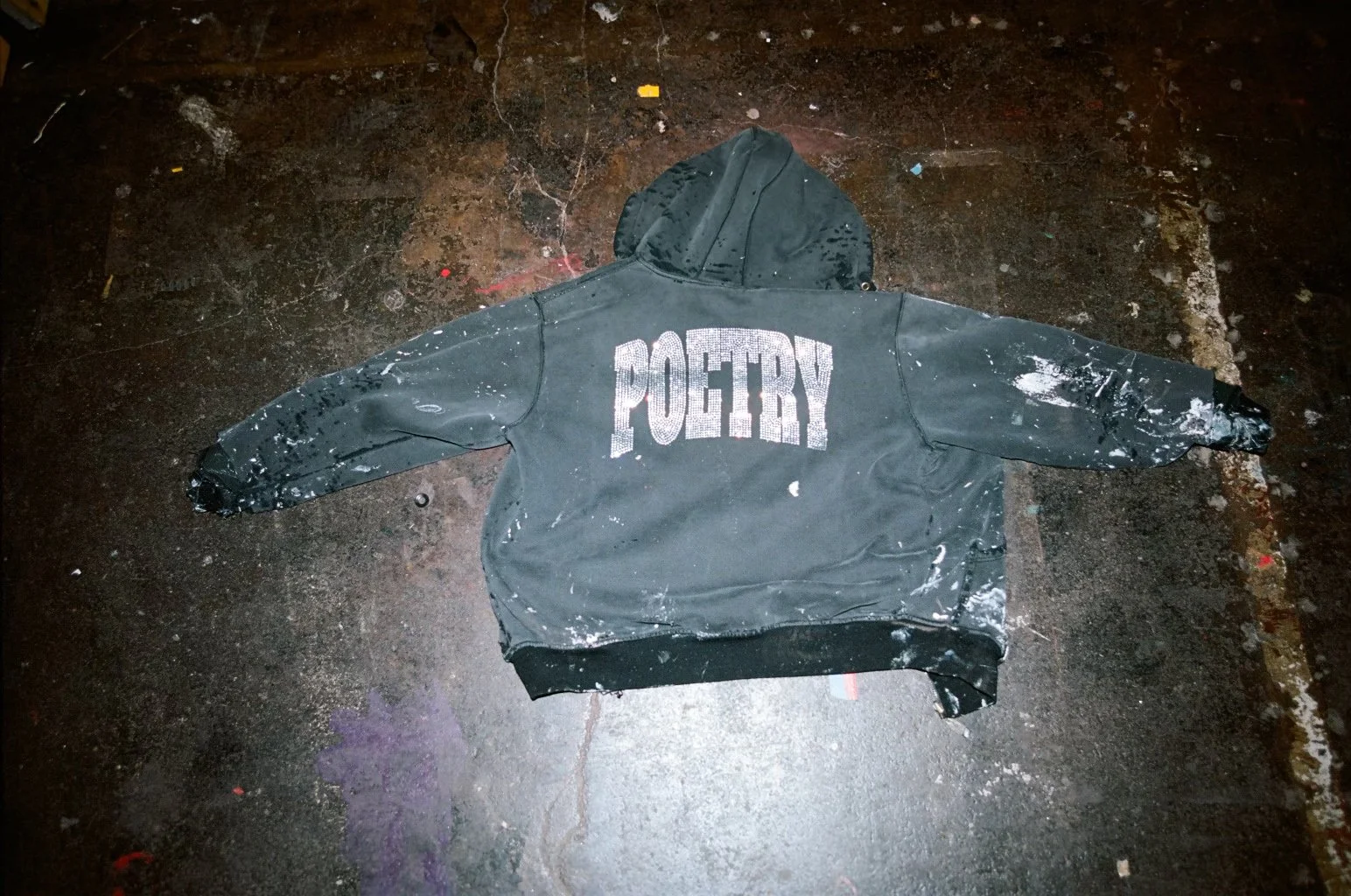
Design within Wright’s studio is not secondary to his artistic practice; it is integral to it. Products emerging from the studio—whether printed materials, objects, or wearable items—are conceived with the same conceptual rigor as his photographs and videos.
This integration reflects a broader reconsideration of what design can be. Rather than serving purely functional or commercial purposes, design becomes a medium for exploration. It allows Wright to translate his visual language into forms that can be interacted with, used, or collected.
The aesthetics of these objects are consistent with his overall practice: minimal, deliberate, and materially focused. There is an emphasis on quality—on the tactile experience of holding an object, on the way it ages over time. This attention to detail suggests a commitment to longevity, both in physical and conceptual terms.
atelier
Wright’s work does not explicitly depict the city, but its influence is nonetheless present. The quality of light, the architectural textures, and the sense of openness all find their way into his compositions. There is a certain quietness to his images that mirrors the more introspective aspects of Los Angeles—those that exist beyond its more visible cultural narratives.
At the same time, the city’s proximity to industries such as film and fashion creates opportunities for dialogue between art and commerce. Wright navigates this terrain with a degree of subtlety, maintaining the integrity of his practice while engaging with broader cultural systems.
pro
A defining characteristic of Wright’s work is its attention to material. Whether working with photographic prints, video formats, or physical objects, he considers not only how something looks, but how it exists in space.
This focus extends to the processes used to create the work. There is a willingness to experiment—to allow materials to behave in unexpected ways. Imperfections are not necessarily corrected; they are often incorporated, becoming part of the final composition.
Such an approach reflects a broader interest in the relationship between control and chance. While Wright’s work is highly considered, it is not overly rigid. There is room for variation, for subtle shifts that occur during the process of making.
thetry
In Wright’s studio, objects are never neutral. Each item—whether a photograph, a book, or a piece of clothing—functions as a carrier of meaning. This does not mean that the work is overly symbolic or didactic; rather, it suggests that meaning emerges through interaction.
A printed image, for instance, gains significance through its scale, its surface, and its context. A designed object acquires meaning through use, through the way it is handled and experienced over time. Wright’s work encourages a form of engagement that goes beyond visual consumption.
This emphasis on objects aligns with a broader shift in contemporary practice, where the boundaries between art and design are increasingly blurred. By treating products as extensions of his artistic language, Wright challenges traditional hierarchies and opens up new possibilities for how work can be experienced.
show
Another important aspect of Wright’s practice is how his work is distributed. Rather than limiting his output to gallery contexts, he often produces items that can circulate more widely. This does not dilute the work; instead, it expands its reach.
Books, prints, and other objects allow his visual language to exist in multiple environments. They can be collected, shared, or integrated into everyday life. This approach reflects a broader interest in accessibility—not in the sense of mass production, but in creating points of entry for different audiences.
At the same time, there is a careful balance between availability and exclusivity. Limited runs, controlled distribution, and attention to detail ensure that each object retains a sense of value. This balance is central to the identity of the studio.
lang
Despite the diversity of mediums, Wright’s work is remarkably cohesive. There is a consistent sensibility that runs through everything he produces—a focus on form, light, and material that ties the work together.
This cohesion is not the result of repetition, but of a clearly defined approach to image-making. Each project builds on the previous one, creating a body of work that feels both unified and dynamic. The studio becomes a space where ideas can evolve over time, rather than being confined to individual projects.
discip
Jason S. Wright’s work points toward a future in which the distinctions between disciplines continue to dissolve. His practice demonstrates that it is possible to move fluidly between photography, video, and design without losing coherence.
This hybrid approach reflects broader changes within contemporary culture, where boundaries are increasingly fluid and interdisciplinary thinking is valued. Wright’s studio operates at the forefront of this shift, offering a model for how artists can engage with multiple mediums in a meaningful way.
Rather than positioning himself within a single category, Wright embraces complexity. His work resists easy classification, inviting viewers to engage with it on multiple levels. It is this openness—combined with a rigorous attention to detail—that defines his practice.
fin
The work of Jason S. Wright is best understood not as a collection of discrete outputs, but as a continuous process. Photography, video, and design are not endpoints but stages within an ongoing exploration of image and form.
From his base in Los Angeles, Wright has developed a practice that is both deeply personal and broadly resonant. His studio functions as a site of inquiry, where materials, processes, and ideas are constantly in dialogue.
In an era defined by rapid production and constant change, his work offers a different rhythm—one that values precision, reflection, and longevity. It is a practice that does not seek to dominate attention, but to sustain it, inviting viewers to look closer, and to look longer.