Jay Kelley Review: Noah Baumbach’s Hollywood Drama Follows a Fading Actor Facing His Own Reflection

December 7, 2025
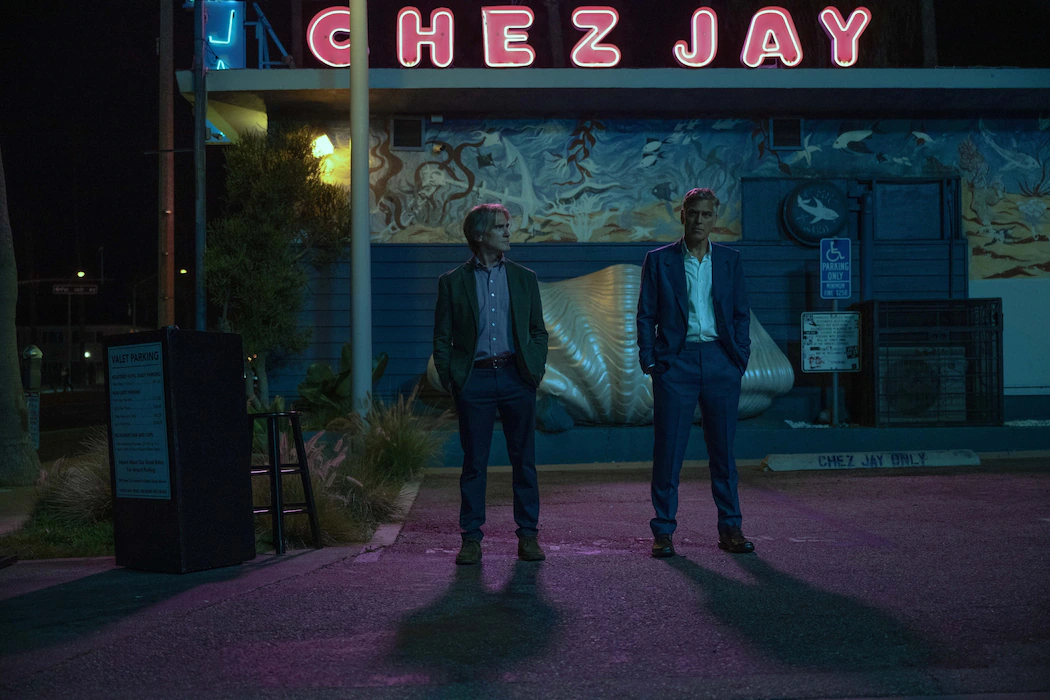
When Noah Baumbach turns his camera toward Hollywood, he inevitably brings a scalpel. His films have always been preoccupied with the tension between who people are and who they believe themselves to be, but Jay Kelly marks the first time he approaches that tension through the architecture of fame itself. The result is a sharp, hallucinatory drama about the fragility of self-image, anchored by one of George Clooney’s most quietly devastating performances.
In conversation with Nick Chen, Baumbach describes Jay Kelly not as a Hollywood satire but as a “fever dream about recognition”—what it means to be seen, mis-seen, or no longer seen at all. Shot in Los Angeles and designed with a dreamy, slightly warped sheen, the film follows Clooney as a fading actor whose legacy begins to distort in real time. Rumors circulate, roles slip away, and former collaborators rewrite the mythology of who he once was. Baumbach uses this instability as both narrative engine and philosophical inquiry: what remains of a person when the image everyone consumes is no longer accurate, or no longer flattering?
a fade
George Clooney’s casting is central to the film’s impact. Baumbach understands the meta-currency of a global icon playing someone terrified of becoming irrelevant. Clooney’s character—also named Jay Kelly—is introduced at a moment of career stasis: too famous to disappear, too unstable to evolve. His public image has calcified into something he no longer recognizes. He is caught between the man he is, the myth others insist on projecting, and the ghost of who he once hoped to be.
In the film’s opening act, Kelly begins experiencing strange distortions in everyday life. Fans insist he starred in movies he never made. A streaming algorithm autoplays a documentary about him that he doesn’t remember participating in. Posters from his early career appear altered—his expression darker, his body posture unfamiliar. Whether these shifts are real or hallucinated becomes the film’s central ambiguity, and Baumbach embraces that uncertainty with relish.
Clooney’s performance grounds the surreal elements in vulnerability. His Jay Kelly is both charismatic and brittle, a man whose charm has become a mask he can no longer comfortably wear. His struggle is not with fame’s decline but with the eerie experience of watching fame take on a life of its own.
style
If Marriage Story was sharply naturalistic, Jay Kelly is intentionally warped. Here, Los Angeles is rendered as a mirage—the palm trees a little too still, the sunlight a little too hazy, the parties full of people who speak as though reading from prewritten scripts about themselves. The film leans heavily into long takes, mirrors, and architectural reflections, building a visual landscape that reinforces Kelly’s disorientation.
Baumbach, known for his grounded dialogue and character-driven realism, surprises by incorporating elements of the uncanny. Scenes shift between timelines without warning. Extras repeat lines. A publicist played by Greta Gerwig appears in two different places wearing the same outfit on the same day, with no one acknowledging the contradiction. These touches create a dream logic that suits a story about a man trapped inside an image machine that no longer follows the rules.
Jay’s inner unraveling is depicted through Baumbach’s willingness to let the world around him flicker. At one point Jay walks into a restaurant where multiple versions of himself appear on the walls: early headshots, mid-career tabloid covers, promotional stills. Some images are subtly wrong—his hair parted on the opposite side, his gaze slightly off. It’s as though the world is gaslighting him through his own archive.
stir
While Clooney carries the emotional spine of the film, Jay Kelly surrounds him with a cast that functions like a Greek chorus of fame. Adam Driver appears as a director obsessed with resurrecting Kelly’s career for his own artistic redemption. Laura Dern plays an acting coach who builds an entire curriculum around Kelly’s “misunderstood genius.” Saoirse Ronan, in one of the film’s sharpest storylines, plays an up-and-coming actress whose career mirrors Kelly’s early rise but at triple the speed.
Each character presents a different angle on what fame means right now: currency, burden, delusion, opportunity. Together they form a mosaic of an industry constantly reinterpreting its stars, often without their consent. In Baumbach’s hands, the ensemble becomes less a collection of supporting roles and more a constellation—each shining brightly, each throwing reflections onto Kelly that he struggles to reconcile.
Supporting appearances by Don Cheadle, Maya Hawke, and an unexpectedly biting cameo from Willem Dafoe add texture to the film’s world. These actors don’t merely decorate the frame; they embody a Hollywood ecosystem that feeds on memory and reinvention, often with little regard for truth.
idea
It would be easy to describe Jay Kelly as a critique of celebrity culture, but Baumbach reaches for something more intimate: the existential discomfort of being misunderstood. Fame amplifies that discomfort, but it does not create it. Jay’s crisis is less about the loss of relevance and more about the terror of being misread by the world, of losing authorship over his own story.
The film’s most powerful sequences occur not in studios or red carpets but in private, mundane spaces. A late-night conversation between Jay and his former co-star (played with tender exhaustion by Julianne Moore) exposes a shared worry: that their best selves might be fictional versions crafted for public consumption, and that the real versions might be disappointingly small. Baumbach uses these moments to anchor the film’s surrealism in emotional truth.
fwd
Speaking to Nick Chen, Baumbach frames Jay Kelly as a continuation of his long-standing interest in identity, but filtered through a new, heightened lens. He describes wanting to capture “the confusion of being recognized and not recognized at the same time.” It’s a distinctly modern dilemma—one accelerated by social media, algorithmic memory, and the fragmentation of public narratives.
Baumbach’s interpretation of Hollywood isn’t cruel, but it is unflinching. It is a place where fame is both mirror and mirage, and where one’s self-image can be revised by the collective imagination overnight. In that sense, Jay Kelly is not merely a story about a fading star. It is a story about anyone who has ever felt misrepresented by the world and unsure how to reclaim their reflection.
impression
In its final act, Jay Kelly shifts from psychological thriller to melancholy fable. Whether the distortions haunting Jay are real or imagined becomes secondary to watching him confront the unsettling truth that he can’t fully control his own myth. The ending, quiet and ambiguous, suggests acceptance—not of obscurity but of complexity.
Baumbach has crafted one of his most stylistically daring films, and Clooney delivers one of his most vulnerable performances. Together they transform Jay Kelly into a film less about fame’s spectacle and more about the fragile architecture of identity.
It is a story that lingers—like a face seen in a reflection that you’re not entirely sure belonged to you.