JAŸ-Z Returns to the Stage — Philadelphia Becomes the Center of Focus

March 17, 2026
Philadelphia, it’s time.
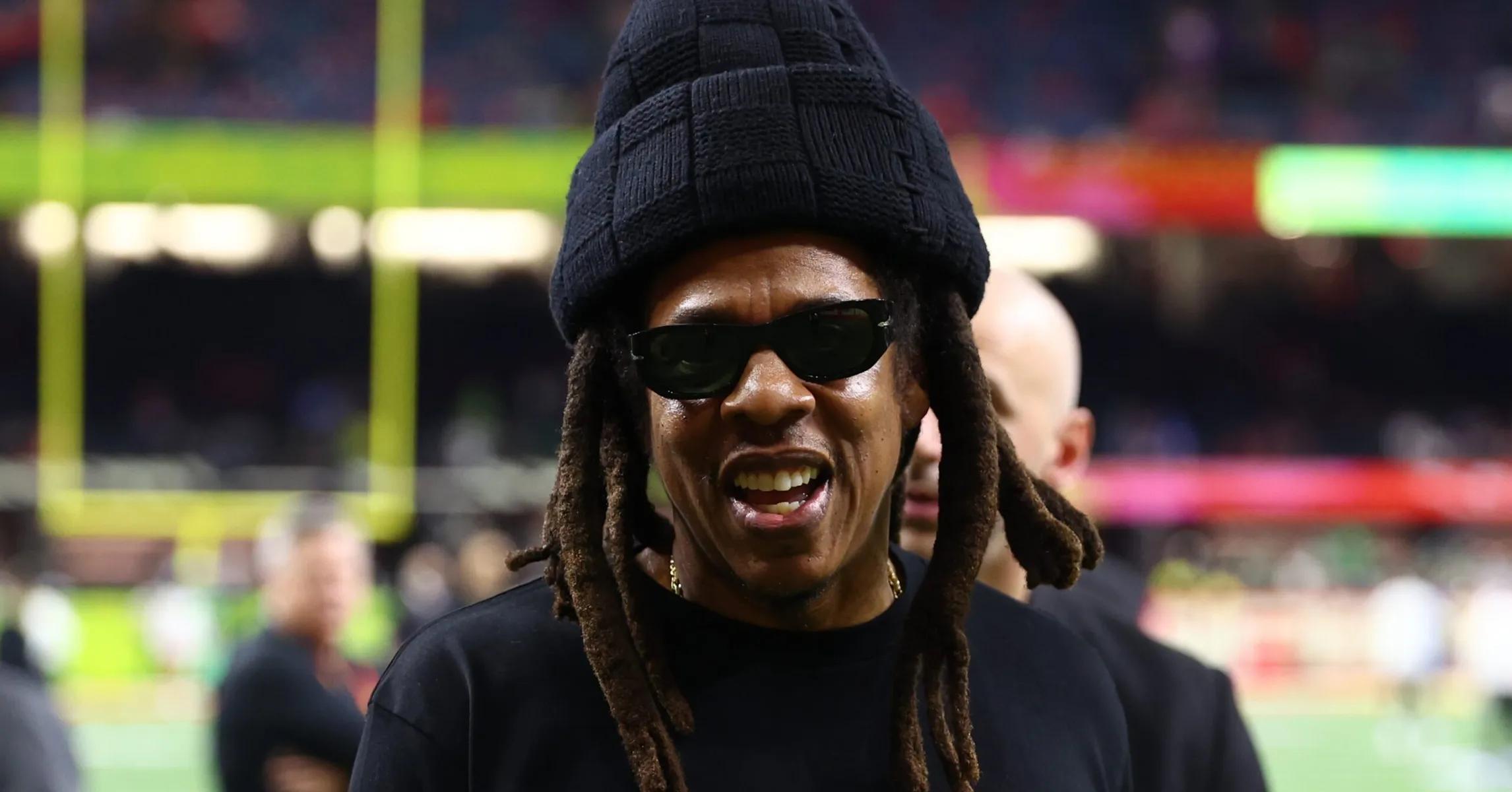
On May 30, 2026, the Roots Picnic reaches a new peak as Jay-Z takes the headlining stage—a moment that feels less like an announcement and more like a cultural inevitability finally realized.
Because this isn’t simply about one of hip-hop’s most iconic figures performing at one of its most respected festivals. It’s about convergence. Legacy meeting curation. Precision meeting place. A city with one of the deepest musical histories in America hosting an artist whose catalog helped define modern music itself.
The Roots Picnic has always been a thinking person’s festival—one that moves with intention rather than noise. And Jay-Z, at this stage of his career, is a thinking artist. Reserved. Selective. Strategic.
This headline doesn’t shout.
It resonates.
View this post on Instagram
the roots picnic: philadelphia’s living archive
Curated by The Roots—arguably the most musically versatile hip-hop group ever assembled—the festival has evolved from a local gathering into a national cultural checkpoint. It is not built on excess. It is built on taste.
For years, the Picnic has balanced eras and genres with rare discipline. Neo-soul pioneers share space with contemporary rap disruptors. Legacy acts coexist with emerging voices. And throughout it all, there is a throughline: musicianship.
Held in Philadelphia, often anchored by the Mann Center for the Performing Arts, the festival carries an atmosphere that feels closer to a curated experience than a chaotic lineup.
Where other festivals lean into spectacle, the Roots Picnic leans into substance.
Where others chase attention, this one commands respect.
Bringing Jay-Z into that environment isn’t about scaling up—it’s about sharpening focus.
flow
Jay-Z in 2026 is not the artist he was in 2003. Or 2013. Or even 2017.
He no longer operates within the traditional cycles of music promotion. Albums arrive rarely. Tours even more so. Public appearances are deliberate, almost architectural in how they are placed.
Through ventures like Roc Nation, his role has expanded far beyond performance. He is an executive, a strategist, a cultural investor. Music remains central—but it is no longer the only axis.
And that’s precisely why this performance matters.
loc
Philadelphia is not a passive host.
It is an active participant in this moment.
Few cities in America carry such a deep, layered musical identity. From soul to hip-hop to jazz, Philadelphia has produced artists who value lyricism, structure, and emotional clarity.
Figures like Black Thought and Jill Scott represent a lineage rooted in articulation and discipline. Even newer voices like Meek Mill carry that DNA forward—balancing raw expression with narrative focus.
Jay-Z’s work has always thrived in cities that listen closely.
Philadelphia listens closely.
This performance, then, becomes a dialogue rather than a display. A shared language between artist and audience—one built on nuance, reference, and recognition.
stir
To approach a Jay-Z set in 2026 is to engage with one of the most complete catalogs in modern music.
From Reasonable Doubt (1996) to 4:44 (2017), his discography charts not just the evolution of an artist, but the evolution of hip-hop itself.
Early work captures the tension of ambition and survival. Mid-career projects reflect dominance and expansion. Later albums lean into introspection, legacy, and accountability.
What makes this catalog unique is its adaptability.
Songs that once functioned as declarations now operate as reflections. Lines that once read as bravado now reveal subtext. The music changes as the listener changes.
At the Roots Picnic, this dynamic becomes communal.
An audience spanning generations engages with the same material from different vantage points. Some remember its release. Others are discovering its depth in real time.
This is what transforms a performance into something more than entertainment.
It becomes interpretation.
show
Speculation around a Jay-Z setlist is inevitable.
Will he lean into hits? Will he prioritize deep cuts? Will he structure the performance chronologically or thematically?
Recent appearances suggest a shift toward narrative cohesion.
Rather than simply delivering a sequence of popular tracks, Jay-Z has begun constructing sets that feel like essays—moving through themes of ambition, identity, success, and reflection.
At a festival like the Roots Picnic, that approach feels not only appropriate, but necessary.
This is an audience that rewards structure.
Expect transitions that carry meaning. Expect pacing that builds rather than spikes. Expect moments of restraint that allow certain songs to breathe.
And perhaps most importantly, expect the unexpected.
Because Jay-Z’s most compelling performances often come from deviation—those moments where the script bends and something unplanned emerges.
influ
One of the defining elements of the Roots Picnic is the presence of Questlove and The Roots as both hosts and musical anchors.
Their approach to live performance is fundamentally different from most bands.
They do not replicate recordings.
They reinterpret them.
Through subtle shifts in rhythm, instrumentation, and arrangement, they transform familiar songs into new experiences. A track can stretch, compress, or evolve entirely depending on the moment.
In the context of a Jay-Z performance, this opens up extraordinary possibilities.
Songs like “Dead Presidents” could lean deeper into their jazz foundations. “Public Service Announcement” could be stripped down to its rhythmic core. “Story of O.J.” could expand into something closer to a live suite.
This is where the Roots Picnic distinguishes itself from other festivals.
It allows music to be alive.
And Jay-Z, with his deep understanding of structure and flow, is uniquely equipped to operate within that space.
gen
The audience at the Roots Picnic represents a rare convergence.
There are listeners who grew up with Jay-Z’s earliest work—who experienced albums like The Blueprint as cultural events. There are younger fans who understand his impact through influence, reputation, and selective exposure.
And there is a middle ground—listeners who bridge both worlds.
This creates a unique dynamic.
A single performance must resonate across multiple timelines. It must satisfy nostalgia without relying on it. It must introduce depth without alienating familiarity.
Few artists can manage that balance.
Jay-Z can.
Because his catalog is layered. Because his presence carries authority. Because his delivery—measured, controlled, intentional—translates across contexts.