Joe Kay: Fifteen Years of Soulection and the Art of Collective Sound

April 10, 2026
21 hours ago

Soulection operates within a recognizable aesthetic—but one that avoids rigidity. There’s a consistency in tone: warm palettes, minimal graphics, an emphasis on mood over excess.
Yet it doesn’t lock itself into a single visual or sonic identity. The flexibility is intentional. It allows the collective to evolve without appearing to pivot.
That balance—coherence without constraint—is difficult to maintain. Soulection achieves it by prioritizing feeling over form. The aesthetic follows the music, not the other way around.
stir
Anniversaries often imply closure, a moment to summarize. Soulection resists that framing.
The 15-year mark doesn’t function as a conclusion. It reads more like a midpoint—a recognition of distance traveled, paired with an understanding that the trajectory is ongoing.
Joe Kay’s reflections on the journey tend to circle back to the same idea: growth without compromise. Not in the sense of refusing change, but in maintaining the core principles that defined the beginning—curation, community, and connection.
As the tour continues, each city becomes part of the archive. Not as documentation, but as lived experience—moments that reinforce why the movement endures.
idea
In 2026, the landscape that Soulection helped shape looks different. Genre boundaries have blurred across the industry. Global sounds circulate more freely. Independent artists have more tools at their disposal.
In some ways, the environment has caught up to the vision Soulection introduced years ago.
But the collective’s relevance doesn’t come from being first. It comes from consistency—from maintaining a point of view as the world shifts around it.
Soulection represents a way of engaging with music that prioritizes depth over immediacy. It asks listeners to stay a little longer, to hear the transitions, to feel the spaces between tracks.
That approach isn’t always the loudest. But it endures.
flow
Fifteen years on, Soulection isn’t defined by its past releases or even its current tour. It’s defined by its ability to continue—quietly, steadily—building connections across distances.
Joe Kay remains at the center, not as a singular figure, but as a facilitator of something larger than himself.
The movement doesn’t declare itself. It reveals itself over time—through mixes, through shows, through the way people carry the sound into their own lives.
And that might be the most accurate measure of its success: not how big it became, but how deeply it embedded itself into the people who found it.
There are collectives, and then there are systems of feeling. What Joe Kay built with Soulection over the past fifteen years sits somewhere between both—less a label in the traditional sense, more a frequency that people learn to tune into over time. The anniversary tour doesn’t read like a retrospective. It moves like a continuation, a signal still expanding outward.
Fifteen years in, the story isn’t about survival. It’s about translation—how a local sound from Southern California became a global language without losing its intimacy.
View this post on Instagram
new
Soulection didn’t arrive with infrastructure. There was no immediate co-sign, no industry-backed rollout. Instead, it grew out of instinct—Joe Kay’s early radio shows, his curation of emerging artists, and a belief that music could operate as a connective tissue rather than a product.
Before playlists became algorithmic battlegrounds, Soulection functioned as a filter. It introduced listeners to artists they hadn’t heard yet, sounds they couldn’t quite categorize. The early years weren’t defined by scale but by trust. Listeners came back not for hits, but for perspective.
That distinction matters now more than ever. In an era where access is infinite, curation becomes identity.
evolve
The evolution of Soulection is inseparable from its radio presence. Shows on platforms like Apple Music—particularly the long-running Soulection Radio—transformed what could have been a niche broadcast into a global ritual.
Listeners didn’t just consume episodes; they built routines around them. The weekly drop became a timestamp, a shared moment across time zones. Whether you were in Los Angeles, London, or Lagos, the experience aligned.
Joe Kay understood something early: radio isn’t outdated—it’s misunderstood. In Soulection’s hands, it became less about transmission and more about atmosphere. Each set flowed like a narrative, moving between genres without friction. R&B dissolved into electronic textures, hip-hop blended into global rhythms. The absence of rigid categorization wasn’t accidental—it was foundational.
rarity
Soulection’s roster and extended network reflect a deliberate resistance to geographic limitation. Artists from across continents found a home within its orbit, not because they fit a mold, but because they shared a sensibility.
Names emerged, circulated, and evolved within the ecosystem. Some stayed closely tied to the collective, others moved outward into their own trajectories. But the connective thread remained: a certain emotional clarity, a shared understanding of groove, space, and restraint.
Joe Kay often speaks less about ownership and more about amplification. The goal was never to contain artists, but to provide a platform where they could be heard—clearly, and on their own terms.
That philosophy shaped the community as much as the music. Fans didn’t just follow Soulection; they identified with it.
straddle
What begins online doesn’t always translate offline. Soulection is one of the rare cases where it did—and then expanded.
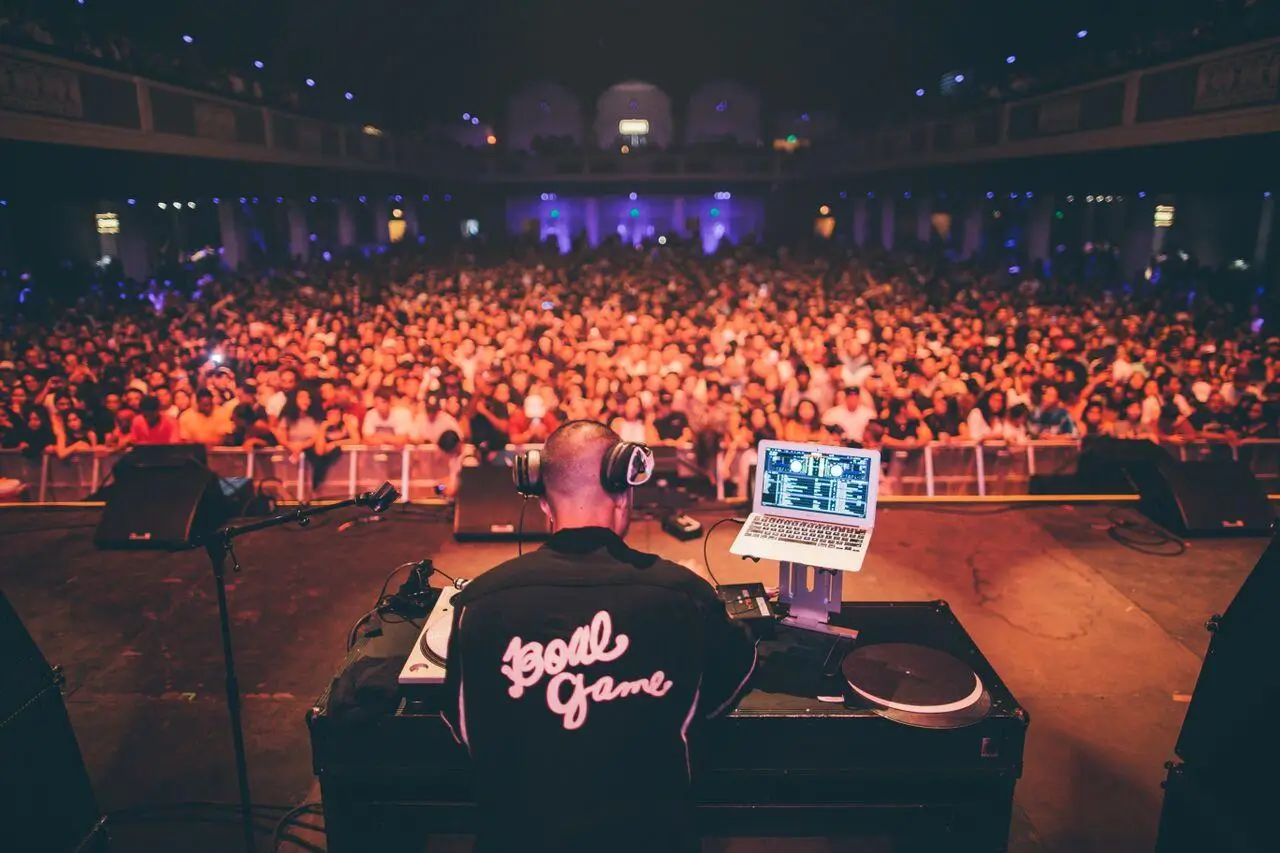
Live shows became proof of concept. The energy that existed in mixes and streams carried into physical space without dilution. Crowds weren’t passive; they were participatory, already familiar with the sonic language being played.
The 15th anniversary tour builds on that foundation. It’s less about revisiting milestones and more about reaffirming presence. Each stop acts as both celebration and checkpoint, mapping where the movement has reached.
From intimate venues to larger festival stages, the dynamic remains consistent: a shared rhythm between artist and audience that feels less like performance and more like exchange.
commune
At its center, Soulection is sustained by community—not as a marketing term, but as an operational truth.
The listeners who discovered early episodes are still present, now joined by newer audiences who encountered the collective through different entry points—streaming platforms, social media, live events. The layers don’t replace each other; they stack.
Joe Kay’s role within this structure isn’t static. He operates as curator, connector, and, at times, translator between worlds. His interviews and conversations often emphasize people over metrics, relationships over reach.
That approach has allowed Soulection to scale without feeling impersonal. Even as it reaches global audiences, it maintains a sense of proximity.
show
Soulection operates within a recognizable aesthetic—but one that avoids rigidity. There’s a consistency in tone: warm palettes, minimal graphics, an emphasis on mood over excess.
Yet it doesn’t lock itself into a single visual or sonic identity. The flexibility is intentional. It allows the collective to evolve without appearing to pivot.
That balance—coherence without constraint—is difficult to maintain. Soulection achieves it by prioritizing feeling over form. The aesthetic follows the music, not the other way around.
View this post on Instagram
drive
Anniversaries often imply closure, a moment to summarize. Soulection resists that framing.
The 15-year mark doesn’t function as a conclusion. It reads more like a midpoint—a recognition of distance traveled, paired with an understanding that the trajectory is ongoing.
Joe Kay’s reflections on the journey tend to circle back to the same idea: growth without compromise. Not in the sense of refusing change, but in maintaining the core principles that defined the beginning—curation, community, and connection.
As the tour continues, each city becomes part of the archive. Not as documentation, but as lived experience—moments that reinforce why the movement endures.
fwd
In 2026, the landscape that Soulection helped shape looks different. Genre boundaries have blurred across the industry. Global sounds circulate more freely. Independent artists have more tools at their disposal.
In some ways, the environment has caught up to the vision Soulection introduced years ago.
But the collective’s relevance doesn’t come from being first. It comes from consistency—from maintaining a point of view as the world shifts around it.
Soulection represents a way of engaging with music that prioritizes depth over immediacy. It asks listeners to stay a little longer, to hear the transitions, to feel the spaces between tracks.
That approach isn’t always the loudest. But it endures.
clue
Fifteen years on, Soulection isn’t defined by its past releases or even its current tour. It’s defined by its ability to continue—quietly, steadily—building connections across distances.
Joe Kay remains at the center, not as a singular figure, but as a facilitator of something larger than himself.
The movement doesn’t declare itself. It reveals itself over time—through mixes, through shows, through the way people carry the sound into their own lives.
And that might be the most accurate measure of its success: not how big it became, but how deeply it embedded itself into the people who found it.