CaseSafe by July: The Smart Suitcase Taking the Guesswork Out of Lost Luggage

March 13, 2026
luggage
Few travel frustrations rival the sinking feeling that arrives when a baggage carousel slows to a halt and your suitcase never appears. The circular belt empties. Travelers gather their belongings and depart. Eventually, only a handful of people remain, each silently hoping their luggage is simply delayed. For many, that hope fades quickly into the realization that their bag has vanished somewhere between departure and arrival.
Air travel has become faster, more global, and more interconnected, but baggage handling systems remain imperfect. Millions of bags pass through airports every day, moving through conveyor belts, cargo holds, connecting flights, and international terminals. In such an enormous logistical network, even small errors can send luggage off course.
The result is a scenario travelers know too well: standing in line at an airport service desk to report a missing bag, filling out forms, describing what the suitcase looks like, and waiting days or weeks for updates. Sometimes luggage returns eventually. Other times, it disappears entirely.
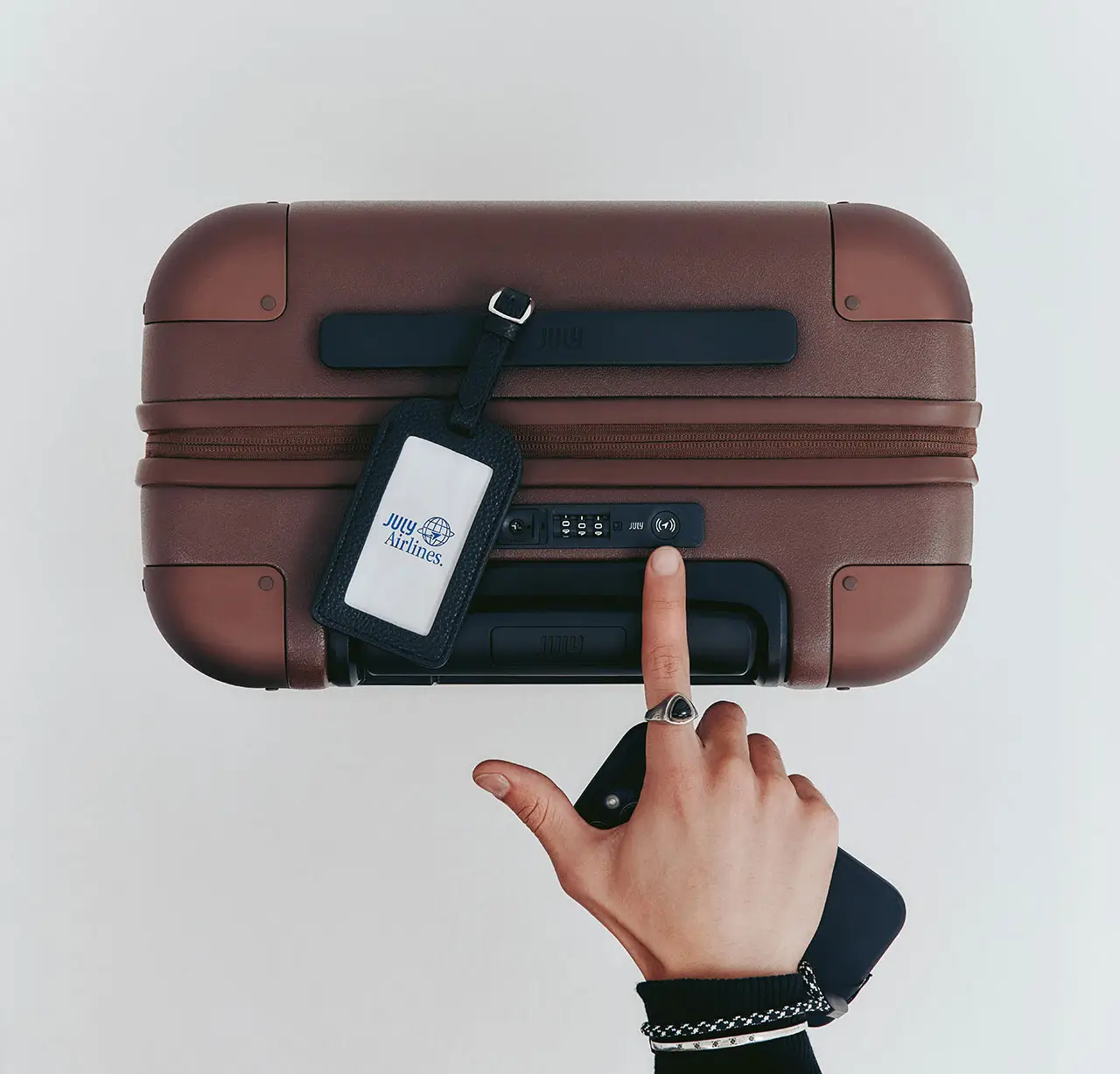
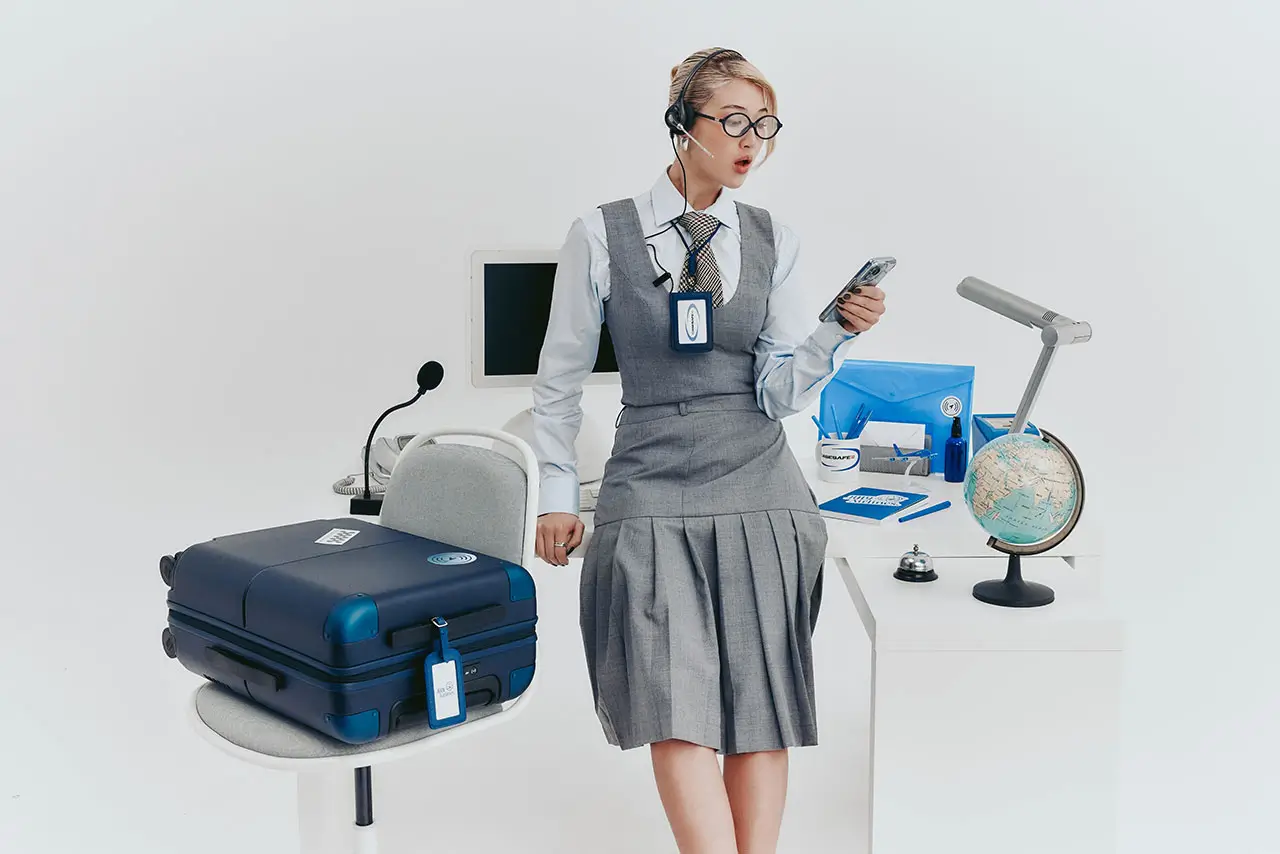
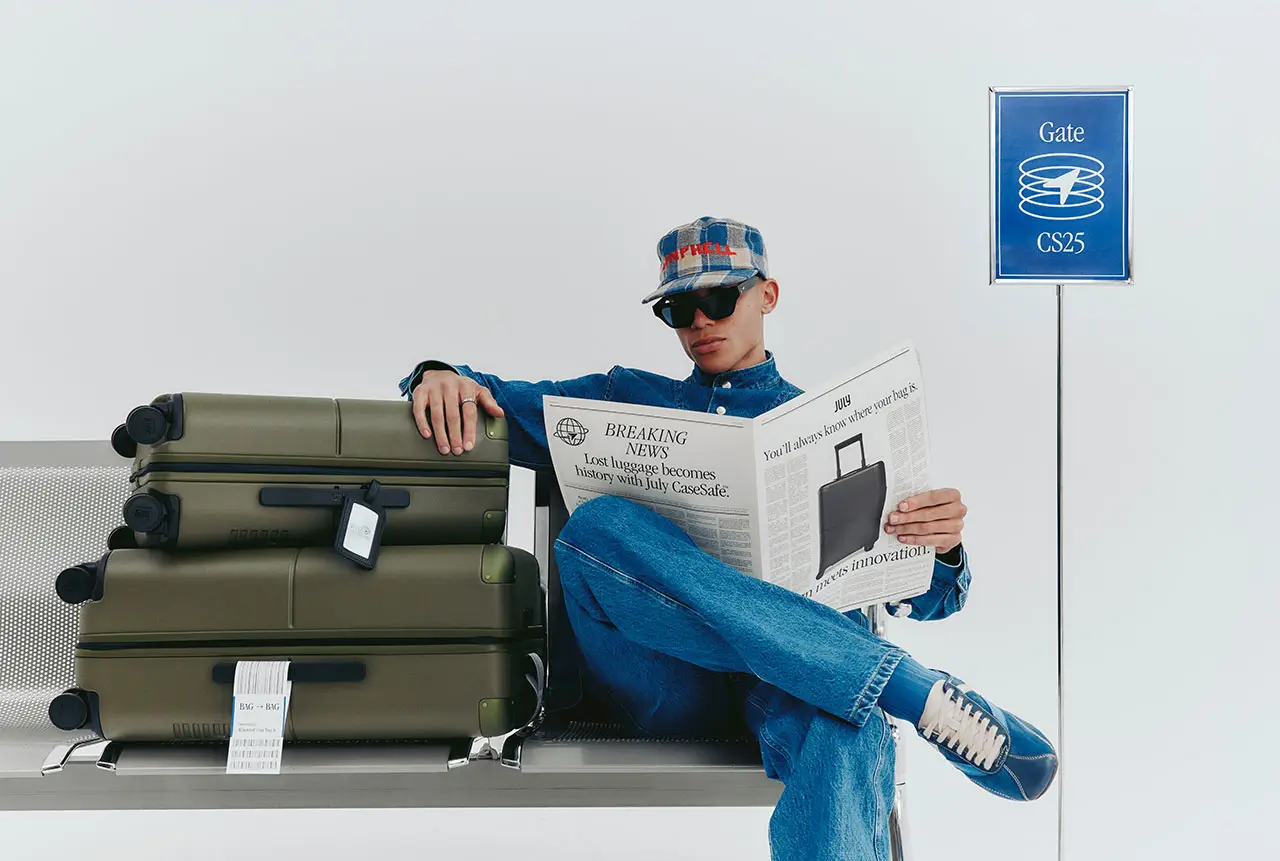
This long-standing problem is precisely what the Australian travel brand July set out to address with its newest innovation: the CaseSafe smart suitcase. Designed to bring clarity to the opaque world of airline baggage handling, CaseSafe introduces built-in tracking technology intended to make lost luggage far less stressful—and potentially prevent it from being lost in the first place.
View this post on Instagram
issue
The airline industry moves extraordinary volumes of baggage each year. According to aviation industry studies, billions of checked bags travel through global airports annually. Although the vast majority arrive successfully with their owners, even a tiny percentage of errors translates into millions of misplaced bags worldwide.
The reasons luggage goes missing are surprisingly varied.
Sometimes bags miss tight connections when flights are delayed. Other times, labels become damaged or unreadable. In certain cases, human error plays a role—bags loaded onto the wrong aircraft or routed to the wrong airport entirely.
Even when luggage is located quickly, the process of reuniting it with its owner can be slow. Airlines must track down the bag, confirm its identity, arrange shipping, and coordinate delivery. Travelers often wait days for updates and may spend the early days of their trip purchasing replacement clothing and toiletries.
Compensation policies vary widely between airlines, and reimbursement often covers only a fraction of the inconvenience. For travelers attending business meetings, weddings, or once-in-a-lifetime vacations, the loss of luggage can disrupt entire plans.
Over the past decade, the rise of personal tracking devices has begun to change the equation. Travelers started placing small Bluetooth trackers inside their bags, allowing them to monitor their suitcase’s location via smartphone apps. But while helpful, those solutions require an extra gadget, separate batteries, and manual placement.
July’s CaseSafe takes a different approach: integrating tracking technology directly into the suitcase itself.
phil
Founded in Melbourne, July has built a reputation for modern travel gear that balances minimal aesthetics with practical functionality. The company’s products often focus on solving everyday travel frustrations—quiet wheels, reinforced aluminum frames, compression systems, and durable shells designed to survive repeated flights.
The brand’s philosophy centers on the idea that travel should feel effortless. Instead of adding more gadgets or accessories, July aims to build functionality directly into the luggage itself.
CaseSafe represents the next evolution of that philosophy. Rather than relying on removable tracking devices, the suitcase incorporates location tracking within its structure. The result is a piece of luggage that feels conventional in appearance but carries a powerful technological advantage.
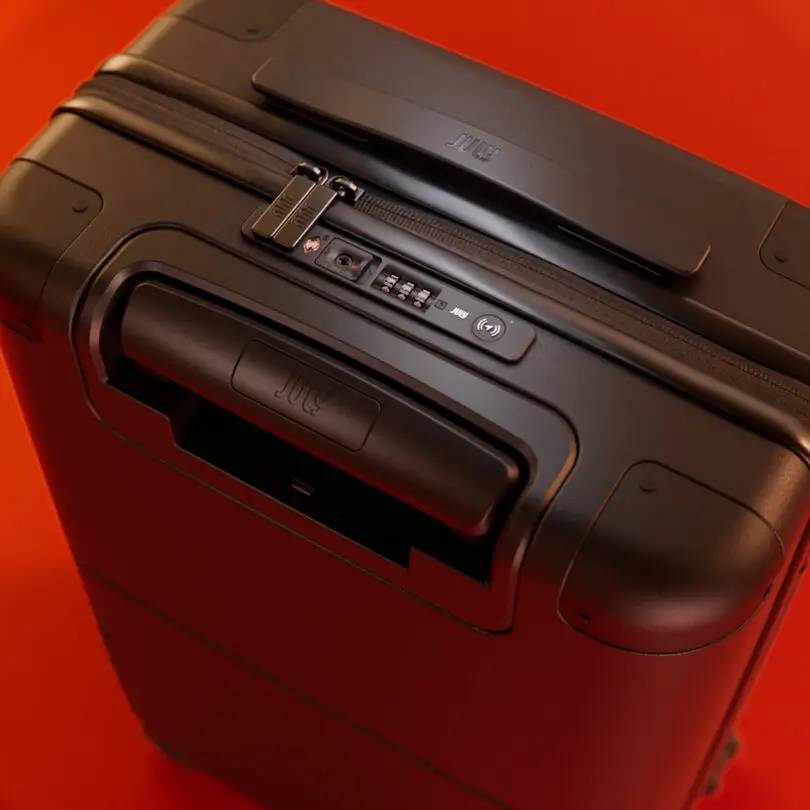
At first glance, the suitcase resembles July’s existing minimalist design language: smooth polycarbonate surfaces, clean edges, and understated color palettes. But beneath the exterior sits a connected system designed to keep travelers informed about their bag’s location.
intro
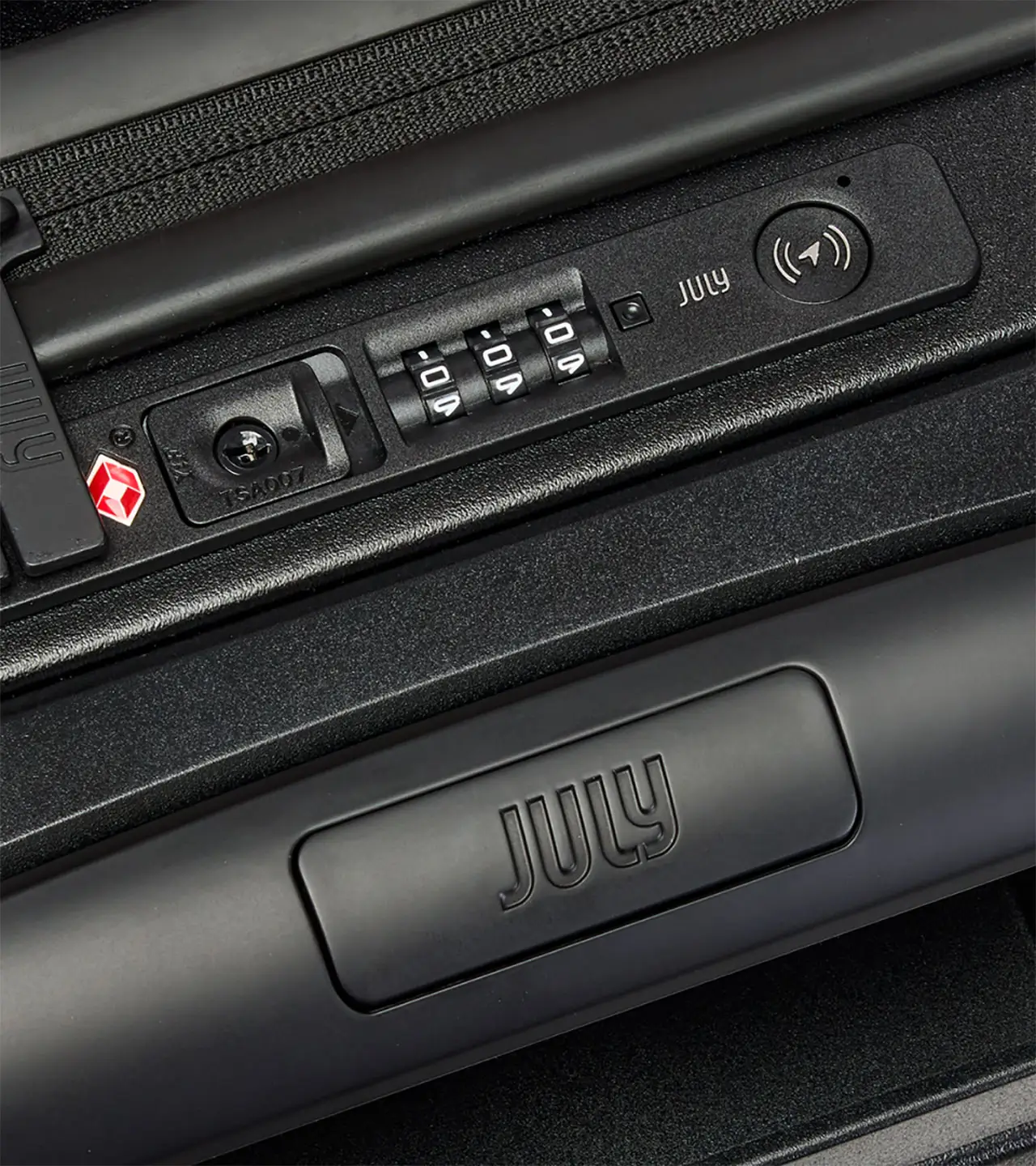
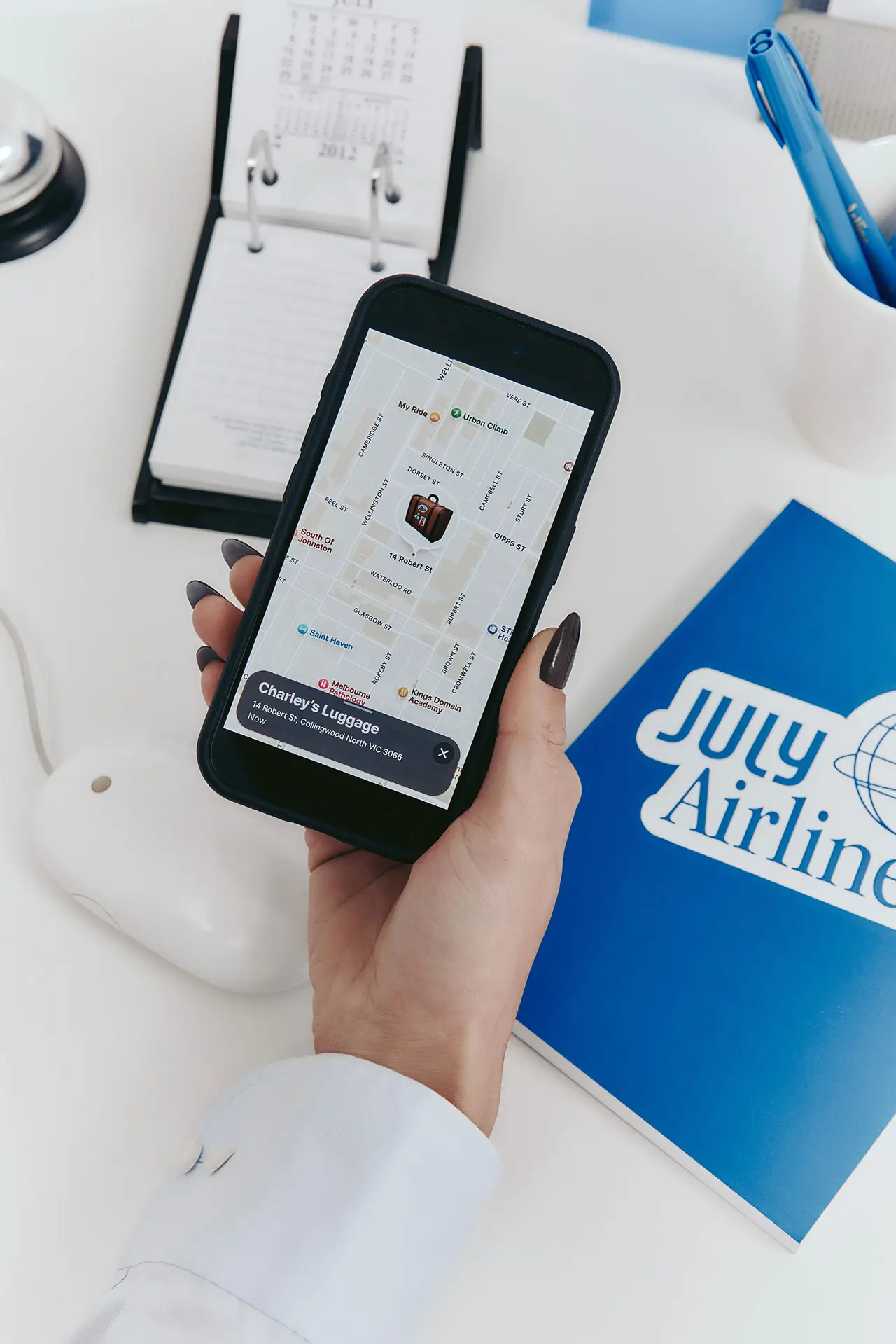
The defining feature of CaseSafe is its integrated tracking technology. Built discreetly into the suitcase body, the system allows travelers to monitor their luggage location through a smartphone application.
Instead of guessing where a missing suitcase might be, travelers can see its last known location in real time. If a bag fails to appear at baggage claim, the owner can immediately confirm whether it remains at the departure airport, sits in a connecting terminal, or has arrived somewhere unexpected.
This level of transparency fundamentally changes the lost-luggage experience. Rather than relying solely on airline databases—which sometimes take hours or days to update—travelers can access location data instantly.
In practical terms, this could mean the difference between waiting anxiously in a queue and calmly approaching airline staff with precise information about where the bag currently sits.
flow
Traditional lost-luggage scenarios leave travelers in the dark. After filing a report, updates often arrive sporadically, and airline support teams must manually investigate the bag’s path.
With integrated tracking, travelers gain a form of digital visibility over their belongings.
If luggage misses a connection, its location may appear immediately in the tracking app. If a suitcase arrives in a different terminal, the traveler might spot it before the airline even contacts them. In certain cases, the data could help airport staff recover misplaced bags faster.
For frequent flyers, this kind of reassurance carries real value. Business travelers, photographers, stylists, and performers often transport expensive gear or irreplaceable items in checked luggage. Knowing the bag’s location reduces anxiety and gives travelers a sense of control in situations where they normally have none.
tech
While tracking technology forms the centerpiece of CaseSafe, the suitcase still needs to function as reliable luggage. July’s design team focused on integrating the tracking hardware without compromising durability or usability.
The CaseSafe shell uses lightweight polycarbonate, a material commonly favored for its balance of strength and flexibility. The suitcase includes reinforced corners designed to absorb impacts during airport handling, as well as smooth-rolling wheels intended to glide through terminals with minimal effort.
Inside, the suitcase features a structured compression system that allows travelers to organize clothing efficiently. Compartments help separate garments, shoes, and accessories, maximizing packing space while keeping contents secure during transit.
Battery life and connectivity also played key roles in the design process. Integrated tracking systems must function for long journeys without frequent charging, ensuring the suitcase remains trackable across multiple flights.
grow
CaseSafe arrives at a moment when travelers increasingly expect technology to simplify everyday experiences. Smartphones already manage boarding passes, hotel keys, navigation, and communication. Extending that digital convenience to luggage feels like a natural progression.
Travel gear brands have experimented with smart luggage before. Earlier generations of connected suitcases included built-in batteries for charging devices, digital locks, and GPS modules. Some products gained attention but struggled with airline regulations around lithium batteries.
In response, manufacturers began designing systems that comply with airline safety rules while still offering advanced features. Integrated tracking represents one of the most practical applications because it addresses a real travel pain point.
Rather than focusing on novelty, CaseSafe targets a longstanding logistical issue that travelers genuinely want solved.
emotive
Lost luggage is more than a logistical inconvenience. It carries emotional consequences as well.
For many travelers, a suitcase contains more than clothing. It may include sentimental items, gifts, professional equipment, or personal necessities. Losing a bag can disrupt travel plans and create stress during moments that should be enjoyable.
By providing real-time location visibility, CaseSafe aims to remove much of that uncertainty. Even if a bag goes missing temporarily, the traveler still knows where it is.
This small shift—from uncertainty to visibility—can dramatically reduce anxiety.
Instead of wondering whether the suitcase is lost forever, the traveler sees its path and waits for the system to bring it back.
imply
While CaseSafe is designed primarily for travelers, it may also indirectly influence airline operations.
When passengers can see their bag’s location, communication with airline staff becomes more efficient. Instead of vague descriptions of luggage appearance, travelers can provide specific details about where the suitcase was last detected.
In some scenarios, this could accelerate recovery efforts and reduce administrative workload.
Airports themselves are investing in smarter baggage systems as well. Radio-frequency identification (RFID) tags and digital tracking networks are gradually replacing older barcode systems. As these technologies expand, integrated suitcase tracking may work alongside airport infrastructure to improve overall reliability.
fwd
The CaseSafe suitcase hints at a broader future where travel gear becomes increasingly intelligent.
Imagine luggage that automatically checks itself onto flights, communicates with airport systems, and updates travelers about every step of its journey. Suitcases could notify owners when they arrive at baggage claim or warn them if they are loaded onto the wrong plane.
While that future is still developing, CaseSafe represents a practical first step. By embedding tracking technology directly into the suitcase, July brings connected travel closer to everyday reality.
why
Frequent travelers are often early adopters of innovations that simplify airport experiences. From digital boarding passes to biometric security checkpoints, the travel industry has steadily integrated technology into its processes.
Smart luggage follows the same trajectory.
For travelers who have experienced the frustration of missing bags, the promise of real-time tracking feels particularly appealing. Even occasional flyers can appreciate the peace of mind that comes with knowing exactly where their suitcase is located.
CaseSafe offers that reassurance without requiring additional devices or complicated setup. The technology lives within the suitcase itself, ready whenever it is needed.
stir
Air travel relies heavily on trust. Passengers trust airlines to transport them safely and handle their belongings responsibly. Most of the time, that trust is rewarded.
But when things go wrong—when a bag disappears into the vast machinery of global travel—the lack of transparency becomes painfully clear.
Products like CaseSafe aim to rebuild that trust by giving travelers access to information that was once hidden behind airline systems.
Instead of waiting passively for updates, travelers gain the ability to see where their belongings are and understand what might have gone wrong.
innov
Travel gear has evolved dramatically over the past century. Early suitcases were heavy leather trunks designed for steamships and trains. Modern luggage prioritizes mobility, lightweight construction, and efficiency for fast-paced air travel.
Now, the next frontier appears to be connectivity.
Smart features once reserved for electronics—tracking, wireless connectivity, digital integration—are gradually becoming part of everyday travel gear.
July’s CaseSafe suitcase reflects this shift. It merges traditional luggage craftsmanship with modern tracking technology, creating a hybrid product that addresses one of travel’s most persistent frustrations.
fin
The most successful innovations often solve problems so familiar that people forget they exist. Lost luggage has been one of those problems for decades.
By embedding tracking directly into a suitcase, July offers a simple yet meaningful change: the ability to see where your belongings are at any moment.
For travelers standing beside a baggage carousel, watching the final suitcase pass by, that knowledge could transform one of the most stressful moments in travel into something far more manageable.
CaseSafe may not eliminate lost luggage entirely. But it offers something equally valuable: clarity in a system that has long operated in uncertainty.
And for anyone who has ever waited anxiously at an airport carousel, that clarity might be the most welcome travel innovation in years.

No comments yet.