Kanye West Ignites Los Angeles with Sold-Out Concert and Million-Fan Queue

March 14, 2026
Los Angeles has always been one of the cities where music history bends a little differently. Trends start here, reputations are tested here, and crowds have long served as a barometer for cultural relevance. That is precisely why the latest announcement surrounding Kanye West’s upcoming Los Angeles concert carries weight far beyond the logistics of a single performance.
When ticket registration opened, few expected what followed. Within hours, more than a million fans had reportedly joined the digital queue hoping to secure access to the event. The overwhelming demand forced organizers to expand the schedule almost immediately, adding a second night to accommodate the surge of interest.
In an era where streaming numbers, viral clips, and algorithm-driven charts often define an artist’s popularity, the scene unfolding around West’s Los Angeles shows serves as a reminder that live music remains one of the clearest indicators of cultural magnetism. The line—virtual though it may have been—stretched into seven figures, a number that places the event among the most in-demand concerts of the decade.
stir
Ticket sales today operate differently than they did even a decade ago. Instead of fans camping outside arenas overnight, millions now converge on a single digital waiting room. For West’s Los Angeles event, that waiting room filled at a staggering pace.
According to early reports from ticketing platforms and event promoters, the queue passed the million-user mark shortly after access opened. Each user represented a fan hoping to secure seats or standing-room access to a performance that had been rumored for weeks but only recently confirmed.
The numbers quickly exceeded what organizers had initially prepared for. Even major stadium tours rarely attract that level of simultaneous demand for a single city performance.
The solution was swift: add another night.
By expanding the event into a two-show run, promoters created additional capacity while preserving the sense that these performances would remain a rare moment rather than a prolonged residency.
the huh
For Kanye West, Los Angeles has long been more than a tour stop. The city has played a recurring role throughout his career, serving as a stage for both artistic experimentation and cultural spectacle.
West has debuted music here, staged listening events here, and built some of his most elaborate visual performances within the city’s sprawling arenas and stadiums.
Los Angeles audiences bring a particular energy to those events. The city blends industry insiders, fashion figures, musicians, artists, and everyday fans into a crowd that reflects the broader creative ecosystem surrounding West’s work.
When an event sells out in Los Angeles, it sends a signal far beyond the West Coast.
It suggests that the artist still holds a gravitational pull within the cultural capital of entertainment.
flow
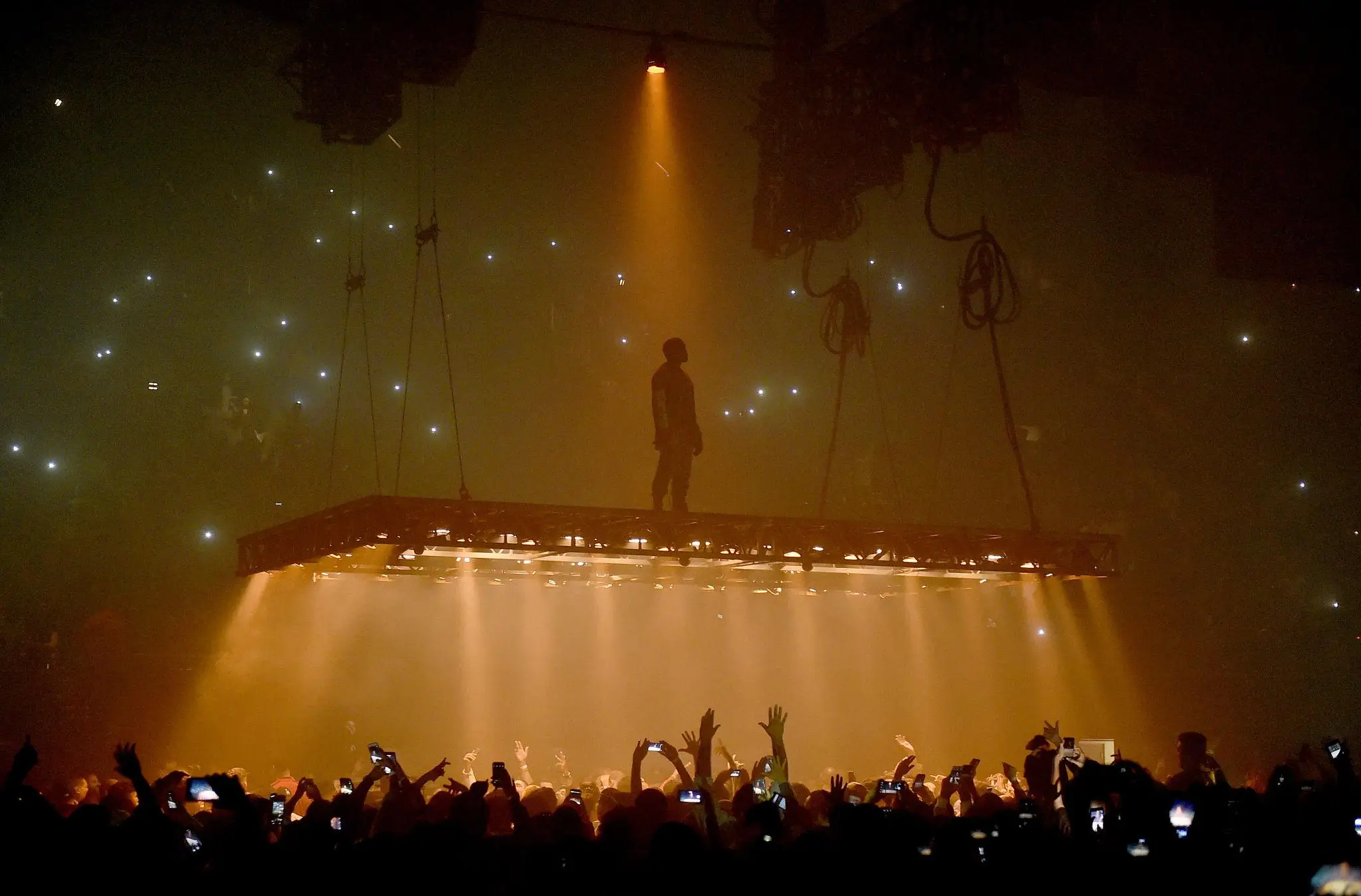
West’s concerts have rarely followed the conventional structure of a pop performance. Over the years, his shows have blurred the lines between concert, installation, and theatrical experience.
Floating stages. Immersive lighting grids. Massive projection systems. Minimalist industrial set designs.
Each era has introduced a different visual language.
Fans attending the upcoming Los Angeles performances are already speculating about what form this latest production might take. Some expect the stark aesthetic associated with his more recent projects, while others anticipate a return to the monumental staging that defined earlier tours.
Either way, West’s reputation for ambitious stagecraft ensures that the event will likely extend beyond a simple setlist.
recept
Despite years of public controversy and shifting media narratives, West continues to command a fiercely loyal fanbase. The million-person ticket queue illustrates the durability of that audience.
Part of this loyalty stems from the way West’s music has woven itself into multiple generations of listeners. Fans who first encountered his work during the early 2000s college-era releases now attend shows alongside younger listeners discovering his later experimental projects.
The result is a crowd that spans age groups, cultural backgrounds, and musical tastes.
Few artists manage to maintain that breadth of appeal over two decades.
West remains one of them.
eco
Modern concert promotion often hinges on the principle of scarcity. Limited dates can create urgency, encouraging fans to act quickly when tickets appear.
West’s Los Angeles announcement followed that model closely.
The initial show was framed as a singular event, which helped drive the massive queue. Once demand became clear, the addition of a second night expanded access without diluting the excitement surrounding the performance.
For promoters, the strategy balances exclusivity with practicality. It keeps the event culturally significant while preventing thousands of disappointed fans from walking away empty-handed.
In the streaming era—where music is infinitely accessible—live performances have become one of the few remaining experiences defined by real-world limits.
culture
Kanye West has always existed at the intersection of music, fashion, art, and controversy. Each new project tends to ignite conversation well beyond traditional music circles.
The Los Angeles concerts appear to be continuing that pattern.
Long before the first note is conjured, the shows have already generated headlines across entertainment media and social platforms. Screenshots of the ticket queue spread quickly online, fueling the sense that something significant was unfolding.
In many ways, that anticipation is part of the experience.
West’s events rarely exist in isolation. They operate as cultural moments—flashpoints where music, spectacle, and public conversation collide.
fwd
With two Los Angeles performances now confirmed, attention turns toward what comes next.
Will these shows mark the beginning of a broader tour?
Could they introduce new music or a new visual era?
Or will they remain standalone events designed to capture a particular moment in time?
West has historically favored unpredictability. Announcements often arrive suddenly, and performances sometimes evolve dramatically from night to night.
For fans lucky enough to secure tickets, the uncertainty is part of the appeal.
fin
Perhaps the most striking element of the story is not simply that Kanye West sold out a concert.
It is how quickly it happened.
More than a million people entering a queue at once reflects a level of engagement rarely seen outside the very top tier of global performers. It also underscores the enduring importance of live events in an increasingly digital music landscape.
For all the changes that have transformed the industry—streaming platforms, social media promotion, algorithmic playlists—the electricity of a live crowd remains irreplaceable.
In Los Angeles, that electricity is already building.
And with two nights now on the schedule, Kanye West’s latest concert spectacle is shaping up to become one of the city’s most talked-about music events of the year.


No comments yet.