Karl Lagerfeld’s Custom-Designed Private Office: A Profound Discover Inside Discipline

March 24, 2026
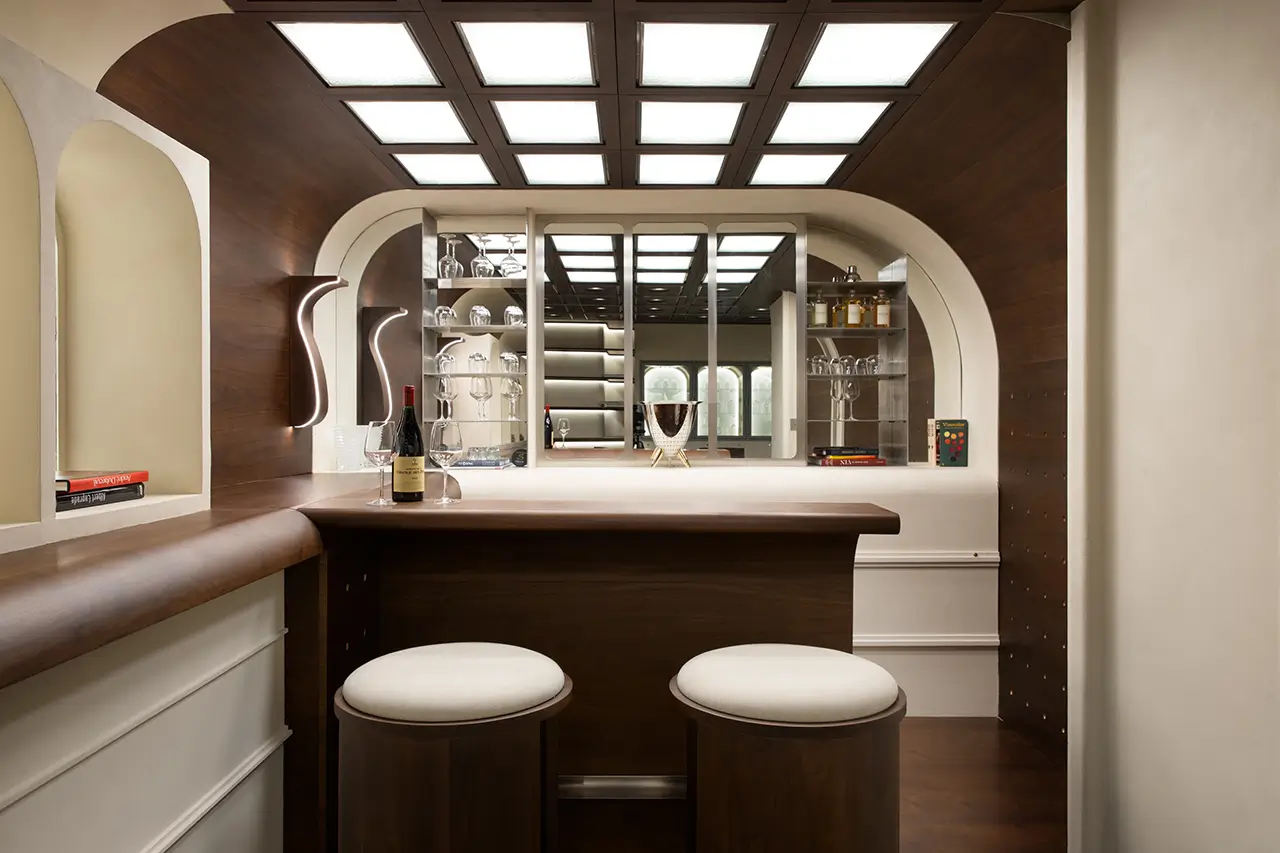
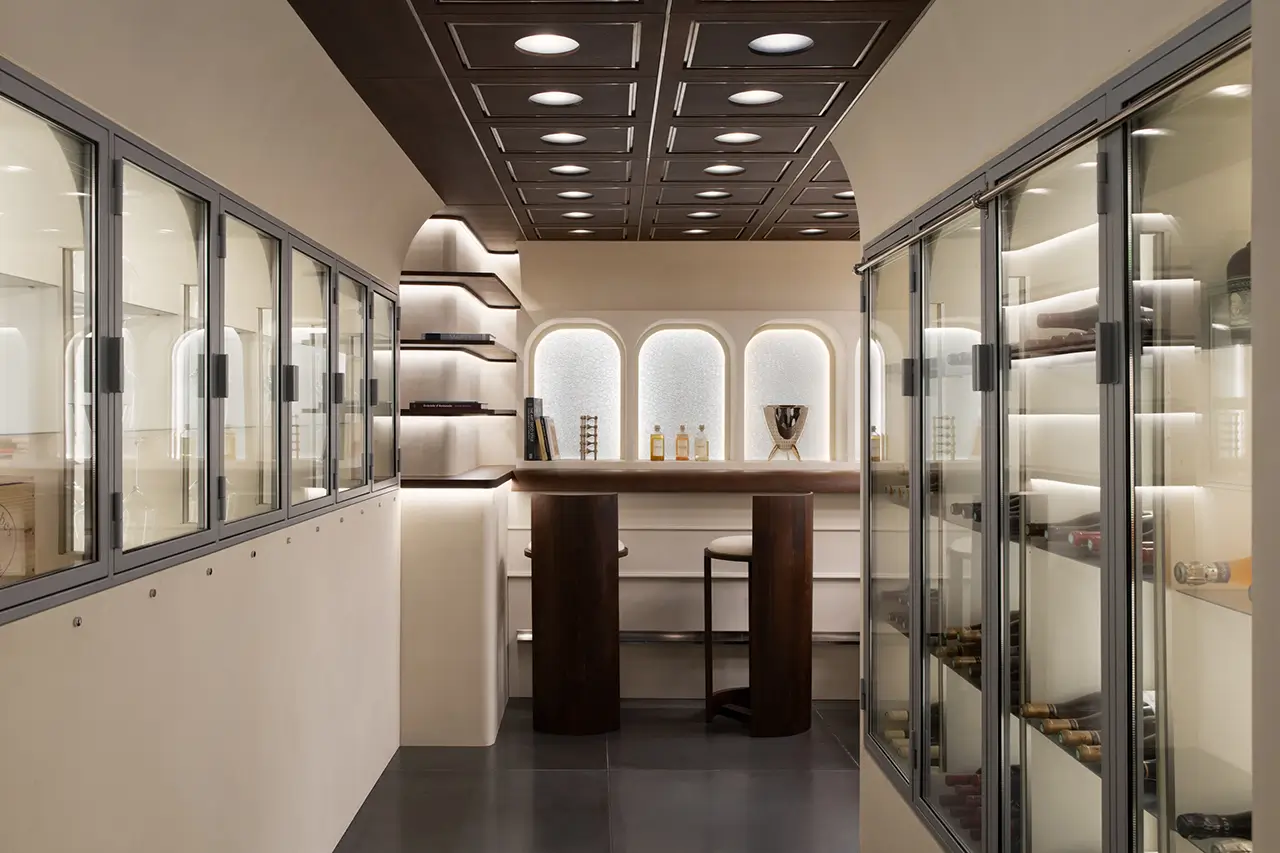
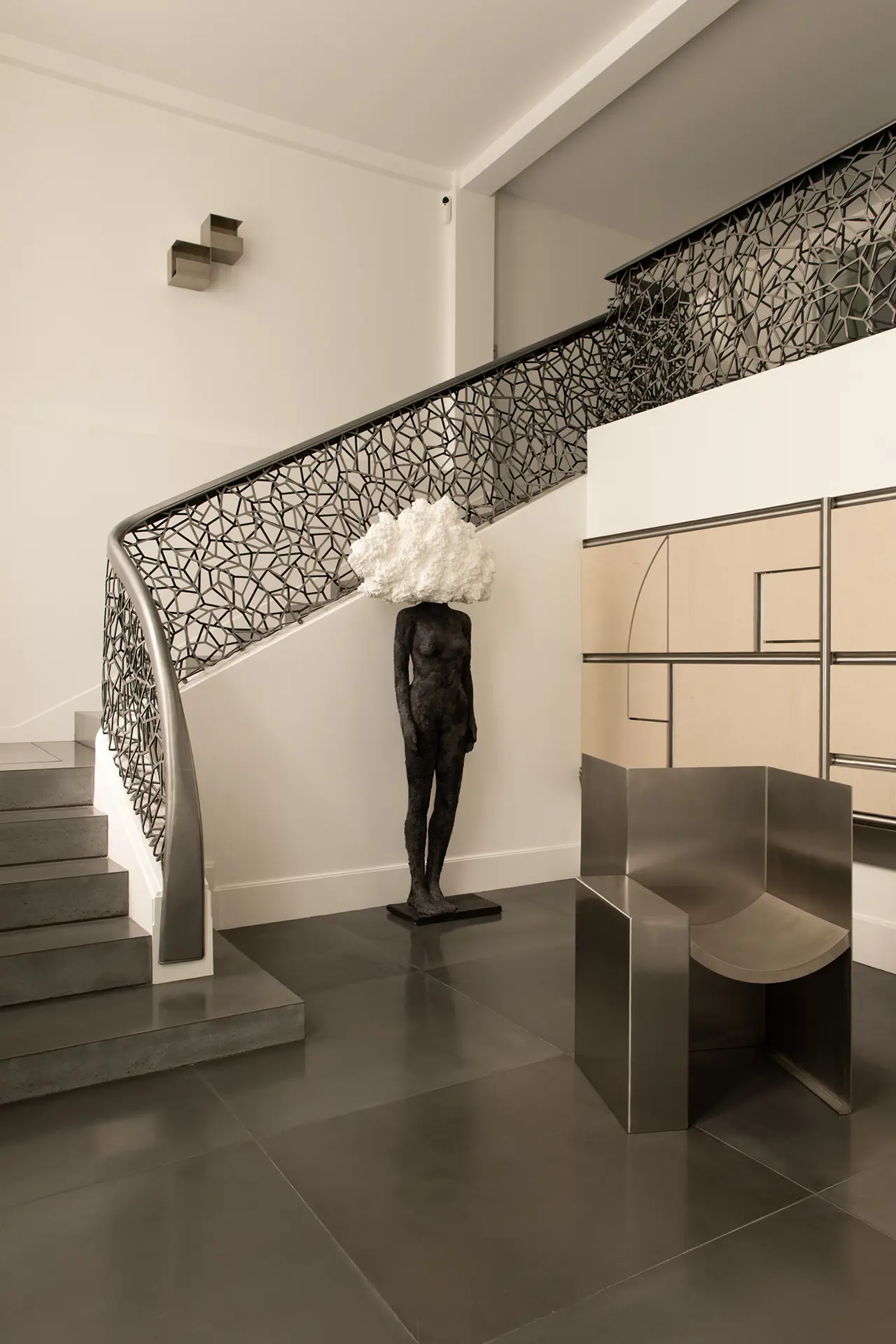
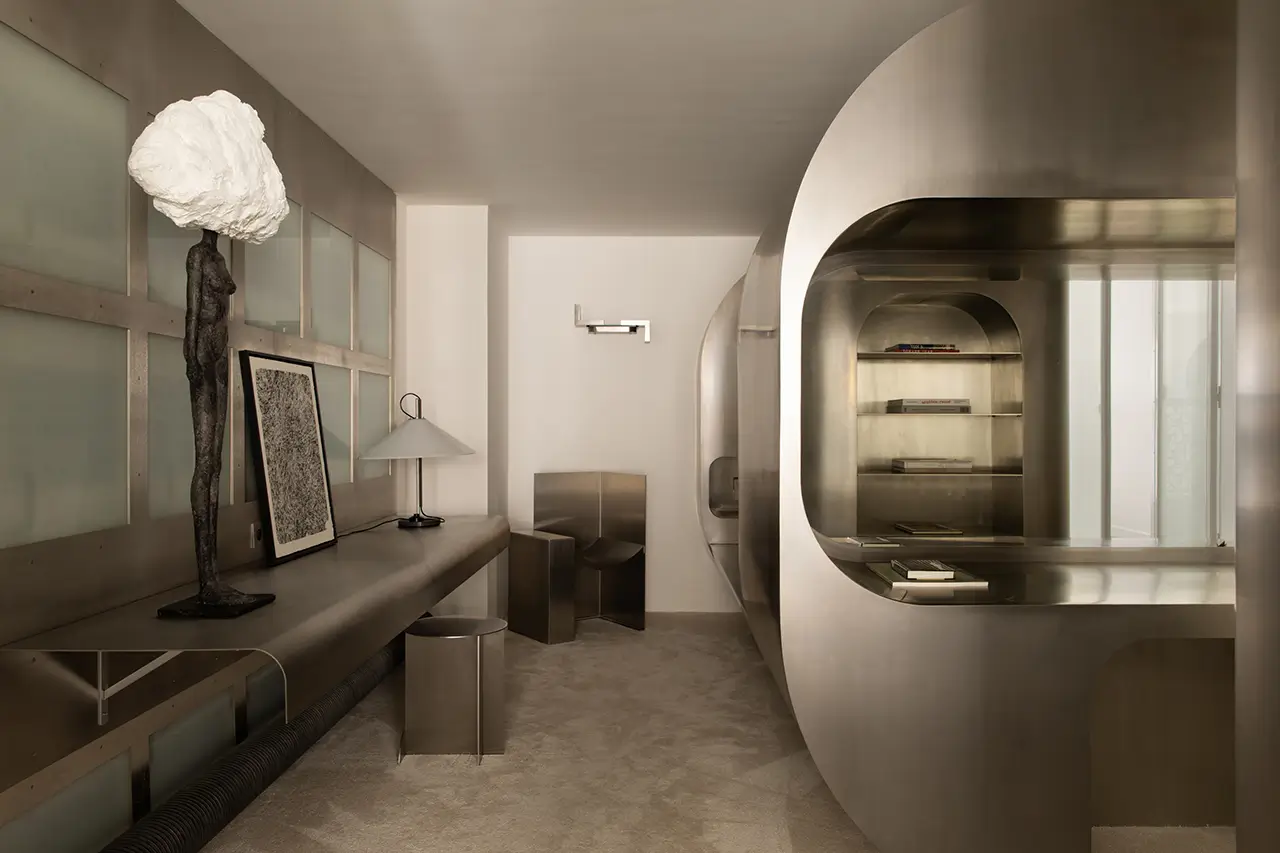
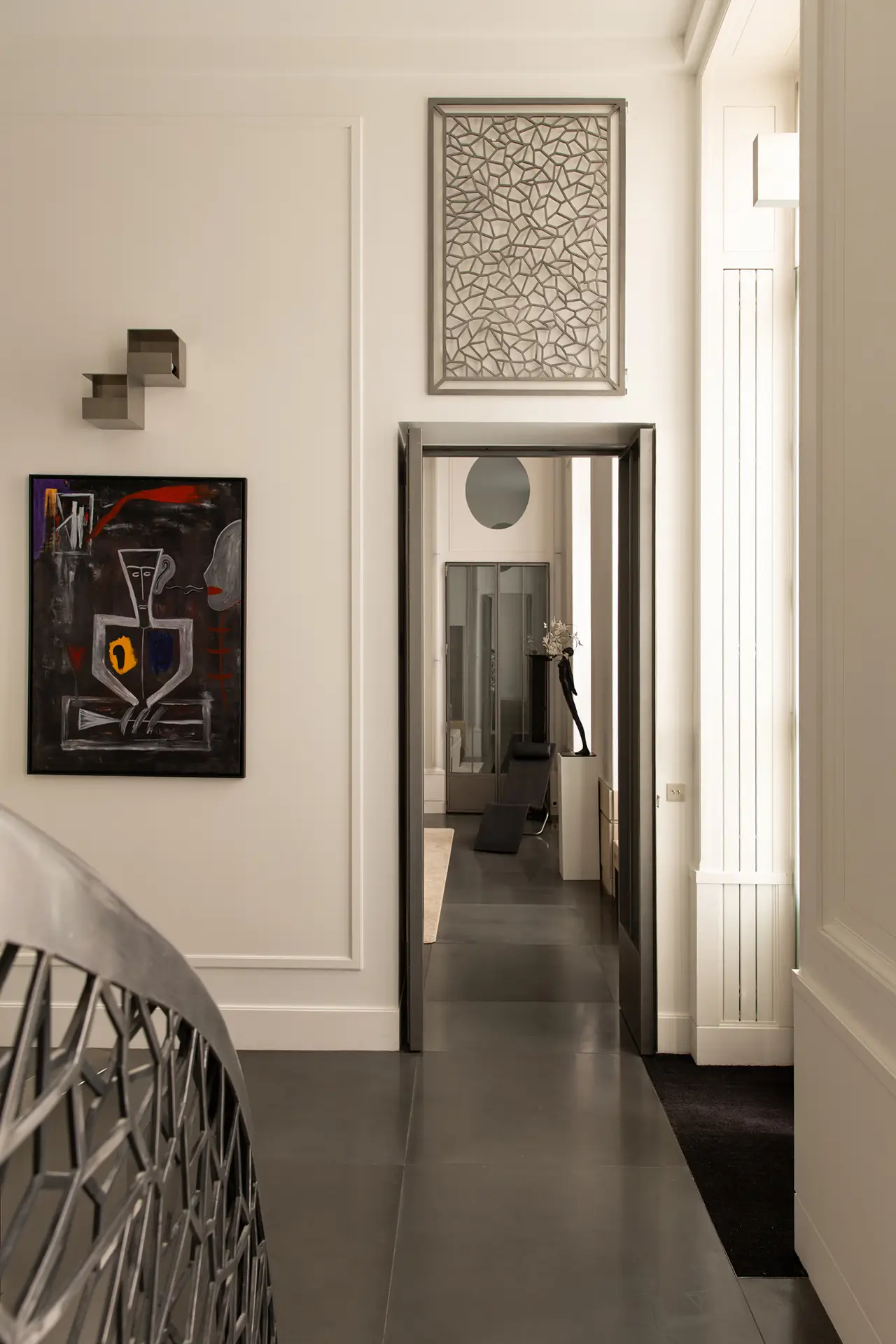
There are interiors designed to impress, and then there are interiors designed to function as extensions of a mind. Karl Lagerfeld’s private office belonged emphatically to the latter category. It was not merely a workspace, nor even a curated aesthetic environment in the conventional sense. It was an operational landscape—precise, austere, intensely controlled—yet paradoxically capable of conjuring something closer to a mental vacation than a site of labor.
Visitors often described the experience as disorienting at first. The stark whiteness, the immaculate surfaces, the deliberate absence of clutter—these qualities read as severity. But stay long enough, and the logic reveals itself. The office was not cold; it was liberating. It stripped away distraction to produce a state of heightened clarity, a place where imagination could unfold without interference. In this sense, Lagerfeld’s office did not oppose leisure—it redefined it.
idea
Known for his relentless productivity—designing simultaneously for Chanel, Fendi, and his eponymous label—he required an environment that could sustain speed without sacrificing depth. The office became a system.
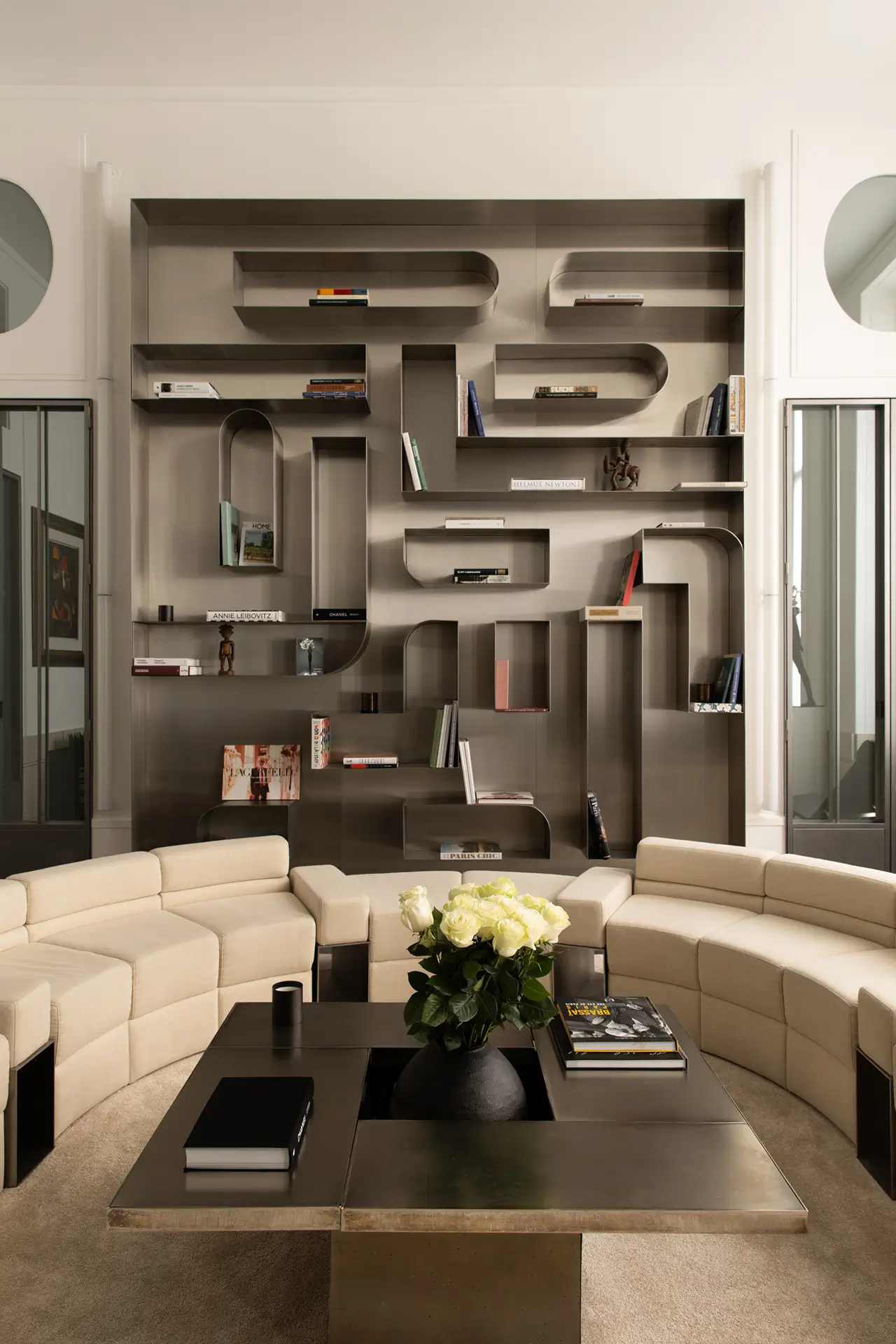
Rows of books, often numbering in the tens of thousands, were not decorative gestures but tools. They formed a kind of analog database, a pre-digital search engine organized by instinct and memory. Art books, photography monographs, literature, fashion archives—each volume was positioned within reach, yet the overall impression remained one of total order rather than accumulation.
The desk itself was rarely cluttered. Lagerfeld sketched constantly, producing designs in rapid succession, but the act of creation never translated into visual chaos. Papers were cycled, not stored. Ideas moved. The space was not for archiving thought; it was for generating it.
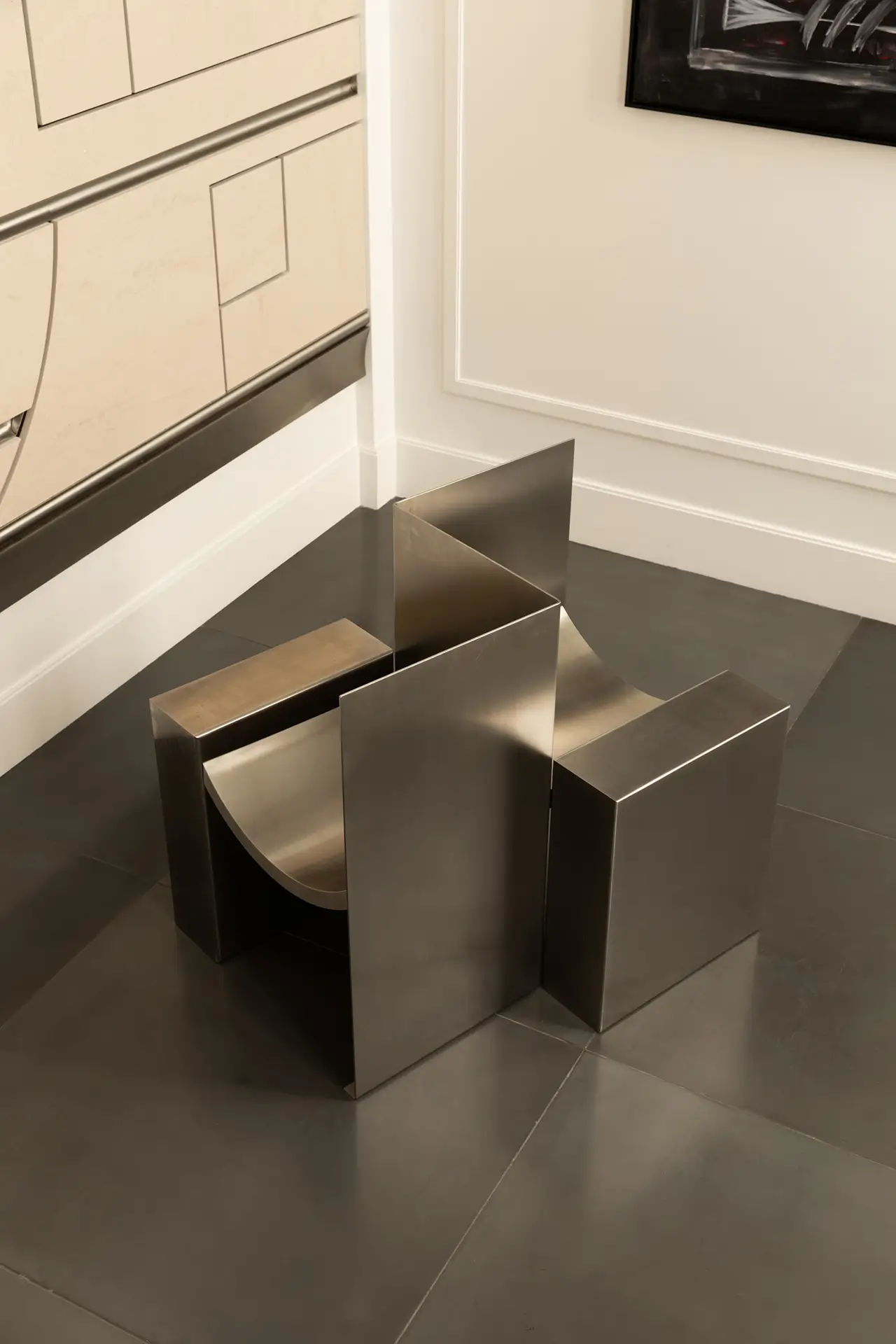
Materials reinforced this philosophy. Chrome, glass, lacquered surfaces—everything reflected light, amplifying the room’s brightness. There was no room for opacity, literal or conceptual. Even the furniture, often custom-designed or carefully selected, adhered to a strict visual grammar: linear, restrained, and resistant to ornament.
discip
White dominated the office—not as a neutral backdrop but as an active force. Lagerfeld famously preferred monochrome environments, particularly white interiors, because they allowed him to “see everything clearly.” This was not a view of abstraction; it was a working principle.
White eliminates hierarchy. It flattens visual noise, allowing objects—books, sketches, references—to exist without competing for attention. In Lagerfeld’s office, this translated into a kind of perceptual openness. Visitors often reported an unexpected sense of calm, even as they stood within a space engineered for high output.
Yet white also imposes discipline. It reveals imperfections instantly. Dust, disorder, even the slightest misalignment becomes visible. Maintaining such an environment requires constant vigilance, a commitment to upkeep that mirrors the discipline of the work produced within it.
This duality—calm and control—defines the experience of the office. It is at once serene and exacting, offering the psychological release of simplicity while demanding the rigor of precision.
allure
Despite its rigor, visitors frequently described the office as feeling like a vacation. This perception is not accidental. Lagerfeld understood that creativity thrives not only on discipline but on the illusion of freedom.
The office created this illusion through space, light, and silence. Large windows allowed natural light to flood the room, softening the starkness of the white surfaces. The absence of clutter translated into an absence of pressure. There were no visual reminders of unfinished tasks, no stacks of pending work. Everything existed in a state of readiness rather than urgency.
In this environment, time seemed to behave differently. Without the visual cues of accumulation, the mind was freed from the sense of being overwhelmed. Work became fluid, continuous, almost effortless. The office did not remove labor; it removed friction.
This is where the idea of a “vacation experience” emerges. It is not about escape from work but about a transformation of how work is perceived. In Lagerfeld’s office, productivity felt less like obligation and more like exploration.
dull
Unlike many creative studios, Lagerfeld’s office was notably devoid of personal memorabilia. There were no family photographs, no sentimental artifacts, no nostalgic clutter. Objects existed for function or for visual coherence—rarely for emotional resonance.
This absence is telling. Lagerfeld was known for his forward-facing mindset, his resistance to nostalgia. “I hate the past,” he once remarked, not as a rejection of history but as a refusal to be constrained by it. The office embodied this philosophy.
Even the extensive library, while rooted in historical material, was used as a springboard rather than a shrine. Books were references, not relics. They informed the present rather than anchoring it to the past.
The result was a space that felt perpetually current. Without the weight of personal history, the office remained open to reinvention. It was a place where ideas could emerge without the burden of context.
relation
To step into Lagerfeld’s office was, in many ways, to step into Lagerfeld himself. The space functioned as an extension of his identity—precise, controlled, endlessly productive, yet subtly playful in its contradictions.
He cultivated an image of detachment, of cool intellectualism, but beneath this was a deep engagement with culture, history, and aesthetics. The office reflected this balance. It was restrained but not sterile, disciplined but not rigid.
Every element contributed to a cohesive narrative. The monochrome palette echoed his personal wardrobe—black suits, white shirts, fingerless gloves. The emphasis on order mirrored his work ethic. The absence of sentiment aligned with his forward-looking philosophy.
In this sense, the office was not simply a place where Lagerfeld worked. It was a place where he existed as a concept, a carefully constructed persona that blurred the boundaries between life and work.
modern
What does Lagerfeld’s office offer to contemporary designers, artists, and thinkers? At a time when creative work is often associated with chaos—messy desks, scattered ideas, perpetual distraction—the office presents an alternative model.
It suggests that creativity does not require disorder. On the contrary, it may thrive in environments of clarity and control. By removing visual noise, one can create mental space. By imposing structure, one can enable freedom.
This is not to say that every creative should adopt a monochrome, minimalist workspace. Lagerfeld’s office was deeply personal, tailored to his specific needs and temperament. But the underlying principles—intentionality, discipline, coherence—remain relevant.
In an era defined by constant input, the idea of subtraction becomes increasingly valuable. To design a space that filters rather than accumulates, that clarifies rather than complicates, is to create conditions for sustained creativity.
emotive
The enduring fascination with Lagerfeld’s office lies in its paradox. It is a space of extreme control that produces a sense of freedom. It is minimal yet rich, disciplined yet liberating, static yet dynamic.
Visitors entered expecting to encounter rigidity and instead found fluidity. They anticipated austerity and discovered calm. The office challenged assumptions about what a creative environment should be.
Perhaps this is its most significant legacy. It demonstrates that the relationship between space and creativity is not fixed but fluid, capable of being reimagined. By redefining the terms of that relationship, Lagerfeld created not just an office but an experience—one that continues to resonate long after the work produced within it has entered the cultural canon.
sum
To describe Karl Lagerfeld’s private office as a “vacation experience” is to misunderstand the nature of both work and leisure. In this space, the two are not opposites but complements. The office does not offer escape from work; it transforms work into something that feels like escape.
This transformation is achieved not through indulgence but through precision. By eliminating distraction, by imposing order, by designing every element with intention, Lagerfeld created an environment where the mind could move freely.
It is a lesson that extends beyond design. In a world increasingly defined by excess—of information, of objects, of demands—the idea of creating space, both physical and mental, becomes an act of resistance.