Woodland Camo, Rewritten: The KOI Fatigue Thermal in Focus

April 1, 2026
5 hours ago
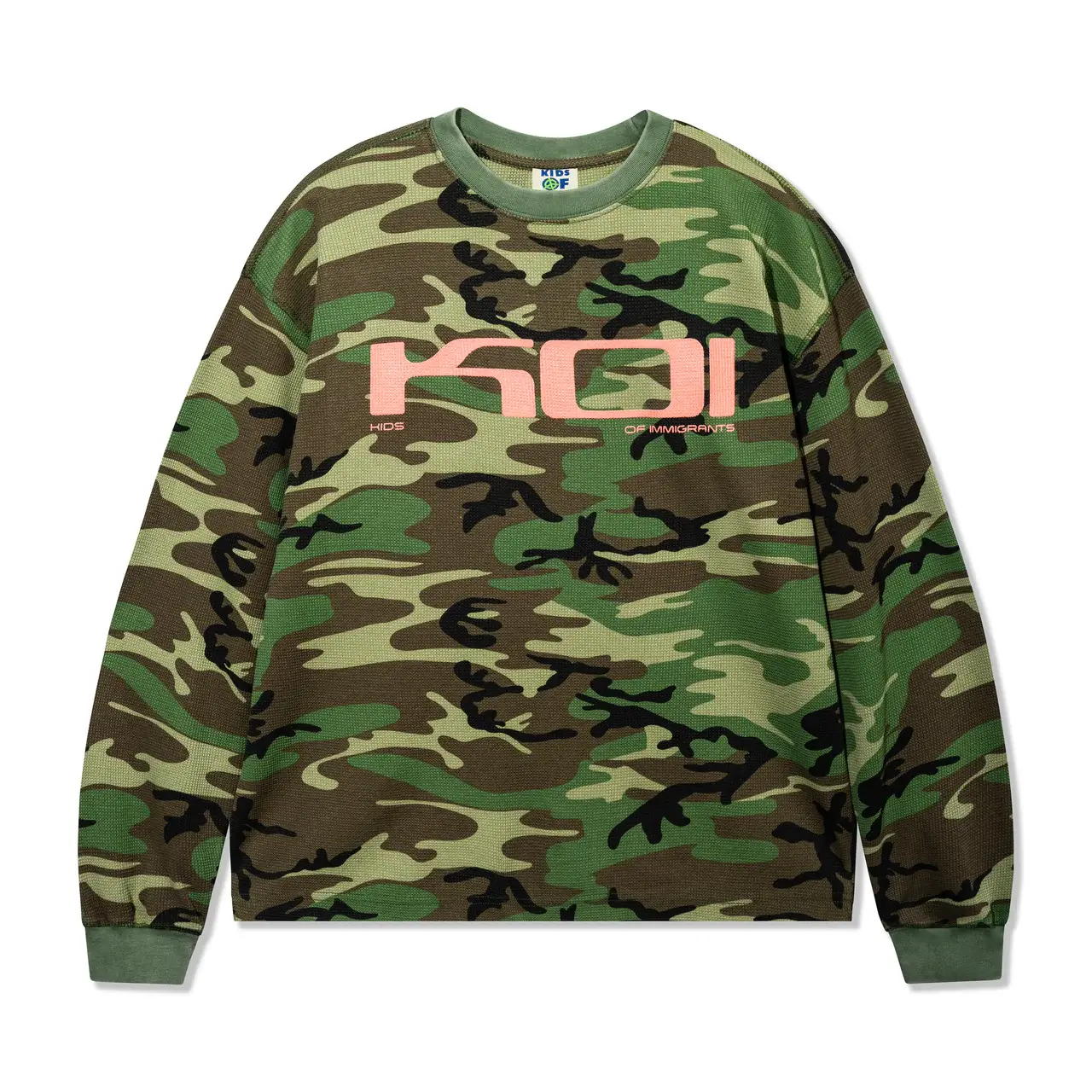
There is a deliberate quietness to the Kids of Immigrants “KOI Fatigue” thermal long sleeve—an object that speaks less through spectacle and more through coded familiarity. Woodland camouflage, a pattern historically rooted in military function, is recontextualized here as cultural surface. It becomes less about concealment and more about visibility—about the layered identities that define contemporary streetwear and the communities that shape it.
Kids of Immigrants, as a brand, has consistently operated within this space: bridging personal narrative with broader cultural dialogue. The “KOI Fatigue” piece continues that trajectory, translating themes of heritage, movement, and belonging into a garment that feels both immediate and reflective. It is not simply a thermal—it is a wearable articulation of lived experience.
flow
At its core, the garment is built from a 60/40 cotton-polyester blend, a composition that balances comfort with resilience. Cotton provides softness and breathability, while polyester introduces durability and shape retention. This blend is particularly suited to thermal construction, where the fabric’s ability to trap heat without becoming overly dense is essential.
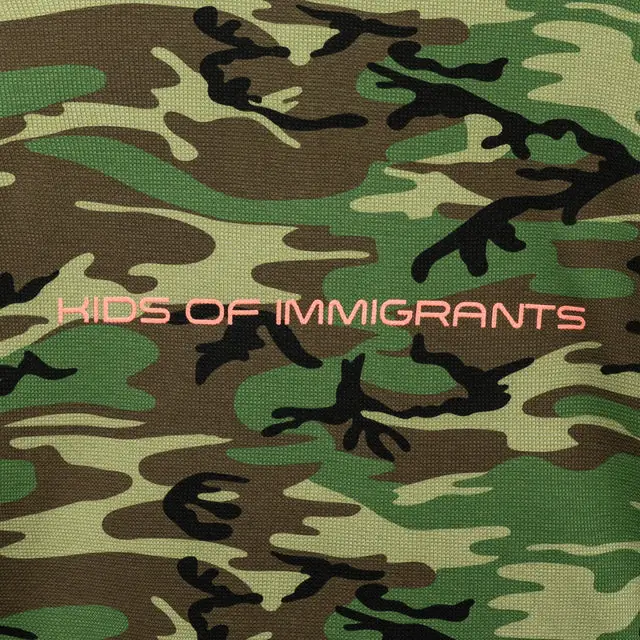
The thermal weave itself—subtly textured, almost grid-like—serves both functional and aesthetic purposes. It creates micro-pockets of air, enhancing insulation, while also adding a visual depth that interacts with the camouflage pattern. The result is a surface that feels alive, shifting slightly with movement and light.
The slightly cropped length is a key design decision. It alters the proportions of the garment, bringing it into dialogue with contemporary silhouettes. Rather than extending past the waist in a traditional manner, the crop introduces a sense of precision. It allows the piece to sit cleanly within layered outfits, aligning with the brand’s emphasis on intentional styling.
The relaxed fit further reinforces this balance. It is neither oversized nor restrictive. Instead, it offers a measured looseness—enough to allow movement, enough to suggest ease, but controlled enough to maintain structure. This is a garment designed to be worn, not just displayed.
utility
Woodland camouflage carries a complex history. Originally developed for military use, it was engineered to blend the wearer into natural environments. Over time, however, it has been absorbed into civilian fashion, taking on new meanings.
In the context of Kids of Immigrants, camo becomes something else entirely. It is no longer about disappearing—it is about layering. The pattern, with its overlapping shapes and tones, mirrors the experience of navigating multiple identities. It suggests a kind of visual hybridity, where elements coexist without fully resolving.
The “KOI Fatigue” thermal embraces this ambiguity. The camo is not aggressive or overstated. It sits within the garment’s structure, integrated rather than imposed. This allows it to function as both a reference and a foundation—a backdrop against which other elements, such as the screen-printed graphics, can operate.
View this post on Instagram
stir
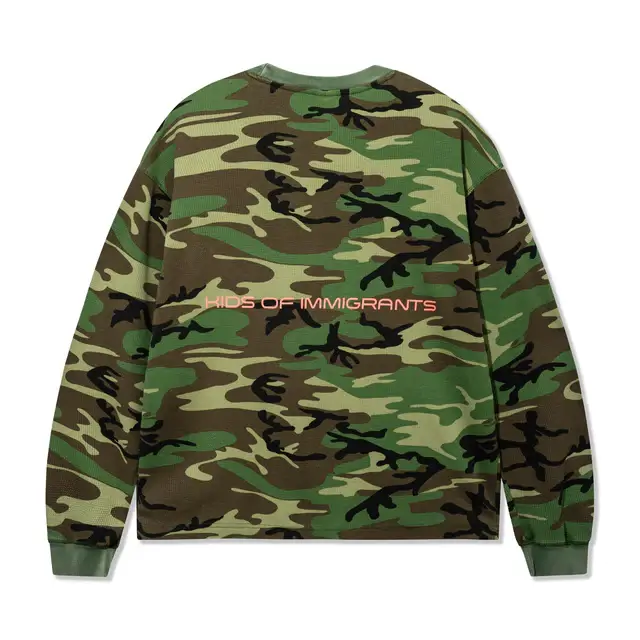
The front and back screen prints introduce a narrative layer to the piece. Screen printing, as a technique, is inherently tied to repetition and dissemination. It allows for the consistent reproduction of imagery, making it a natural choice for brands that operate within cultural storytelling.
On the “KOI Fatigue” thermal, the prints are not merely decorative. They act as markers—points of entry into the brand’s ethos. Whether through typography, symbols, or abstract forms, they carry meaning that extends beyond the garment itself.
The placement of these prints—front and back—creates a duality. The front offers an immediate impression, a first read. The back, often revealed as the wearer moves, adds a secondary layer. This interplay encourages engagement, inviting viewers to consider the garment from multiple perspectives.
The integration of print with camouflage is particularly effective. Rather than competing, the two elements coexist. The camo provides a textured ground, while the print introduces clarity. Together, they create a dynamic surface that feels both complex and cohesive.
bal
The slightly cropped length and relaxed fit combine to produce a silhouette that is responsive to movement. The garment does not cling or constrict. Instead, it moves with the body, adapting to different postures and environments.
This responsiveness is central to its appeal. It allows the thermal to function across contexts—layered under outerwear, worn alone, styled with tailored pieces or more casual elements. The proportions are calibrated to accommodate variation, reflecting the fluidity of contemporary dressing.
The sleeves, likely extending to the wrist with a subtle taper, maintain this balance. They provide coverage without excess, aligning with the garment’s overall sense of restraint. Every element feels considered, contributing to a cohesive whole.
flow
Kids of Immigrants has built its identity around storytelling—specifically, the stories of those navigating between cultures, spaces, and identities. The “KOI Fatigue” thermal fits seamlessly within this framework.
The name itself—“Kids of Immigrants”—is both descriptive and declarative. It acknowledges a shared experience while also asserting presence. The garments become extensions of this narrative, carrying with them the nuances of that identity.
In this context, the thermal is more than a product. It is a medium. It communicates values, experiences, and perspectives. The use of camo, the choice of materials, the application of print—all of these elements contribute to a larger conversation about belonging and visibility.
day
Beyond its conceptual layers, the “KOI Fatigue” thermal is designed for everyday use. The cotton-poly blend ensures that it can withstand regular wear without significant degradation. The screen prints, when properly applied, are resistant to fading and cracking, maintaining their integrity over time.
The thermal construction also makes it adaptable to different climates. It can function as a standalone piece in milder conditions or as a base layer in colder environments. This versatility enhances its practicality, aligning with the brand’s emphasis on garments that integrate seamlessly into daily life.
style
Stylistically, the piece lends itself to a range of interpretations. Paired with neutral trousers, it becomes a focal point—its camo pattern and prints providing visual interest. Layered under a jacket, it adds depth, with glimpses of pattern and color emerging through the outfit.
Footwear choices can further shift its tone. Combined with minimalist sneakers, it leans toward a refined streetwear aesthetic. With heavier boots, it nods more directly to its utilitarian roots. This flexibility is a testament to the garment’s design—it does not dictate styling, but rather accommodates it.
subtle
What distinguishes the “KOI Fatigue” thermal is its restraint. It does not rely on exaggerated graphics or bold branding to assert itself. Instead, it operates through nuance—through the interplay of material, pattern, and proportion.
This restraint is not a limitation; it is a strength. It allows the garment to remain relevant across seasons, resisting the rapid cycles of trend-based fashion. It suggests a longer lifespan, both physically and culturally.
fin
The Kids of Immigrants “KOI Fatigue” thermal long sleeve is a study in balance—between function and expression, between history and contemporary context. It takes elements rooted in utility and reinterprets them through a cultural lens, creating something that feels both grounded and forward-looking.
Through its 60/40 cotton-polyester blend, its thermal construction, its slightly cropped length, and its relaxed fit, it establishes a foundation of comfort and practicality. Through its woodland camo pattern and screen-printed graphics, it builds a narrative—one that speaks to identity, movement, and belonging.