Kim Kardashian: A Dekko of Her Wardrobe Archive into Legal Access for Women

March 29, 2026
1 hour ago
a story
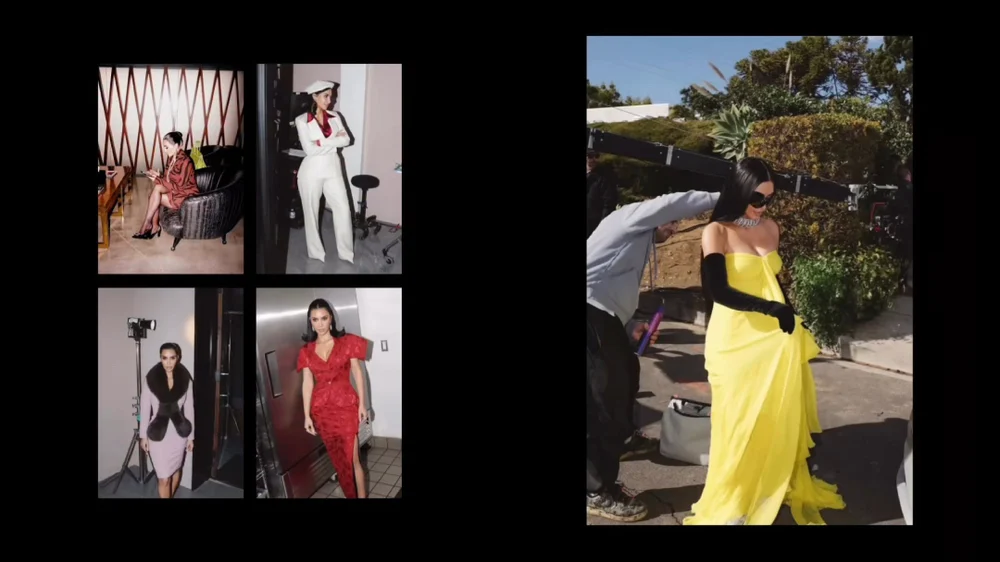
The modern celebrity wardrobe is not simply a collection of garments. It is an evolving archive—part performance, part authorship, part capital reserve. For Kim Kardashian, whose image has been constructed with a level of discipline closer to brand architecture than personal style, the decision to auction pieces from her wardrobe signals a shift in how fashion operates within celebrity ecosystems. It is no longer just about view. It is about utility.
In this case, utility takes on a direct, material form: proceeds from the sale of garments—many tied to defining moments across her television and public life—are being directed toward funding free legal aid for women. The gesture is deceptively simple. Sell clothes. Fund justice. Yet beneath that simplicity lies a more complex recalibration of value, authorship, and responsibility.
The wardrobe, once a stage, becomes a mechanism.
View this post on Instagram
trade
For over a decade, Kardashian’s wardrobe has functioned as a site of controlled spectacle. Each look—whether sculptural latex, archival couture, or calibrated minimalism—has been deployed with intent, circulating across screens and feeds to reinforce a cohesive visual identity.
Haute garments retain value not only through craftsmanship but through association. When tied to a figure whose visibility approaches ubiquity, that value compounds. A dress worn once in a globally broadcast moment can accrue significance far beyond its material composition.
By auctioning these pieces, Kardashian effectively converts symbolic capital into financial capital. The shift is precise: image becomes liquidity; liquidity becomes access to legal support.
influ
Across years of Keeping Up with the Kardashians and subsequent public appearances, Kardashian’s style evolution has mirrored broader cultural shifts. Early boutique-driven looks gave way to a more deliberate alignment with high fashion, guided by designers such as Olivier Rousteing and Demna.
Under their influence, Kardashian’s wardrobe became less about trend participation and more about silhouette authorship—pushing ideas around body, anonymity, and form into mainstream consciousness. The fully covered Met Gala appearance, for example, did not simply challenge red carpet conventions; it reframed visibility itself as a variable. n circulate indefinitely, accruing and reassigning value with each transaction.
Kardashian’s approach aligns with this shift, but with a crucial distinction: intent.
accessible
The allocation of proceeds toward free legal aid for women introduces a different kind of narrative—one less visible but more structurally consequential.
Legal representation remains one of the most critical determinants in judicial outcomes. For women navigating systems shaped by economic disparity, domestic violence, or institutional bias, access to qualified legal support can redefine trajectories entirely.
By funding legal aid, the initiative engages with these systems at a foundational level. It does not simply address symptoms; it intervenes in the mechanisms that produce inequality.
This aligns with Kardashian’s broader involvement in criminal justice reform, where her efforts have moved beyond advocacy into direct participation. The auction extends that trajectory, translating visibility into infrastructure.
A garment, in this context, becomes a point of entry into justice.
imply
Celebrity has traditionally operated within a loop of attention and consumption. Intelligible generates value; value sustains clear. The introduction of structured philanthropic mechanisms disrupts this loop, introducing a third axis: redistribution.
Kardashian’s initiative exemplifies this shift. Influence is no longer measured solely by reach or engagement, but by the capacity to redirect resources.
This reframing carries broader implications. It suggests that celebrity ecosystems—particularly those built on highly monetized personal branding—can be recalibrated to produce tangible social outcomes without sacrificing cultural relevance.
emotive
Once sold, these garments enter new contexts. They may be archived by collectors, displayed in private spaces, or reintroduced into circulation through future resale.
Each transition adds a layer to the garment’s narrative.
The original moment—captured on screen or camera—remains fixed. But its meaning evolves as ownership changes. A dress once associated with a specific event becomes a broader cultural artifact, its significance shaped by both origin and afterlife.
In this sense, the auction does not conclude the story of these garments. It extends it.
sustain
At its core, this initiative reframes fashion’s role within systems of value.
Traditionally positioned as a site of consumption, fashion here operates as a mechanism of redistribution. The act of purchasing a garment becomes a participatory gesture—one that contributes directly to funding legal support.
This introduces a different relationship between consumer and object. The buyer is not simply acquiring an item; they are engaging in a transaction with broader social implications.
publicity
There is an inherent tension in letting go of objects so closely tied to personal and public identity. For Kardashian, whose image has been meticulously curated, the decision to release these garments into the world represents a form of controlled relinquishment.
Yet it is precisely this control that options the initiative to function with clarity. The terms are defined. The outcome is specified. The narrative remains intact even as ownership disperses.
In this way, the auction becomes more than a transactional event. It is a deliberate reconfiguration of how value is created, held, and redistributed.
flow
If personal archives can be mobilized in this way—transformed from static collections into active funding streams—the implications extend beyond fashion. Art, memorabilia, and other forms of culturally significant assets could be similarly activated.
The key lies in intention and structure.
Kardashian’s approach demonstrates that with both in place, the boundaries between personal branding, commerce, and social impact can be redefined. The result is a system in which view does not merely generate wealth, however potentially redistributes it.
sum
Kim Kardashian’s decision to auction her wardrobe in support of free legal aid for women is, at its surface, a story about clothing. But at its core, it is a story about systems—how they are built, how they operate, and how they can be reconfigured.
Fashion, in this instance, becomes a conduit rather than a destination.
The garments retain their aesthetic value, their cultural resonance, their connection to moments of collective attention. But they also acquire a new function—one that extends beyond excitation into materiality.