DRIFT

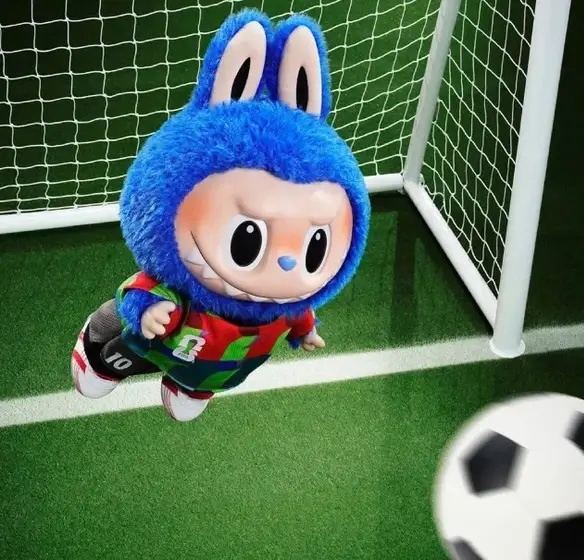
There is something almost inevitable about the convergence of global football culture and designer toys. Both operate on devotion, scarcity, ritual, and identity. Both thrive on symbols—kits, crests, mascots, silhouettes. So when Labubu—the mischievous, sharp-toothed creature born from the imagination of Kasing Lung—steps onto the pitch in a collision orbiting the FIFA World Cup, it doesn’t feel like novelty. It feels like alignment.

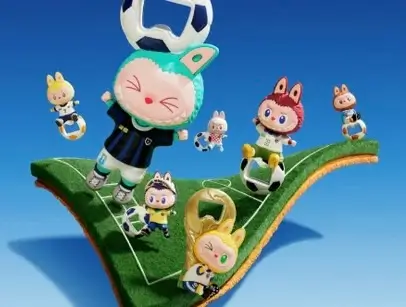
Through Pop Mart’s expanding ecosystem of blind boxes, vinyl figures, and lifestyle accessories, Labubu becomes less a static collectible and more a cultural participant—now dressed in football kits, holding miniature balls, and appearing across cups, bottle openers, and fan objects that extend far beyond the display shelf.

This is not simply merchandise. It is the translation of football fever into collectible form.

flow

Labubu has always existed in a liminal space—part fairy-tale creature, part street-culture icon. The character’s appeal lies in contradiction: cute but feral, skittish yet slightly unsettling. That tension is precisely what allows it to travel across contexts so fluidly.

Football, especially at the scale of the World Cup, is similarly paradoxical. It is both hyper-national and universally shared. It is ritualistic but spontaneous. Emotional yet commercialized. In that sense, Labubu doesn’t need to be adapted for football—it simply needs to be placed within it.

The result is a character that doesn’t just wear a jersey—it inhabits the acknowledment of fandom.

stir

What distinguishes this release is not just the figures themselves, but the extension into functional objects. Cups, bottle openers, and small lifestyle items may seem peripheral, but they are central to how this collaboration operates.

These objects do three things:

  • They embed Labubu into daily ritual
    A cup is not a collectible in the traditional sense—it is used, handled, lived with. By placing Labubu on drinkware, the character moves from shelf to habit.
  • They mirror football culture’s social dimension
    Football is watched collectively—over drinks, in bars, at home gatherings. Bottle openers and cups are not random accessories; they are tools of communal viewing.
  • They lower the barrier to entry
    Not every consumer engages with blind-box collecting. Functional merchandise offers an entry point—accessible, practical, and still emotionally resonant.

In this way, the collection behaves less like a drop and more like a system—one that captures different layers of engagement, from the obsessive collector to the casual fan.

chance

The blind box format—central to Pop Mart’s global success—introduces a crucial dynamic: unpredictability. You don’t choose your Labubu; you discover it.

This mechanic mirrors football in subtle but powerful ways:

  • Uncertainty: Matches are not predetermined, just as pulls are not guaranteed
  • Anticipation: The moment of opening echoes the tension before kickoff
  • Community exchange: Trading duplicates reflects the social economy of fandom

Within a World Cup context, this becomes even more potent. National teams, underdogs, surprise performances—these are narratives built on chance. The blind box becomes a microcosm of the tournament itself.


View this post on Instagram


A post shared by POP MART (@popmart)

lang

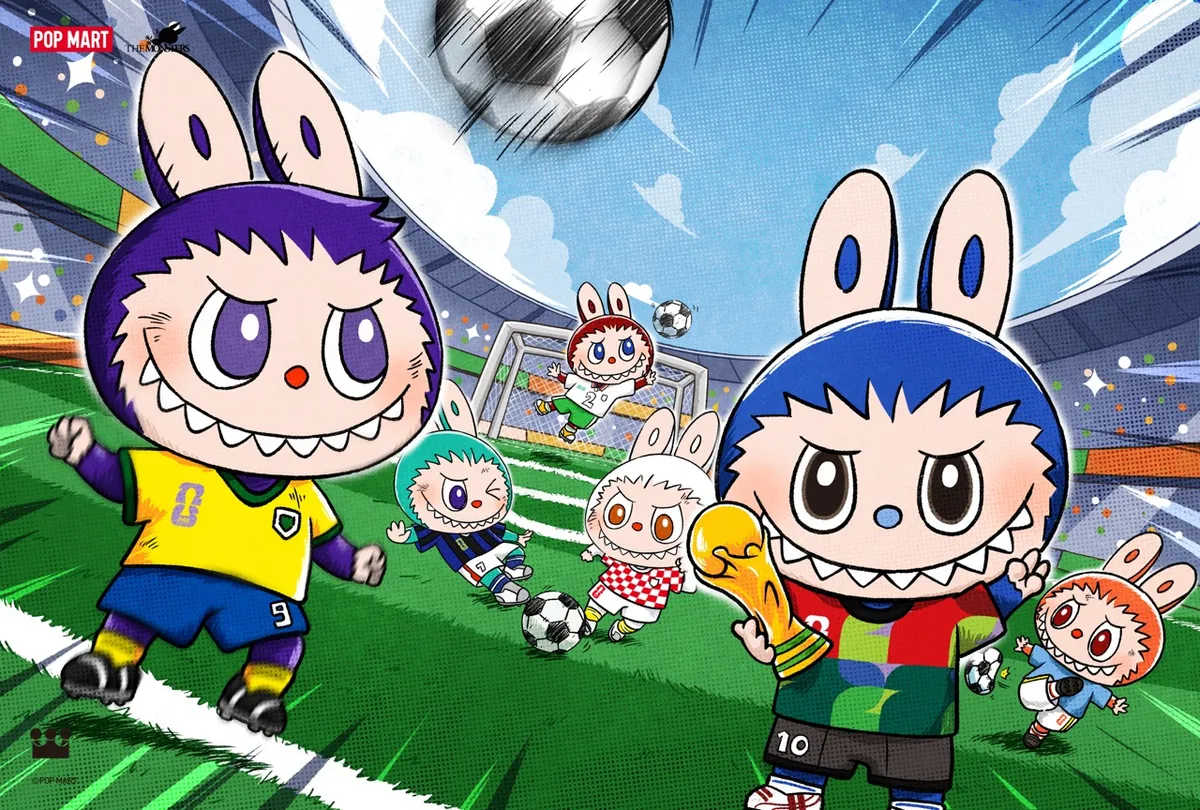
The visual strategy behind the Labubu football series is deceptively simple: translate kit culture into character form.

But within that simplicity lies precision:

  • Color blocking reflects national palettes without direct replication
  • Miniature accessories—balls, scarves, boots—anchor the figures in sport
  • Expression remains unchanged, preserving Labubu’s identity regardless of context

This last point is critical. Labubu does not become a football mascot. It remains Labubu, merely participating in football.

That distinction preserves authenticity—something both toy collectors and football fans are acutely sensitive to.

rare

One of the defining features of World Cup-related products is their temporality. They are tied to a specific moment—a tournament that happens once every four years.

This creates a unique tension in the Labubu release:

  • Short-term relevance (linked to the tournament)
  • Long-term collectibility (anchored in the character’s enduring appeal)

For collectors, this duality is compelling. A Labubu football figure is both a timestamp and an artifact. It marks a cultural moment while remaining part of a broader collectible universe.

culture

There is a long history of mascots in football—from official tournament characters to club-specific icons. But many of these feel localized, tied to specific geographies or narratives.

Labubu operates differently.

Because it originates outside football, it enters the space without baggage. It doesn’t represent a nation, a team, or a governing body. It represents itself.

This neutrality allows it to move across markets seamlessly:

  • In Asia, it aligns with established designer toy culture
  • In Europe, it intersects with football’s deep-rooted traditions
  • In North America, it taps into growing soccer enthusiasm and collectible trends

The result is a rare form of cultural translation—one that doesn’t dilute either side.

move

Labubu’s design—sharp teeth, wide grin, exaggerated features—creates what might be called “cute aggression.” It’s endearing but slightly chaotic.

In a football context, this becomes metaphorically resonant:

  • The unpredictability of matches
  • The emotional volatility of fans
  • The intensity beneath the spectacle

Labubu doesn’t just decorate football culture—it reflects its emotional texture.

show

This collaboration signals something larger than a single release. It reflects the continued globalization of designer toy culture.

Once niche, this category now intersects with:

  • Fashion
  • Sports
  • Entertainment
  • Lifestyle goods

Labubu, as one of Pop Mart’s flagship characters, becomes a vehicle for that expansion. Its presence in a World Cup context is less a novelty than a milestone.

new

Traditional mascots are designed to represent. Labubu, by contrast, is designed to exist.

It doesn’t explain the World Cup. It doesn’t narrate it. It simply enters the space and adapts.

In doing so, it becomes a new kind of mascot—one that doesn’t belong to the event but coexists with it.

fin

The collision of Labubu and the World Cup is not about scale—it’s about resonance.

A small vinyl figure, a cup, a bottle opener—these are modest objects. But within them is a complex interplay of culture, commerce, and emotion.

Football fever is, at its core, about shared experience. Designer toys, at their best, are about personal attachment. This collaboration bridges the two.

Labubu doesn’t need to score goals. It only needs to be present—on the table, in the hand, within the moment.

And in that presence, it becomes part of the game.