Lauren London Reflects on the Meaning of Nipsey Hussle Square in Los Angeles

March 4, 2026
sym
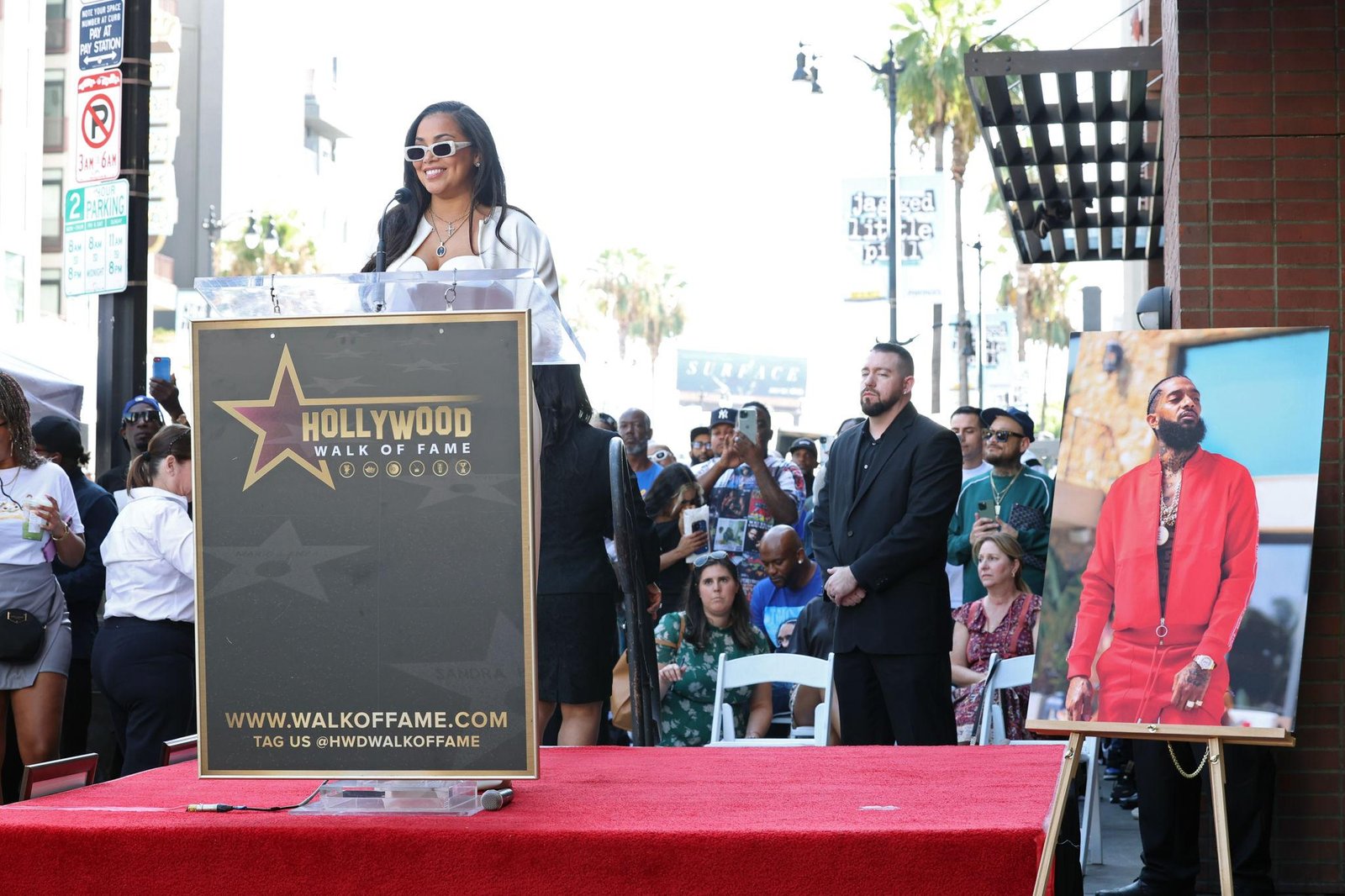
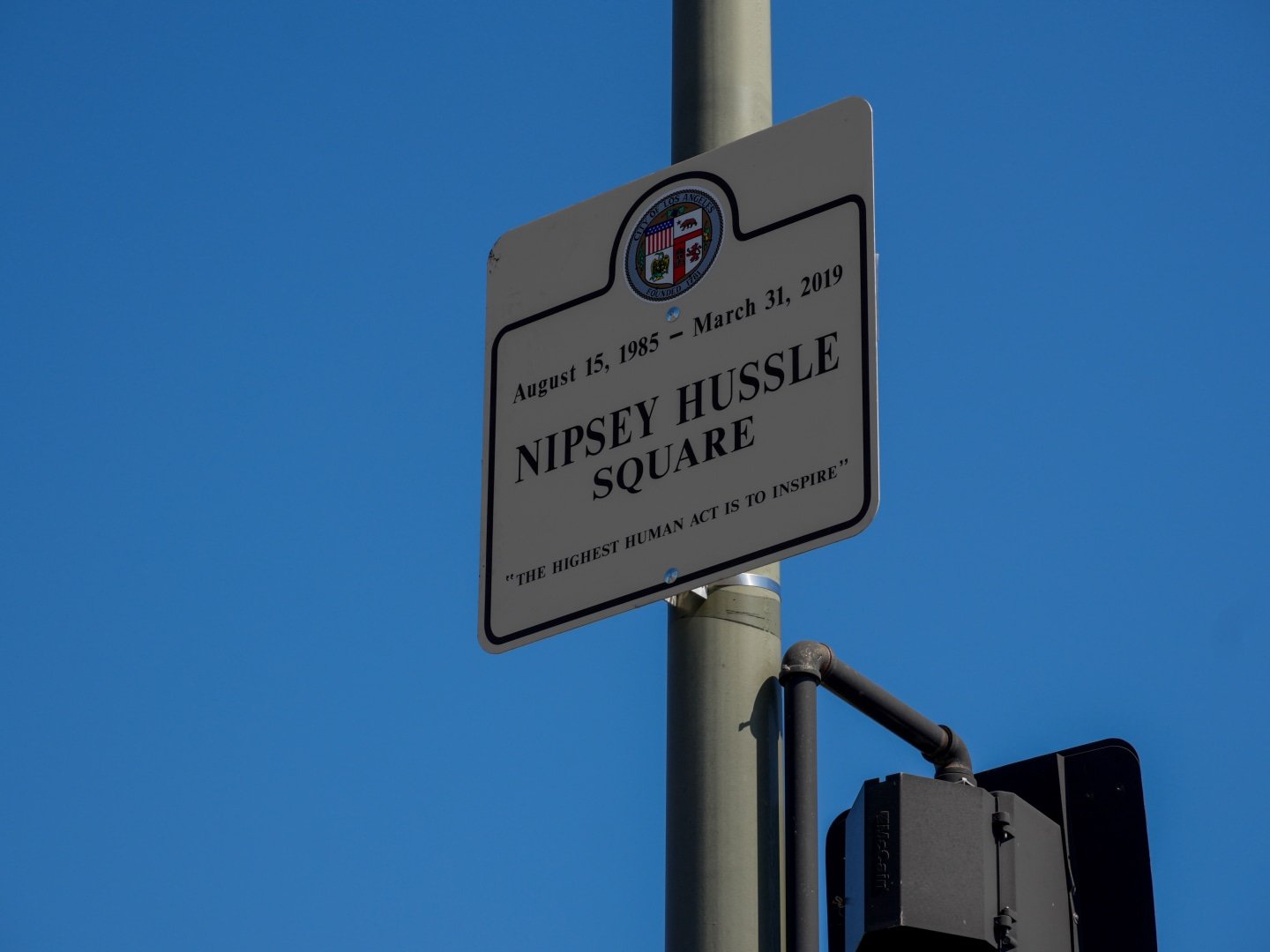
When the intersection of Crenshaw Boulevard and Slauson Avenue in Los Angeles was officially renamed Nipsey Hussle Square, it marked more than a ceremonial gesture. The corner—already immortalized in hip-hop culture—transformed into a civic landmark representing resilience, entrepreneurship, and community pride. For actor and entrepreneur Lauren London, the dedication carries a deeper meaning than any plaque or street sign could ever express.
London, who shared a life and family with Nipsey Hussle, has spoken thoughtfully about how the memorial represents a continuation of his vision rather than a closure of his story. The square is not simply a monument to a fallen artist; it is a reminder of the ambitions he held for his neighborhood, his community, and the generations that would follow.
In reflecting on the significance of the site, London has framed it as both a place of memory and a place of forward momentum—a physical location where grief, inspiration, and responsibility coexist.
leg
Long before it was renamed, the intersection of Crenshaw and Slauson was already deeply tied to Nipsey Hussle’s life story. Born Ermias Asghedom, the rapper grew up in South Los Angeles and developed an early awareness of the challenges facing his community. His music would eventually bring him international recognition, but his ambitions always extended beyond entertainment.
The corner housed his clothing store and entrepreneurial headquarters, known as The Marathon Clothing. Rather than relocating his business to a more affluent district, Hussle deliberately rooted his brand in the neighborhood that raised him.
The decision was symbolic. He believed that economic empowerment could transform communities often overlooked by mainstream investment.
For Lauren London, that choice remains central to understanding the meaning behind the square’s renaming. The corner was not just a location where Hussle conducted business; it was where he enacted his philosophy of reinvestment and cultural pride.
“Crenshaw and Slauson was never just an address,” London has said in various reflections about his legacy. “It was a mission.”
london
Lauren London has largely approached public discussions of Hussle’s legacy with careful intention. Rather than presenting herself as the sole interpreter of his life, she consistently emphasizes collective memory and shared responsibility.
Her reflections on Nipsey Hussle Square often center on the idea that his legacy belongs to the community as much as it does to his family.
For London, the square represents a permanent reminder that Hussle’s influence extends beyond music charts or industry accolades. His work in local entrepreneurship, financial literacy initiatives, and youth mentorship has shaped how many people now view hip-hop artists—as cultural architects rather than simply entertainers.
London has described the dedication of Nipsey Hussle Square as an emotional milestone. Standing at the intersection where Hussle spent countless hours building his vision, she has spoken about the surreal nature of seeing his name formally embedded in the geography of Los Angeles.
It is both a tribute and a challenge: a tribute to what he achieved, and a challenge to continue the work he began.
stir
The renaming of the intersection followed the devastating loss of Nipsey Hussle in 2019, when he was fatally shot outside his store. The tragedy sent shockwaves through the music world and beyond, sparking an outpouring of grief that stretched far beyond Los Angeles.
For many, Hussle’s death felt particularly painful because of his reputation as an artist who had dedicated himself to building rather than escaping his community.
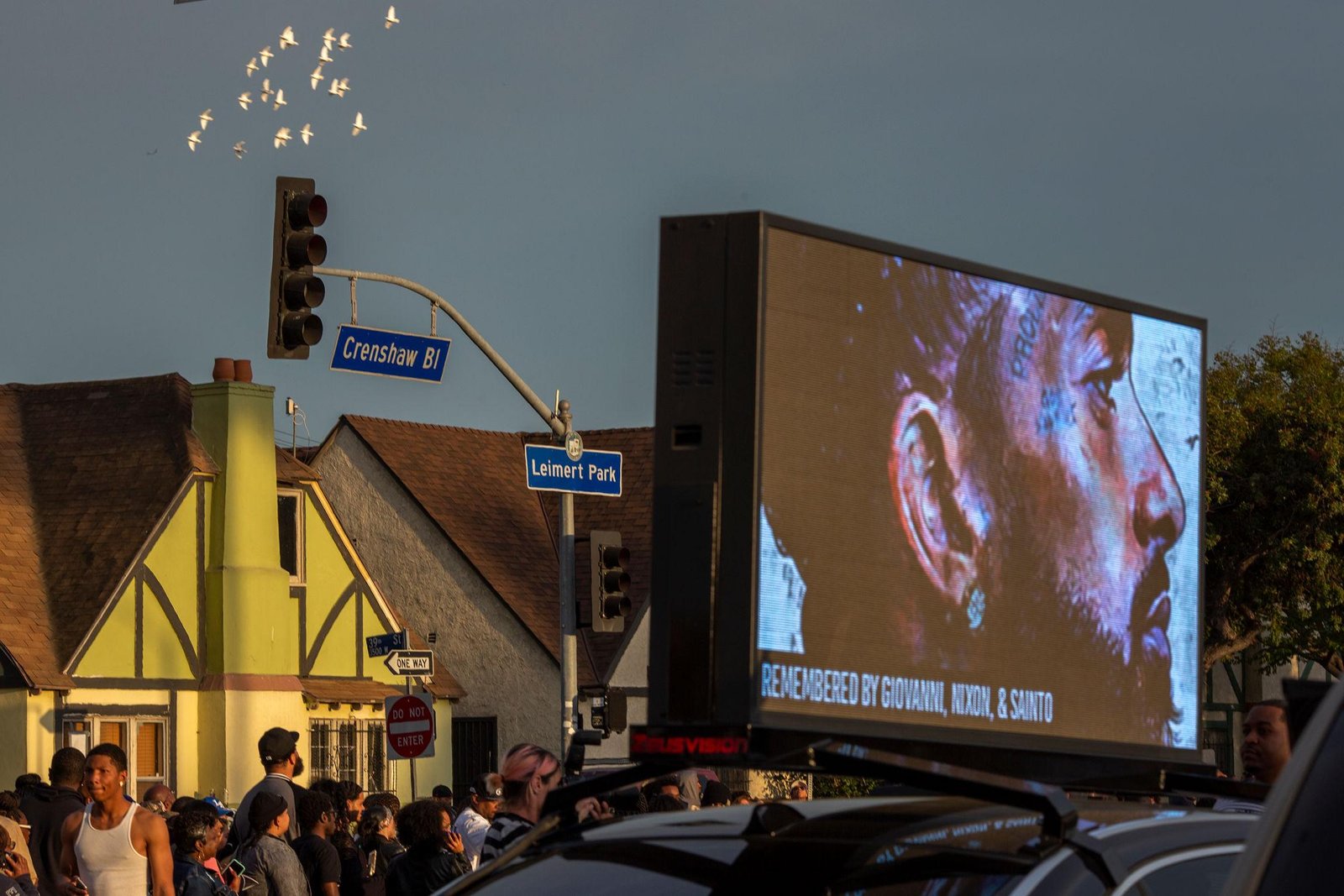
Memorial gatherings quickly formed around the Crenshaw and Slauson intersection. Fans, neighbors, activists, and fellow artists left candles, murals, flowers, and handwritten notes. The corner became a place of collective mourning.
But over time, it evolved into something else: a place of reflection and inspiration.
When the city later approved the renaming of the intersection as Nipsey Hussle Square, the decision acknowledged what the community already understood. The corner had become a site of cultural significance.
For Lauren London, that transformation—from grief to recognition—reflects Hussle’s philosophy of perseverance.
“He always believed in turning pain into purpose,” she has noted in reflections on his impact.
flow
One of the phrases most closely associated with Nipsey Hussle is “The Marathon Continues.” It appeared in his music, merchandise, and public statements, becoming both a slogan and a philosophy.
The phrase suggests that success and social progress are not achieved through quick victories but through sustained commitment over time.
Lauren London often refers to this concept when discussing the meaning of Nipsey Hussle Square. The street sign itself becomes a symbol of that marathon—evidence that Hussle’s influence did not end with his passing.
Instead, the square functions as a checkpoint along a longer journey.
Young entrepreneurs still visit the intersection seeking inspiration. Tourists come to understand the cultural significance of the site. Local residents see it as proof that one of their own reshaped the narrative of the neighborhood.
The marathon continues not only through Hussle’s music but through the actions of those inspired by his work.
culture
Although Nipsey Hussle gained global recognition through albums like Victory Lap, his cultural impact extends far beyond the boundaries of hip-hop.
He became known for advocating financial literacy, supporting tech education initiatives, and encouraging ownership within Black communities.
These efforts made him a unique figure in contemporary music culture. While many artists have spoken about social change, Hussle attempted to implement tangible economic solutions.
Lauren London frequently emphasizes this dimension of his legacy. In interviews and public remarks, she highlights how Hussle viewed business ownership and community investment as essential tools for empowerment.
Nipsey Hussle Square therefore symbolizes more than artistic achievement. It represents a philosophy of economic independence.
Standing beneath the street sign bearing his name, visitors encounter not only the memory of a rapper but the blueprint of a community advocate.
show
Since Hussle’s passing, Lauren London has taken on an important role in preserving the integrity of his legacy. She has approached that responsibility with quiet dignity, rarely seeking the spotlight yet consistently participating in initiatives that honor his work.
Her reflections on Nipsey Hussle Square reveal how carefully she considers the meaning of public memorials.
Rather than allowing the square to become a static monument, she frames it as an active reminder of unfinished work.
The neighborhood Hussle loved still faces many of the structural challenges he sought to address. Economic disparities, limited resources, and systemic barriers remain realities for many residents.
For London, the square is therefore not an endpoint but a starting point—a place where inspiration must translate into action.
commune
One of the most powerful aspects of Nipsey Hussle Square is the way it belongs to the community.
Unlike traditional monuments erected by institutions, the meaning of this space was shaped first by the people who gathered there. Murals appeared before official recognition. Street vendors sold T-shirts bearing Hussle’s image. Musicians played his songs from car speakers.
The square evolved organically as a site of remembrance.
Lauren London has spoken about how meaningful it is to witness that grassroots ownership of memory. It reflects the authenticity of Hussle’s relationship with his neighborhood.
He was not simply a celebrity returning for occasional visits. He remained embedded in the community’s daily life.
Because of that connection, the square feels less like a memorial imposed from above and more like a tribute built collectively from the ground up.
landmark
In many ways, Nipsey Hussle Square has become one of the most recognizable cultural landmarks in modern Los Angeles.
Visitors from across the world travel to Crenshaw and Slauson to see the intersection that symbolizes Hussle’s journey from local artist to global icon.
Murals and artwork throughout the neighborhood continue to evolve, turning the area into a living gallery celebrating his life.
Lauren London has acknowledged the emotional complexity of seeing the location attract such attention. While the recognition affirms Hussle’s impact, it also reminds her of the personal loss behind the public story.
Yet she consistently frames the attention as an opportunity for education and inspiration.
Every visitor who learns about Hussle’s commitment to community development becomes part of the continuing narrative.
fwd
As the years pass, the meaning of Nipsey Hussle Square continues to evolve.
For older residents who watched Hussle grow up in the neighborhood, the square represents a story of perseverance against difficult odds. For younger generations discovering his music for the first time, it serves as a gateway into a broader conversation about entrepreneurship and cultural pride.
Lauren London’s reflections often return to a central theme: legacy is not measured solely by accomplishments but by the inspiration those accomplishments ignite in others.
The square stands as proof that Hussle’s ideas remain alive in the people who continue to believe in them.
It is a reminder that transformation rarely happens overnight. Like the marathon Hussle spoke about so often, meaningful change requires patience, persistence, and collective effort.
sum
Nipsey Hussle Square is, on the surface, just a renamed intersection. Yet for Lauren London and countless others, it represents something far more profound.
It tells the story of a young man who refused to abandon his community, who believed in the power of ownership and education, and who used his influence to inspire others.
For London, the square is both a place of remembrance and a call to action. Every time someone stands beneath the sign bearing Hussle’s name, they encounter the principles he championed: resilience, empowerment, and dedication to the long journey of progress.
In that sense, the square does not mark the end of Nipsey Hussle’s story.
It marks the continuation of his marathon.

No comments yet.