
Le Kilt’s Hand Knitted Aran Vest Revives Traditional Cable Knit Craft

March 6, 2026
a heritage
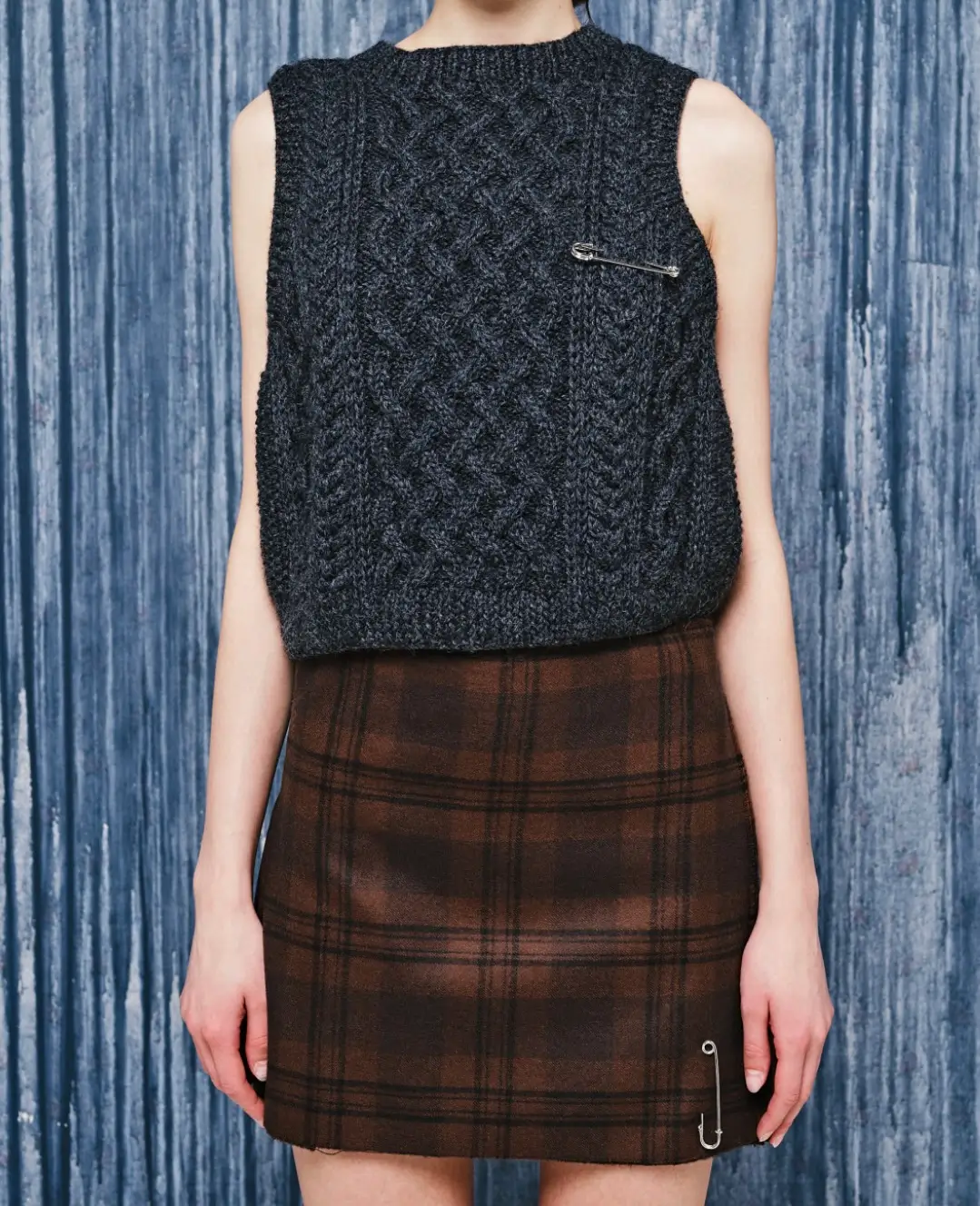
Few garments embody the meeting point of heritage craft and modern design as seamlessly as the hand knitted Aran vest by Le Kilt. Rooted in centuries-old Irish knitting traditions yet reimagined through the lens of contemporary fashion, the piece represents more than a seasonal wardrobe staple. It functions as a cultural artifact, a wearable expression of craftsmanship, and an emblem of slow fashion values.
Founded by designer Samantha McCoach, Le Kilt has built its reputation on preserving and elevating traditional textile practices, particularly those linked to Scottish heritage. The brand’s philosophy centers on respecting historical techniques while adapting them for modern wardrobes. With the Aran vest, that ethos is on full display.
The vest takes inspiration from the legendary Aran sweater tradition originating from Ireland’s rugged Atlantic islands. Historically worn by fishermen and coastal workers, Aran knitwear was prized for its warmth, durability, and symbolic patterns. Each stitch carried meaning—representing elements such as ropes, nets, or protection.
By transforming this heritage into a vest silhouette, Le Kilt delivers a garment that bridges past and present while remaining unmistakably contemporary.
origin
The story of Aran knitting begins on the windswept Aran Islands off Ireland’s western coast. In the late nineteenth and early twentieth centuries, island communities developed distinctive knitting techniques designed to combat harsh maritime climates.
Traditional Aran sweaters were crafted from unscoured wool, retaining natural lanolin oils that provided water resistance. The garments featured elaborate cable patterns that created both insulation and texture.
Among the most recognizable motifs are:
-
Cable stitches symbolizing fishermen’s ropes
-
Diamond patterns representing fields and prosperity
-
Honeycomb stitches signifying hard work and reward
-
Basket stitches evoking fishermen’s baskets
These designs served not merely decorative purposes but also cultural storytelling. Families often developed unique combinations of stitches, allowing garments to become identifiers of lineage and community.
Today, Aran knitwear has evolved into an internationally recognized symbol of Irish craftsmanship. Yet many contemporary interpretations lose the artisanal authenticity that defined the originals.
Le Kilt’s hand knitted Aran vest seeks to preserve that authenticity while adapting the tradition to modern fashion contexts.
garment
The defining characteristic of the vest lies in its hand-knitted construction. Unlike machine-produced knitwear, hand knitting preserves subtle irregularities that highlight the human touch behind the garment.
Each vest requires hours of meticulous work. Skilled knitters follow intricate cable patterns that demand precision and rhythm. The resulting texture carries depth and dimension that cannot be replicated through automated processes.
The yarn itself is typically sourced from high-quality wool selected for warmth, resilience, and softness. Natural fibers ensure breathability and durability, allowing the garment to age gracefully over time.
The hand-knitted structure also contributes to the vest’s sculptural appearance. Cable stitches create raised ridges that give the fabric a tactile richness, transforming a functional knit into a visually striking design object.
Such attention to craft aligns with Le Kilt’s broader commitment to slow fashion. Rather than chasing rapid seasonal trends, the brand emphasizes longevity, quality, and timeless aesthetics.
sil
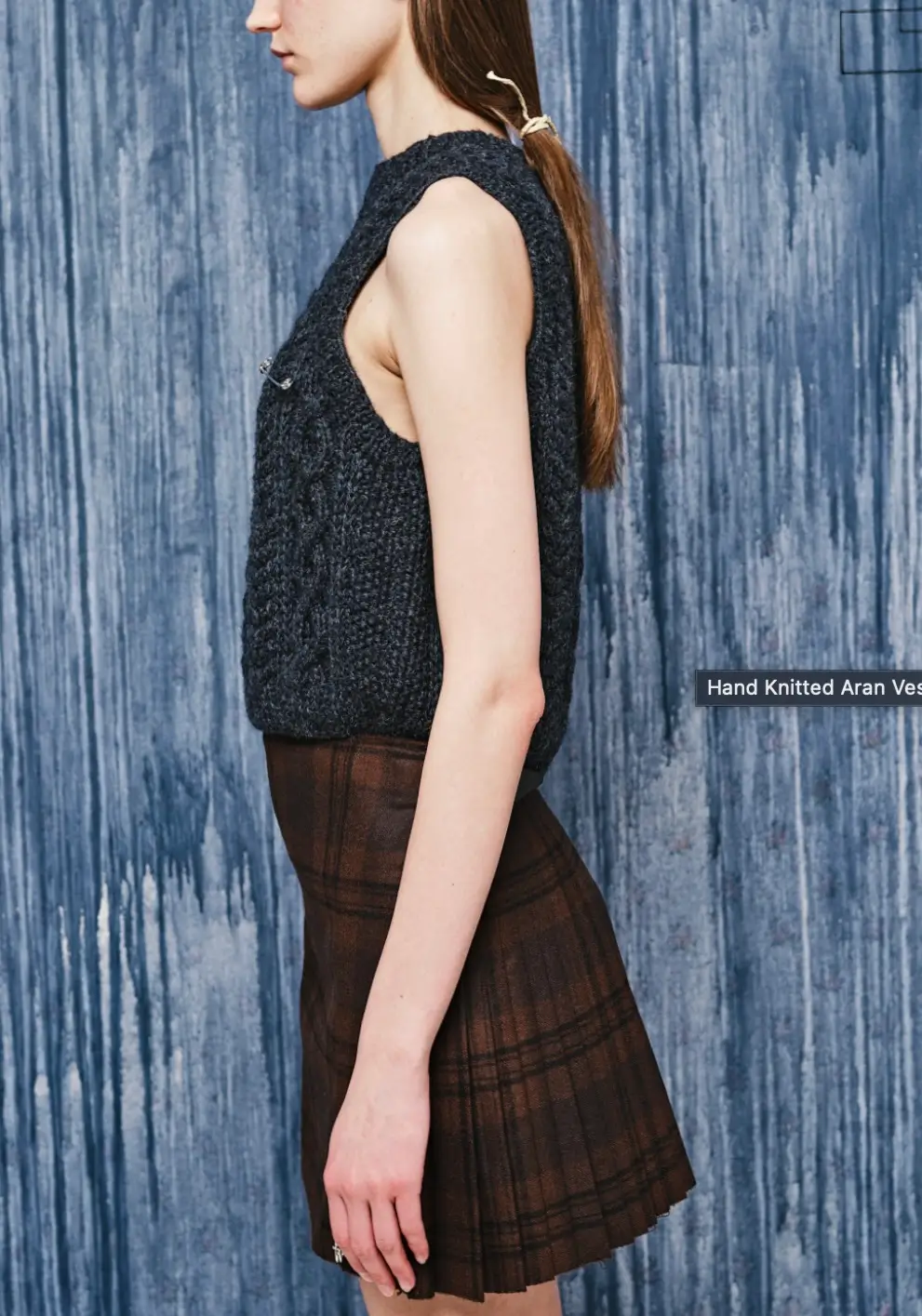
Traditional Aran sweaters are known for their heavy structure and oversized silhouettes. Le Kilt’s vest reinterpretation introduces a more versatile shape suited to contemporary layering.
The sleeveless construction allows the garment to function across multiple styling contexts. It can be worn over crisp shirts, long-sleeve tees, or lightweight knits, making it adaptable across seasons.
The design often features:
-
A relaxed, slightly boxy fit
-
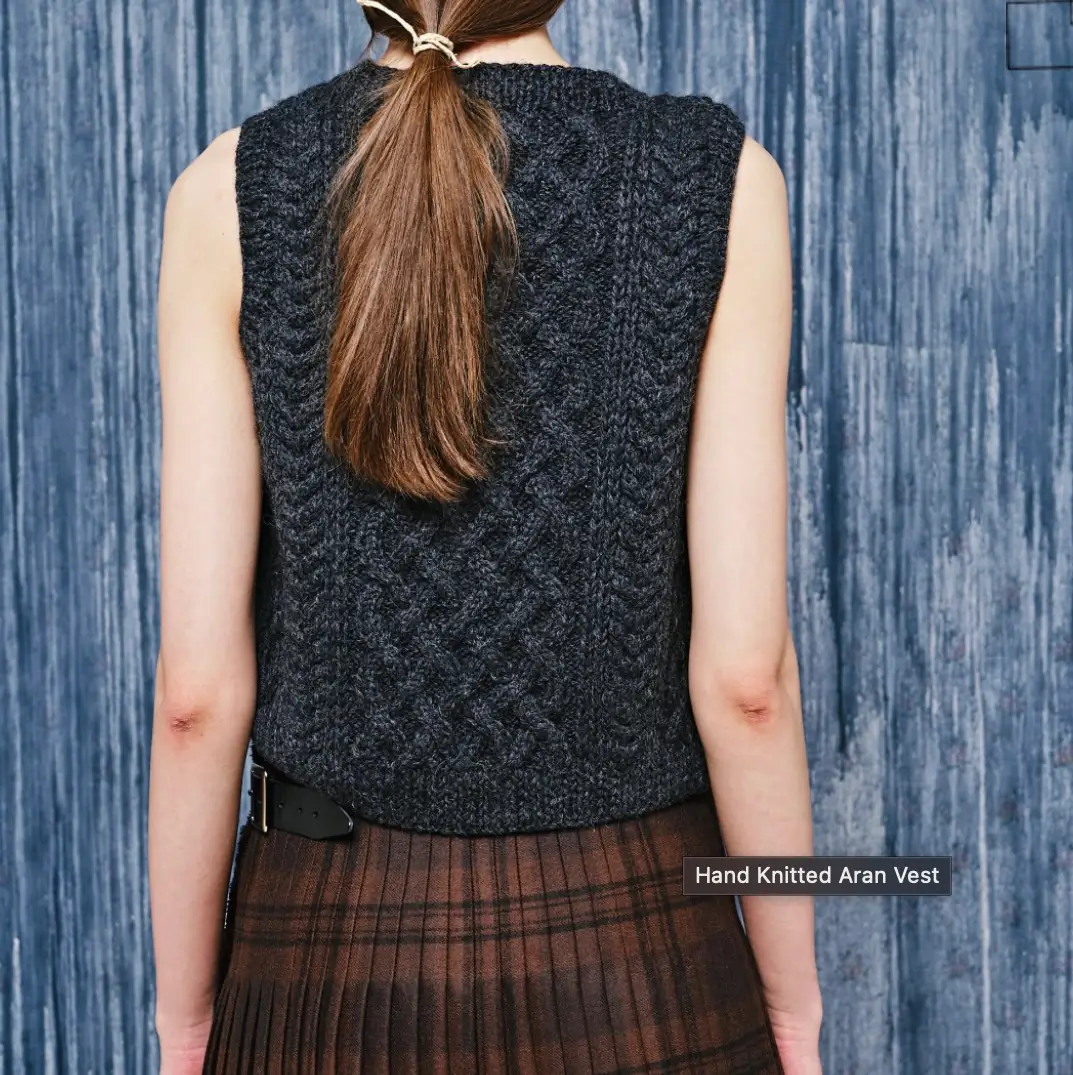
Ribbed hem and neckline
-
Dense cable knit panels across the body
-
Subtle shaping that maintains structure without bulk
This silhouette reflects the brand’s design philosophy—respecting historical references while ensuring the garment integrates seamlessly into modern wardrobes.
The vest’s proportions also allow the cable patterns to become the central visual focus. Without sleeves to interrupt the design, the intricate knit structures unfold across the garment like a textile landscape.
mat
Aran knitwear is defined by its tactile qualities, and the Le Kilt vest fully embraces this tradition. The wool yarn provides natural insulation, making the garment ideal for colder climates while remaining breathable enough for transitional seasons.
The textured surface created by cable knitting traps pockets of air, enhancing thermal efficiency. This technique historically helped fishermen stay warm during long hours at sea, and it continues to offer practical benefits in contemporary settings.
Beyond functionality, the tactile dimension adds aesthetic depth. The interplay of cables, ridges, and stitches creates shadows and highlights that shift with movement and light.
Such richness turns the vest into a statement piece even when paired with minimal outfits.
stir
The renewed interest in handcrafted garments has positioned Aran knitwear at the forefront of contemporary fashion conversations.
Consumers increasingly seek pieces that offer authenticity, craftsmanship, and narrative value. In a market saturated with mass-produced clothing, garments like the Le Kilt Aran vest stand apart by emphasizing human skill and historical continuity.
This shift aligns with broader cultural movements favoring slow fashion, sustainability, and artisanal production.
Luxury fashion houses and independent labels alike have begun revisiting traditional textile techniques—from Japanese sashiko stitching to Scottish tweed weaving. Aran knitting occupies a similar position within this revival of heritage craft.
Le Kilt’s approach demonstrates how historical methods can remain relevant when interpreted through thoughtful design.
contemporary
One of the vest’s greatest strengths lies in its versatility. Despite its heritage origins, the garment integrates effortlessly into modern styling frameworks.
Paired with tailored trousers and a crisp shirt, the vest can create a refined academic aesthetic reminiscent of traditional British tailoring.
Layered over a relaxed tee with denim or cargo trousers, it introduces texture to casual streetwear ensembles.
For colder months, it works seamlessly under coats or oversized outerwear, providing both insulation and visual contrast.
The neutral tones commonly associated with Aran knitwear—cream, oatmeal, or natural wool shades—also enhance the vest’s adaptability. These colors complement a wide range of palettes while highlighting the knit patterns themselves.
View this post on Instagram
le kilt
At the core of Le Kilt’s identity is a commitment to preserving traditional craftsmanship while encouraging modern experimentation.
The brand gained recognition for its reinterpretation of the classic Scottish kilt, transforming a historically masculine garment into a contemporary fashion staple. This philosophy extends across its collections, where heritage textiles become vehicles for modern expression.
The Aran vest reflects this balance between preservation and innovation.
By maintaining hand-knitted construction, Le Kilt protects the authenticity of Aran craftsmanship. Yet the vest silhouette and contemporary styling demonstrate the brand’s willingness to push tradition forward.
This duality—respecting history while embracing change—defines the brand’s ongoing creative direction.
slow
The fashion industry faces increasing scrutiny over environmental impact and labor practices. In this context, garments rooted in traditional craftsmanship offer an alternative to disposable fashion.
Hand-knitted pieces inherently resist fast production cycles. Their creation requires time, skill, and careful attention to detail.
This slower pace encourages consumers to view garments as long-term investments rather than temporary trends.
Natural wool fibers also contribute to sustainability goals. Wool is biodegradable, renewable, and capable of lasting for decades with proper care.
The Le Kilt Aran vest embodies these values, reinforcing the idea that fashion can be both aesthetically compelling and environmentally responsible.
culture
Beyond aesthetics and function, Aran knitting carries deep cultural symbolism. The intricate patterns woven into each garment reflect generations of tradition and storytelling.
While contemporary wearers may not always recognize the specific meanings behind each stitch, the visual language of Aran knitwear still conveys a sense of heritage and identity.
Le Kilt’s reinterpretation preserves this symbolic resonance while inviting new audiences to engage with the craft.
In doing so, the brand contributes to the ongoing dialogue between tradition and modernity within fashion.
evolve
Fashion is often associated with rapid change and seasonal reinvention. Yet certain garments transcend trends by embodying enduring values such as craftsmanship, authenticity, and cultural heritage.
The Le Kilt hand knitted Aran vest belongs to this category.
Its design draws upon centuries-old techniques while remaining adaptable to contemporary styling. Its materials promise durability and comfort. And its craftsmanship celebrates the human hands behind each stitch.
In an industry increasingly driven by speed and spectacle, such garments remind us of fashion’s deeper roots.
They tell stories—of communities, traditions, and artisanship—while continuing to evolve alongside modern culture.
fin
The Le Kilt Hand Knitted Aran Vest stands as a powerful example of how heritage craft can thrive within contemporary fashion.
By honoring the legacy of Aran knitting while introducing modern silhouettes and styling possibilities, the brand creates a garment that bridges generations of textile tradition.
The vest is not simply knitwear. It is a reflection of craftsmanship, cultural memory, and thoughtful design.
As fashion continues to rediscover the value of authenticity and artisanal production, pieces like the Le Kilt Aran vest demonstrate that the past still holds inspiration for the future.

No comments yet.


