Le Labo at Twenty: The Essence of Slow Perfumery and the Architecture of Scent

April 1, 2026
2 hours ago

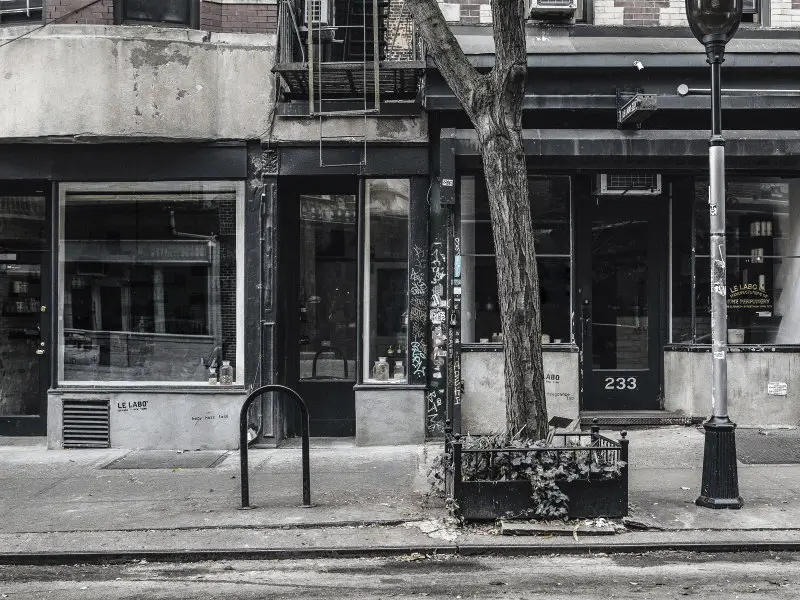
There is a certain kind of quietude that defines the early years of Le Labo. Not absence, but intention. A refusal to accelerate. A resistance to spectacle. Two decades ago, on Elizabeth Street in New York’s Nolita district, the brand opened its first laboratory with little more than a set of formulations, a point of view, and an almost stubborn belief in slowness. No grand campaign, no seasonal urgency. Just scent—compounded, bottled, labeled by hand.
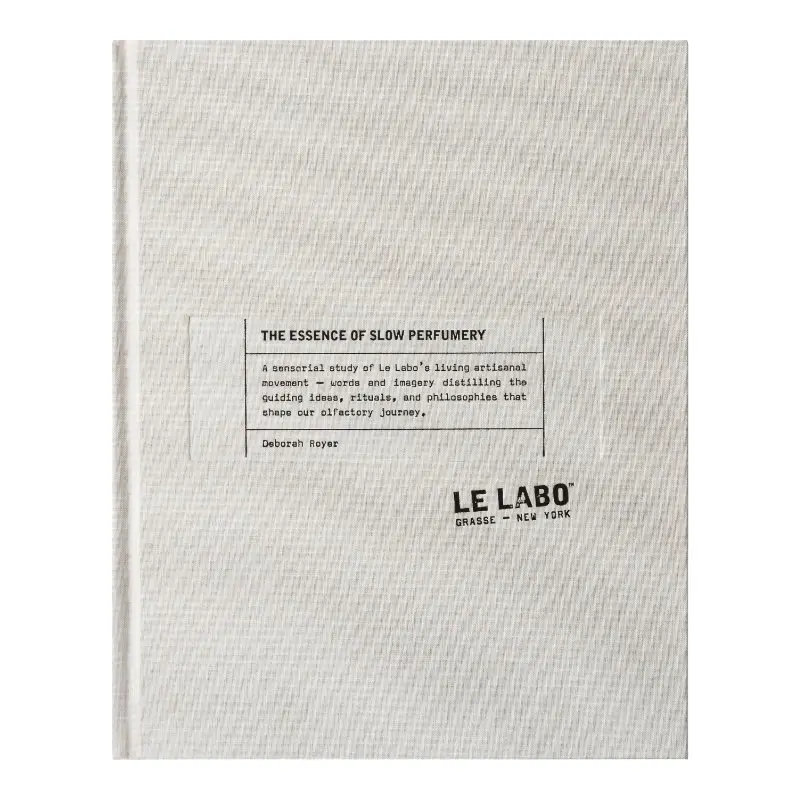
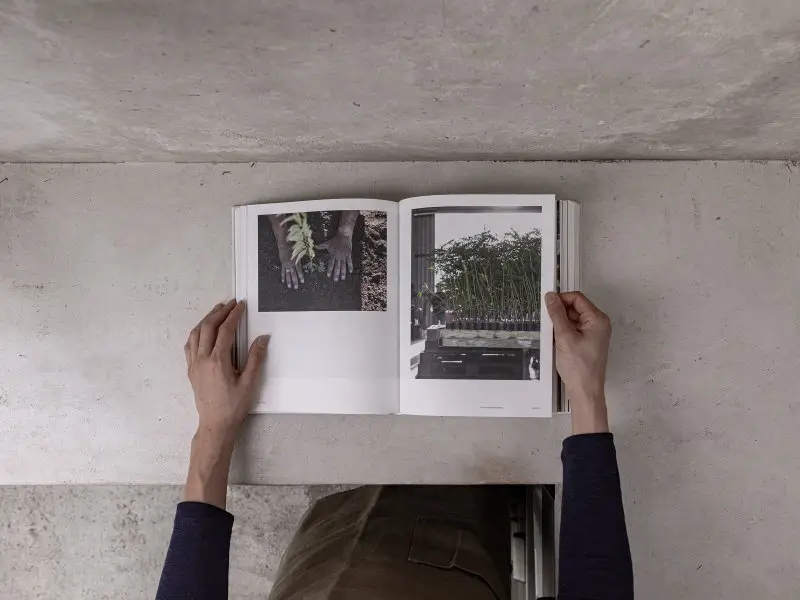
Twenty years later, that same philosophy is being distilled into a book: Le Labo: The Essence of Slow Perfumery, written by Deborah Royer. The project arrives not as a retrospective in the conventional sense, but as something more elusive—part archive, part meditation, part invitation. It does not simply recount the brand’s trajectory; it attempts to capture its tempo.
View this post on Instagram
stir
The original space on Elizabeth Street did not resemble a boutique so much as an atelier stripped to its essentials. Bottles stood like instruments. Labels were typed in real time. Fragrance was not presented as a finished object, but as a process unfolding in front of the customer.
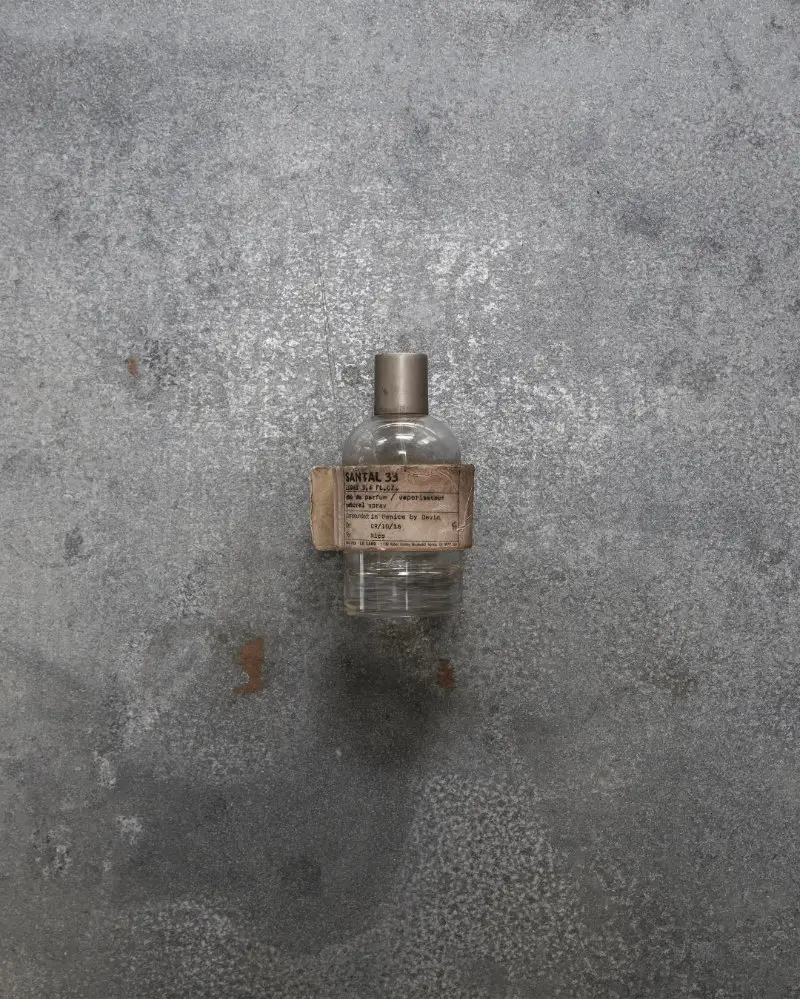
This distinction—between selling and making—became foundational. While other houses leaned into narrative spectacle, Le Labo positioned itself closer to the logic of craft. Each bottle was dated. Each label personalized. Time, in this context, was not something to be optimized; it was something to be marked.
That ethos aligned quietly with a broader cultural shift in the early 2000s—a growing skepticism toward mass production and a renewed interest in the handmade. Yet Le Labo did not frame itself as a reaction. It simply moved at its own pace, and in doing so, helped define what would later be recognized as an artisanal movement within perfumery.
slow
The phrase “slow perfumery” risks being misunderstood as branding shorthand. In practice, it operates more like a discipline. Formulas are constructed with a deliberate minimalism. Ingredients are allowed to speak without excessive orchestration. There is an emphasis on structure rather than flourish.
Take Santal 33, perhaps the brand’s most culturally resonant composition. Its now-iconic profile—sandalwood, leather, smoke—has been imitated to the point of ubiquity. Yet its original impact lay in restraint. It did not overwhelm; it lingered. It created space.
This idea of space—olfactory, emotional, temporal—runs through the brand’s work. Fragrances are not designed to announce themselves immediately. They unfold. They evolve. They require attention.
In that sense, Le Labo’s approach aligns less with traditional luxury and more with a kind of sensory minimalism. The value is not in excess, but in clarity.
archive
Le Labo: The Essence of Slow Perfumery extends this philosophy into print. Rather than a linear history, the book assembles fragments—essays, photographs, reflections—into a structure that mirrors the brand’s sensibility.
Authored by Deborah Royer, the text resists definitive statements. It moves instead through impressions: the texture of a lab bench, the weight of a glass bottle, the quiet ritual of labeling. The writing does not attempt to explain fragrance so much as to situate it within lived experience.
This is where the book becomes more than documentation. It functions as an object that embodies the same values as the fragrances themselves. It invites the reader to slow down, to move through its pages without urgency.
There is an implicit argument here—that scent, like reading, benefits from deceleration. That meaning emerges not through speed, but through attention.
show
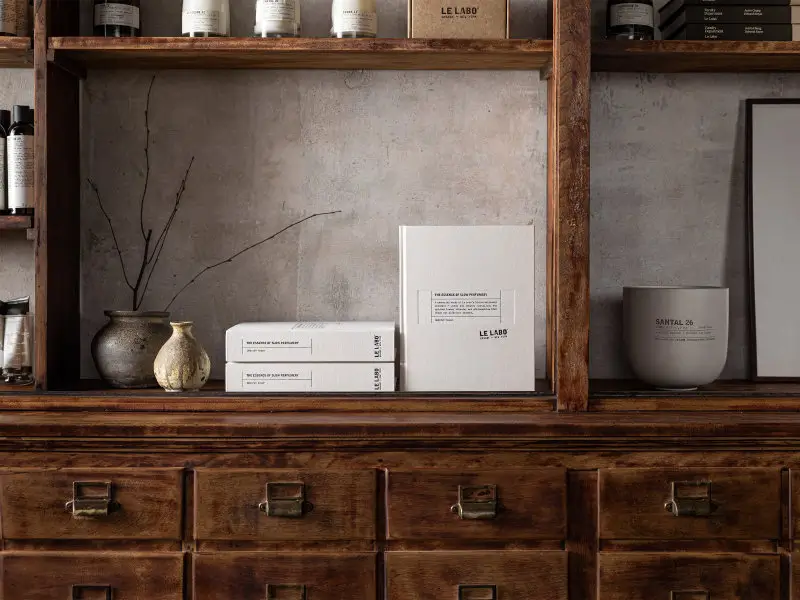
Visually, Le Labo has always operated within a narrow palette: amber glass, monochrome labels, industrial interiors. This consistency is not incidental. It reflects a broader commitment to reduction.
In an industry often defined by ornate bottles and elaborate campaigns, Le Labo’s aesthetic reads almost as a refusal. The packaging does not attempt to seduce. It presents itself plainly, allowing the fragrance to carry the experience.
This restraint has, over time, become its own form of identity. The bottles are immediately recognizable—not because they are decorative, but because they are not.
The book reinforces this visual language. Images are not overly stylized. They document rather than dramatize. The result is a continuity between object and narrative, between product and philosophy.
idea
Fragrance occupies a unique position among sensory mediums. It is both immediate and elusive, capable of triggering memory with a precision that feels almost involuntary.
Le Labo’s work has consistently engaged with this dimension. Its compositions often feel less like statements and more like environments—spaces in which memory can surface.
The book leans into this quality. Contributors reflect not only on scents, but on the moments associated with them: a particular room, a specific season, a fleeting encounter. These fragments accumulate, creating a mosaic of experiences that extends beyond the brand itself.
In this way, the archive becomes porous. It does not belong solely to Le Labo; it includes those who have encountered it.
tred
Over two decades, Le Labo has expanded from a single lab in Nolita to a global presence. Stores now exist in cities across continents. The fragrances are widely recognized. Santal 33 has, in many ways, become a cultural signifier.
Yet the brand has maintained a degree of consistency that is rare at this scale. The stores retain their laboratory aesthetic. The personalization remains. The emphasis on in-store compounding continues.
This continuity suggests a deliberate approach to growth—one that prioritizes coherence over rapid expansion. It also raises questions about scalability. How does a philosophy rooted in slowness adapt to global demand?
The answer, at least in part, lies in the brand’s refusal to fully resolve that tension. Instead of optimizing for efficiency, it preserves elements of friction—waiting times, limited availability, the variability inherent in hand-mixed products.
These constraints are not inefficiencies; they are integral to the experience.
bal
Le Labo occupies an ambiguous position within the fragrance landscape. It is often categorized as a niche brand, yet its reach extends far beyond that designation.
This duality reflects a broader shift within the industry, where the boundaries between niche and mainstream have become increasingly fluid. Brands that once operated at the margins now influence the center.
Le Labo’s impact can be seen in the proliferation of minimalist packaging, the emphasis on storytelling, and the growing interest in ingredient transparency. What was once distinctive has, in some cases, become standard.
The book acknowledges this influence without foregrounding it. It does not position Le Labo as a disruptor or innovator in explicit terms. Instead, it presents the work itself, allowing its resonance to emerge indirectly.
role
While the brand often appears self-contained, its development has been shaped by a network of collaborators—perfumers, designers, writers, and customers.
The book brings some of these voices into focus. Essays and reflections reveal the multiplicity of perspectives that have contributed to the brand’s evolution. This plurality challenges the notion of a singular authorship.
At the same time, the act of personalization—printing a customer’s name on a label—creates a subtle form of participation. Each bottle becomes a small collaboration, a point of intersection between maker and wearer.
This dynamic complicates the traditional relationship between brand and consumer. It suggests a more distributed model of authorship, where meaning is co-created.
theme
Perhaps the most persistent theme across Le Labo’s work—and within the book—is time. Not simply as duration, but as material.
Fragrances evolve over hours. Ingredients age. Bottles are dated. The act of compounding occurs in real time. Even the language of the brand emphasizes temporality: fresh blending, limited windows, gradual development.
The book mirrors this temporal awareness. It does not rush toward conclusions. It lingers. It allows ideas to remain partially unresolved.
In a cultural context defined by acceleration, this emphasis on time reads almost as a form of resistance. It proposes an alternative rhythm—one that values duration over immediacy.
position
As Le Labo marks its twentieth anniversary, the broader landscape of perfumery has shifted. Fragrance has become more visible within cultural discourse, intersecting with fashion, art, and wellness.
There is a growing interest in olfactory experiences as a form of identity construction. Scents are no longer merely accessories; they are extensions of self.
Le Labo’s approach—grounded in individuality, personalization, and process—aligns with this shift. Its emphasis on the wearer’s experience, rather than external projection, resonates with contemporary sensibilities.
The book situates the brand within this context without explicitly framing it as a response. It remains focused on the internal logic of the work, allowing external relevance to emerge organically.
fwd
Anniversaries often invite celebration, retrospection, and projection. Le Labo’s twentieth year does all three, but in a manner consistent with its ethos.
The book does not declare achievements. It does not enumerate milestones. It offers instead a series of reflections—on craft, on time, on the act of making.
This restraint is perhaps the most consistent aspect of the brand’s identity. Even at a moment that could justify amplification, it chooses subtlety.
fin
Le Labo: The Essence of Slow Perfumery functions as both documentation and extension. It captures twenty years of work while embodying the principles that shaped that work.
In doing so, it raises a broader question: what does it mean to move slowly in a culture that prioritizes speed?
Le Labo’s answer is not prescriptive. It does not advocate for slowness as a universal solution. It demonstrates, instead, what becomes possible when time is treated as a resource rather than a constraint.
The fragrances linger. The labels mark a moment. The book invites a different pace.
And somewhere between those elements—between scent, object, and reflection—a distinct kind of continuity emerges. Not driven by novelty, but sustained by attention.