Leonardo DiCaprio — A New Momentum Across Film, Production, and Influence

March 17, 2026
pivot
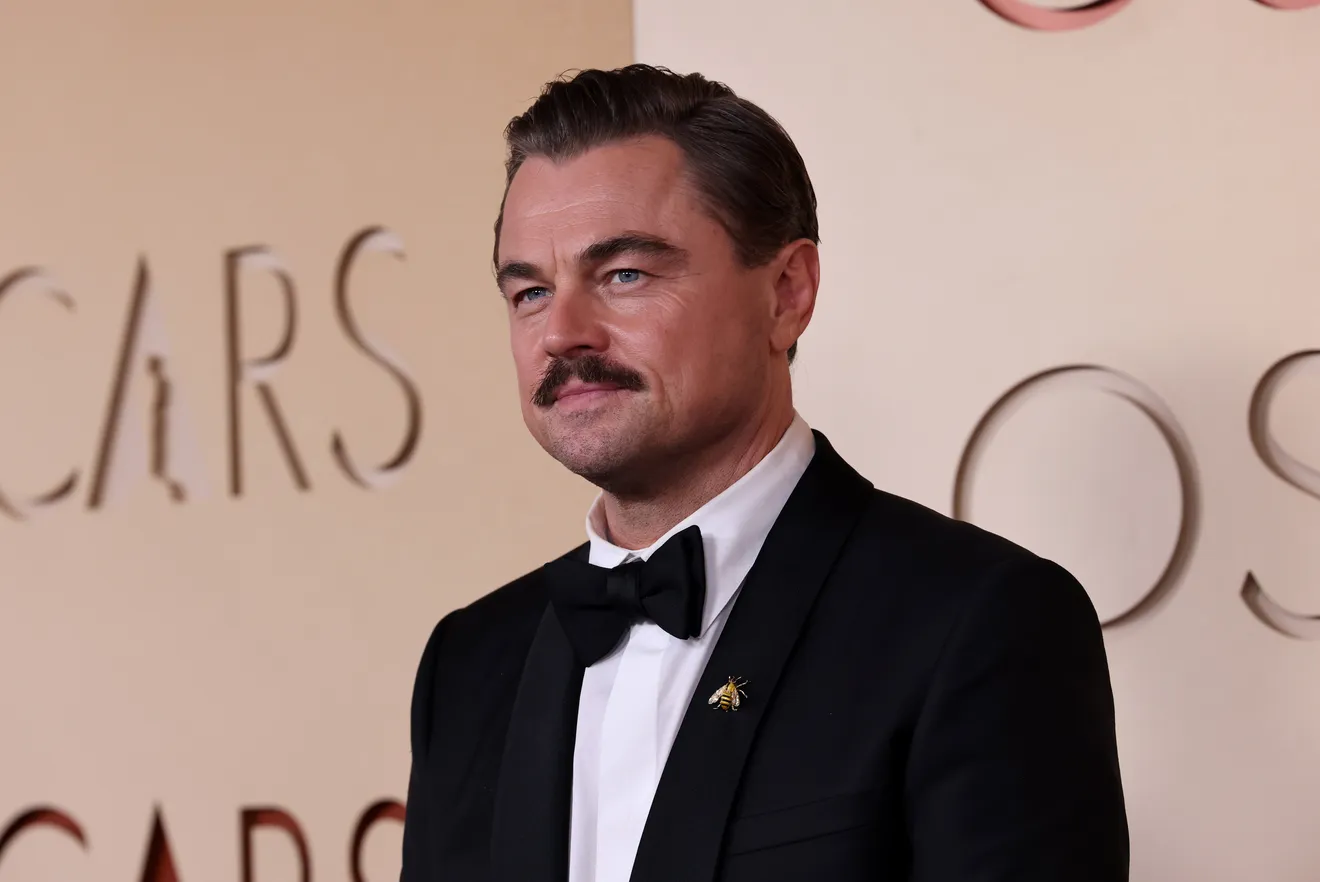
In the immediate aftermath of the 2026 Oscars, Leonardo DiCaprio occupies a position that feels increasingly rare in contemporary cinema. He is neither ubiquitous nor absent, neither chasing visibility nor retreating into obscurity. Instead, he is operating in a prudential measured register—one defined by restraint, authorship, and long-sawn cultural placement.
The narrative is no longer about whether DiCaprio will win another Oscar. That question has dissolved into something more structural: how he is shaping the ecosystem around him. What is quietly building between 2026 and 2028 is less about individual performances and more about a shift toward institutional influence—where each project functions as both artwork and infrastructure.
This period potentially marks a recalibration. Fewer roles, yes—but each one heavier, more deliberate, and more embedded within a broader cultural strategy.
flow
The next major signal in DiCaprio’s trajectory is his continued collide with Martin Scorsese, specifically through the developing project What Happens at Night.
Their partnership has long functioned as one of modern cinema’s most reliable creative alliances—stretching from Gangs of New York through The Wolf of Wall Street and into the more recent Killers of the Flower Moon. Yet what defines this new chapter is not continuity, but tonal departure.
Early industry chatter positions What Happens at Night as a gothic psychological work—less concerned with historical sprawl and more invested in interiority. This matters. It signals a pivot from DiCaprio as the kinetic center of narrative to DiCaprio as a vessel for atmosphere.
The implications for the 2026–2028 window are substantial:
The Scorsese partnership is no longer about scale alone. It is about distillation. The performances are expected to become quieter, more controlled, and more psychologically dense. Where earlier roles leaned into volatility—think Jordan Belfort’s excess or Howard Hughes’ obsession—this phase appears to favor something colder, more restrained.
If the film lands as anticipated, it is not merely an awards contender. It becomes a recalibration of the DiCaprio-Scorsese language itself, introducing a new tonal vocabulary that could define the remainder of their partnership.
heat 2
Parallel to the introspective turn of What Happens at Night is a very different proposition: Heat 2, directed by Michael Mann.
If realized in its current form, Heat 2 represents DiCaprio’s re-entry into the large-scale crime epic—a genre that carries both cultural weight and cinematic mythology. The original Heat remains one of the defining texts of modern masculinity in film, and any continuation inevitably engages with that legacy.
For DiCaprio, the significance lies in contrast. Where Scorsese’s upcoming work leans inward, Heat 2 leans outward—toward scale, tension, and myth-building.
But this is not a regression into spectacle. Instead, it aligns with a recurring theme in his recent choices: the exploration of aging, consequence, and legacy within male identity. In this context, a crime epic becomes less about action and more about erosion—how power fades, how control fractures, how time reshapes ambition.
Between 2026 and 2028, this duality—intimate psychological work alongside expansive narrative cinema—positions DiCaprio in a uniquely balanced space. He is not abandoning scale; he is redefining its purpose.
culture
Beyond acting, the most consequential development in this period is the continued expansion of Appian Way Productions.
What began as a traditional production company has evolved into something more complex: a platform for narrative curation. Through documentaries, limited series, and socially driven projects, Appian Way is increasingly positioned at the intersection of cinema and advocacy.
This expansion operates across several vectors:
Environmental storytelling remains central. Projects focused on climate, conservation, and ecological urgency are not treated as side ventures but as core outputs. These films carry both artistic ambition and policy-adjacent relevance, extending DiCaprio’s long-standing environmental commitments into structured media production.
Simultaneously, there is a growing emphasis on underrepresented narratives—particularly Indigenous perspectives and global socio-political stories. These are not prestige add-ons; they are strategic investments in narrative diversification.
Perhaps most importantly, Appian Way is moving into serialized storytelling. Limited series offer a different temporal canvas—one that allows for deeper exploration of complex subjects while aligning with evolving audience consumption patterns.
Between 2026 and 2028, this expansion transforms DiCaprio’s role. He is no longer simply attached to projects; he is shaping the conditions under which those projects exist.
auth
One of the least visible yet most significant changes in DiCaprio’s trajectory is his increasing involvement in financing and greenlighting decisions.
This shift is subtle but transformative. It signals a move away from reactive participation—accepting roles, joining projects—toward proactive authorship. He is helping determine which films are made, which scripts are developed, and which narratives receive resources.
In practical terms, this manifests in several ways:
He is attaching himself earlier in the development process, often before projects are fully financed. His involvement becomes a catalyst, unlocking funding and attracting convincers.
He is leveraging long-standing industry relationships to assemble creative teams that might otherwise struggle to secure backing. Directors, writers, and cinematographers benefit from this networked influence.
He is prioritizing projects that align with long-term cultural relevance rather than short-term commercial trends. This includes both high-profile features and smaller, more experimental works.
The cumulative effect is the emergence of DiCaprio as a structural force within the industry. Not merely a participant in Hollywood’s output, but an architect of its direction.
fwd
As DiCaprio reduces his on-screen frequency, the cultural weight of his projects increases.
This is not accidental. It reflects a deliberate alignment with narratives that resonate beyond entertainment. Whether through environmental documentaries, historically grounded dramas, or psychologically complex character studies, his work increasingly engages with broader cultural conversations.
The effect is cumulative. Each project contributes to a larger body of work that functions as commentary—on power, responsibility, identity, and the human condition.
This positioning places DiCaprio in a distinct category. He is not simply a performer within the system; he is a participant in its ongoing dialogue.
fin
Leonardo is building an architecture—one composed of carefully chosen roles, strategically developed projects, and a production ecosystem that amplifies his influence.
Together, these elements form a coherent trajectory. One that prioritizes longevity over immediacy, substance over saturation.
In this phase, DiCaprio is no longer simply navigating Hollywood.
He is shaping the terrain.