Les Mains Bleues: The Art and Legacy of Denim Jeans

February 21, 2025
“Les Mains Bleues,” or “The Blue Hands,” is a term that resonates deeply within the world of denim jeans. It symbolizes the artisans and workers whose hands are stained blue from handling indigo-dyed fabrics, a testament to their craftsmanship and dedication. This exploration delves into the history, cultural significance, and evolution of denim jeans, highlighting the artistry and innovation that define this iconic garment.
The Origins of Denim
Denim’s story begins in the late 17th century, with its roots in the French city of Nîmes. The fabric, originally known as “serge de Nîmes,” was a sturdy fabric/cloth twill that became popular for its durability. This material eventually made its way to America, where it was adopted by Levi Strauss and Jacob Davis in the 1870s to create workwear for miners and laborers. The iconic blue jeans were born, characterized by their indigo dye and reinforced rivets.
Indigo Dyeing: The Pithy of “Les Mains Bleues”
Indigo dyeing is central to the identity of denim jeans. The deep blue color, achieved through a complex dyeing process, is both a visual and symbolic hallmark of denim. The dye is derived from the indigo plant, which undergoes fermentation to extract the pigment. Artisans immerse the fabric in indigo vats, a process that requires skill and precision to achieve the desired hue.
The term “Les Mains Bleues” reflects the artisans’ expertise and the physical manifestation of their craft—their hands stained blue from repeated contact with the dye. This imagery captures the essence of denim production, where tradition and artistry converge.
The Cultural Impression of Denim Jeans
Denim jeans have transcended their origins as workwear to become a global fashion staple. Throughout the20th century, jeans evolved from a symbol of rugged individualism to a canvas for cultural expression. In the1950s, they were embraced by youth subcultures as a symbol of rebellion and nonconformity, popularized by icons like James Dean and Marlon Brando.
The 60s and 70s saw jeans become a symbol of counterculture movements, representing freedom and social change. As the decades progressed, denim continued to evolve, reflecting the zeitgeist of each era. From bell-bottoms to skinny jeans, the versatility of denim allowed it to adapt to changing fashion trends while maintaining its core identity.
The Role of Première Vision
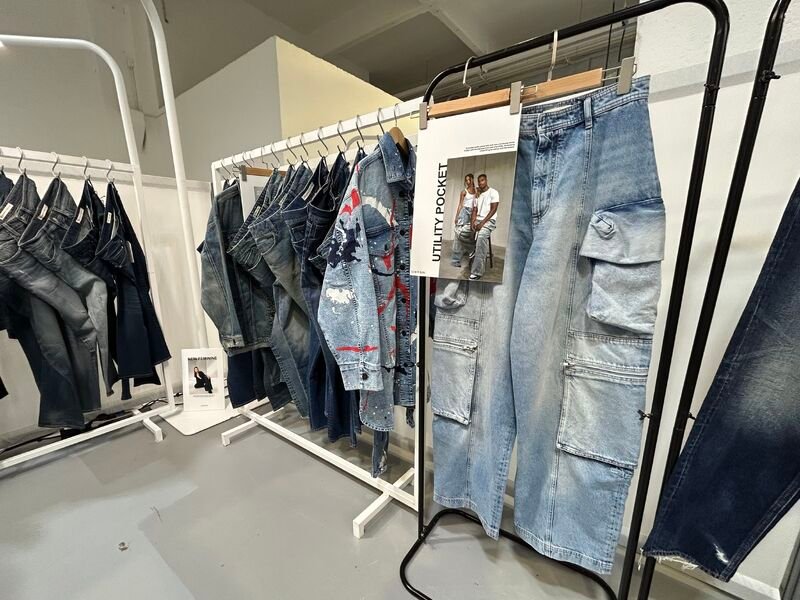
Premiére Vision, a leading international event for fashion professionals, plays a crucial role in the evolution of denim. The event showcases the latest innovations in textile production, including advancements in denim manufacturing and sustainable practices. It serves as a platform for designers, manufacturers, and artisans to exchange ideas and explore new possibilities in denim design.
At Première Vision, “Les Mains Bleues” is celebrated as a symbol of craftsmanship and innovation. The event highlights the artistry involved in denim production, from traditional indigo dyeing techniques to cutting-edge technologies that enhance fabric performance and sustainability.
Innovation in Denim
In recent years, the denim industry has faced increasing scrutiny over its environmental impact. Traditional indigo dyeing and denim production processes are resource-intensive, consuming large amounts of water and energy. In response, the industry has embraced innovation to reduce its ecological footprint.
Première Vision showcases sustainable practices in denim production, such as water-saving dyeing techniques, organic cotton sourcing, and eco-friendly finishing processes. These innovations align with the spirit of “Les Mains Bleues,” emphasizing the importance of preserving artisanal techniques while adapting to modern environmental challenges.
The Global Influence of Denim
Denim jeans have become a universal garment, worn by people of all ages and backgrounds across the globe. Their appeal lies in their versatility, comfort, and ability to convey a sense of individuality. Denim’s global influence is reflected in the diverse styles and interpretations seen in different cultures, from Japanese selvedge denim to American vintage-inspired designs.
At Première Vision, this global perspective is embraced, with exhibitors and attendees from around the world showcasing their unique approaches to denim. The event fosters cross-cultural merges, leading to innovative designs that honor the legacy of “Les Mains Bleues.”
Future of Denim
As the fashion industry continues to evolve, denim remains at the forefront of innovation and cultural relevance. The fusion of traditional techniques with modern technology is paving the way for new possibilities in denim design. Smart textiles, sustainable materials, and advanced manufacturing processes are shaping the future of denim, ensuring its continued relevance in the fashion landscape.
Première Vision plays a pivotal role in this evolution, serving as a catalyst for innovation and creativity. By highlighting the artistry of denim production and promoting sustainable practices, the event ensures that the spirit of “Les Mains Bleues” endures in the fashion world.
Impression
Les Mains Bleues” is more than just a reference to the artisans of the past; it is a symbol of the enduring flow between tradition and innovation in the world of denim jeans. From its origins in Nîmes to its global impression, denim has become a canvas for cultural expression and a testament to the artistry of its makers. As the fashion industry looks to the future, the blue hands of the past continue to guide the way, weaving a narrative of creativity, heritage, and global connection.