review: Lime Reframes the Ride: Smaller Wheels, Lower Frames, Broader Access

April 11, 2026
2 hours ago
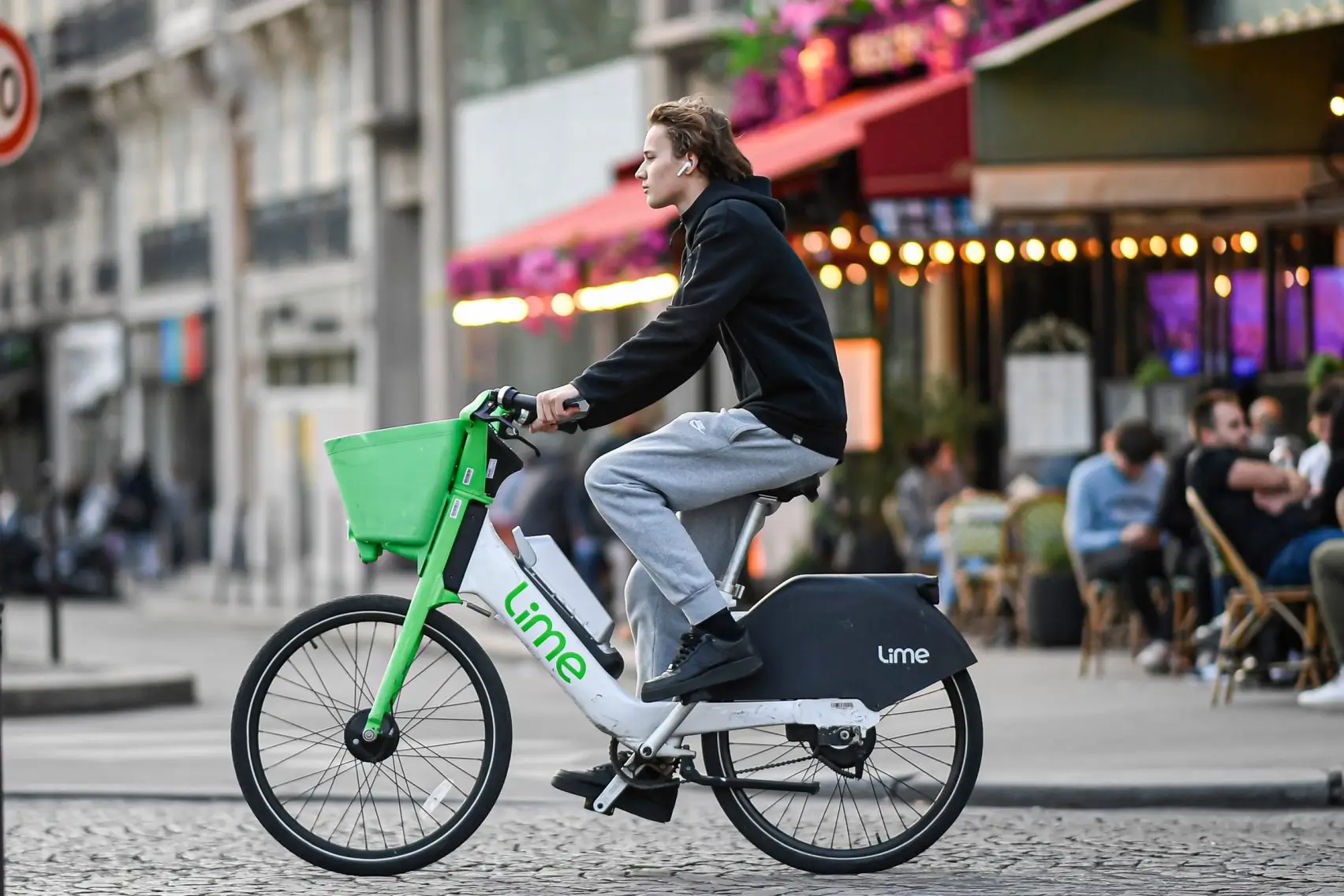
Something subtle has shifted—not loudly, not theatrically—but at the level of entry. The way a body approaches a bike. The moment before motion.
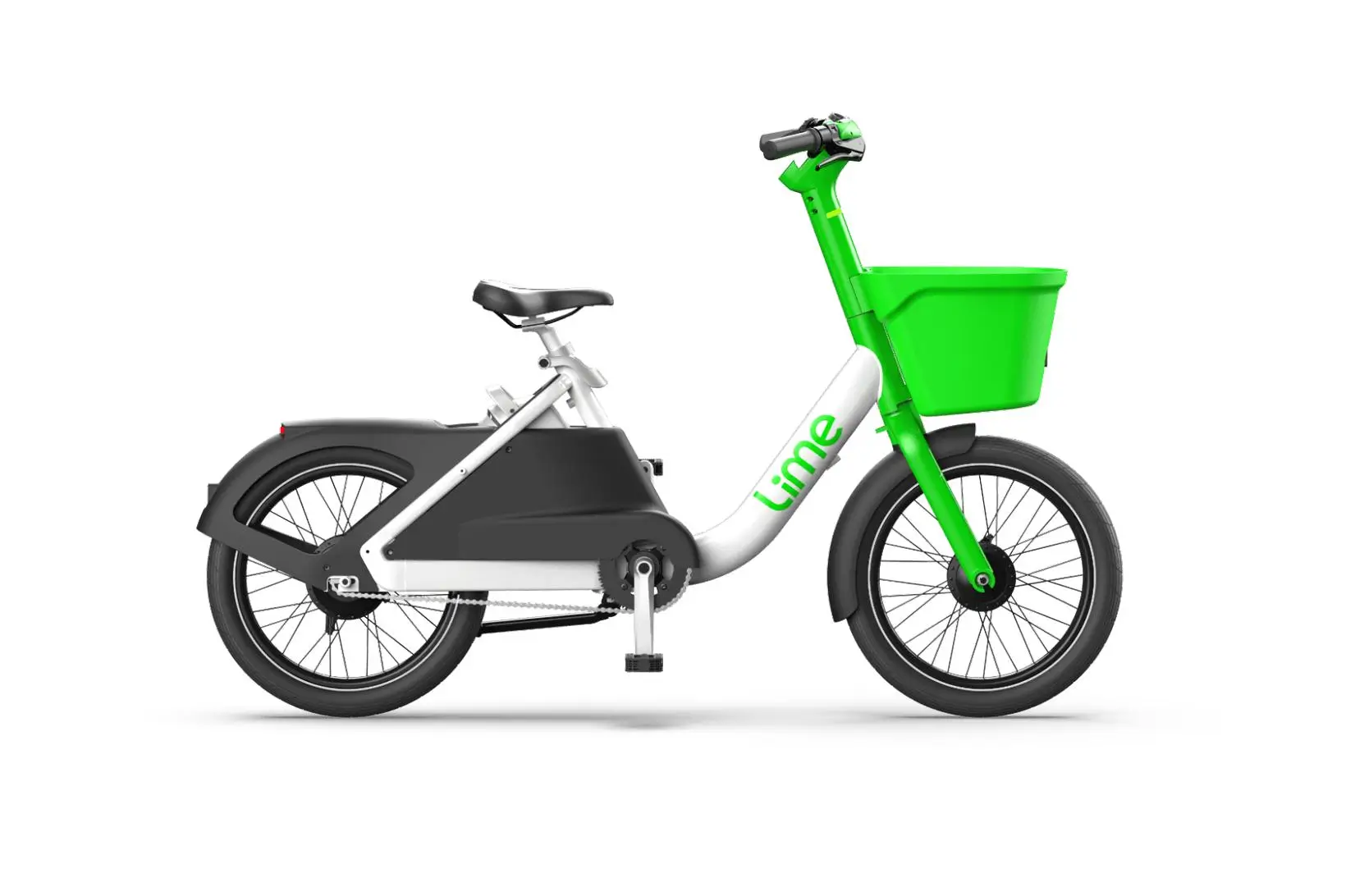
With its latest redesign, Lime is not just updating hardware; it is adjusting the threshold of participation. The new rental electric bike, now rolling out across cities in the UK after trials in the US, Europe, and Australia, doesn’t announce itself as radical. It simply removes friction.
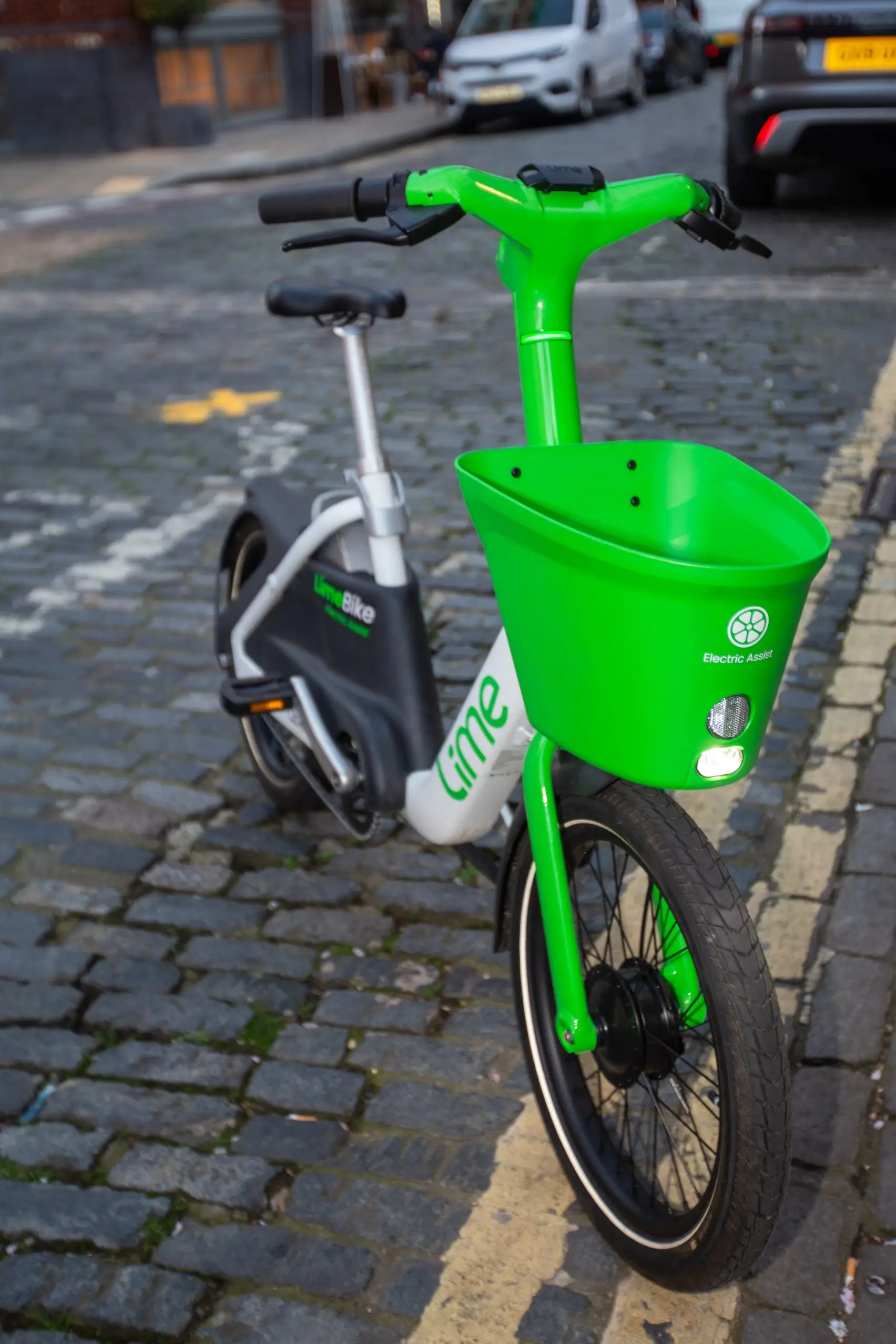
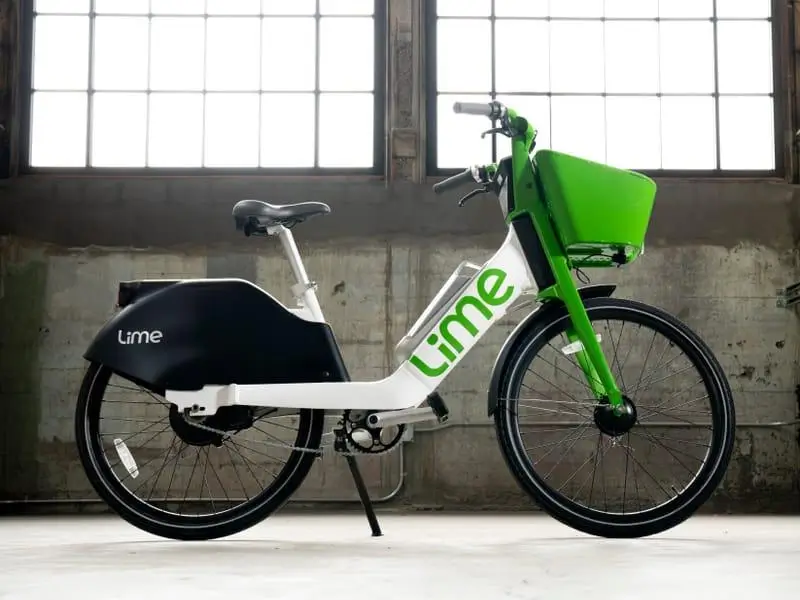
Smaller wheels. A lower frame. A battery relocated out of the way. Each change reads as incremental. Together, they form a quiet proposition: more people should feel like this is for them.
flow
The most immediate difference is structural. The frame sits lower, opening the bike into a step-through format that reduces the act of mounting to something nearly incidental.
This matters more than it sounds.
For decades, bike geometry has quietly encoded assumptions about who rides. Traditional frames—high crossbars, larger diameters—carry with them a kind of physical expectation: flexibility, confidence, familiarity. Remove those assumptions, and the bike becomes less of a test and more of an invitation.
The lowered frame does not simply accommodate shorter riders; it reframes the entire interaction. Mounting no longer requires a moment of calculation. Stopping at a light doesn’t require balancing acts. The bike becomes something you can step into and out of, rather than climb onto and commit to.
There is a psychological easing here. A shift from performance to participation.
imply
Upon primary gander, the smaller wheels may read as purely aesthetic—a compression of form. But wheel size carries behavioral consequences.
Smaller wheels lower the center of gravity. They reduce the perceived height of the rider. They create a feeling of being “in” the bike rather than perched on top of it. For newer riders or those returning after years away, this distinction can be decisive.
There is also maneuverability. In dense urban environments—tight corners, unpredictable traffic, layered pedestrian flows—a bike that responds quickly and predictably becomes less intimidating. Turning radii shrink. Micro-adjustments feel intuitive.
Critics might point to stability at higher speeds, where larger wheels traditionally perform better. But Lime’s bikes are not designed for speed records. They are designed for short, functional journeys—commutes, errands, connections between transit points. Within that context, smaller wheels trade top-end smoothness for low-speed confidence.
It is a recalibration of priorities.
LONDON STEP-THRU Citizen E-Bike Seat Bat
stance
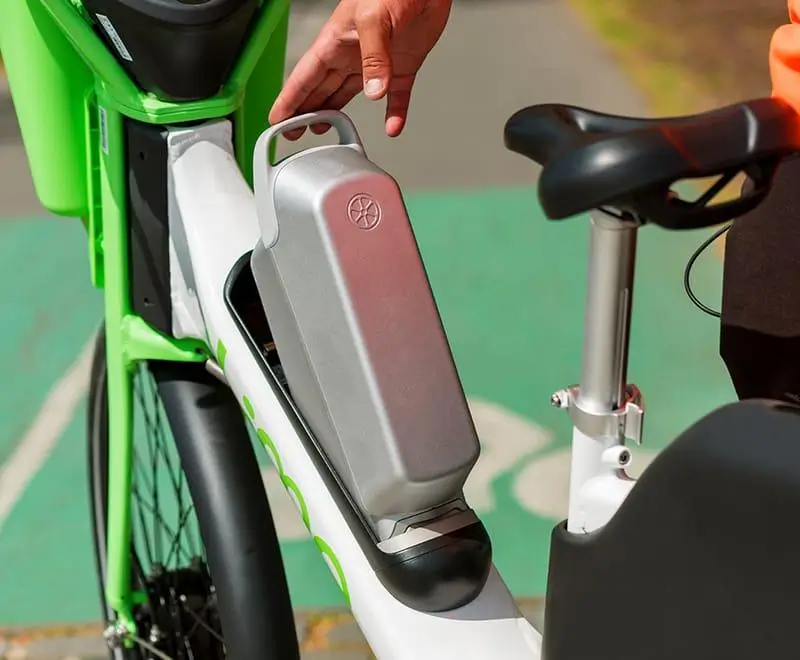
One of the less viewed but more consequential changes is the relocation of the battery—from the crossbar to behind the seat post.
This shift does multiple things at once.
First, it clears the central frame, reinforcing the openness of the step-through design. The absence of a bulky battery in the middle makes the bike feel less obstructed, more legible, easier to navigate physically.
Second, it alters weight distribution. By placing the battery toward the rear, the bike stabilizes differently, particularly during mounting and stopping. The sensation becomes less top-heavy, more grounded.
Third, it simplifies maintenance and modularity—an important factor for a fleet vehicle. Shared bikes operate under constant stress: weather exposure, varied riders, frequent use. A battery positioned for easier access can reduce downtime, streamline servicing, and extend lifecycle efficiency.
This is where design intersects with operations. The user experience improves, but so does the system behind it.
consider
Lime has been explicit about its intent: to make the bikes more appealing to women and older riders. It is a statement that reveals as much about the past as it does about the present.
Cycling infrastructure and design have long skewed toward a narrow user profile—often younger, often male, often already confident on two wheels. The result is not just a participation gap but a perception gap: who cycling is “for.”
By lowering barriers—literally and figuratively—the new design acknowledges that discomfort, intimidation, and inconvenience are not marginal issues. They are central.
For an older rider, the ability to step through rather than swing a leg over can determine whether the ride happens at all. For someone in everyday clothing, the absence of awkward mounting reduces friction. For women navigating urban safety considerations, a bike that feels stable and easy to control can shift the entire experience.
This is not about niche accommodation. It is about expanding the baseline.
min
What makes this redesign notable is not any single feature, but the accumulation of small decisions that collectively reorient the product.
Micromobility has moved through phases. Early iterations emphasized novelty—dockless systems, app-based access, rapid deployment. Then came durability and scalability—stronger frames, standardized fleets, operational efficiency.
Now, a third phase is emerging: refinement through inclusion.
The question is no longer just how many bikes can be deployed, but who feels comfortable using them. Adoption is not only a function of availability; it is a function of design empathy.
Lime’s updated bike reflects this shift. It is less about standing out view and more about disappearing as a barrier. The best compliment such a bike can receive is not that it looks advanced, but that it feels natural.
why
The UK rollout is not incidental. British cities present a specific set of conditions: dense streets, variable cycling infrastructure, a mix of historic layouts and modern interventions.
In cities like London, Manchester, and Birmingham, cycling exists within a layered environment—buses, taxis, pedestrians, narrow lanes, inconsistent bike paths. For many potential riders, the hesitation is not ideological but practical.
A bike that feels easier to mount, easier to control, and less physically demanding can make the difference between opting in and opting out.
There is also a cultural dimension. Cycling in the UK has grown, but it has not reached the normalization seen in cities like Amsterdam or Copenhagen. Expanding the demographic base—bringing in riders who might not self-identify as “cyclists”—is key to that normalization.
Design, in this sense, becomes a cultural tool.
idea
It is easy to isolate the object—the bike itself—but Lime operates as a system. The redesign must function within an ecosystem of apps, pricing models, parking regulations, and urban policies.
The smaller wheels and lower frame influence how bikes are parked, how they fit into designated zones, how they are perceived visually in public space. A more compact, approachable form can reduce the sense of clutter or intrusion that sometimes accompanies shared mobility fleets.
There is also the question of data. As these bikes roll out, Lime will gather information on usage patterns: who rides, how often, for how long, in which areas. If the design succeeds, it should not just increase total rides but diversify them.
More first-time users. More occasional riders. More people who previously opted for other modes of transport.
That is the real metric of success.
show
There is an understated aesthetic shift embedded in the redesign. The bike appears less aggressive, less technical, more neutral.
This neutrality is intentional.
Highly stylized or performance-oriented designs can signal exclusivity, even unintentionally. By contrast, a bike that looks simple, balanced, and unassuming can feel more universally accessible.
The smaller wheels contribute to this. The lower frame softens the silhouette. The repositioned battery reduces visual clutter.
It is not minimalism for its own sake, but minimalism as a strategy of inclusion.
extent
While Lime highlights women and older riders, the implications extend further.
Consider people with limited mobility, those recovering from injury, or individuals who simply prefer a less physically demanding mode of transport. Consider tourists unfamiliar with local cycling norms. Consider casual users who do not want to “gear up” for a ride.
The redesigned bike accommodates all of these scenarios without explicitly targeting them. It operates on the principle that reducing friction benefits everyone, even if it is designed with specific groups in mind.
Inclusivity, in this sense, is not a niche feature. It is a universal upgrade.
share
If this redesign signals anything, it is that the future of shared cycling will be shaped less by spectacle and more by subtlety.
The next wave of innovation may not be visible at a glance. It will be felt in the ease of use, the absence of barriers, the quiet expansion of who participates.
Lime’s smaller-wheeled bike does not attempt to redefine cycling. It attempts to redefine access to cycling.
And in doing so, it addresses a fundamental question that has lingered beneath the surface of micromobility’s growth: not just how cities move, but who gets to move within them.
end
The most effective design changes often go unnoticed. They do not demand attention; they remove obstacles.
With its updated bike, Lime has not introduced a dramatic new form. It has refined an existing one until it feels easier, calmer, more open.
You might not think about the wheel size as you ride. You might not consciously register the lower frame or the relocated battery. But you might notice something else: that getting on feels simpler, that riding feels steadier, that stopping feels less precarious.