Viva La Lisa: Blackpink’s Lisa Consolidates Global Power in Las Vegas

March 31, 2026
2 hours ago
new
In a move that feels both inevitable and strategically precise, Lisa has announced her first Las Vegas residency, titled Viva La Lisa. Positioned at the intersection of spectacle, global fandom, and brand expansion, the residency signals a recalibration—not just of her solo career, but of how K-pop’s most internationally fluid figures now occupy Western entertainment infrastructures.
Las Vegas has long served as a proving ground for permanence. Residencies transform touring artists into institutions, translating momentum into longevity. For Lisa, whose career has been defined by mobility—across countries, aesthetics, and industries—the decision to anchor herself, even temporarily, suggests a shift from velocity to control.
The title itself, Viva La Lisa, reads as both declaration and framework. It carries a celebratory cadence while subtly centering authorship. This is not a supporting chapter to BLACKPINK; it is a standalone proposition.
stir
The choice of Las Vegas is neither ornamental nor incidental. Over the past decade, the city has redefined itself as a hub for controlled spectacle—where artists can refine narrative, production, and audience engagement without the fragmentation of global touring.
Residencies historically belonged to legacy acts, but that paradigm has shifted. Contemporary performers now use Las Vegas not as a finale, but as a platform for reinvention. Lisa enters this ecosystem at a moment when residency culture has become synonymous with precision: curated setlists, architectural staging, and repeatable immersion.
Viva La Lisa is expected to follow this model while adapting it to her specific strengths—choreographic sharpness, visual discipline, and cross-market fluency. Unlike artists whose residencies lean on nostalgia, Lisa’s catalog is still expanding. This creates a different tension: how to build a “definitive” show when the narrative is still unfolding.
BLACKPINK’s LISA Announces Viva La Lisa 2026 Las Vegas Residencyhttps://t.co/e0tJBN2RxT
— billboard (@billboard) March 31, 2026
viva
The residency is understood to be structured as a hybrid between concert and installation. Lisa’s performances have always emphasized choreography as narrative, not accessory. In Las Vegas, that philosophy can be scaled.
Expect a multi-act format:
- Opening sequences grounded in her solo releases, including LALISA and MONEY
- Reinterpretations of key BLACKPINK tracks, reframed through a solo lens
- Transitional segments that blur performance and visual art—LED environments, kinetic staging, and modular set pieces
Rather than replicating a tour, Viva La Lisa will likely operate as a controlled ecosystem. Each performance becomes iterative, refined night after night.
flow
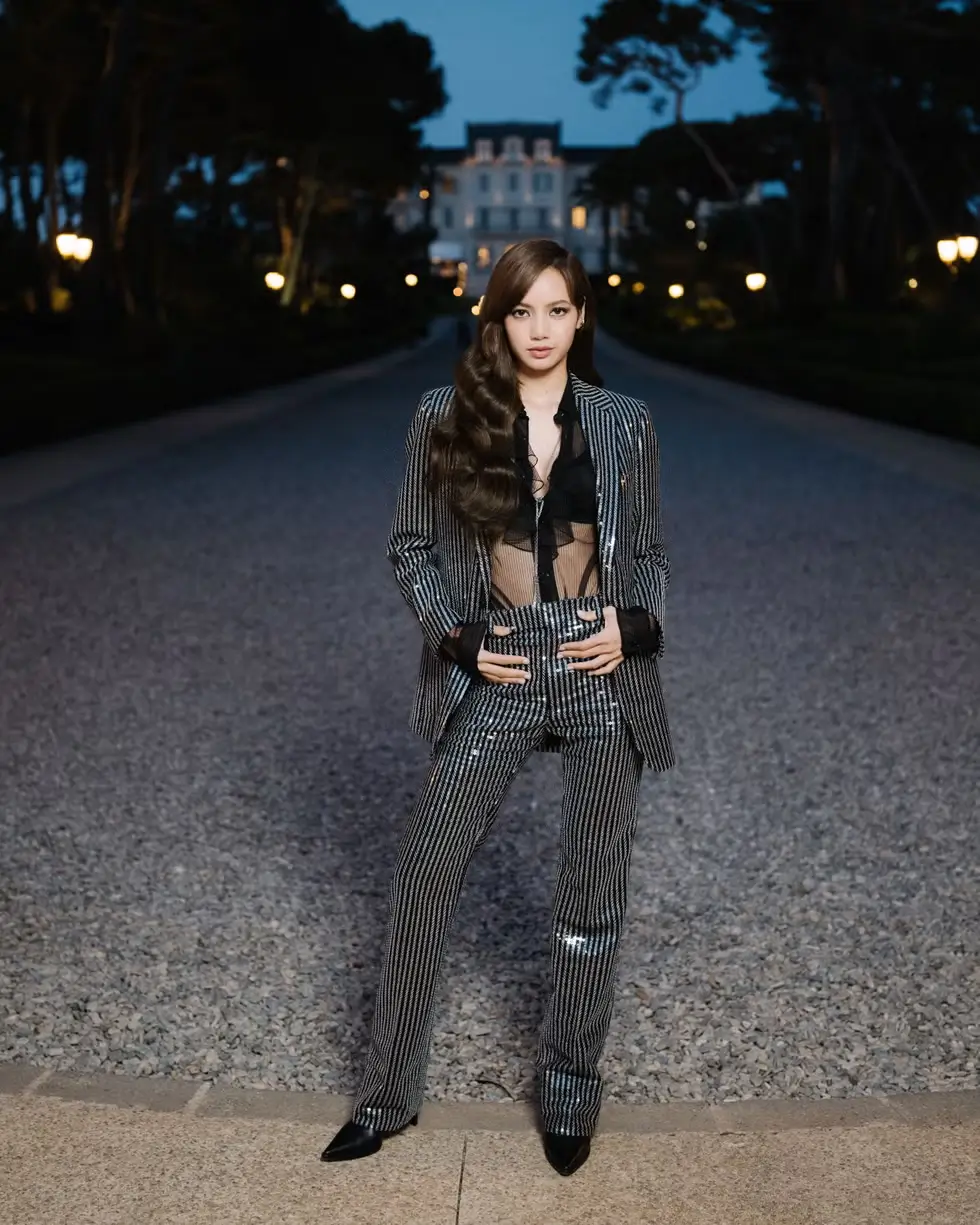
Any Lisa-led project inevitably intersects with fashion. As a global ambassador for Celine and a frequent collaborator with Louis Vuitton, her visual language is already embedded in luxury discourse.
In the context of Viva La Lisa, wardrobe becomes structural. Rather than functioning as costume changes, looks are expected to delineate acts—each silhouette signaling a shift in tone, tempo, and narrative.
The Las Vegas format allows for something rare: consistency. Unlike touring wardrobes, which must account for logistics and durability, residency styling can be more intricate, more referential. Materials, tailoring, and embellishment can operate at a higher level because they are not subjected to constant transit.
This positions Viva La Lisa as not just a concert, but a serialized fashion narrative.
choreo
Lisa’s identity as a performer is inseparable from movement. Her choreography is defined by precision—sharp isolations, controlled transitions, and a capacity to hold tension within stillness.
In a residency format, choreography evolves. Repetition does not dilute impact; it sharpens it. Micro-adjustments accumulate, turning already refined sequences into something closer to exactitude.
The stage itself becomes a partner. With fixed dimensions, choreographic mapping can reach a level of spatial intelligence impossible on tour. Every mark, every angle, every camera line can be optimized.
This is where Viva La Lisa may distinguish itself: not through scale alone, but through calibration.
audience
Las Vegas residencies operate on a paradox: the show remains the same, but the audience changes nightly. For Lisa, whose fanbase spans continents, this creates a unique dynamic.
Each performance becomes a convergence point—fans traveling from Seoul, Bangkok, Paris, Los Angeles. The residency transforms into a global node, compressing her international audience into a single geographic space.
This has implications beyond atmosphere. It reshapes fandom into something more concentrated, more visible. The crowd itself becomes part of the spectacle.
position
Lisa’s residency arrives at a moment when K-pop’s relationship with Western markets is no longer exploratory—it is infrastructural. Artists are not merely touring abroad; they are embedding themselves within Western entertainment systems.
Viva La Lisa exemplifies this shift. It is not framed as a crossover, but as a continuation. The boundaries that once defined “K-pop” as separate from Western pop are increasingly porous.
Lisa, as an individual artist, embodies this fluidity. Born in Thailand, trained in South Korea, operating globally—her career resists singular categorization. The residency formalizes that hybridity within one of entertainment’s most codified spaces.
show
Residencies are also economic statements. They convert touring volatility into predictable demand. For an artist like Lisa, whose brand extends beyond music into fashion, endorsements, and digital influence, the residency creates a centralized platform.
This allows for layered monetization:
- Ticketing across extended runs
- Exclusive merchandise tied specifically to Viva La Lisa
- Potential brand collaborations activated on-site
More importantly, it consolidates visibility. Rather than dispersing attention across multiple cities, Lisa’s presence is intensified within one.
bequest
There is an underlying question embedded in any residency: what does the artist choose to define?
For legacy acts, the answer often lies in retrospection. For Lisa, it is more complex. Her career is still in motion, still expanding. Viva La Lisa therefore becomes less about summation and more about articulation.
It is an opportunity to establish a baseline—a reference point against which future projects will be measured.
The residency format allows her to control that narrative with unusual precision. Every element—setlist, staging, pacing—can be curated without compromise.
theme
What follows Viva La Lisa may be as significant as the residency itself. Las Vegas, in this context, is not an endpoint but a pivot.
Possible trajectories include:
- Expanded solo discography aligned with the residency’s aesthetic
- Film or documentary projects capturing the show’s construction
- Further integration into luxury fashion campaigns, leveraging residency view
The residency becomes a platform from which multiple narratives can emerge.
end
Viva La Lisa is less about arrival and more about consolidation. It gathers the disparate elements of Lisa’s career—music, fashion, choreography, global identity—and situates them within a single, controlled environment.
Las Vegas provides the infrastructure. Lisa provides the authorship.
What emerges is not just a residency, but a statement of intent: that contemporary pop stardom is no longer defined by movement alone, but by the ability to command space—physically, culturally, and narratively.
In that sense, Viva La Lisa is not simply a show. It is a recalibration of scale.