Loewe Elixir: Jack McCollough and Lazaro Hernandez Recompose Scent as Landscape

April 9, 2026
1 hour ago
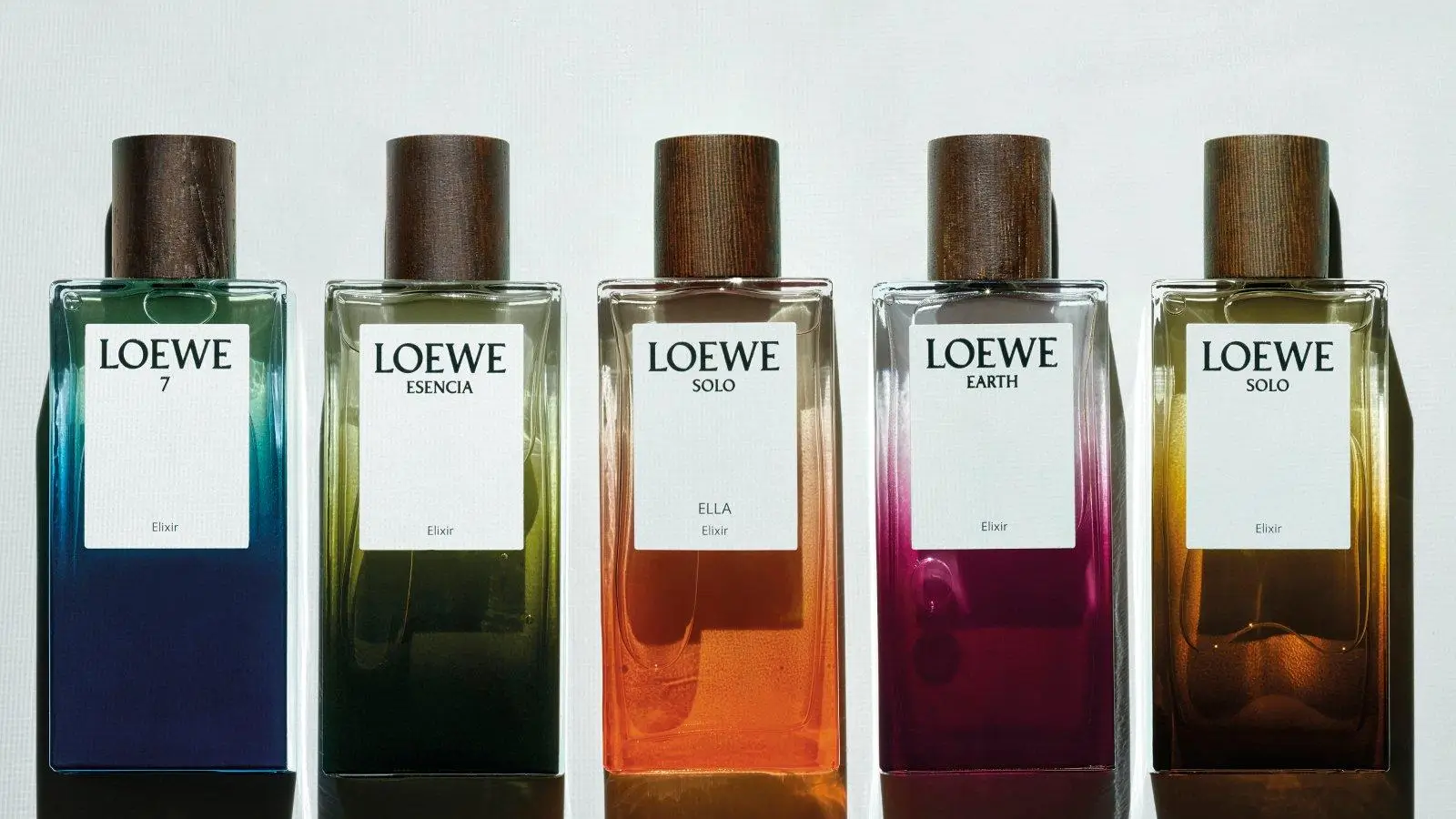
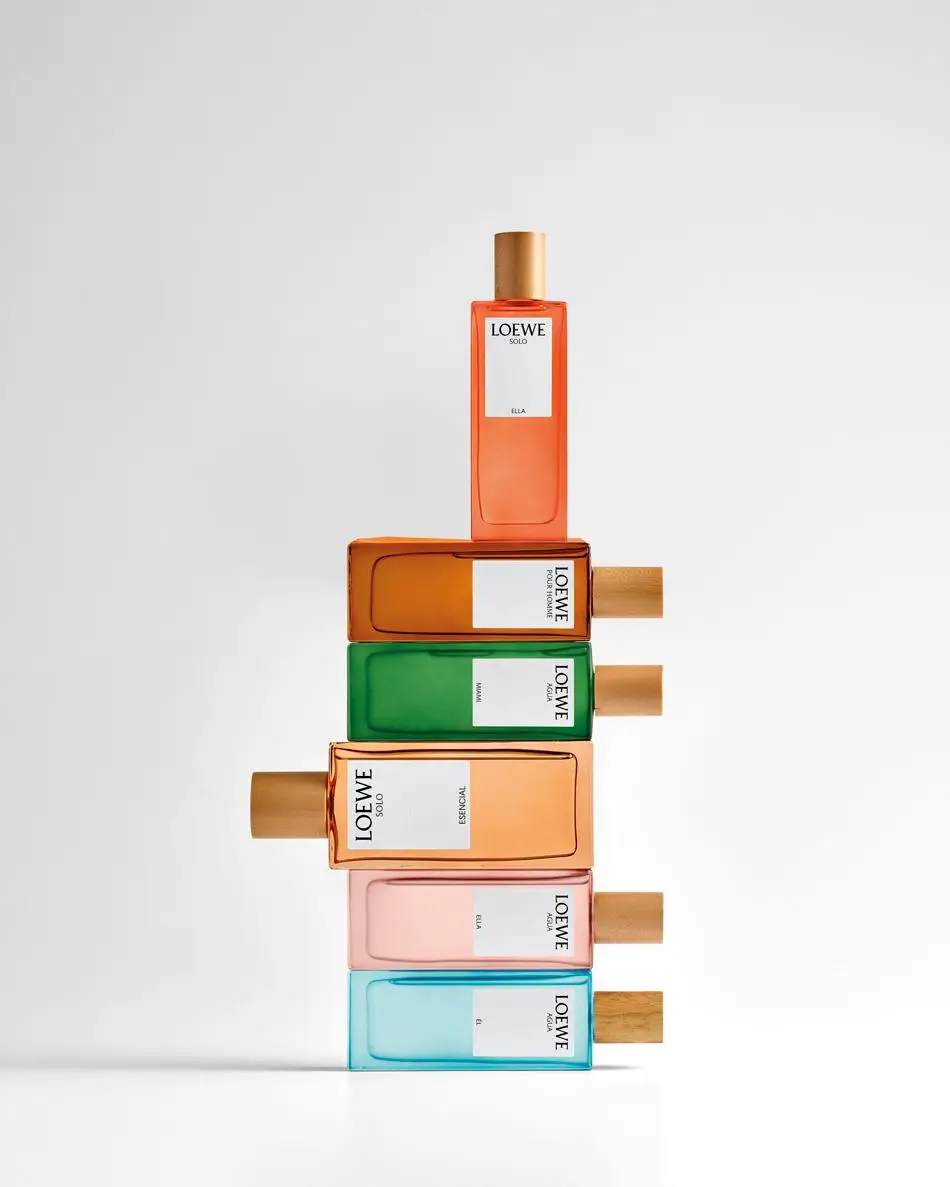
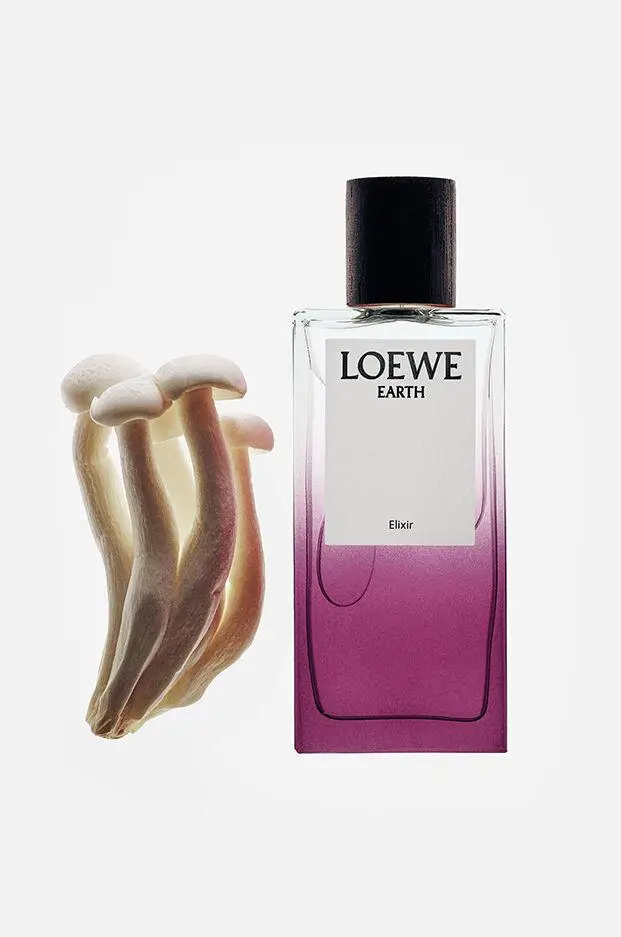
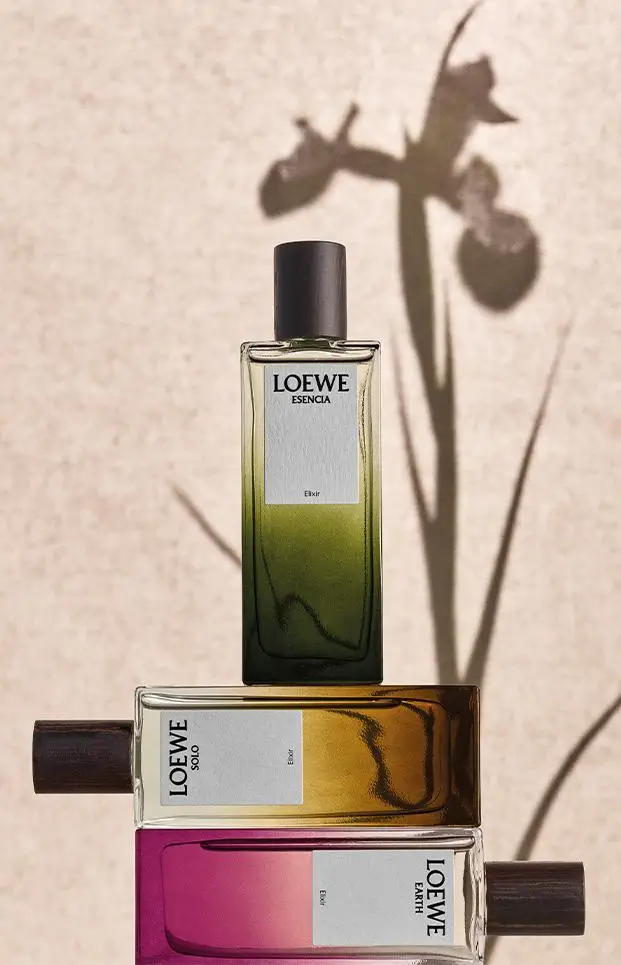
There is always a moment—quiet, almost imperceptible—when a house begins to shift. Not loudly, not with the blunt force of rebranding, but through something more elusive: tone, cadence, atmosphere. At Loewe, that shift now arrives through scent.
The appointment of Jack McCollough and Lazaro Hernandez signals more than a continuation of craft-driven modernism—it suggests a recalibration of how the house communicates intimacy. Their first perfume campaign does not attempt to overwrite the legacy built under Jonathan Anderson. Instead, it studies it, absorbs it, and then quietly adjusts its frequency.
This is not a campaign that announces itself. It lingers.
stir
Loewe’s fragrance universe has long resisted the conventions of perfume marketing. There are no overt narratives of seduction, no cinematic love stories unfolding across glossy backdrops. Instead, the house has built its olfactory identity through objects—glass, color, light, organic fragments of the natural world.
Under Anderson, perfume became less about persona and more about presence. Bottles resembled sculptural artifacts; campaigns felt closer to still-life photography than advertising. A tomato, a leaf, a shard of sunlight—these became as central as the fragrance itself.
McCollough and Hernandez inherit this language, but they do not replicate it verbatim. Their intervention is subtle: a tightening of composition, a slightly more deliberate framing of emotion, a sense that the objects now exist within a quieter, more introspective field.
Where Anderson’s Loewe often felt curious, exploratory, almost playful, this new chapter leans toward something more restrained. Not colder, but more precise.
View this post on Instagram
flow
There is no storyline to follow here. No protagonist, no arc, no resolution. Instead, the campaign operates as a series of atmospheric fragments—images that feel less like advertisements and more like moments suspended in time.
A bottle catches light at an oblique angle. A surface reflects color in a way that feels almost accidental. Organic elements—fruit, foliage, mineral textures—appear not as props but as cohabitants of the frame.
This refusal of narrative is intentional. McCollough and Hernandez understand that Loewe’s strength lies in its ability to create emotional resonance without explanation. The viewer is not told what to feel; they are invited to notice.
And in noticing, something shifts.
The campaign becomes less about selling a fragrance and more about calibrating perception. It asks: what does it mean to experience scent visually? How can stillness carry intensity?
emotive
If there is a defining quality to this first campaign, it is control.
Not rigidity, but control in the sense of exactness. Every element appears considered—the distance between objects, the density of shadow, the saturation of color. Nothing feels incidental, even when it appears effortless.
This is where McCollough and Hernandez’s background at Proenza Schouler becomes visible. Their work has always balanced structure and ease, intellectual rigor and emotional clarity. At Loewe, that balance translates into a visual language that is both composed and quietly expressive.
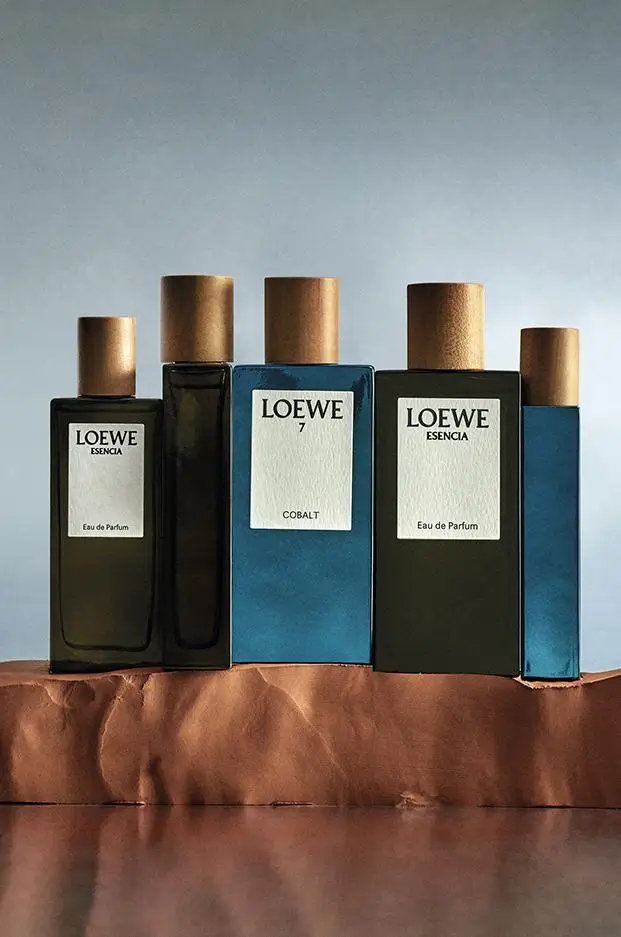
The bottles themselves—already iconic in their cylindrical form with graduated color caps—are treated almost reverentially. They are not styled so much as positioned, allowed to exist within the frame rather than dominate it.
There is confidence in that restraint.
tincture
Color has always been central to Loewe’s fragrance identity. The spectrum of caps—each hue corresponding to a different olfactory profile—functions as both system and signature.
In this campaign, color is not simply aesthetic; it is communicative.
The arrangement of bottles suggests relationships: contrasts, harmonies, subtle tensions between tones. A warm amber sits beside a muted green; a soft pink interrupts a field of neutrals. These juxtapositions create a visual rhythm that mirrors the layering of scent itself.
McCollough and Hernandez amplify this language by reducing everything else. Backgrounds remain minimal, often neutral or softly textured, allowing color to carry the emotional weight.
The result is a kind of visual synesthesia. You begin to “feel” the fragrance through color alone.
frame
Loewe’s connection to nature is not new. Botanical references, organic materials, and environmental textures have long been embedded in its visual world.
What changes here is the framing.
Nature is no longer presented as something abundant or expansive. Instead, it is distilled—reduced to singular elements that exist in dialogue with the product. A single leaf, a fragment of fruit, a surface that suggests earth or stone.
This reduction creates intimacy. It brings nature closer, makes it tactile, almost personal.
McCollough and Hernandez avoid the cliché of “natural beauty” as something lush or overflowing. Instead, they present nature as something precise, almost architectural in its simplicity.
It is less about immersion and more about encounter.
gone
Perhaps the most striking aspect of the campaign is what it omits: the human figure.
In an industry where fragrance is often tied to the body—skin, desire, proximity—Loewe continues to resist that association. There are no faces, no gestures, no implied narratives of touch or attraction.
This absence is not a void; it is a statement.
By removing the body, the campaign shifts focus entirely onto the sensory relationship between object and viewer. The fragrance becomes less about how it will make you appear to others and more about how it exists in your own perception.
It is a deeply internal approach to luxury—one that prioritizes experience over display.
View this post on Instagram
continued
The challenge of any transition is avoiding rupture while still asserting change. McCollough and Hernandez navigate this with notable precision.
The campaign clearly belongs to Loewe—it retains the house’s visual codes, its commitment to materiality, its rejection of conventional storytelling. And yet, there is a discernible shift in tone.
Where Anderson’s work often embraced a kind of intellectual playfulness, this new direction feels more contemplative. The images are quieter, the compositions more resolved.
It is not a break, but a refinement.
This is perhaps the most compelling aspect of the campaign: its ability to signal evolution without spectacle. There is no need to declare a “new era.” The change is embedded in the details.
culture
Loewe has consistently positioned its perfumes not merely as products but as cultural artifacts—objects that exist at the intersection of design, art, and sensory experience.
McCollough and Hernandez extend this positioning by emphasizing the sculptural quality of the bottles and the conceptual nature of the imagery. The campaign could easily be mistaken for an exhibition catalog or an artist’s portfolio.
This blurring of boundaries is intentional. It elevates the fragrance beyond its functional purpose and situates it within a broader cultural context.
To own a Loewe perfume, in this framing, is not simply to wear a scent. It is to participate in a visual and conceptual system.
sustain
In a landscape saturated with maximalism—bold campaigns, celebrity endorsements, high-concept narratives—Loewe’s approach feels almost radical in its restraint.
McCollough and Hernandez understand that attention does not always require amplification. Sometimes, it requires subtraction.
By stripping the campaign down to its essential elements—object, light, color, texture—they create space for the viewer to engage more deeply. There is nothing to distract, nothing to decode in a literal sense.
And yet, the images linger.
This is the paradox of restraint: the less that is shown, the more that is felt.
new
What this first perfume campaign ultimately reveals is not a dramatic transformation, but a recalibration.
McCollough and Hernandez are not interested in redefining Loewe from the ground up. Instead, they are tuning it—adjusting its frequency so that it resonates differently, perhaps more quietly, but with greater clarity.
The campaign suggests a future in which Loewe continues to explore the intersection of craft, concept, and sensory experience, but with an added emphasis on precision and introspection.
It is a subtle shift, but one that feels significant.
Because in fashion—and especially in fragrance—it is often the smallest adjustments that carry the most weight.
how
The question, inevitably, is whether this approach succeeds.
The answer depends on what one expects from a fragrance campaign. If the goal is immediate impact, viral visibility, or narrative spectacle, this campaign may feel understated, even elusive.
But if the goal is longevity—creating images that endure, that continue to resonate beyond their initial release—then the strategy becomes clear.
McCollough and Hernandez are not chasing attention. They are cultivating presence.
And in doing so, they align perfectly with Loewe’s ethos: a house that has always preferred to whisper rather than shout.
sum
This first Loewe perfume campaign under Jack McCollough and Lazaro Hernandez does not attempt to dazzle. It does not rely on novelty or disruption.
Instead, it refines.
It takes the visual language established under Jonathan Anderson and sharpens it, distills it, and repositions it within a slightly different emotional register.
The result is a campaign that feels both familiar and new—anchored in the house’s identity, yet subtly transformed.
It is Loewe, but quieter. More precise. More internal.
And perhaps, in that quietness, more powerful than ever.