Lomomatic 110 Camera & Flash Metal Review: A New Era for Pocket Film

March 28, 2026
1 hour ago
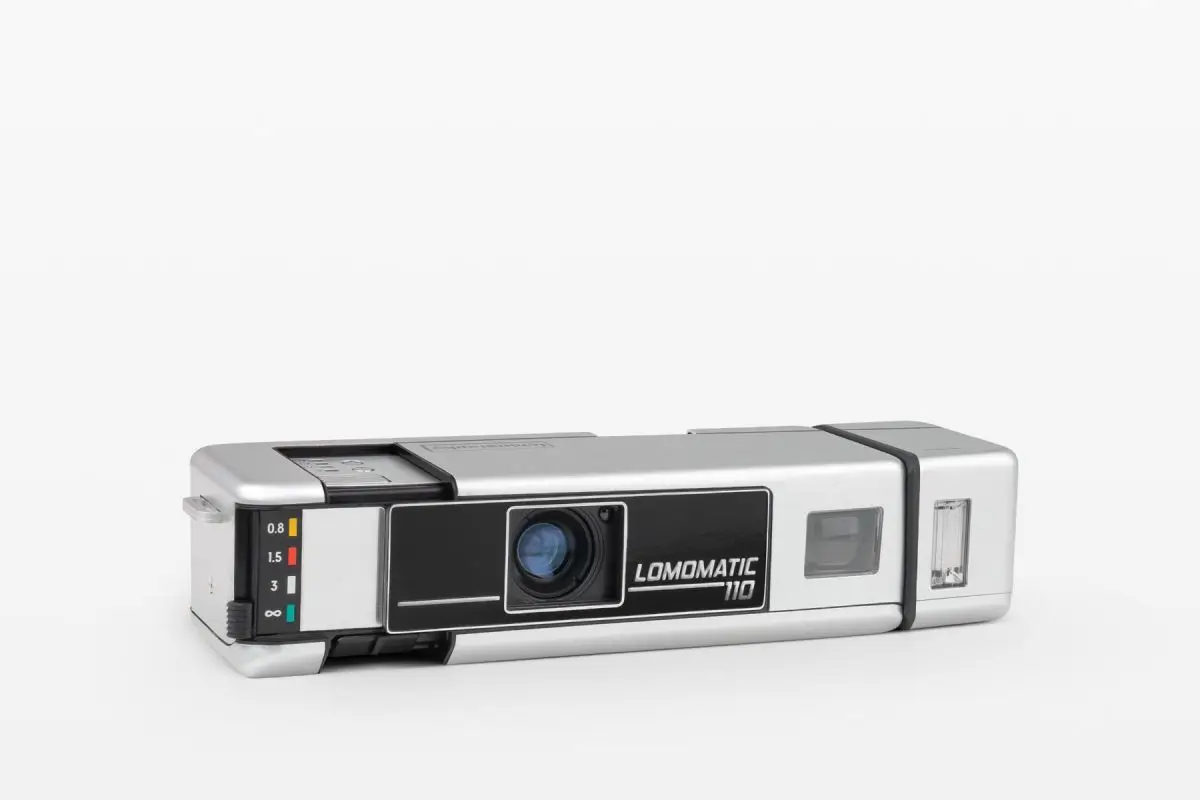
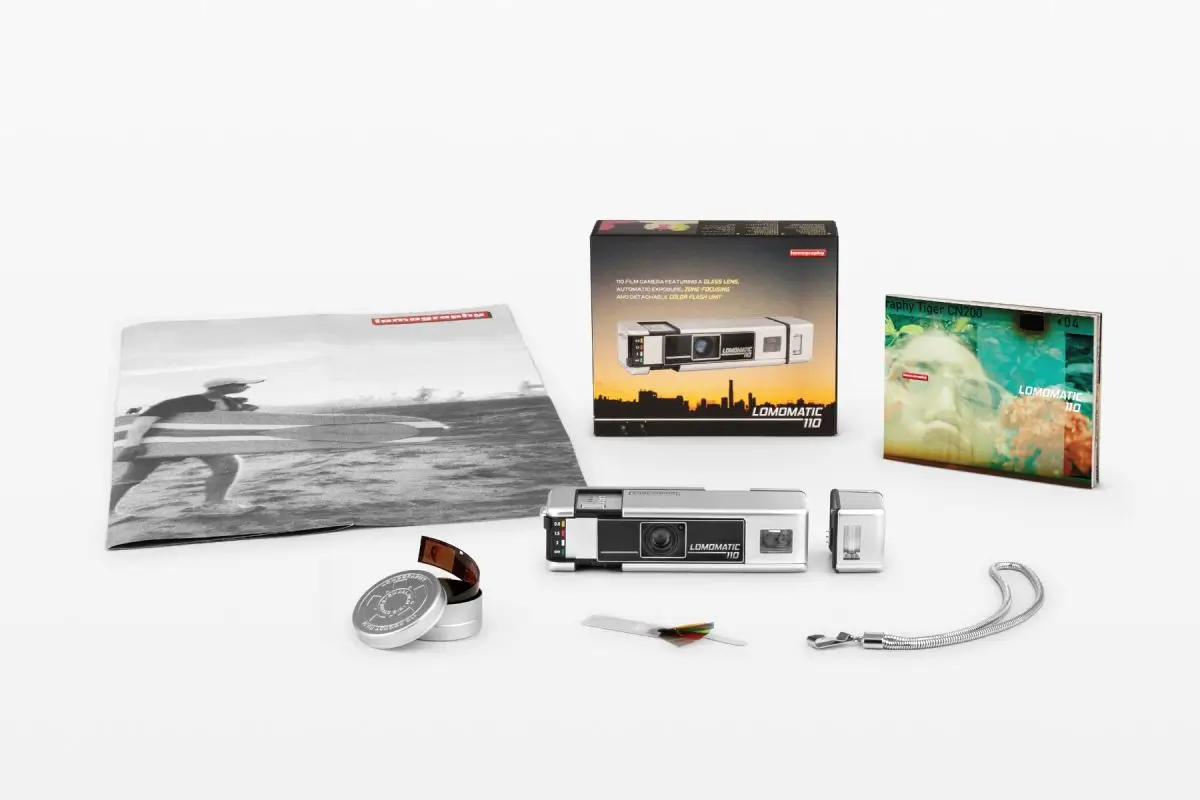
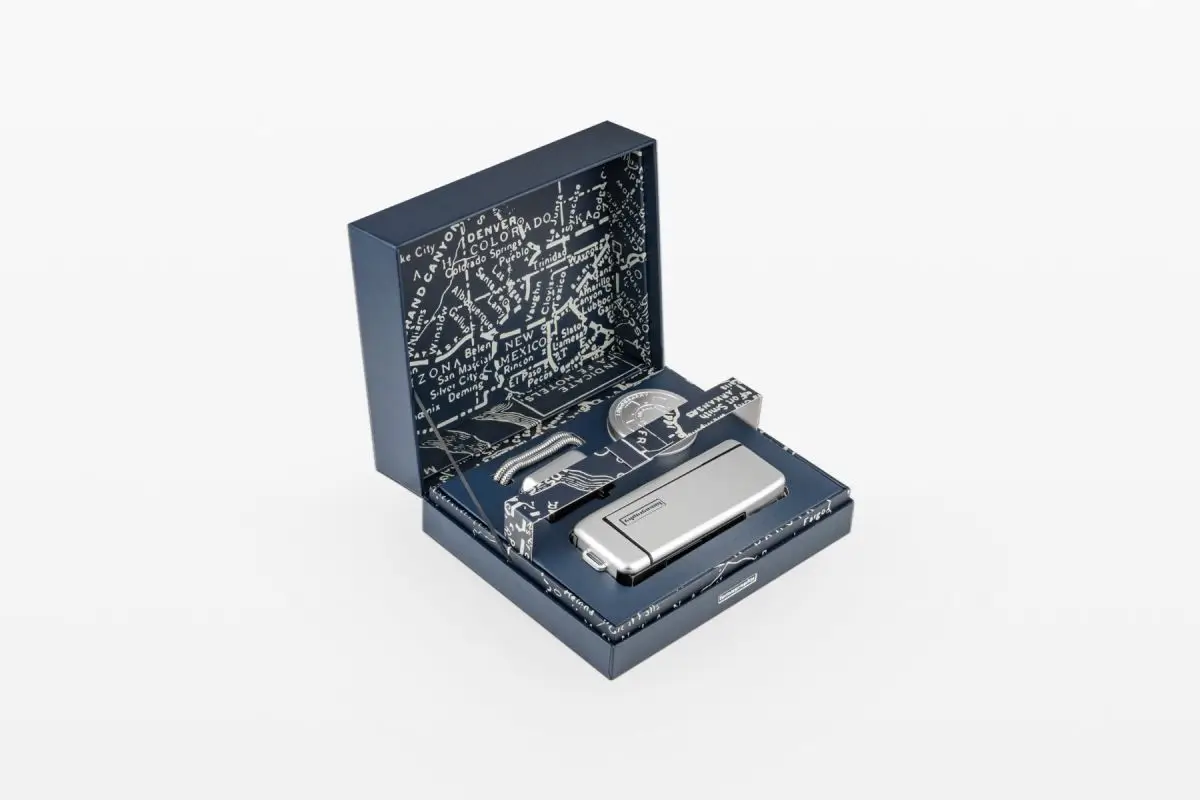
There’s a certain kind of object that refuses to stay still—not because it moves, but because it invites motion. The Lomomatic 110 Camera & Flash Metal belongs to that category. It doesn’t ask for a studio, a tripod, or even a second thought. It slips into a pocket, disappears until needed, and then returns with images that feel less manufactured and more lived.
Positioned as a revival of 110-format photography, the Lomomatic reframes what small-format analog can be in 2026: not a novelty, not nostalgia for its own sake, but a tool for frictionless image-making. In an era where cameras compete on resolution and algorithmic perfection, this device operates on a different axis entirely—intuition, immediacy, and constraint as creative leverage.
stir
The first encounter is tactile. The metal construction gives the Lomomatic a density that immediately distinguishes it from plastic-heavy contemporaries and vintage toy cameras. There’s a coolness to the touch, a subtle weight that reassures rather than burdens. It feels engineered rather than assembled, intentional rather than incidental.
This material choice is not purely aesthetic. It reinforces durability for travel—the kind of camera you can carry through transit systems, coastlines, or late-night city walks without second-guessing its resilience. It aligns with the product’s positioning as a “passport to adventure,” but avoids cliché by grounding that idea in actual build quality.
Where many compact cameras aim to disappear entirely, the Lomomatic strikes a balance. It is discreet enough to remain unobtrusive, yet distinct enough to feel like an object of design. The finish, lines, and compact geometry create something closer to a personal artifact than a gadget.
idea
At the center of its capability is a glass lens—arguably the most critical upgrade in redefining expectations for 110 photography. Historically, the format has been associated with softness and unpredictability, often due to lower-quality optics. Here, the inclusion of a glass lens recalibrates that narrative.
Sharpness becomes relative rather than absolute. The Lomomatic doesn’t chase clinical perfection; instead, it offers clarity where it matters while preserving the character of film grain and light diffusion. Edges hold form, colors maintain integrity, and contrast feels intentional rather than accidental.
The result is an image that occupies a middle ground—clean enough to feel composed, but textured enough to remain unmistakably analog. For photographers accustomed to digital sharpness, this lens provides a bridge into film without sacrificing too much control. For analog purists, it respects the format while elevating its baseline performance.
claim
Perhaps the most quietly radical feature is its automatic exposure system. In a landscape where manual control is often equated with seriousness, automation can be misunderstood. Here, it is not a compromise—it is a design philosophy.
Automatic exposure allows the Lomomatic to function as an extension of the eye rather than a device requiring constant adjustment. Light is interpreted, settings are handled, and the photographer remains focused on framing and timing. This shift reduces friction, making it easier to capture moments that would otherwise be lost while adjusting dials or navigating menus.
It also opens the camera to a wider range of users. Whether experienced or new to film, the barrier to entry is minimal. Yet the output does not feel simplified. Instead, it reflects a deliberate narrowing of variables, allowing creativity to emerge through composition and subject rather than technical calibration.
flow
Despite its minimal footprint, the Lomomatic integrates a suite of creative tools that expand its expressive range. These features operate within the constraints of the format, offering variation without overwhelming the user.
Multiple exposure capabilities allow frames to overlap, creating layered narratives within a single image. Long exposure options invite experimentation with motion, turning passing lights into streaks or softening movement into abstraction. Color-shifting and tonal variations—often influenced by film stock—further diversify output.
What’s notable is how these features are presented. They do not feel like add-ons or gimmicks. Instead, they are embedded into the camera’s identity as a creative instrument. Each function encourages a different way of seeing, prompting the user to think beyond straightforward documentation.
fx
The inclusion of a detachable flash introduces flexibility that extends the camera’s usability across environments. Rather than being fixed, the flash becomes a companion—something you choose to engage with depending on context.
In low-light conditions, it provides the necessary illumination to maintain clarity without sacrificing the analog aesthetic. In brighter settings, it can be removed to preserve natural lighting. This modularity reinforces the camera’s adaptability, ensuring it remains relevant across varied scenarios.
The flash itself contributes to the visual signature of the Lomomatic. Direct flash on film carries a distinct quality—slightly harsh, often nostalgic, yet capable of producing striking results when used intentionally. It adds another layer of creative decision-making without complicating the overall experience.
move
Scale is central to the Lomomatic’s appeal. Its pocket-sized form factor transforms it from a planned tool into an ever-present one. Unlike larger cameras that require deliberate packing, this device integrates seamlessly into daily life.
This accessibility changes behavior. Moments that might previously have gone undocumented—because the camera wasn’t nearby or felt too cumbersome—become opportunities. The Lomomatic encourages spontaneity, aligning with a more fluid approach to photography.
In travel contexts, this becomes particularly valuable. The camera does not compete with luggage space or demand attention. It exists alongside the journey, ready to capture fragments of experience without interrupting them.
style
The revival of 110 film is not incidental. It reflects a broader cultural shift toward smaller, more personal forms of media. In contrast to the hyper-detailed outputs of modern devices, 110 images feel intimate. They carry imperfections that read as authenticity rather than shortage.
The Lomomatic leverages this shift by modernizing the format without stripping it of its identity. It acknowledges the limitations—frame size, grain, color variability—but positions them as assets. Each image becomes less about accuracy and more about interpretation.
This reframing aligns with a wider return to analog practices across creative fields. Vinyl, film photography, and tactile design objects are being re-evaluated not as regressions, but as alternatives to digital saturation. The Lomomatic sits comfortably within this movement, offering a contemporary entry point into a historically overlooked format.
design
Beyond specifications, the Lomomatic operates as an experience. Loading film, advancing frames, waiting for development—these processes introduce time into photography. They slow it down, creating anticipation and reflection.
The camera’s design supports this rhythm. Its controls are intuitive, its feedback is physical, and its outcomes are deferred. This stands in contrast to the immediacy of digital capture, where images are instantly reviewed, edited, and shared.
By removing instant gratification, the Lomomatic reintroduces a sense of discovery. Each roll becomes a sequence of unknowns, each frame a small act of trust. This dynamic reshapes the relationship between photographer and image, emphasizing process over perfection.
fin
The Lomomatic 110 Camera & Flash Metal is less about achieving the “perfect” photograph and more about enabling a different kind of engagement with image-making. It prioritizes movement—physical, creative, and conceptual.
Its metal body anchors it in durability, its glass lens elevates its output, and its automatic exposure simplifies interaction. Together, these elements create a device that feels both contemporary and timeless.
In a market saturated with increasingly complex technology, the Lomomatic offers an alternative: a camera that does less, but means more. It invites users to step outside the logic of optimization and into a space where imperfection is not only accepted, but essential.