Loro Piana Darby Checked Wool and Cashmere Overshirt

April 2, 2026
1 hour ago
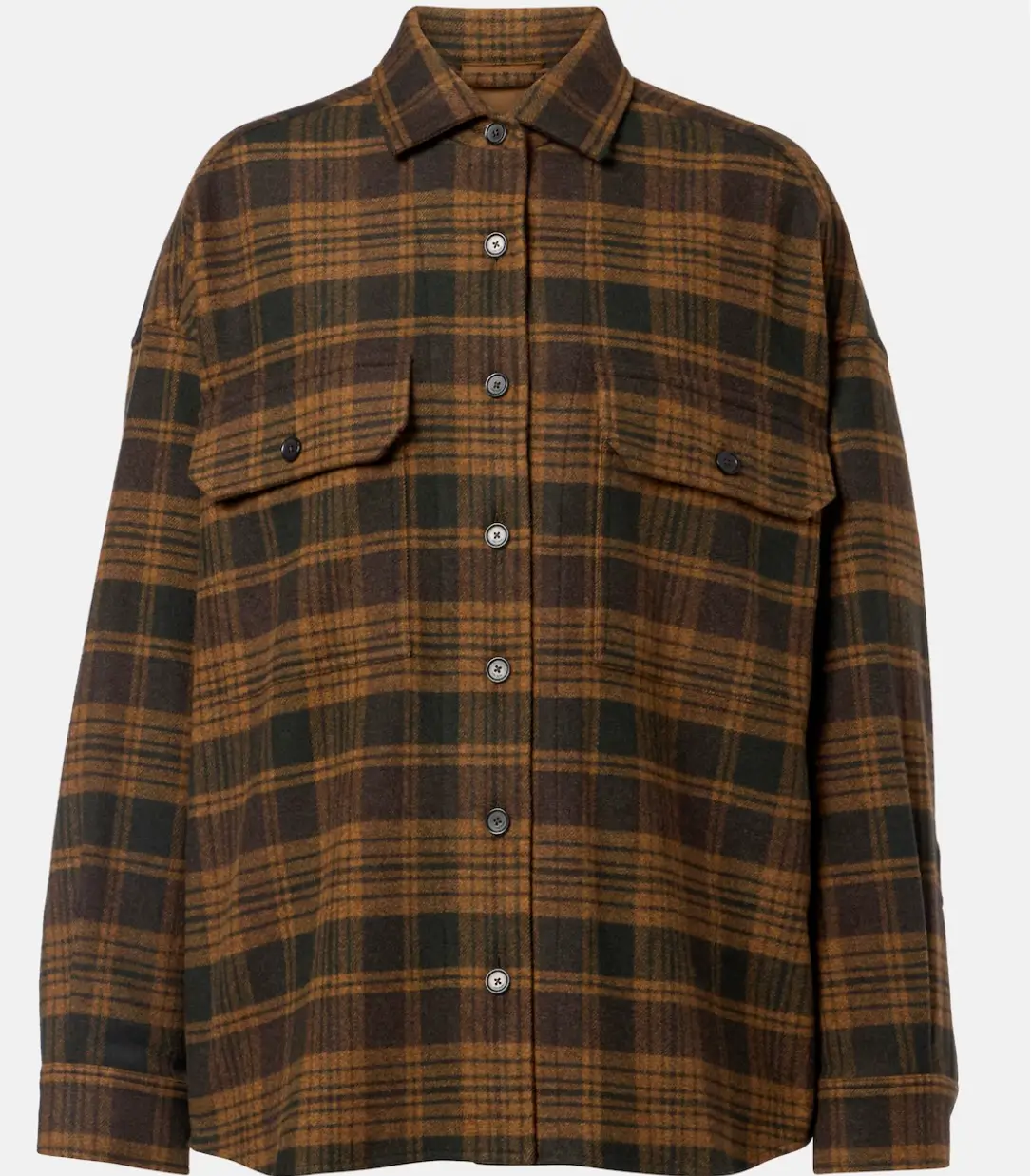
There was a time when the longline flannel existed as a purely utilitarian object—fabric, brushed, often loud in palette, and anchored in workwear or grunge. It signified durability, not discretion. Yet within the ecosystem of Loro Piana, that same silhouette is not discarded but rather recomposed. The Darby checked overshirt does not reject the flannel lineage; it refines it until the origin becomes almost theoretical.
The transformation begins with material. Where traditional flannel relies on cotton for warmth and softness, Loro Piana replaces the expectation with a wool–cashmere blend, recalibrating texture into something far more fluid. The tactile experience shifts from rugged to almost imperceptible luxury, a surface that reads visually as familiar plaid yet behaves like something closer to tailoring.
stir
The Darby overshirt is less about pattern than it is about fiber authority. Loro Piana’s reputation has long been tethered to sourcing—fibers that are not only rare but treated with an almost archival respect. Here, wool provides structure while cashmere introduces a softened, brushed depth that absorbs light rather than reflecting it harshly.
The result is a plaid that feels muted, atmospheric, and controlled. Cream, camel, and soft grey intersect without tension. There is no visual aggression—only tonal harmony. This is not flannel as statement; it is flannel as environment.
Crucially, the fabric carries a weight that allows it to sit between categories. It is neither shirt nor coat, but something more ambiguous—what the industry now calls an overshirt, though even that term feels insufficient given the level of execution.
flow
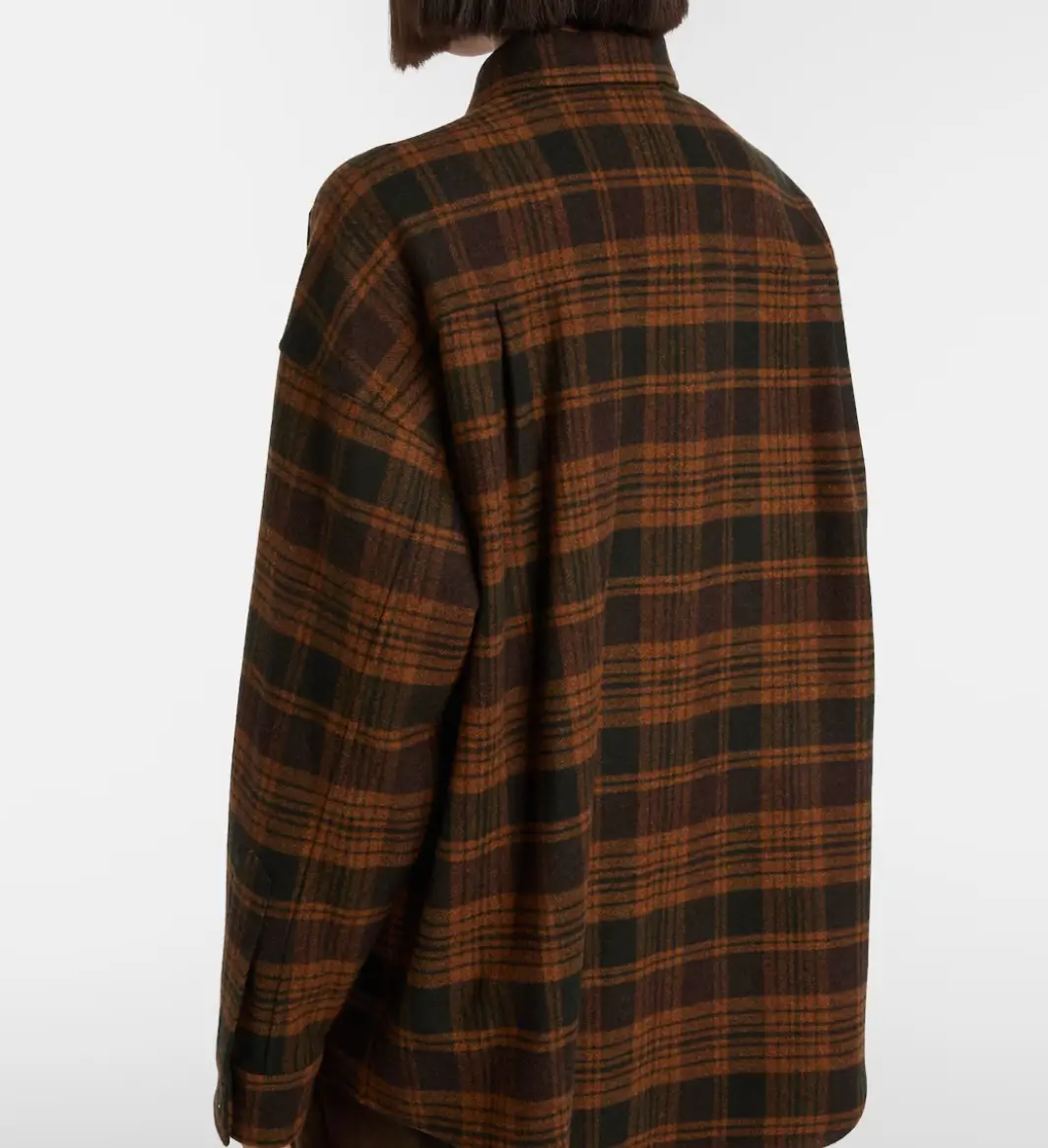
Silhouette is where the Darby overshirt most directly echoes the longline flannel of memory. The cut extends below the hip, approaching mid-thigh depending on styling, establishing that elongated line that has come to define contemporary layering. Yet unlike traditional oversized garments, the proportions here are disciplined rather than exaggerated.
The shoulders fall naturally, not dramatically. The body drapes without collapsing. Buttons are functional but rarely intended for full closure; the garment is designed to be worn open, allowing the structure to reveal itself in motion. There is an inherent understanding that ease is not the absence of design—it is the result of precision.
Large patch pockets ground the piece, referencing its utilitarian ancestry, but they are executed with restraint. Seams are clean, transitions subtle. Nothing interrupts the continuity of the plaid.
lang
The Darby overshirt finds its most compelling expression when styled in the same spirit as its construction: quiet, deliberate, and layered without excess. A cropped knit or fine ribbed top beneath introduces contrast in proportion, allowing the longline outer layer to elongate the frame. Light-wash denim—straight or slightly relaxed—anchors the look in familiarity, preventing the piece from drifting into abstraction.
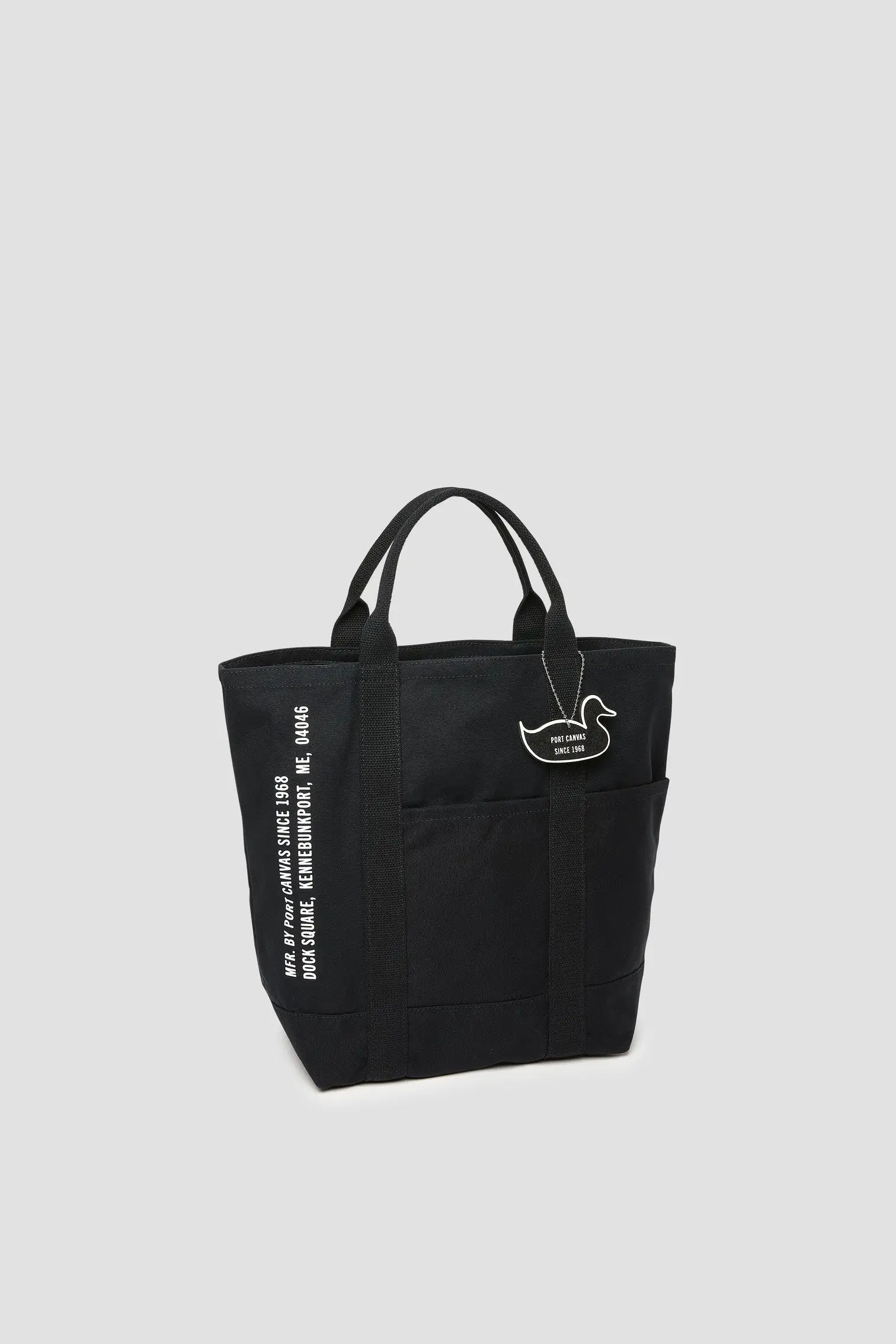
Footwear remains equally considered. Minimal sneakers, suede boots, or even understated loafers maintain the tonal narrative. Accessories are secondary, almost optional. A leather tote, a simple cup of coffee—these are not props but extensions of the lifestyle the garment implies.
What emerges is not an outfit but a state of dress: composed, unforced, and distinctly modern.
refine
The term “quiet haute” has been overextended in recent seasons, often applied to anything neutral or logo-free. In the case of Loro Piana, the concept regains its original meaning. The Darby overshirt does not rely on branding to communicate value; instead, it operates through material literacy and visual restraint.
There is a confidence in knowing that recognition is not required. The piece is not designed to be noticed immediately. It reveals itself gradually—through movement, through touch, through the way it integrates into a wardrobe rather than dominating it.
This is where the Darby diverges most significantly from its flannel predecessor. Where flannel once functioned as a marker of identity—subculture, rebellion, utility—this overshirt functions as an absence of noise. It is not about declaring who you are, but about refining how you appear.
essential
The evolution from longline flannel to wool–cashmere overshirt reflects a broader shift in fashion. Categories that were once rigid—shirt, jacket, coat—have dissolved into hybrid forms that prioritize adaptability. The Darby overshirt embodies this transition. It can be worn as a light outer layer in transitional weather, or as a mid-layer beneath a heavier coat, adapting without compromising its identity.
This versatility is not accidental. It is the result of a design philosophy that views garments as part of a system rather than standalone statements. Each piece must function across contexts, seasons, and moods.
expend
To understand the price of the Darby overshirt is to understand what is being valued. It is not the plaid itself, nor the silhouette, both of which can be found at vastly lower price points. The cost lies in the consistency of execution—the sourcing of fibers, the calibration of color, the refinement of cut, and the discipline to remove anything unnecessary.
In this sense, the overshirt is less a garment and more a study in reduction. Every element that does not serve the whole has been eliminated. What remains is a piece that feels inevitable, as though it could not exist in any other form.
fin
If the longline flannel once represented accessibility and function, the Loro Piana Darby overshirt represents its ultimate distillation. The familiar has been elevated, not through excess but through precision. It retains the essence of what made the original appealing—the length, the layering potential, the ease—while removing everything that tethered it to a specific time or subculture.
What remains is something more enduring. A garment that does not chase relevance because it exists outside of it. A longline flannel, no longer define just casualness, but by material intelligence and quiet authority.