Maison Margiela Scentsorium: A Motion of Scent and Struct as Couture

April 5, 2026
1 hour ago

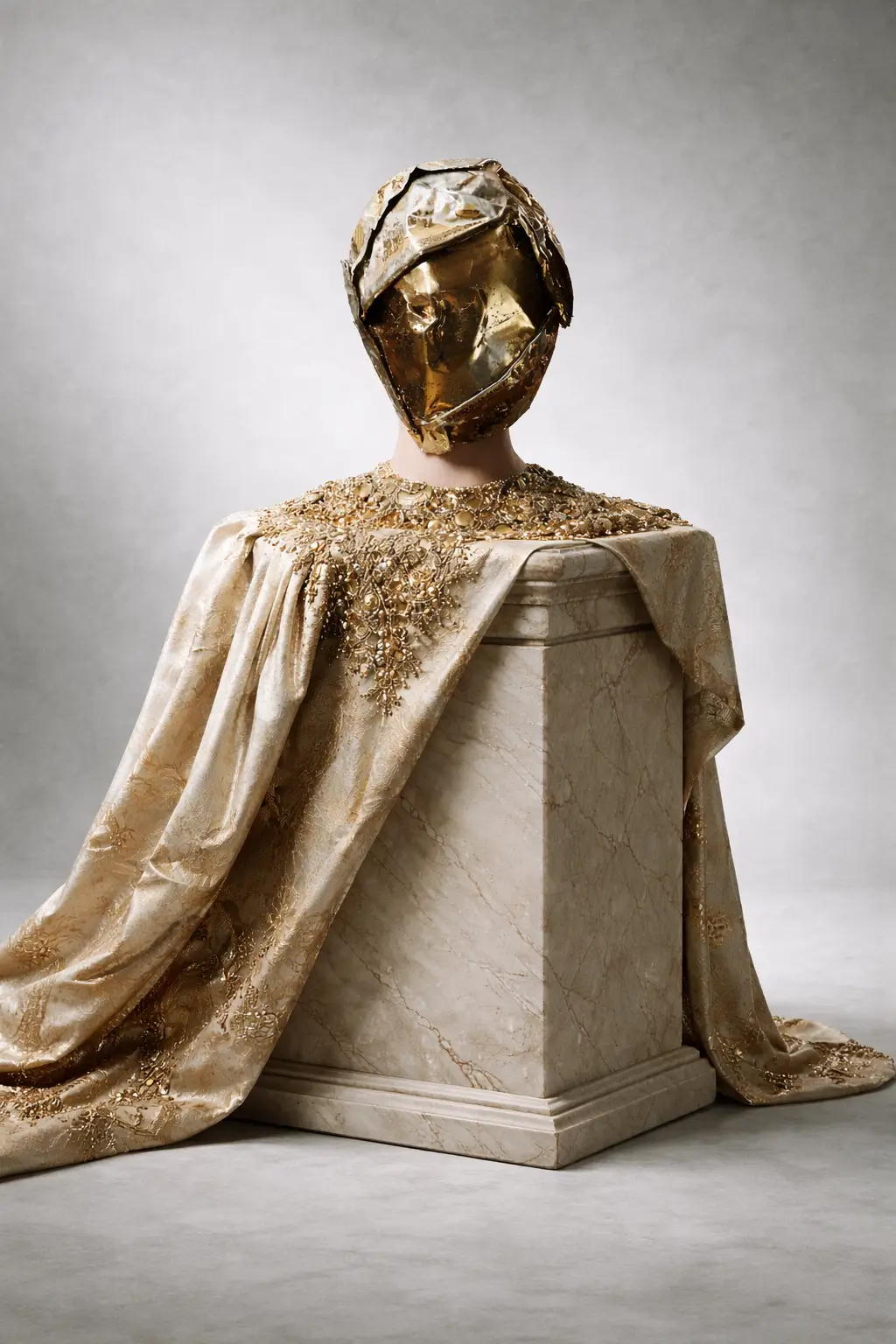

Maison Margiela has spent decades working within that space, dissolving the fixed meanings of garments and reconstructing them as environments, gestures, fragments of time. The arrival of the Scentsorium Collection, introduced through the house’s verified fragrance channel, does not feel like a new direction. It feels like the continuation of a long-standing inquiry—what happens when material is no longer confined to form?
The caption that accompanies the official post—“couture becomes perfume and emotion becomes matter”—reads less like marketing and more like a thesis. It proposes a transformation, but not in the conventional sense. This is not about translating garments into scent in any literal way. It is about shifting the role of perfume itself, repositioning it from a finishing touch into a foundational element. Not something applied, but something constructed.
View this post on Instagram
idea
The Scentsorium Collection begins, as Margiela often does, with material. Not abstracted notes, but tangible elements—resins, woods, florals, minerals—each treated not as a component to be hidden within a blend, but as a surface to be revealed. In traditional perfumery, blending often aims toward cohesion, toward the seamless merging of elements into a unified identity. Here, the emphasis shifts. Cohesion is not abandoned, but it is complicated.
Each fragrance within the collection appears to maintain a certain legibility. You can sense the density of a resin, the dryness of a spice, the softness of a floral note. But these elements do not resolve into a single, easily named structure. Instead, they remain slightly apart from one another, layered rather than fused. The effect is architectural. The scent behaves less like a liquid and more like a space—something you move through, rather than something that settles on the skin.
This approach aligns closely with the house’s work in couture under John Galliano, where garments often reveal their own construction. Seams are exposed, linings become exteriors, surfaces carry traces of manipulation. The object is never entirely closed. It remains open, readable, in process.
flow
To wear one of these fragrances is to encounter something that does not fully resolve. The structure unfolds, but it resists closure. Traditional fragrance pyramids—top, heart, base—imply a kind of narrative progression, a beginning that leads to a middle that resolves into an end. The Scentsorium compositions appear to interrupt this sequence.
A note that should dissipate may linger. A base element may surface earlier than expected. The hierarchy destabilizes, not in a chaotic way, but in a controlled, deliberate manner. The scent exists in a state of suspension—never entirely fixed, always in slight motion.
This creates a different kind of engagement. The wearer is not simply experiencing the fragrance; they are participating in its evolution. Skin, temperature, environment—all become active variables. The perfume is not complete without these conditions. It adapts, shifts, responds.
This semi-open structure mirrors Margiela’s broader design language. Nothing is entirely finished. Nothing is entirely sealed. The work exists in a state ofbecoming.
stir
The second half of the caption—“emotion becomes matter”—introduces a more complex proposition. Emotion, by definition, is intangible. It cannot be held, measured, or fixed. To suggest that it can become matter is to suggest a form of translation that moves beyond representation.
In the context of the Scentsorium Collection, this does not mean that a fragrance simply evokes a feeling. It means that the feeling itself becomes part of the material structure of the scent. The composition is not designed to remind you of something; it is designed to create a condition.
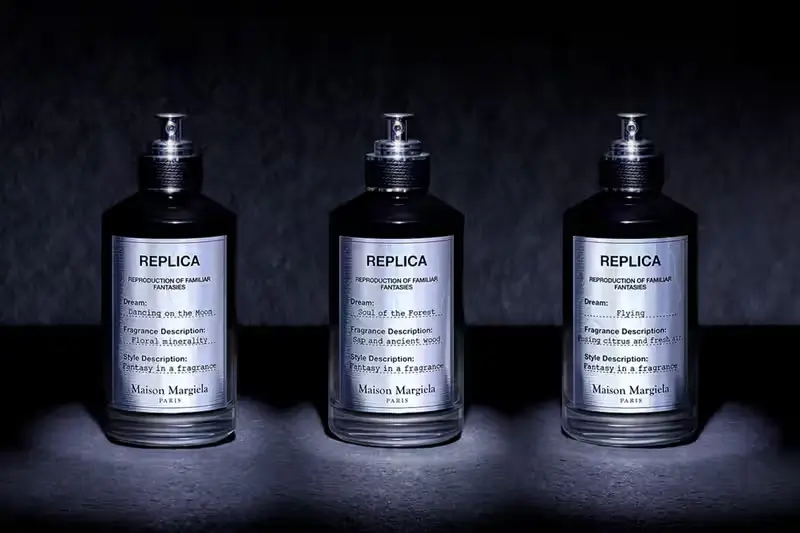
This distinction is subtle but significant. Memory-based fragrances, such as those in the Replica line, often operate through recognition. They reference specific moments—places, times, experiences—and translate them into scent. Scentsorium moves differently. It does not point backward. It exists in the present, constructing an atmosphere that is felt rather than recalled.
The emotion is not external to the fragrance; it is embedded within it. It becomes part of the material language.
eco
No Margiela work exists in isolation. The runway, the lighting, the sound—all contribute to the meaning of the collection. The same principle extends here. The Scentsorium fragrances are not static objects. They are responsive systems.
In a controlled interior space, the scent may feel dense, contained, almost sculptural. In open air, it may disperse, becoming lighter, more diffuse. Temperature alters its behavior, as does proximity to the skin. The fragrance exists in relation to its environment, not apart from it.
This responsiveness reinforces the idea that the scent is not a finished product, but an evolving condition. It is co-authored by the wearer and their surroundings. It changes as they move, as the day shifts, as the air itself transforms.