Max Mara’s Navy Hoodie and the Logic of Its Making

March 24, 2026
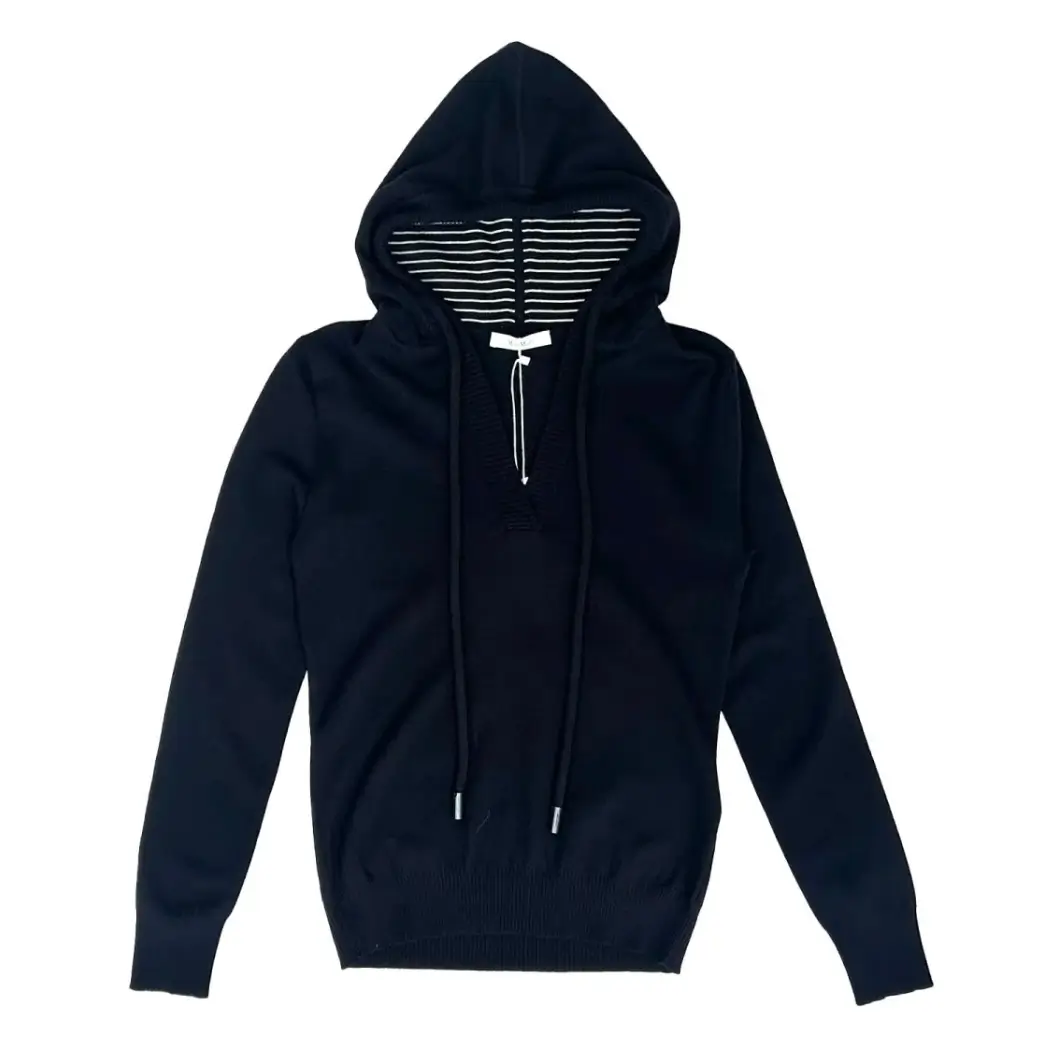
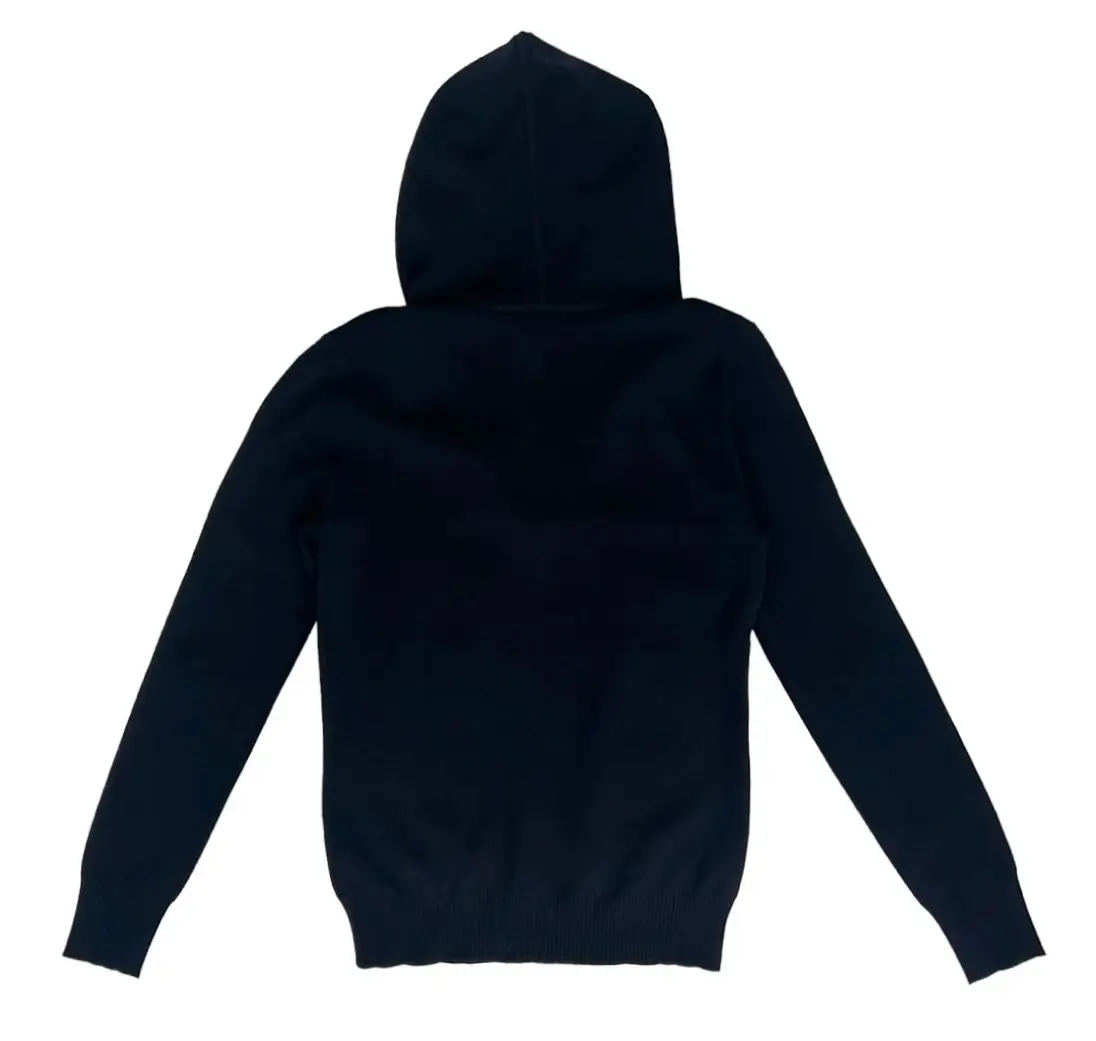
The navy Mxmdivo hoodie by Max Mara occupies a space that has been quietly redefined over the past decade. Once confined to the margins of fashion—associated with athletics, anonymity, or subcultural identity—the hoodie now exists within a more structured system of luxury. Its transformation has not been driven by surface-level reinvention, but by a deeper recalibration of how garments are made. Material, proportion, and durability now take precedence over novelty. In this context, origin becomes less a point of marketing and more a functional architecture that determines how the piece behaves over time.
For Max Mara, origin is never singular. It is distributed across a network, deliberate in its construction, and governed by a level of control that ensures consistency without rigidity. The Mxmdivo hoodie reflects this approach with clarity. It is not defined by a single place, but by a sequence of decisions that extend from design through to fabrication and assembly.
origin
Every Max Mara garment begins in Reggio Emilia, where the house established its identity in the mid-twentieth century and continues to refine it. This origin point is not symbolic; it is operational. The Mxmdivo hoodie is conceived within the same framework that informs the brand’s coats and tailored pieces. Its proportions are studied, its materials selected with precision, and its finishing calibrated to align with a broader visual language that values restraint over excess.
This continuity is critical. The hoodie is not treated as an exception within the collection, nor as a concession to casualwear. Instead, it is approached as an extension of the brand’s existing system. The silhouette is controlled without appearing restrictive, the fabric chosen for both structure and tactility, and the overall construction guided by the expectation that the garment will endure beyond a single season. What emerges is a piece that feels considered rather than reactive, integrated rather than adapted.
View this post on Instagram
stir
The physical assembly of the Mxmdivo hoodie takes place within Europe, most often in Italy or Portugal, with occasional production in other nearby regions such as Romania or Hungary. This distribution is not incidental. It reflects a broader strategy that aligns specific garment types with regions that specialize in their construction.
Italy remains closely tied to the brand’s identity, offering proximity to design teams and a tradition of craftsmanship that supports smaller, more controlled production runs. Portugal, by contrast, has developed a reputation for excellence in jersey and cotton garments, combining technical expertise with the capacity for consistent output. For a hoodie, which relies on precision in fabric handling and seam construction, Portugal provides an environment where these requirements can be met at scale without compromising quality.
The country of manufacture is always indicated on the garment’s interior label. This designation refers specifically to where the hoodie is sewn and finished. It does not encompass the full journey of the garment, but it provides a clear point of reference within that journey.
flow
While the hoodie may be assembled in Portugal or Italy, the fabric often follows a separate path. Max Mara sources its cotton from European mills, with a strong emphasis on Italian production. This introduces a layered geography in which spinning, weaving, dyeing, and finishing may occur in one location before the material is transported for final assembly.
This separation is intentional. It allows the brand to retain control over the most critical aspect of the garment—the fabric—while leveraging specialized manufacturing expertise elsewhere. The cotton used in the Mxmdivo hoodie is typically long-staple, contributing to a smoother surface and greater durability. The weave is tighter, the density higher, resulting in a material that holds its shape rather than collapsing into softness alone.
Externally, the fabric presents a matte, composed surface. Internally, it is often brushed or looped to provide comfort against the skin. This duality is central to the garment’s identity. It balances softness with structure, ensuring that the hoodie remains stable in form while accommodating movement.
why
The decision to maintain production within Europe reflects a broader commitment to consistency. Shorter supply chains enable closer oversight, reducing variability between batches and ensuring that finishing standards remain aligned across different production sites. Labor conditions are regulated, and the level of technical expertise within European textile industries supports a higher degree of precision.
Material integrity is also preserved through proximity. When fabrics are produced and assembled within the same regional network, the risk of degradation during transport is minimized. Dye consistency is easier to maintain, and the final garment retains the qualities established during its initial processing.
For a piece intended to function as a long-term element of a wardrobe, these factors are not peripheral. They are foundational.
edition
Portugal’s role in the production of luxury casualwear has expanded steadily, driven by its capacity to combine traditional craftsmanship with advanced manufacturing techniques. In the context of the Mxmdivo hoodie, this specialization is particularly relevant. The precision required in stitching, the consistency of fleece development, and the durability of seams all benefit from the country’s expertise in jersey production.
The presence of a “Made in Portugal” label on the hoodie does not signal a departure from luxury standards. It reflects a strategic alignment with a region that has become essential to the category.
Faye Peraya (@malisorn00) at Cannes Film Festival wearing a #MaxMara navy suit styled with the #MaxMaraWhitneyBag. #FayePeraya pic.twitter.com/YSPSOdY6Qm
— Max Mara (@maxmara) May 21, 2025
style
Even when the final assembly occurs outside Italy, the garment remains anchored in Italian influence. Fabric sourcing, design oversight, and quality control all trace back to the brand’s origin. This ensures that the hoodie maintains a coherence with Max Mara’s broader identity, regardless of where it is physically constructed.
The result is not a dilution of origin, but an expansion of it. Italy functions as the center, with surrounding regions contributing specialized capabilities that reinforce the final product.
auth
Within this system, authenticity becomes legible through detail. Clear labeling, consistent typography, and accurate composition listings are not simply regulatory requirements; they are indicators of the garment’s legitimacy. Product codes provide an additional layer of verification, linking the hoodie to its place within the brand’s production cycle.
These markers are subtle, but they are definitive. They allow the garment to be read with precision, ensuring that its origin can be traced and understood.
fin
The navy Mxmdivo hoodie resists reduction to a single point of origin. It is designed in Italy, constructed from European-sourced materials, and assembled within a network that includes Portugal and other specialized regions. This distributed system allows the garment to achieve a level of consistency that would be difficult to maintain within a single location.
What defines the hoodie is not where it is made in isolation, but how its making is structured. Each stage contributes to a final form that is stable, durable, and quietly resolved. The garment does not announce this complexity. It contains it, allowing its performance over time to reflect the decisions embedded within it.