McDonald’s All-American Games 2026: The Next Gen Takes the Floor

March 19, 2026
The announcement arrives with the familiar cadence of institutional language: rosters finalized, legacy affirmed, anticipation building. Forty-eight names—twenty-four girls, twenty-four boys—selected from more than seven hundred nominees. A distilled list, presented as culmination.
Yet the language, for all its ceremony, feels slightly outpaced by the reality it attempts to contain.
Because in 2026, the McDonald’s All-American Game is no longer a moment of revelation. It is a moment of confirmation. The wait is declared over, but the truth is that waiting itself has largely disappeared. The players chosen have already existed in public consciousness—circulated through feeds, dissected through clips, elevated through algorithmic repetition.
The roster does not introduce them.
It ratifies them.
View this post on Instagram
select
To understand the significance of this moment, one must begin with the act of selection—not as recognition, but as compression.
Seven hundred names reduced to forty-eight. A process guided by scouts, analysts, coaches, and media figures who operate as both evaluators and curators. Their task is not merely to identify talent, but to formalize a narrative: who belongs to this particular moment in basketball history.
Historically, such selection carried the weight of discovery. It signaled the emergence of players into a national spotlight that had previously been inaccessible.
Now, it functions differently.
The spotlight is already on. Selection does not illuminate—it sharpens. It focuses diffuse attention into a singular frame, transforming a field of visible prospects into a defined class.
This is the first shift.
The McDonald’s All-American Game no longer creates visibility. It organizes it.
View this post on Instagram
amp
There is a deliberate resonance in staging the 49th edition in Glendale, Arizona, at Desert Diamond Arena. Not simply because it is a new host city, but because it reflects a broader alignment between environment and event.
The desert is a landscape of exposure. It offers little concealment. Light dominates. Space expands. Everything appears more pronounced, more defined.
In this context, Glendale becomes more than a location—it becomes an amplifier.
The Phoenix region carries its own lineage, having shaped or hosted figures such as Devin Booker and Deandre Ayton. It is a geography already associated with emergence, with transformation from potential to presence.
Placing the McDonald’s All-American Game here extends that narrative. It situates the event within a continuum of visibility and ascent.
flow
What defines the current iteration of the McDonald’s All-American Game is not simply the level of talent, but the conditions under which that talent is perceived.
Distance has collapsed.
Where once there existed a temporal gap between performance and recognition, there is now simultaneity. A player’s action is captured, distributed, and evaluated in real time across platforms such as Instagram and TikTok.
This produces a new kind of athlete—one who exists continuously within a feedback loop of performance and perception.
Every play is not just executed; it is anticipated as content.
Every moment is not just experienced; it is framed for repetition.
The result is a shift from episodic visibility to constant presence.
The McDonald’s All-American Game, within this framework, becomes less a debut and more a synchronization point—a moment where multiple streams of attention converge.
compare
The event no longer exists as a singular game. It unfolds as a sequence.
The Sprite Jam Fest, with its dunk contest, three-point competition, and skills challenge, functions as a preliminary articulation of identity. It is here that individuality emerges most clearly, freed from the constraints of team structure.
The dunk contest, in particular, reveals the extent to which basketball has become a visual medium.
A dunk is no longer defined solely by its execution, but by its afterlife—its capacity to exist as an image, to circulate, to be replayed. The apex of the jump, the suspension of time, the moment before descent—these are the frames that endure.
Similarly, the three-point contest reflects an evolution in spatial perception. Range has expanded to the point where distance is redefined. Shots once considered exceptional are now routine.
The line, once a limit, becomes a suggestion.
stir
The introduction of NIL has not altered the existence of value within amateur basketball—it has rendered that value explicit.
Players arrive at the McDonald’s All-American Game already embedded within systems of exchange. Partnerships, endorsements, and personal branding strategies are no longer deferred to the professional stage.
They are active, visible, and integral.
This creates a new dimension of performance.
Athletes are not only competing within the game, but within a broader economy of attention. Their actions carry potential implications beyond the immediate context—affecting perception, marketability, and trajectory.
Value becomes something that is not only accumulated, but displayed.
show
In this environment, the image assumes primacy.
The way a player is seen—through photography, video, styling—becomes inseparable from how they are understood. The tunnel arrival, once incidental, now operates as a site of narrative construction.
Clothing, posture, gesture—each element contributes to a composite identity.
Brands such as Nike and Jordan Brand remain central, but their role has shifted. They are no longer sole authors of athletic identity. Instead, they participate in a collaborative process where players assert their own aesthetic agency.
The athlete becomes both subject and author of their image.
leg
The McDonald’s All-American Game carries with it a lineage that includes figures such as Michael Jordan, Kobe Bryant, and LeBron James. This history provides a framework through which the present is interpreted.
But legacy, in 2026, is not static.
It is not something that awaits completion.
It begins immediately.
The moment a player is selected, they are placed within a continuum of comparison. Their actions are read against precedent. Their potential is measured against established narratives.
Yet they also reshape that narrative.
Each class introduces new variables—new styles of play, new modes of expression, new relationships between athlete and audience. The legacy expands not through repetition, but through adaptation.
aud
The contemporary audience does not merely observe.
It engages.
Through comments, shares, edits, and reinterpretations, spectators become active participants in the construction of meaning. The significance of a moment is no longer determined solely by its occurrence, but by its circulation.
A play becomes important because it is seen.
It is remembered because it is shared.
This participatory dynamic alters the structure of the event itself. It introduces an additional layer of unpredictability, where the narrative is shaped not only by players and organizers, but by the collective response of the audience.
fwd
And yet, within this complex network of visibility, value, and perception, the game itself persists.
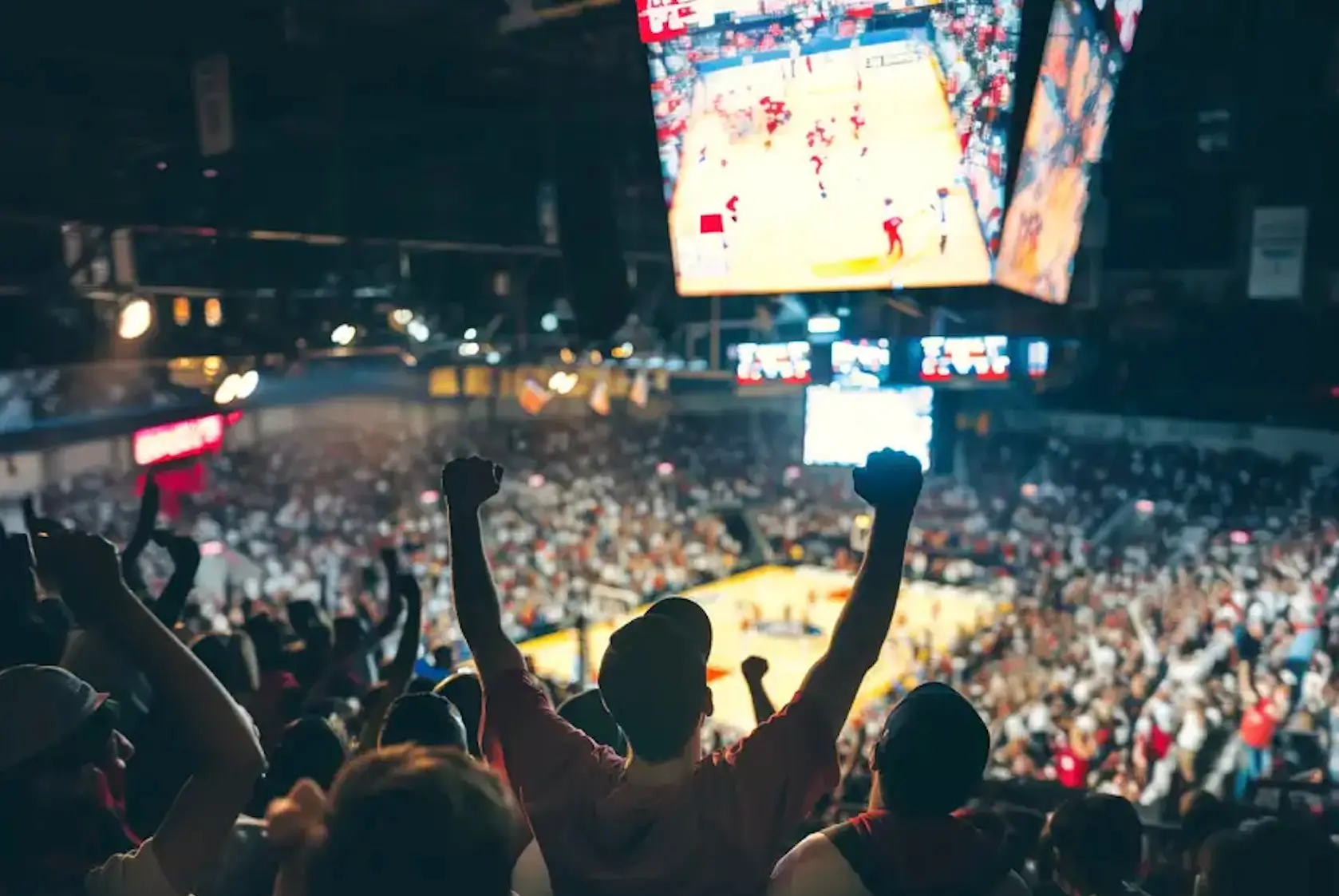
On March 31, at Desert Diamond Arena, the structure remains recognizable. Five players on each side. A ball. A series of movements governed by instinct, training, and timing.
There are moments that resist mediation.
A perfectly executed pass that exists only in the awareness of those on the court.
A defensive rotation that prevents a score without generating a highlight.
A brief pause—a breath—before action resumes.
These moments are not designed for capture. They exist outside the logic of virality.
They are reminders that beneath the layers of representation, there remains a core that is irreducible.
clue
The 49th McDonald’s All-American Game does not announce the arrival of the future.
It reveals that the future has already arrived.
The players selected are not on the verge of becoming something. They are already situated within systems of visibility, value, and narrative that extend beyond the traditional boundaries of amateur sport.
The game, then, is not a beginning.
It is a continuation—a point within an ongoing process where identity, performance, and perception converge.
“NEXT UP” is not aspirational language.
It is descriptive.
The next generation is not waiting.
It is already here—defined, distributed, and moving at the speed of attention.