Megan Thee Stallion Returns to Moulin Rouge! The Musical After Hospitalization

April 2, 2026
1 hour ago
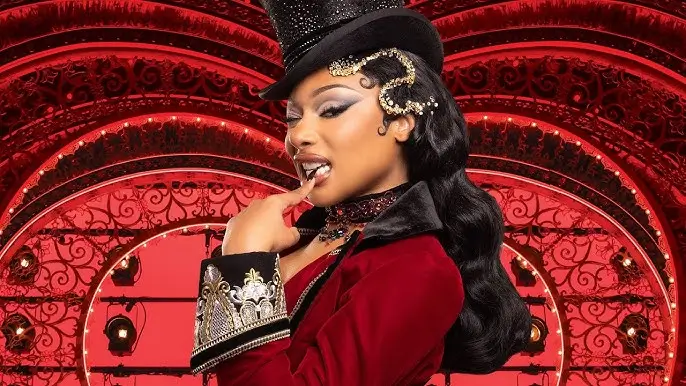
a return
The theater thrives on continuity—the ritual of curtain up, performance, applause, repeat. So when Megan Thee Stallionabruptly exited mid-performance earlier this week during her Broadway run in Moulin Rouge! The Musical, the disruption carried a particular weight. Reports of illness followed quickly, culminating in hospitalization and an immediate pause in her appearances. For a production built on precision and spectacle, the absence of a principal performer—especially one bridging music and theater audiences—introduced both concern and curiosity.
Now, just days later, Megan Thee Stallion is expected to return to the stage tomorrow, signaling not only a recovery but a resumption of momentum. The speed of that turnaround, while reassuring, also underscores the physical demands of Broadway performance—particularly for artists navigating the dual expectations of live theater and global celebrity.
stir
Unlike concert stages where choreography can be adapted and pacing controlled, Broadway demands consistency across eight shows a week. The physical toll is cumulative. Costumes are layered, staging is intricate, and vocal performance must remain intact regardless of fatigue.
For Megan Thee Stallion, whose performance identity is rooted in high-energy delivery, the transition into theater carries additional complexity. Her presence in Moulin Rouge! The Musical is not merely a cameo—it is a recalibration of performance style. Precision replaces improvisation. Repetition replaces spontaneity.
Her mid-performance illness, then, reads not as anomaly but as a reminder of the intensity embedded in theatrical discipline. That she is returning so quickly suggests both professional commitment and a broader understanding of the moment she occupies within the production.
flow
The casting of Megan Thee Stallion in Moulin Rouge! The Musical represents a deliberate expansion of Broadway’s cultural vocabulary. Traditionally anchored in theater-trained performers, productions have increasingly turned toward artists from adjacent disciplines—music, film, and digital culture—to widen their reach.
Megan’s involvement functions on multiple levels. It introduces her audience to Broadway while simultaneously repositioning the production within contemporary music culture. The result is a hybrid audience—longtime theatergoers seated alongside fans encountering the format for the first time.
This cross-pollination is not incidental. It reflects a broader shift in how performance is consumed. Boundaries between mediums are dissolving, and artists capable of navigating multiple formats are becoming central to that evolution.
View this post on Instagram
spect
Moulin Rouge! The Musical has always operated as a heightened environment—lush, maximal, and visually immersive. Its world is one of excess, emotion, and theatrical indulgence. Within this framework, Megan Thee Stallion’s presence introduces a different kind of energy.
Her performance carries a contemporary cadence that contrasts with the production’s Belle Époque aesthetic. That tension is productive. It allows the show to feel less like historical recreation and more like a living, adaptive spectacle.
Her return to the role, therefore, is not simply about continuity. It is about restoring a particular rhythm within the production—one that relies on her distinct presence to maintain its balance between tradition and modernity.
pro
The visibility of Megan’s illness—and her subsequent hospitalization—also speaks to the evolving relationship between performers and their audiences. In an era of constant connectivity, moments that would once remain private now unfold in real time.
There is an expectation of transparency, but also an undercurrent of pressure. The rapid dissemination of information can create a narrative before the performer has fully recovered. In this context, her planned return becomes both a personal milestone and a public statement.
It signals resilience, certainly, but also raises questions about the pace at which recovery is expected. Broadway, by its nature, allows little room for extended absence. Understudies can step in, but the presence of a high-profile performer shifts the stakes.
discip
Returning to the stage after illness is not a simple act. It requires recalibration—of breath, of movement, of timing. The body must re-enter a rhythm that was momentarily disrupted. For performers, this process is as much psychological as it is physical.
Megan Thee Stallion’s return will likely carry an added layer of awareness. Every movement, every note, every cue becomes part of a reestablished flow. The audience, too, participates in this moment, bringing with them an understanding of what has just occurred.
There is a heightened attentiveness that accompanies such returns. Applause may feel more deliberate. Presence may feel more concentrated. The performance becomes, in subtle ways, a shared acknowledgment of interruption and continuation.
move
Her involvement in Moulin Rouge! The Musical also reflects a broader transition within Broadway itself. Productions are increasingly engaging with artists who exist beyond traditional theater pathways. This shift is not merely about attracting new audiences; it is about redefining what theatrical performance can encompass.
The integration of artists like Megan Thee Stallion suggests a willingness to experiment with form and expectation. It challenges the notion of fixed roles and invites a more fluid understanding of performance identity.
In this context, her return takes on additional significance. It reinforces the viability of these cross-disciplinary collaborations, demonstrating that they can endure not only moments of spectacle but also moments of disruption.
rx
Audiences, particularly in live theater, conjure a crucial role in shaping the experience of performance. Their response—applause, silence, attention—feeds back into the energy of the stage.
Tomorrow’s audience will arrive with a heightened awareness of Megan’s recent absence. This awareness is likely to influence the atmosphere within the theater. There is an anticipation that extends beyond the narrative of the show itself.
Such moments remind us that theater is not static. It is responsive, evolving in real time with each performance. The return of a performer after illness becomes part of that evolution, adding a layer of meaning that cannot be scripted.
more
While the immediate focus remains on Megan Thee Stallion’s return, the broader implications extend further. Her presence on Broadway continues to signal a shift in how cultural spaces intersect.
Music, theater, and celebrity are no longer operating in isolation. They are converging, creating new forms of engagement and new expectations for performers. This convergence is not without its challenges, but it is undeniably shaping the future of live performance.
Her return, then, is not simply a resumption of a role. It is a continuation of a larger conversation—one that situates Broadway within a wider cultural framework.
fin
As the curtain rises tomorrow, the moment will carry with it the memory of interruption and the promise of continuation. Megan Thee Stallion’s return to Moulin Rouge! The Musical is, at its core, a reclamation—of rhythm, of presence, of narrative.
It is also a reminder of the fragility embedded within live performance. Every show exists within a set of conditions that can shift without warning. What remains constant is the commitment to return, to resume, to step back into the light.
In that sense, the story is not solely about illness or recovery. It is about the enduring structure of performance itself—the way it absorbs disruption and transforms it into something that can be shared, night after night.
And so, the stage resets. The lights rise. The performance continues.