Michael (2026): A Cinematic Study of Image, Power, and Performance – Biopic

April 1, 2026
2 hours ago
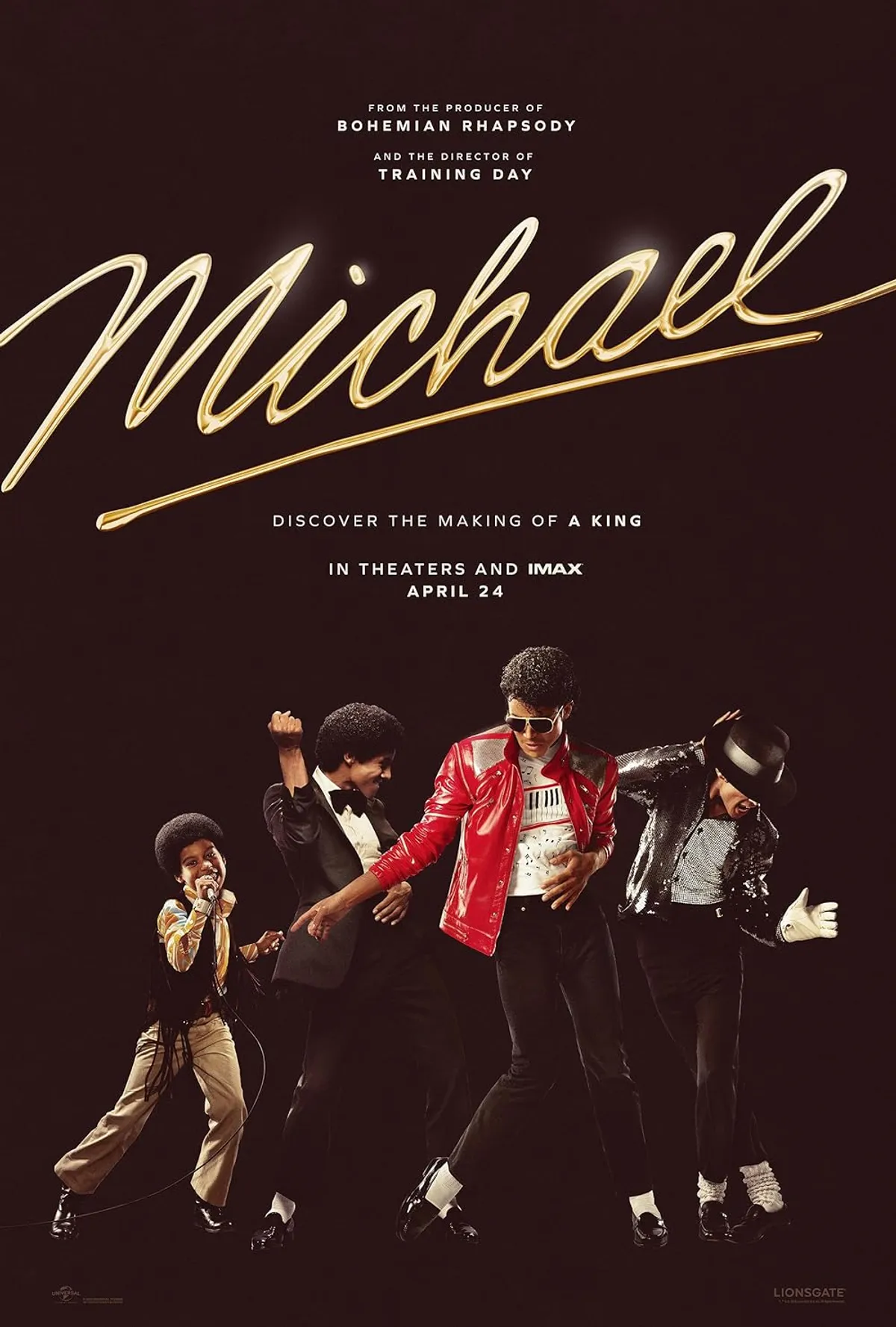
The arrival of Michael—directed by Antoine Fuqua and centered on the life of Michael Jackson—does not unfold as a routine addition to the biopic canon. It arrives with a different gravity, shaped not only by the cultural magnitude of its subject but by the impossibility of fully containing him within a single narrative frame. Scheduled for release on April 24, the film operates within a paradox: to tell a story that has already been told, endlessly, yet remains unresolved.
Biographical cinema has, in recent years, leaned toward clarity—toward arcs that resolve, identities that stabilize. Michael resists that instinct by necessity. The figure at its center was never singular. Performer, composer, cultural architect, global symbol—each identity existed simultaneously, often in tension with the others. The film’s task, then, is not to simplify, but to hold those tensions without collapse.
stir
To approach Michael Jackson cinematically is to confront scale as both subject and obstacle. His career unfolded across decades, geographies, and mediums, redefining what popular music could look like, sound like, and mean. From the precision of Off the Wall to the global saturation of Thriller, from the visual ambition of short films to the choreography that recalibrated performance itself, the body of work resists compression.
Michael must therefore decide what to include and, more critically, what to omit. Every inclusion carries weight. Every omission signals interpretation.
This is where the film diverges from conventional biography. It cannot simply trace chronology. It must construct emphasis—selecting moments that resonate beyond their immediate context. The creation of Thriller, the unveiling of the moonwalk, the scale of the Bad tour—these are not just events; they are inflection points in cultural history.
View this post on Instagram
jaafar
Casting Jaafar Jackson as Michael introduces a dynamic that is both intimate and fraught. As the nephew of the artist, Jaafar carries a proximity that no external performer could replicate. The resemblance—physical, gestural—is striking, but resemblance alone is insufficient.
Michael Jackson’s presence was constructed through layers: voice, movement, timing, silence. To embody him requires more than imitation; it requires translation. The performance must capture not only what was visible, but what was withheld—the tension between public spectacle and private isolation.
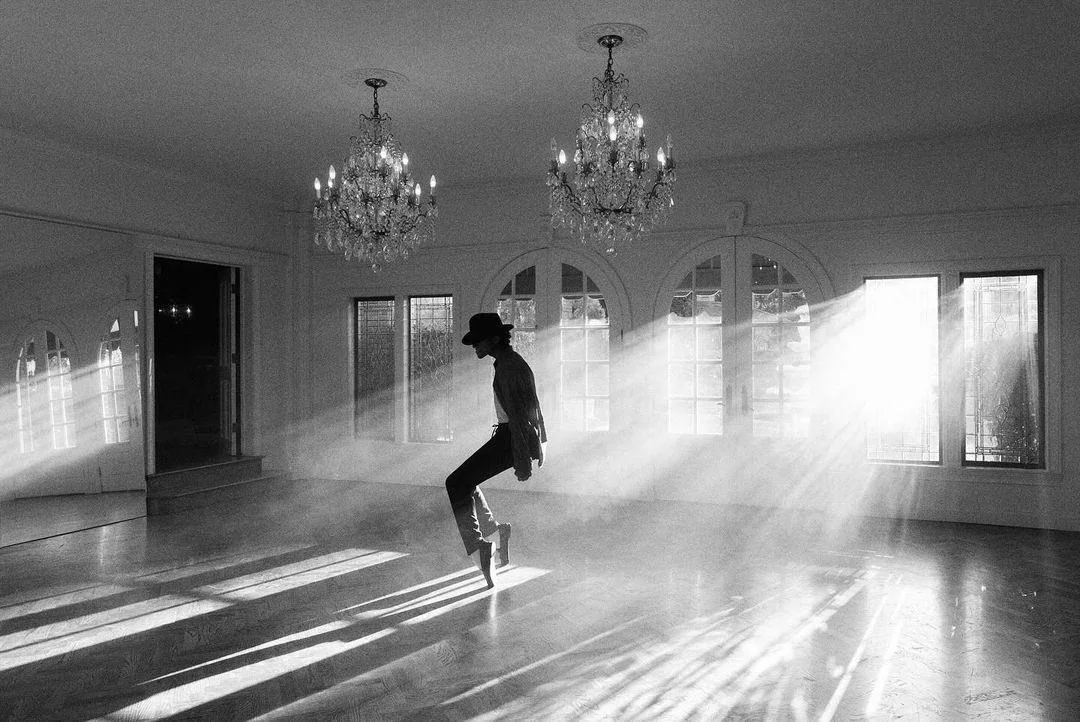
Early glimpses suggest a meticulous attention to choreography. The tilt of the head, the placement of the foot, the controlled release of movement—each detail is calibrated. Yet the more difficult task lies elsewhere: conveying the interior life of a figure who often seemed to exist at a remove from ordinary experience.
flow
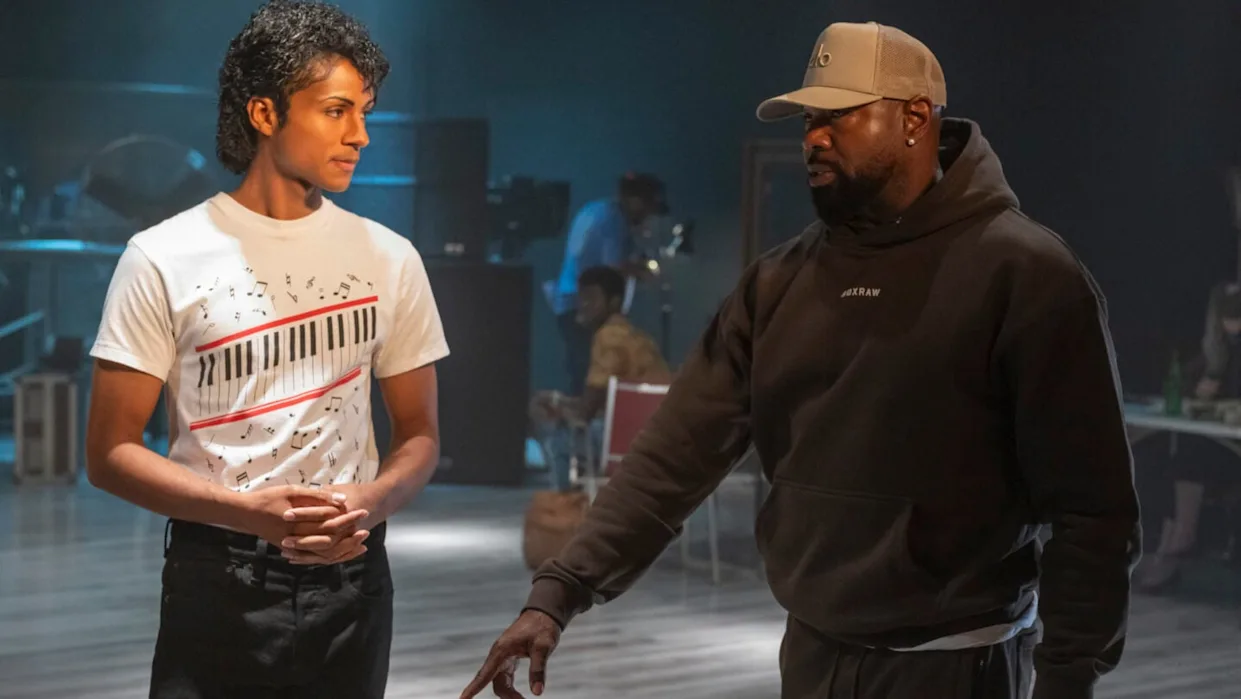
Antoine Fuqua brings to Michael a sensibility shaped by intensity and control. His filmography suggests an interest in individuals under pressure, navigating environments that demand both resilience and adaptation.
Applied to this subject, that sensibility could prove essential. Michael Jackson’s life was defined by extremes—creative, emotional, public. A director inclined toward psychological depth is well-positioned to explore those extremes without flattening them.
Fuqua’s challenge is one of calibration. Too much reverence risks turning the film into hagiography. Too much critique risks backdropping the work itself. The balance must be dynamic, shifting as the narrative progresses.
orchestration
In a film about Michael Jackson, music cannot function as mere accompaniment. It is structure. Songs do not simply appear; they organize the narrative, marking transitions, anchoring sequences, and shaping emotional rhythm.
The recreation of performances—Billie Jean, Beat It, Thriller—carries a dual burden. These moments are among the most recognizable in modern culture. To replicate them exactly risks redundancy. To alter them risks alienation.
The solution lies in perspective. Rather than presenting performances as finished objects, the film can reveal their construction—the rehearsals, the decisions, the iterative process that led to their final form. In doing so, it shifts focus from product to practice.
struct
The visual ambition of Michael is inseparable from its subject. Jackson’s career was defined not only by sound, but by image—by a continuous redefinition of how performance could be viewed.
Recreating that view language requires both fidelity and interpretation. Costumes, lighting, staging—all must align with historical reference points. Yet the film must also establish its own aesthetic coherence.
Early stills suggest a commitment to scale: expansive stage recreations, densely populated crowd scenes, carefully constructed interiors. These elements are necessary, but not sufficient. The film must also find space for intimacy—moments where spectacle recedes and attention narrows.
archive
One of the film’s most significant resources is the archive—recordings, interviews, performances, personal documents. This archive functions as both foundation and constraint. It provides reference, but it also establishes expectation.
Audiences arrive with pre-existing knowledge, shaped by decades of media exposure. The film must navigate this familiarity, offering something that feels both recognizable and newly configured.
This is where interpretation becomes critical. The archive is not neutral. It is a collection of perspectives, each shaped by context. Michael must engage with that complexity, acknowledging that any representation is partial.
story
No discussion of Michael Jackson can avoid the controversies that marked his later life. These elements are not peripheral; they are integral to the public understanding of the figure.
How the film addresses these issues will shape its reception. Avoidance risks incompleteness. Overemphasis risks distortion. The challenge is not resolution, but integration—finding a way to situate these elements within the broader narrative without allowing them to eclipse everything else.
This requires a degree of narrative restraint. The film must resist the impulse to provide definitive answers, instead presenting the material in a way that acknowledges its complexity.
straddle
One of the defining tensions in Michael Jackson’s life was the contrast between public spectacle and private solitude. On stage, he was expansive, commanding, almost otherworldly. Off stage, accounts often describe a more withdrawn, introspective presence.
Michael has the opportunity to explore this duality. The transitions between performance and stillness—between noise and silence—can serve as structural markers within the film.
These quieter moments are where the narrative can deepen. They provide space for reflection, for the articulation of pressures that are less visible but equally significant.
biopic
The contemporary biopic has become a familiar form, with its own conventions and expectations. Rise, fall, redemption. Talent, struggle, recognition. These patterns provide coherence, but they can also constrain.
Michael operates within this landscape but is not fully contained by it. The subject exceeds the form. His life does not resolve neatly. His legacy remains contested, evolving.
This mismatch between subject and form creates both risk and opportunity. The film can either attempt to force coherence, or it can embrace fragmentation—allowing the narrative to remain open, incomplete.
interpret
More than a decade after his passing, Michael Jackson remains a central figure in cultural memory. His work continues to circulate, influencing new generations of artists and audiences.
The film participates in this ongoing process of reinterpretation. It does not simply reflect memory; it reshapes it. By selecting certain moments, emphasizing particular themes, it contributes to how the figure is understood.
This is the power—and the responsibility—of biographical cinema. It does not merely document; it intervenes.
cept
As the April 24 release approaches, anticipation functions as its own form of narrative. Trailers, stills, casting announcements—each fragment contributes to a larger expectation.
This anticipation is not uniform. It varies across audiences, shaped by personal connection, generational context, and familiarity with the subject. For some, the film represents an opportunity to revisit a formative presence. For others, it offers an introduction.
The film must therefore operate across these different registers, addressing both recognition and discovery.
sum
Michael does not promise completion. It cannot. The figure it engages with remains too expansive, too complex, to be fully contained within a single work.
What it can offer is a configuration—a way of seeing that brings certain elements into focus while leaving others in silhouette It can create a space in which the contradictions of the subject are not resolved, but held.
In that sense, the film aligns with the broader trajectory of contemporary biography, which increasingly acknowledges its own limits. It recognizes that to represent a life is to interpret it, and that interpretation is always partial.
As April 24 approaches, the significance of Michael lies not only in what it shows, but in how it chooses to show it. In that choice, the film defines its place within both cinema and cultural memory—an attempt, however provisional, to engage with a legend that continues to exceed every frame placed around it.