Review: MLB and the New Dimensions of the Strike Zone

April 4, 2026
49 minutes ago
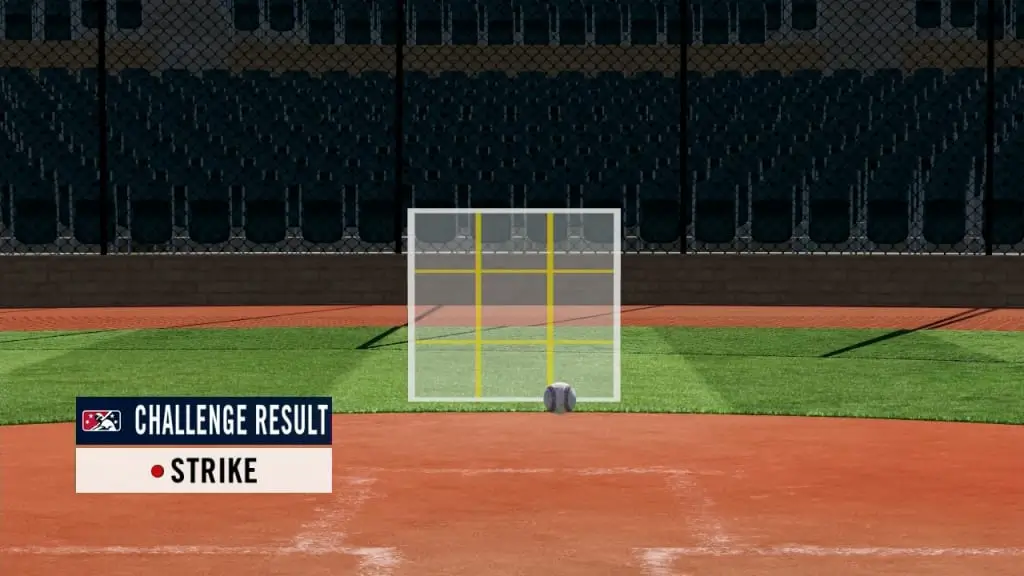
For more than a century, Major League Baseball has operated within a paradox it never needed to resolve. It is a sport defined by numbers—batting averages, earned run averages, exit velocities—yet it allowed one of its most fundamental measurements, the human body itself, to remain imprecise. Heights were rounded, sometimes inflated, occasionally inherited unchanged from a player’s earliest listing. The discrepancy was understood, even quietly accepted, because the system that governed outcomes did not depend on those numbers being exact.
The strike zone, ostensibly anchored to the batter’s body, was never truly measured against it. It was interpreted.
And interpretation, in baseball, has always been a form of culture.
Umpires developed tendencies. Some favored the high strike; others tightened the lower edge. Certain pitchers could expand the zone through reputation, while certain hitters found themselves perpetually negotiating its margins. The zone existed not as a fixed geometry but as a living agreement, shaped by perception, repetition, and the subtle choreography between catcher, pitcher, and umpire.
It was not inaccurate. It was elastic.
What the arrival of automated ball-strike systems—ABS, or what has been colloquially flattened into “robot umpires”—introduces is not simply accuracy, but the removal of elasticity itself. The strike zone is no longer an interpretive space. It is a defined volume, calculated in real time, mapped precisely to the batter’s physical dimensions. Not how the body appears in motion, not how it is perceived from behind the plate, but how it measures within a system that does not allow for approximation.
And in that shift—from perception to measurement—the league encountered something it had long deferred.
The body, as it had been recorded, was not precise enough to support the game it was becoming.
View this post on Instagram
stir
There was no moment of announcement, no formal declaration that the league would begin correcting the physical records of its players. Instead, the changes appeared gradually, almost invisibly, across official databases and profiles. Heights adjusted downward. An inch removed here, two inches there. Numbers that had once existed as part of a broader narrative—of presence, of stature, of implied physical authority—were recalibrated to reflect something closer to empirical truth.
It would be easy to dismiss these revisions as clerical, as the inevitable tidying of a database in the face of new technological demands. But within the logic of ABS, those inches are not neutral. They are consequential.
The strike zone, as enforced by the system, is constructed directly from those measurements. A taller listed height extends the vertical boundaries of the zone, granting pitchers additional space at its upper and lower limits. A shorter, corrected height compresses that space, narrowing the window through which a pitch can be called a strike. The difference is small in absolute terms, but baseball has never been governed by absolutes. It exists in margins.
So the downward revision of player heights—subtle, almost unremarkable on its own—becomes, in aggregate, a reconfiguration of the game’s geometry.
A league that once tolerated approximation is now enforcing precision, and in doing so, it is reshaping the conditions under which every pitch is thrown and every swing is taken.
show
The “human zone,” as it has been implicitly understood, was never uniform. It shifted with context, with count, with the evolving rhythm of a game. A borderline pitch in the first inning might be called differently in the seventh. A veteran pitcher might receive a slightly wider margin than a rookie. Catchers, through the art of framing, could influence perception, subtly presenting a pitch in a way that encouraged the umpire to see it as a strike.
This variability was not incidental. It was embedded in the fabric of the sport.
ABS eliminates it.
The zone becomes consistent—not in the sense that it is identical for every player, but in the sense that it is identically enforced. Each batter receives a zone calibrated to their body, and once defined, that zone does not expand or contract. There is no negotiation, no adjustment, no accumulation of influence over the course of a game.
A pitch is either within the space or it is not.
The authority of the call shifts from the human eye to the system’s measurement.
And in that shift, a layer of the game’s interpretive texture disappears.
style
No position is more directly implicated in the disappearance of that texture than catcher. For the past decade, framing has been elevated from a subtle craft to a central evaluative metric. Catchers were valued not only for their ability to receive pitches, but for their ability to influence how those pitches were perceived. A well-framed pitch could convert the margins of the strike zone into tangible advantage, turning balls into strikes and altering the trajectory of an at-bat.
But framing exists only within ambiguity.
When the strike zone is defined by a system that does not interpret, the catcher’s ability to persuade becomes irrelevant. The glove can no longer suggest a strike; it can only receive the pitch as it is.
This does not diminish the catcher’s role so much as it reorients it. Blocking, throwing, game management—skills that operate independently of perception—become central again. The catcher’s influence shifts from the visual to the strategic, from what can be seen to what must be executed.
In this sense, ABS does not remove the human element. It relocates it.
idea
For pitchers, the transition is both constraining and clarifying. The edges of the strike zone, once spaces of negotiation, are now fixed boundaries. The ability to “live on the black,” to gradually expand the zone through consistency and reputation, is diminished. Precision becomes the primary currency.
This places a different kind of pressure on command. It is no longer sufficient to suggest a strike; the pitch must occupy the defined space. Movement, sequencing, and location must operate within tighter parameters.
And yet, in that tightening, a paradox emerges.
By removing the interpretive margin, ABS forces pitchers into the zone more directly, which in turn invites more contact. The game, long trending toward outcomes defined by strikeouts and home runs, begins to open in subtle ways. Balls are put into play. At-bats extend. Variability increases.
Control, in its most rigid form, produces a different kind of unpredictability.
small
The phrase “small ball” carries with it a historical weight, evoking an earlier era of baseball defined by contact hitting, base running, and strategic nuance. It is often framed as a philosophical choice, a deliberate departure from power-driven offense.
But what is emerging now is not a conscious return to that philosophy. It is a structural consequence of the game’s recalibration.
A more precise, often slightly smaller strike zone alters the rhythm of at-bats. Hitters can afford to be more selective, to extend counts, to wait for pitches that fall within a narrower window. Walk rates tick upward. Pitchers, unable to rely on borderline calls, must engage more directly, increasing the likelihood of contact.
The result is not the elimination of power, but the reintroduction of variation.
Small ball, in this context, is not a strategy. It is an outcome.
identity
Beneath the statistical and strategic implications, there is a quieter shift taking place—one that touches on the identity of the players themselves. A listed height is more than a number; it is part of how a player is perceived, described, and understood within the narrative of the sport. It appears in broadcasts, in scouting reports, in the subtle language of presence and physicality.
To have that number corrected, even by an inch, is to introduce a slight dissonance between perception and record.
You are not exactly who you were said to be.
In most contexts, this would be trivial. In a system that now uses that measurement to define the space in which you compete, it becomes something else. The body is no longer descriptive. It is functional.
The player is not just performing within the game. They are being measured into it.
auth
What emerges from all of this is not simply a technological shift, but a philosophical one. Baseball, long a sport that balanced statistical rigor with narrative elasticity, is moving toward a model in which data holds primary authority.
The system does not interpret context. It does not respond to reputation. It does not adjust based on prior outcomes. It processes inputs and produces decisions.
This does not eliminate narrative, but it repositions it. The story of the game is no longer embedded in the call of the strike zone. It exists around it, not within it.
The authority has shifted.
adaptation
It would be tempting to describe this moment as a rupture, a clean break between the human game and the measured one. But that framing overstates the violence of the change. Baseball is not being replaced. It is being resized.
The field remains constant. The distances unchanged. The rituals intact.
What has changed are the invisible dimensions—the boundaries of the strike zone, the margins of judgment, the relationship between body and rule. These dimensions have been brought into alignment with a level of precision the sport has never previously enforced.
And because those dimensions shape every interaction between pitcher and hitter, the effect is pervasive.
fwd
The full integration of ABS at the major league level is less a question of possibility than of timing. Whether implemented as a complete replacement for human calls or as part of a hybrid challenge system, the infrastructure is already in place. The measurements have been corrected. The zones defined.
The game has, in many ways, already adapted.
What remains is the gradual normalization of a reality in which approximation is no longer tolerated. A reality in which even the smallest discrepancies—an inch in height, a fraction of an inch in pitch location—carry immediate and measurable consequences.
sum
There is a certain quiet flow in the way this transformation unfolds. Baseball, a sport that has always measured performance, now turns its attention to the act of measurement itself. The human body, once a descriptive element within the narrative of the game, becomes a foundational input in its operation.
The correction of player heights may appear minor, but it signals something larger: a shift from a game comfortable with interpretation to one defined by precision.
And in that shift, the geometry of baseball changes.
Not dramatically. Not visibly.
But completely.