MLB The Show 26 Sets a Novel Standard for Baseball Games

March 24, 2026

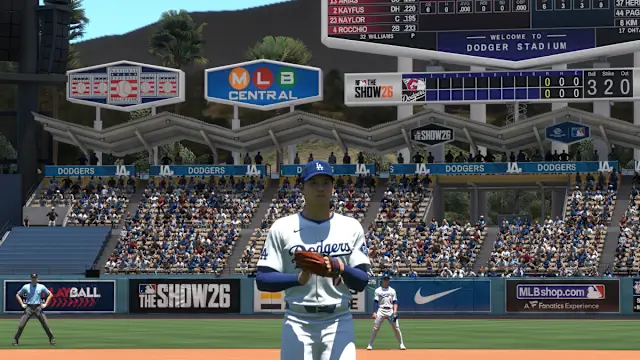
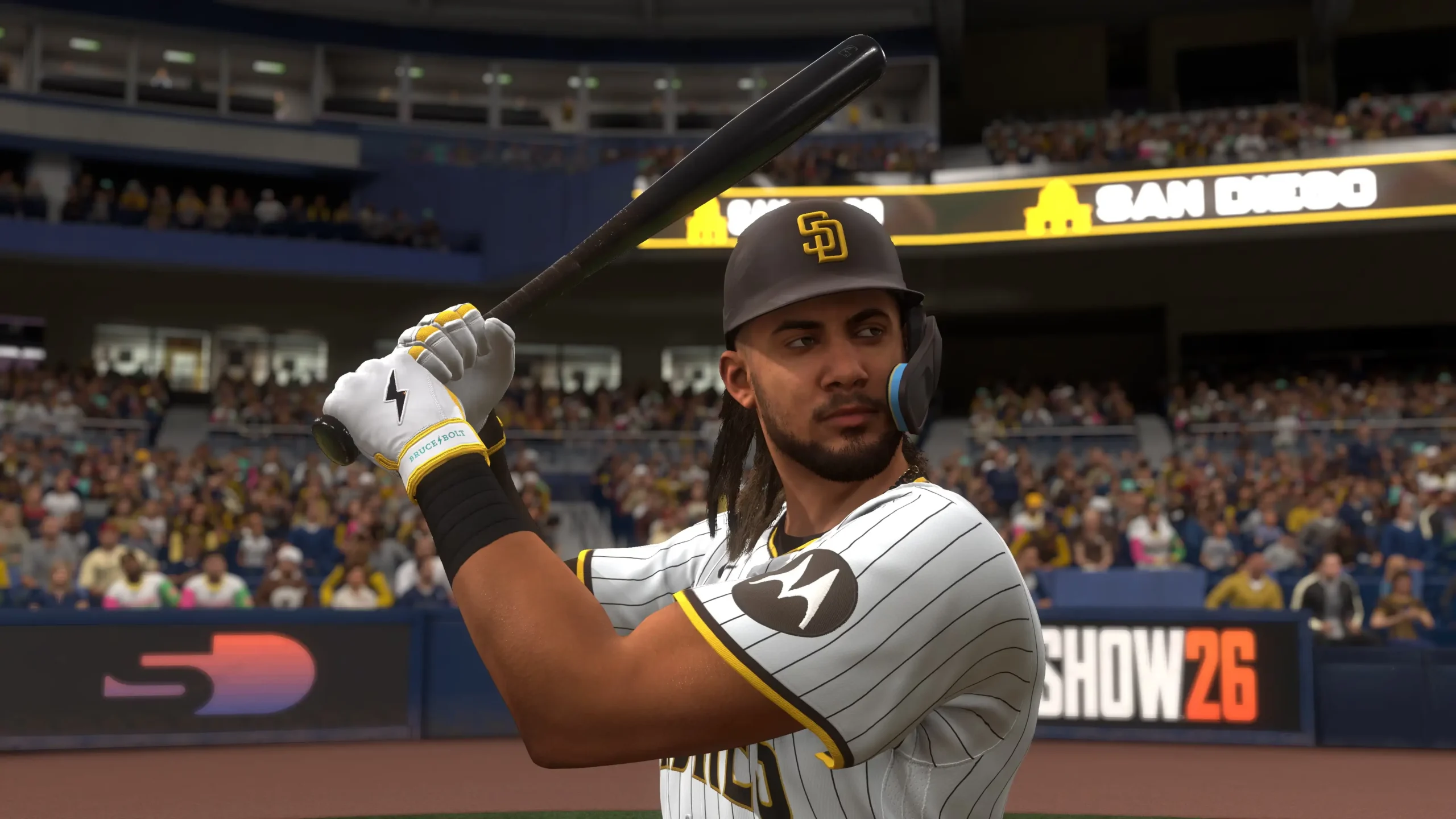
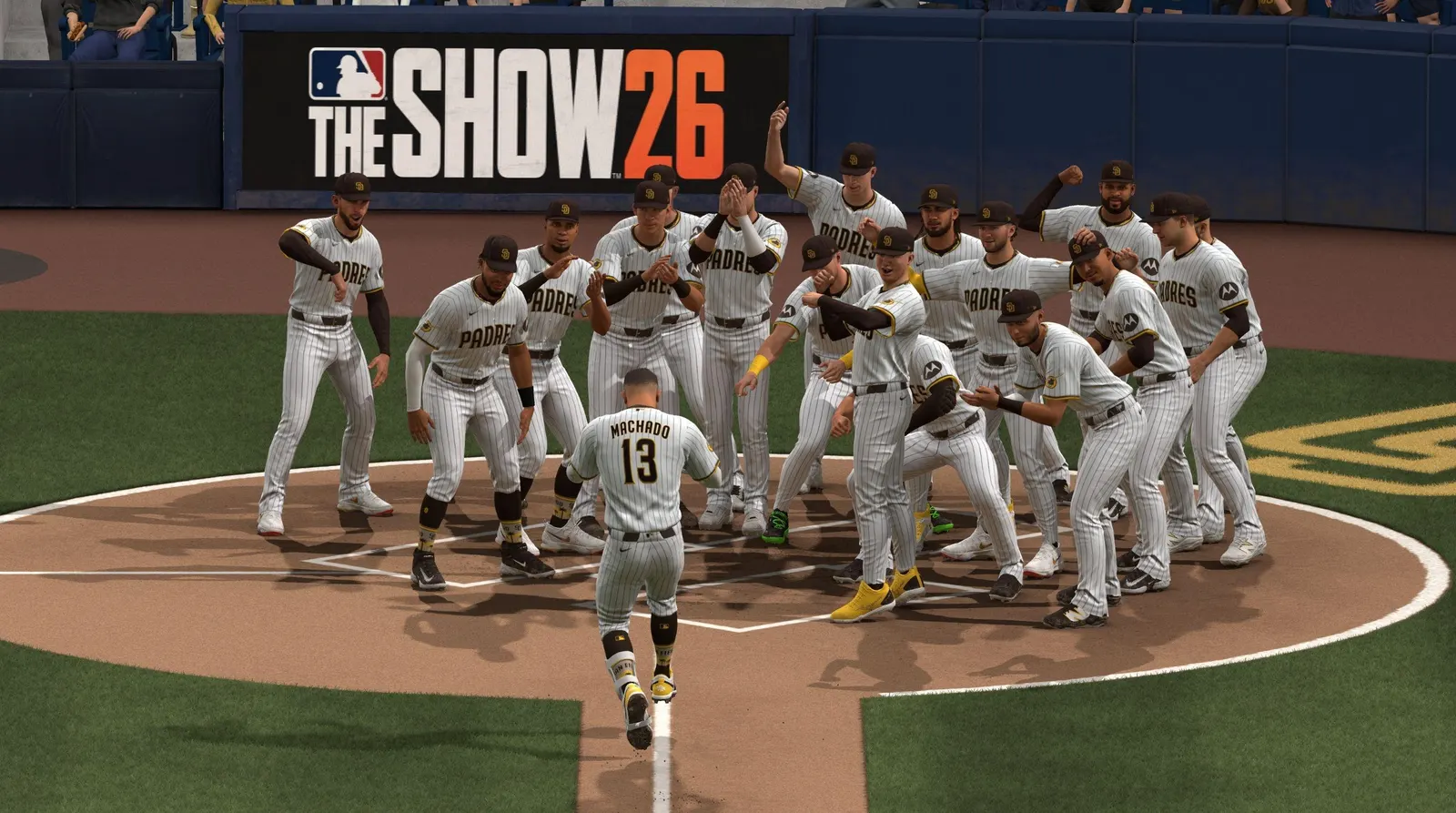
Baseball has never truly belonged to its professional tier alone. The mythology of the sport—its rituals, its anxieties, its long arcs of development—begins far earlier, in fields that are uneven, in crowds that are sparse, in performances that are not yet stabilized by contracts or expectation. What MLB The Show 26 begins to understand, perhaps more clearly than any previous installment, is that the most compelling story in baseball is not the major league moment, but the accumulation that precedes it.
Developed by San Diego Studio, the 2026 edition does not position itself as a radical departure. Instead, it reorganizes emphasis. The game is less concerned with spectacle at the top and more invested in tracing the structural path that leads there—an amateur-to-professional continuum that feels, for the first time, materially inhabited rather than abstractly referenced.
This is not simply an expansion of modes. It is a recalibration of where meaning is located.
View this post on Instagram
stir
The most consequential addition to Road to the Show is its integration of high school and collegiate baseball. This shift is not cosmetic. It redefines pacing. Where earlier versions of the mode moved quickly toward professionalization—treating the minor leagues as a tutorial phase—MLB The Show 26 lingers.
High school games are intentionally uneven. Pitching accuracy fluctuates. Fielding errors occur with greater frequency. The camera work is slightly less polished, the crowd audio thinner, the environmental detail more restrained. These are not technical limitations but design decisions. The game constructs a hierarchy of polish, allowing the player to feel progression not only through statistics but through atmosphere.
College baseball, by contrast, introduces a different tension. Stadiums are fuller, stakes are clearer, and performance begins to carry consequence beyond personal development. Scouts appear not as omnipresent evaluators but as intermittent presences, their interest signaled subtly through commentary and post-game feedback rather than explicit metrics.
The draft itself—long a procedural moment in sports games—is reframed as an event with narrative density. It is less about selection order and more about the culmination of accumulated visibility. The player’s journey is not summarized; it is recognized.
flow
One of the quiet achievements of MLB The Show 26 is its treatment of time. Sports games often compress time to maintain engagement, reducing seasons to digestible loops. Here, time is allowed to expand.
Games breathe. At-bats stretch. Pitch counts matter in ways that are not immediately gamified but gradually understood. Fatigue is not merely a numerical depletion but a felt shift in responsiveness. A pitcher in the seventh inning does not behave identically to one in the first, even if their attributes remain statistically similar.
This approach aligns the game more closely with the actual experience of baseball, where duration is not an obstacle but a defining characteristic. The player is not simply completing tasks; they are inhabiting intervals.
idea
Animation in sports games often operates as a bridge between input and outcome. In MLB The Show 26, it becomes something closer to language. The body of the player character is not merely responsive; it is expressive.
Batting stances can be adjusted with granular precision, affecting not only timing windows but visual rhythm. A slight alteration in hand position or stride length changes the perception of speed. Pitching animations, similarly, carry weight. Release points are not just mechanical variables but aesthetic signatures.
Fielding introduces another layer. The interaction between glove, ball, and ground surface is rendered with a degree of variability that resists predictability. A routine ground ball may take an unexpected hop, not as a scripted event but as a consequence of simulated terrain and ball spin.
These details accumulate into a system where control is not absolute. The player negotiates with the game rather than commanding it.
mode
While Road to the Show expands downward into the amateur sphere, Franchise mode extends laterally, deepening its simulation of organizational management. Trades are no longer governed solely by numerical parity. They are influenced by context—team trajectory, player morale, financial flexibility.
This is not a complete overhaul but a refinement of logic. The AI demonstrates a more coherent understanding of long-term planning. Rebuilding teams behave differently from contenders. Prospects are valued not just for their potential ratings but for their positional scarcity and developmental timelines.
Budget management introduces another dimension. Revenue streams, while not exhaustively modeled, exert enough pressure to shape decision-making. Signing a high-profile free agent carries implications beyond immediate performance, affecting future flexibility and organizational identity.
What emerges is a system that rewards attention rather than exploitation. There are no obvious shortcuts. Success is cumulative.
assemble
Diamond Dynasty, the franchise’s card-based mode, continues to operate as its most commercially visible component. In 2026, it integrates World Baseball Classic content, expanding its geographical scope and introducing players whose presence disrupts the traditional MLB-centric hierarchy.
The mode’s structure remains familiar: collect, assemble, compete. Yet there is a subtle shift in emphasis. The progression curve feels less aggressively monetized, with rewards distributed in a manner that sustains engagement without immediate expenditure.
This is not to suggest the absence of microtransactions, but rather a recalibration of their visibility. The game appears more interested in maintaining a long-term player base than in extracting short-term value.
Online play benefits from incremental improvements in latency and matchmaking. Games feel more stable, though not entirely free of inconsistency. The variability of human opponents introduces a different kind of unpredictability, one that contrasts with the controlled chaos of single-player modes.
From Fresno State to The Show. You can now start your MLB The Show 26 Road To The Show journey just like Aaron and write your own history like never before. @thejudge44 😉
Learn more: https://t.co/UR8ALaXHJG pic.twitter.com/LNv3tpRW51
— MLB The Show (@MLBTheShow) January 27, 2026
select
The inclusion of international venues, such as the Tokyo Dome, signals a broader understanding of baseball’s global footprint. These stadiums are not merely aesthetic additions; they function as memory devices, embedding the sport within specific cultural contexts.
Crowd behavior shifts subtly across locations. Audio profiles vary. The visual language of signage, lighting, and architectural detail contributes to a sense of place that extends beyond the field of play.
This attention to environment reinforces the game’s overarching approach: detail not as spectacle, but as infrastructure.
pace
What ultimately distinguishes MLB The Show 26 is its refusal to conform to the accelerated logic of contemporary gaming. It does not seek to overwhelm with novelty or to compress its systems into instantly gratifying loops. Instead, it insists on duration.
This insistence may not appeal to all players. Those seeking rapid progression or constant stimulation may find the game’s pacing resistant. But for those willing to inhabit its rhythms, it offers something increasingly rare: a simulation that respects the temporal structure of its subject.
The amateur fields, the incremental adjustments, the long seasons—these are not obstacles to be bypassed but elements to be experienced.
fin
There is a moment, late in a game, when the stadium quiets. The crowd settles into a low murmur. The pitcher stands on the mound, the batter adjusts their stance, and time seems to stretch just slightly beyond its usual measure. Nothing has yet happened, but everything is poised to.
MLB The Show 26 understands that moment. It does not attempt to dramatize it excessively or to translate it into spectacle. It allows it to exist.
In doing so, it positions itself not as a reinvention of baseball in digital form, but as a more attentive listener to the sport’s inherent cadence. That attention—measured, deliberate, and occasionally resistant to expectation—is what gives the game its shape.
And perhaps, in a landscape increasingly defined by immediacy, that shape feels unexpectedly new.