Mononoke・Made: When Takashi Murakami Meets READYMADE’s Yuta Hosokawa, Fashion Becomes Artifact

April 7, 2026
2 hours ago
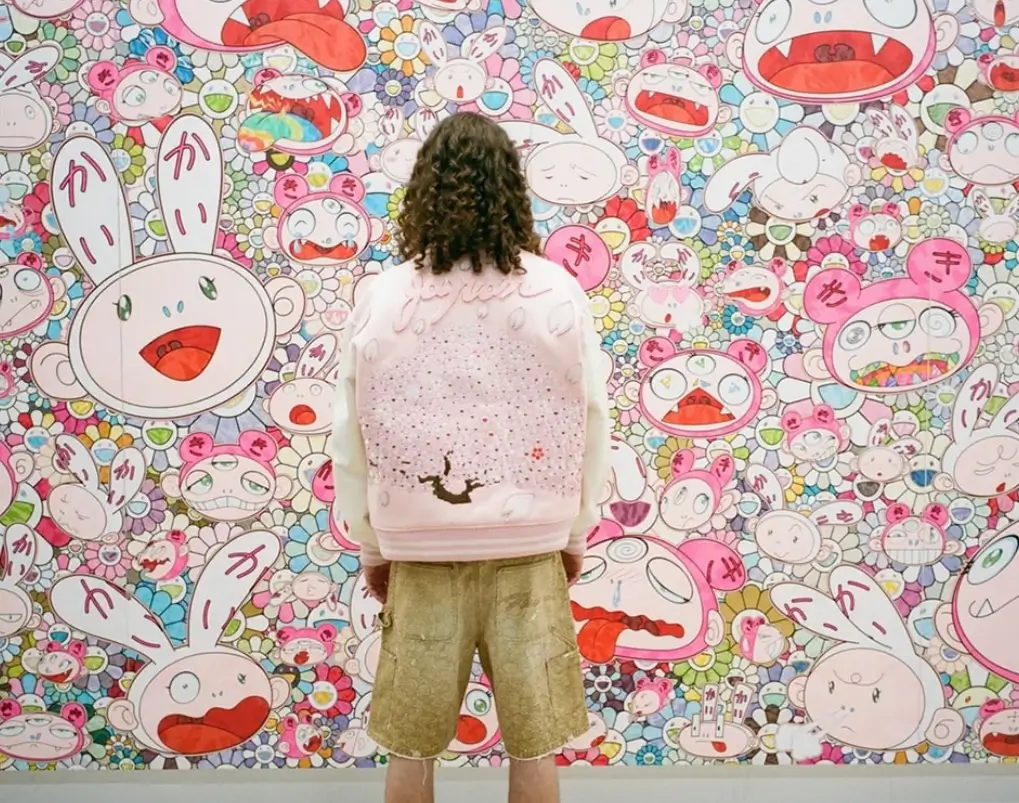
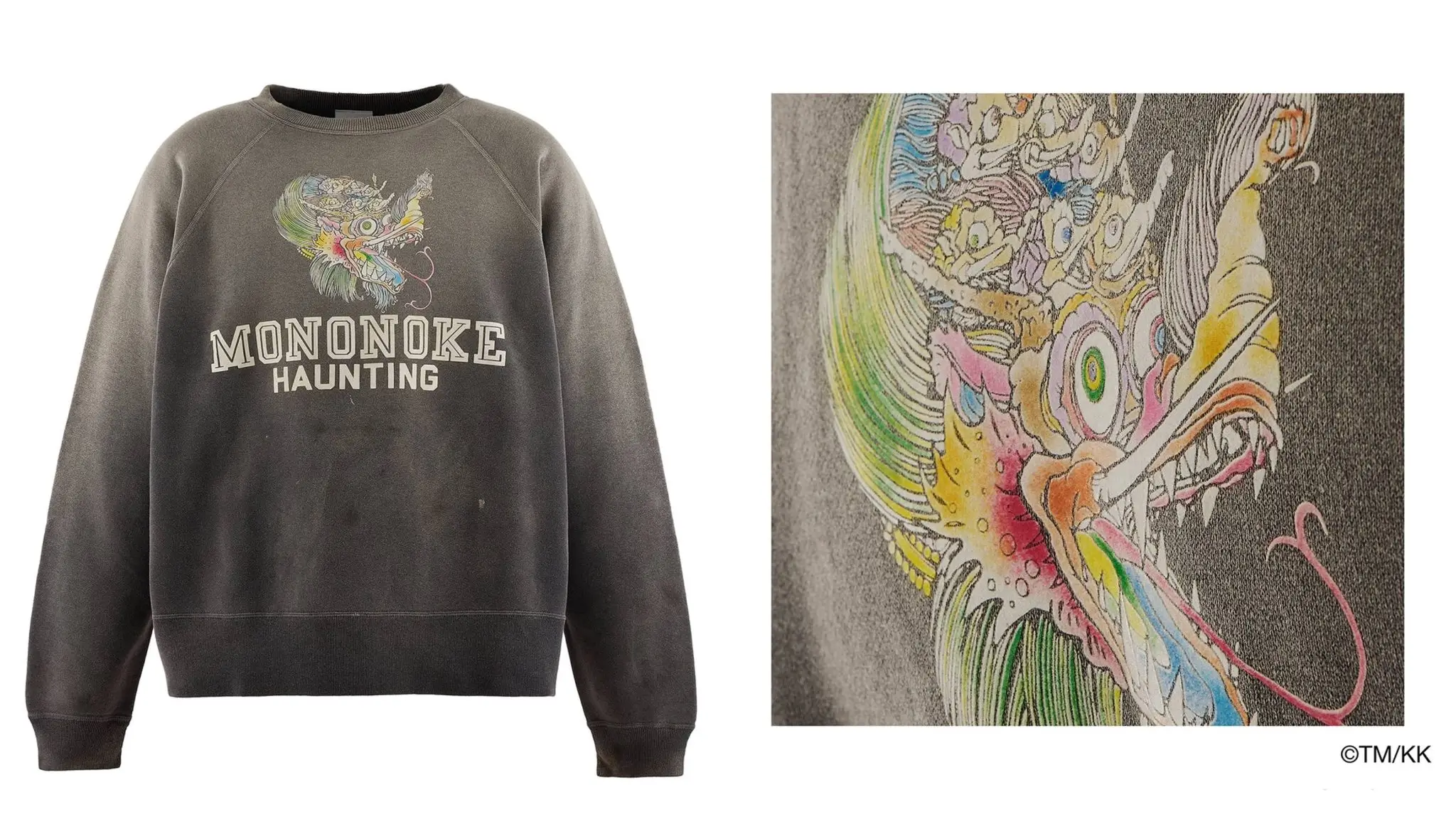
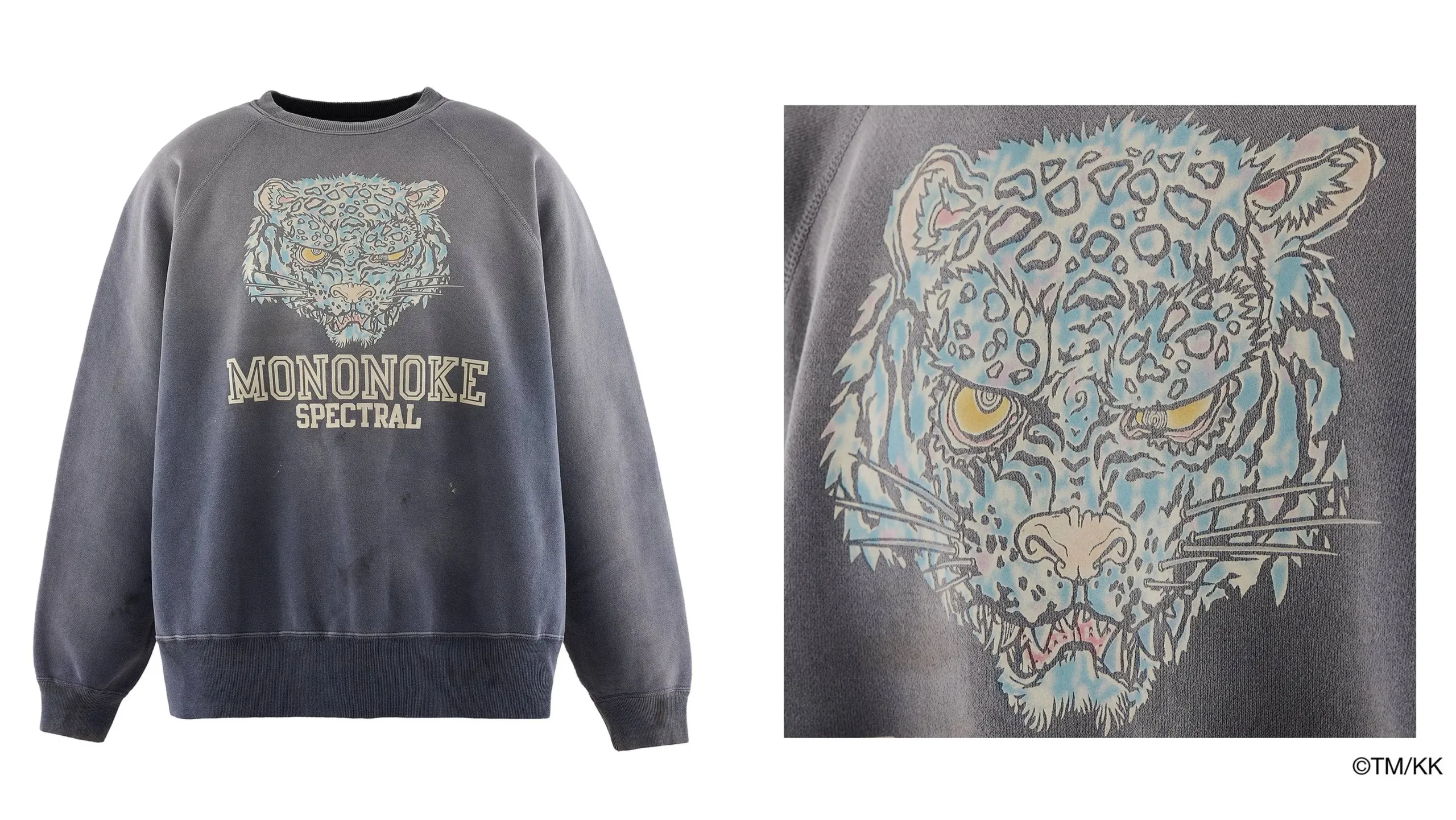
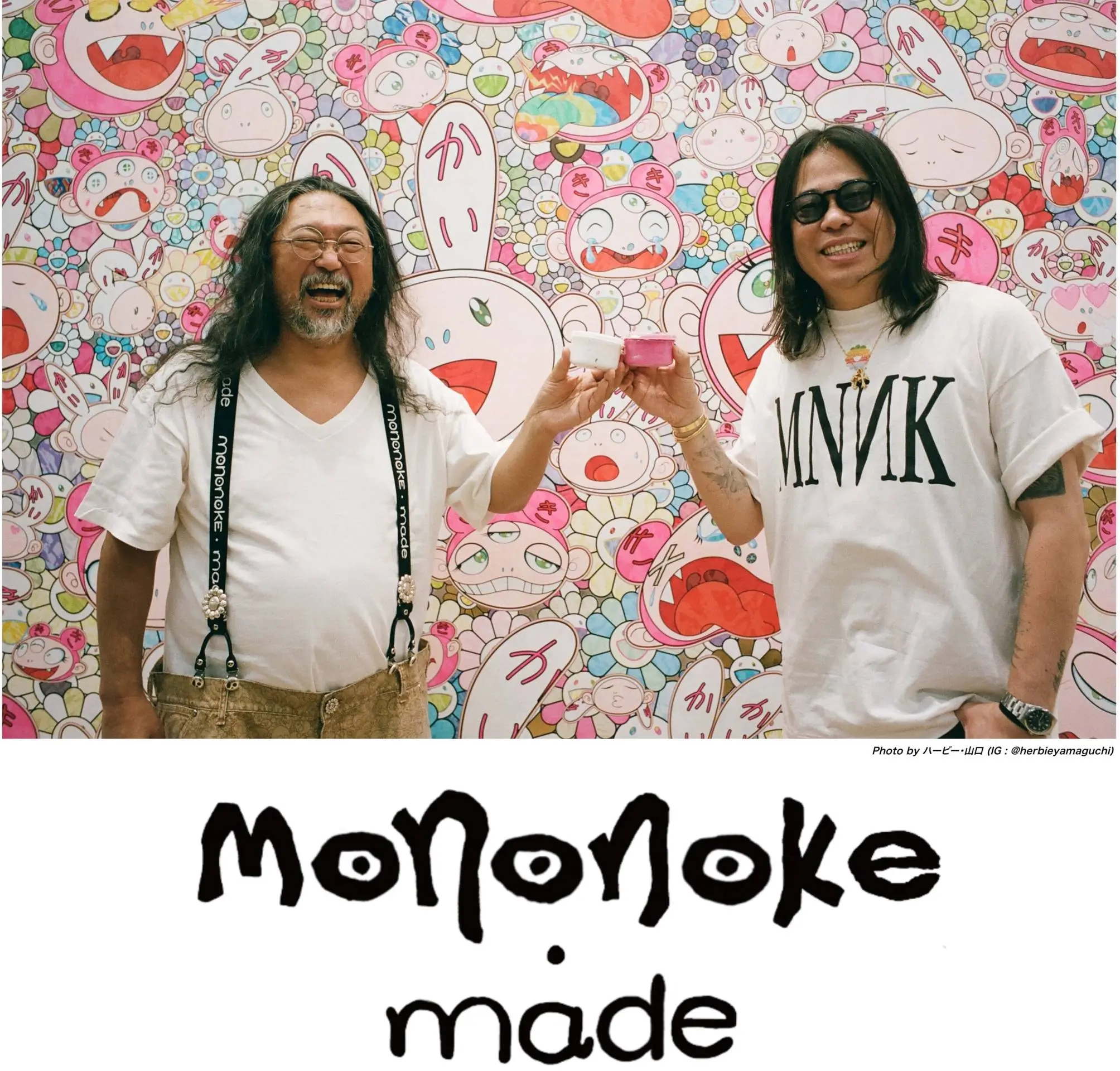
There is a point at which collision stops behaving like partnership and starts operating as translation. Not a merging of aesthetics, but a shift in language—where one system of meaning is rearticulated through another. “mononoke・made,” the long-gestating collaboration between Takashi Murakami and Yuta Hosokawa, arrives precisely in that space.
Launched on April 4th, 2026 (JST), the project does not present itself as a collection in the conventional sense. It resists that framing almost immediately. Instead, it positions each garment as a discrete object—singular, irregular, carrying its own history forward while absorbing new authorship. Clothing here becomes less about repetition and more about instance. Less product, more occurrence.
What Murakami and Hosokawa have built over two years is not simply a converge of art and fashion, but a negotiation between permanence and reuse, between symbolic saturation and material fatigue. It is, in effect, a study of what happens when iconography meets residue.
idea
Murakami’s viewable universe has always operated at scale. His flowers—smiling, radiating, endlessly reproducible—are engineered for visibility. They flatten distinction between high and low, collapsing fine art into commodity and back again. Through his Superflat philosophy, Murakami has long insisted that surface is not superficial; it is structure itself.
READYMADE, under Hosokawa, moves in the opposite direction. It begins with what already exists: discarded military textiles, decommissioned uniforms, surplus fabrics marked by time. Where Murakami amplifies, Hosokawa distills. Where Murakami multiplies, Hosokawa singularizes.
“mononoke・made” is where these logics collide.
The garments carry Murakami’s motifs, but not as clean overlays. They appear fractured, interrupted, embedded into surfaces that resist polish. A smiling flower might emerge from a field of faded olive drab, its vibrancy destabilized by the unevenness of the fabric beneath it. Camouflage patterns dissolve into bursts of saturated color, as if the material itself is being rewritten from within.
This is not Murakami applied to READYMADE. Nor is it READYMADE accommodating Murakami. It is a third condition—one in which both systems lose their autonomy in order to produce something that neither could have generated independently.
The result feels less like collaboration and more like interference.
View this post on Instagram
cept
The naming is not incidental. “Mononoke” carries connotations of spirits, presences, entities that exist between states—neither fully material nor entirely immaterial. In Japanese folklore, mononoke are often tied to objects, to environments, to traces of emotion embedded in physical form.
That framework becomes instructive here.
Each piece in “mononoke・made” behaves as if it is inhabited. Not in a literal sense, but in the way it carries layers of authorship and time. The military fabrics retain their previous function—their exposure, their wear—while Murakami’s imagery introduces a new symbolic charge. The garment becomes a site of accumulation.
You are not just looking at a jacket. You are looking at a surface that has already lived, now overwritten but not erased.
Hosokawa’s longstanding interest in upcycling has always been about more than sustainability. It is about continuity. Materials do not begin again; they continue. Murakami’s intervention does not interrupt that continuity—it complicates it.
The “mononoke” is not the graphic. It is the condition of the garment itself.
flow
In a market structured around scale—drops, restocks, algorithmic demand—“mononoke・made” insists on singularity. Each piece is constructed as a one-of-one, not as a limited edition with controlled scarcity, but as an unrepeatable object shaped by the contingencies of its materials.
This distinction matters.
A limited edition implies replication with constraint. A one-of-one eliminates replication entirely. It cannot be reproduced because its conditions cannot be recreated. The fabric source changes. The wear patterns differ. The placement of imagery shifts in response to what is already there.
In this sense, “mononoke・made” functions almost as a critique of contemporary fashion’s obsession with scale. It proposes that value can emerge not from availability, but from irreproducibility. Not from hype cycles, but from material specificity.
There is a quiet refusal embedded in that approach. A refusal to standardize. A refusal to optimize.
And perhaps most importantly, a refusal to resolve.
View this post on Instagram
archive
Murakami’s work has often been described as surface-driven, but that characterization misses the depth of what surface can contain. In “mononoke・made,” surface becomes archival. It records not only the application of imagery, but the history of the material itself.
Scratches, discolorations, seams—these are not imperfections to be corrected. They are data points. They anchor the garment in time, even as Murakami’s visuals attempt to pull it into a different register.
The tension between these forces is where the work lives.
A pristine Murakami print might suggest timelessness, an eternal present of color and form. A worn military fabric insists on the opposite—it carries evidence of duration, of exposure, of use. When combined, neither cancels the other out. Instead, they coexist in a state of unresolved contradiction.
That contradiction is the aesthetic.
evolve
For Hosokawa, collaboration has always been a means of expansion rather than dilution. READYMADE has intersected with a range of cultural figures and brands, but “mononoke・made” feels distinct in its depth of integration.
This is not a surface-level partnership. It is structural.
Murakami’s involvement extends beyond visual contribution. His philosophy—his approach to repetition, to commodification, to the collapse of hierarchies—inflects the entire project. At the same time, Hosokawa’s methodology grounds that philosophy in material reality.
The collaboration becomes a negotiation between idea and object.
And in that negotiation, READYMADE’s identity shifts. It moves from being a label defined by upcycling to one engaged in a broader discourse about authorship and value.
canvas
Murakami’s relationship with fashion is well-documented, but “mononoke・made” represents a different kind of engagement. Previous collaborations have often leaned into scalability—into the ability to disseminate his imagery across a wide range of products.
Here, that logic is inverted.
The imagery is constrained, not expanded. It is forced to adapt to irregular surfaces, to incomplete canvases. It cannot rely on the perfection of print or the consistency of production. It must respond to what is already there.
This introduces a level of unpredictability into Murakami’s work that is rarely seen.
The result is a kind of destabilization. The imagery is still recognizable, but it behaves differently. It fragments. It distorts. It absorbs the imperfections of its host material.
In doing so, it reveals something about the limits of iconography—how even the most pervasive visual language can be altered by context.
theory
“mononoke・made” also situates itself within the broader trajectory of streetwear, a space that has increasingly become a conduit between disparate cultural domains.
Streetwear’s evolution—from subcultural uniform to global industry—has been marked by its ability to absorb and recontextualize. Art, music, politics, history—all find their way into its vocabulary.
This project extends that logic, but with a heightened level of intentionality.
The use of military materials is not purely aesthetic. It carries historical weight. The integration of Murakami’s imagery is not purely decorative. It carries cultural capital. The combination of the two produces a layered object that operates across multiple registers simultaneously.
It is streetwear, but it is also something else.
role
Time operates differently within “mononoke・made.” It is not linear. It is layered.
The original life of the material sits alongside its current iteration. The two-year development process is embedded within each piece. The future wear of the garment will add another layer still.
This accumulation creates a sense of temporal density. The garments do not exist in a single moment; they exist across multiple moments at once.
And in that sense, they resist the temporality of fashion, which is often structured around cycles of novelty and obsolescence.
“mononoke・made” does not feel new in the conventional sense. It feels continuous.
fwd
Haute, in this context, is not defined by rarity alone, nor by price, nor by brand recognition. It is defined by attention—by the degree to which an object has been considered, constructed, and allowed to retain its complexity.
Each piece in “mononoke・made” demands a different kind of engagement. It cannot be reduced to a single image, a single reference point. It requires time to read, to interpret.
This is a slower form of luxury. One that resists immediacy.
It aligns with a broader shift within fashion, where value is increasingly tied to narrative, to process, to the visible traces of making.
clue
“mononoke・made” does not resolve itself neatly. It does not offer a clear statement or a singular takeaway. Instead, it presents a series of objects that remain open—open to interpretation, open to further transformation.
That openness is its strength.
In bringing together Takashi Murakami and Yuta Hosokawa, the project does not simply combine two practices. It creates a space in which those practices can interfere with each other, producing something unstable, dynamic, and ultimately more complex.
Fashion, here, is not the endpoint. It is the medium.
And within that medium, “mononoke・made” suggests a different possibility: that clothing can function not just as expression, but as artifact—carrying within it the traces of what it has been, what it is, and what it might still become.