Mumumelon: Imitation as Indictment, or How a “Dupe” Became Fashion’s Most Uncomfortable Mirror

April 11, 2026
9 hours ago
Fashion has always borrowed. It samples, references, quotes, recycles silhouettes and codes until originality becomes less a fixed point and more a negotiated illusion. But there is a line—unspoken, carefully maintained—between inspiration and outright imitation. Most brands orbit that line discreetly. They obscure their references, soften the resemblance, rename the idea.
Mumumelon does the opposite.
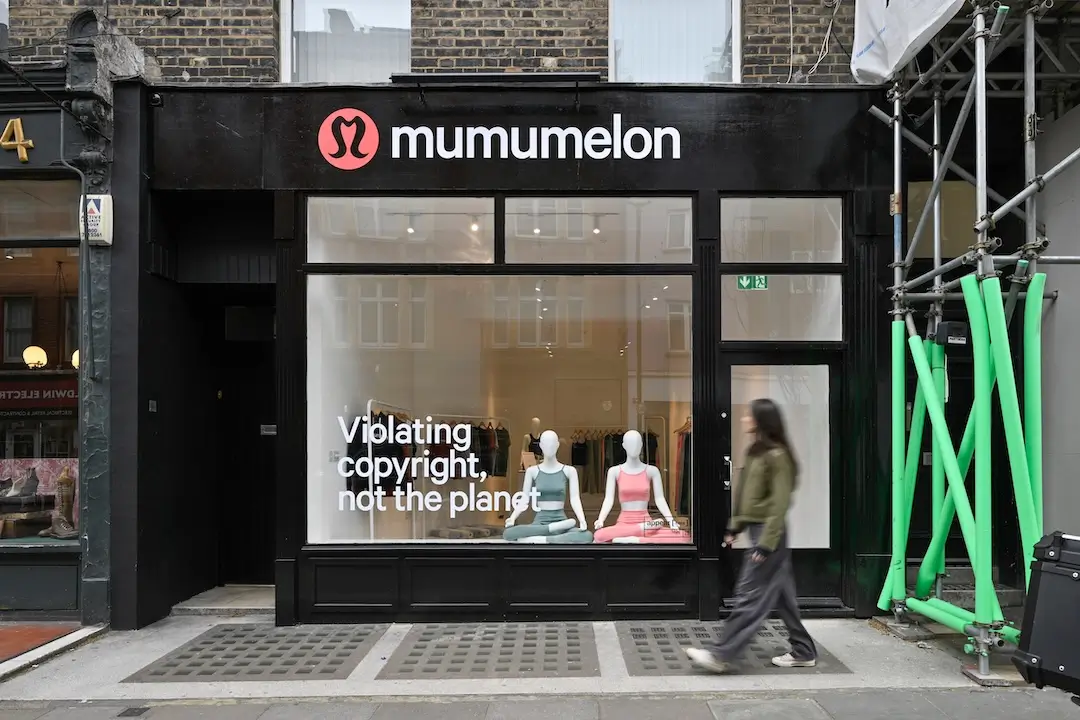
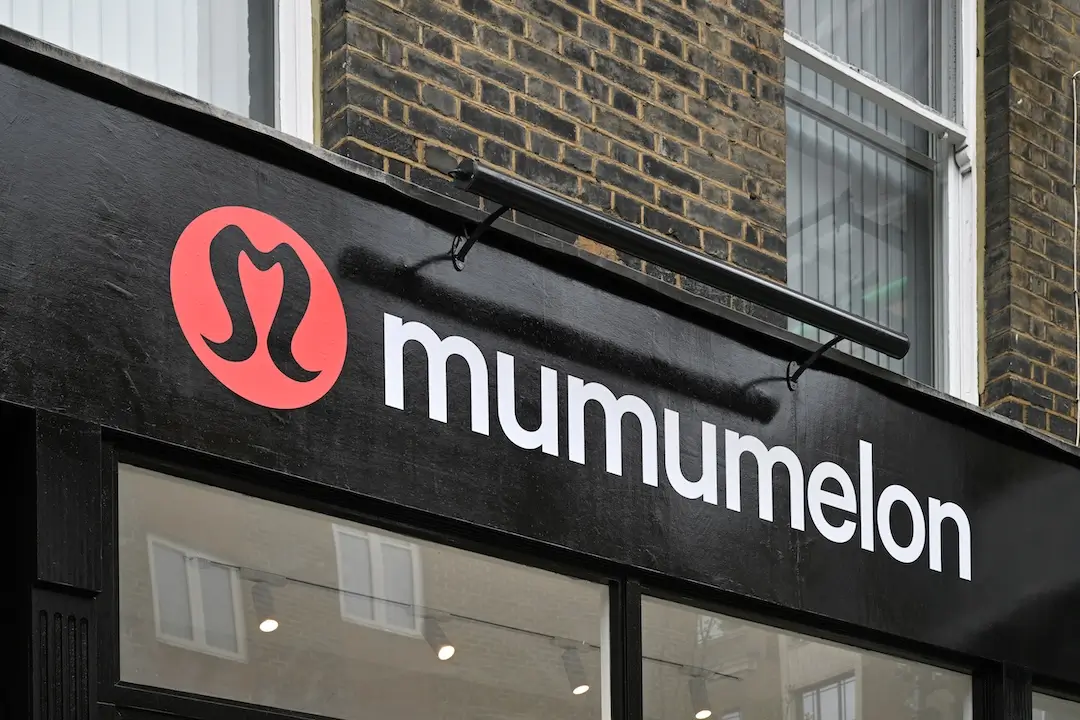
Instead of disguising the act, it prints the provocation directly onto the label. The name itself is an unmissable echo of Lululemon, stretched just far enough to remain legally conjured while culturally unmistakable. It is not a wink—it is a stare. A confrontation staged in fabric, typography, and retail space.
What would typically be considered infringement becomes, here, the central thesis.
Because Mumumelon is not trying to pass as original. It is asking why originality matters so much in an industry built on repetition—and more urgently, what that obsession costs the planet.
View this post on Instagram
stir
Installed in London, the Mumumelon pop-up arrives with the quiet confidence of a brand you already know. The interiors are restrained, almost sterile in their calm. Neutral tones dominate. Activewear is folded with precision. Leggings, sports bras, and matching sets are arranged in gradients that suggest both order and inevitability.
There is no chaos here. No visual alarm.
At first glance, it could be any contemporary athleisure store—another node in a global network of wellness-coded retail. The kind of place where performance fabrics promise self-optimization, where consumption is framed as discipline.
But the longer you look, the more the illusion destabilizes.
The name reads slightly wrong. The designs feel too familiar. The resemblance becomes uncomfortable, not because it fails, but because it succeeds too well.
And then the realization lands: this is intentional.
The mimicry is not a shortcut. It is the point.
idea
At the center of the project is Action Speaks Louder, working in collaboration with Serious People. Together, they have constructed something that exists between brand, artwork, and protest—an intervention that uses the language of commerce to critique commerce itself.
Their premise is disarmingly simple.
If fashion is already built on copying—on reiterating silhouettes, fabrics, and ideas at scale—then why is the act of copying itself considered taboo? Why is it policed when the system quietly depends on it?
Mumumelon pushes that contradiction into the open.
By removing the pretense of originality, the project exposes a deeper issue: the industry’s relentless production cycle. The endless churn of “newness” that is, in reality, a recombination of existing forms. A cycle that consumes resources, generates waste, and accelerates environmental damage, all in the name of differentiation.
In this context, copying becomes a kind of honesty.
frame
The rise of the “dupe” is one of the defining retail behaviors of the past decade. Consumers, increasingly fluent in brand codes, seek out near-identical alternatives at lower price points. Entire ecosystems exist to catalog these substitutions, to map luxury aesthetics onto accessible price tiers.
Mumumelon enters this space, but it refuses the usual logic.
It does not position itself as a cheaper alternative. It does not claim equivalent performance or value. Instead, it magnifies the absurdity of the system itself.
Because if one pair of leggings can be replicated endlessly—across factories, across continents, across price brackets—then what exactly is being sold?
Not just fabric. Not just function.
But narrative.
Brand identity becomes the true product, layered over fundamentally similar materials and constructions. The dupe disrupts that illusion, revealing how thin the boundary can be between “original” and “copy.”
Mumumelon doesn’t just participate in dupe culture—it weaponizes it.
environment
Behind the satire sits a far less skittish reality: fashion’s environmental footprint.
The industry is one of the largest contributors to global emissions, water consumption, and textile waste. Synthetic fabrics—common in athleisure—shed microplastics. Production cycles accelerate. Collections multiply. Consumption becomes continuous rather than seasonal.
Yet these costs remain largely invisible within the retail experience.
Mumumelon brings them into focus not through statistics, but through structure.
By presenting products that are intentionally redundant—copies of copies—it views the excess embedded in the system. Each duplicated design becomes a stand-in for duplicated resource use, duplicated labor, duplicated waste.
The message is not subtle, but it is effective.
If fashion can produce the same item endlessly, then the problem is not design. It is volume.
satire
There is a long tradition of using satire to critique systems that resist direct confrontation. Humor disarms. It lowers defenses. It invites participation before revealing its edge.
Mumumelon operates within that lineage.
The name provokes a smile. The visual similarity invites curiosity. The store experience feels accessible, even enjoyable. But beneath that surface, the critique sharpens.
Because satire allows the project to bypass the usual resistance to sustainability messaging. It does not lecture. It demonstrates.
It shows what fashion already is—then asks whether that reality is acceptable.
scope
One of the more unsettling aspects of Mumumelon is its relationship to branding itself.
Traditional brands rely on ownership—of logos, of names, of view language. These elements are protected, litigated, defended. They are assets.
Mumumelon undermines that logic by operating in a space of deliberate ambiguity.
It borrows just enough to be recognizable, but frames that borrowing as commentary rather than competition. In doing so, it questions the very idea that identity can be owned in a system built on shared references.
This is not to dismiss the importance of intellectual property. Rather, it is to expose how selectively that importance is applied.
Originality is defended when it supports profit. It is ignored when replication drives growth.
role
The success of any fashion system depends not just on brands, but on consumers. Demand fuels production. Desire sustains cycles.
Mumumelon implicates the viewer as much as the industry.
Because the appeal of the dupe is not accidental. It is driven by a desire for access—to aesthetics, to status, to belonging. The ability to approximate a look without paying the premium.
But in chasing that access, consumption increases.
More items are produced. More items are purchased. More items are discarded.
The system expands, even as individual purchases feel rational.
Mumumelon reflects that dynamic back at the audience, asking a question that is difficult to answer cleanly: if the product is interchangeable, why do we keep buying more of it?
temp
Like many pop-ups, Mumumelon is designed to be temporary. It appears, disrupts, and disappears. But the idea it introduces is less transient.
Because once the mechanism is visible, it is difficult to unsee.
The next time a consumer enters an athleisure store, the similarities may feel more pronounced. The repetition more obvious. The narrative more constructed.
This is the project’s real impression.
Not in the garments themselves, but in the shift in perception.
mere
Mumumelon does not offer solutions. It does not propose a new production model or a clear path forward. Instead, it holds a mirror to the industry—and refuses to adjust the angle.
What it reflects is uncomfortable.
A system built on the promise of difference, sustained by sameness. A cycle of innovation that often reconfigures rather than reinvents. An environmental cost that accumulates quietly beneath layers of branding and aspiration.
By making imitation explicit, Mumumelon strips away the protective language that usually surrounds these realities.
And in doing so, it creates a moment of clarity.
after
The challenge with satire is what follows it.
Awareness, on its own, is not transformation. Recognition does not automatically lead to change. The system Mumumelon critiques is vast, complex, and deeply entrenched.
But projects like this shift the conversation.
They create space for different questions to be asked—about production, about consumption, about value.
They make it harder to accept the status quo without reflection.
And perhaps that is enough, at least as a starting point.
fin
Mumumelon’s provocation lies in its simplicity.
By copying openly, it reveals what is usually hidden. By exaggerating sameness, it exposes the illusion of difference. By framing imitation as critique, it turns a taboo into a tool.
It is not a brand in the traditional sense. It does not seek loyalty or longevity.
Instead, it operates as a moment—a disruption in the flow of fashion’s continuous narrative.
A reminder that behind every new collection, every refined display, every carefully constructed identity, there is a system that deserves to be examined as closely as the garments it produces.
And sometimes, the clearest way to see that system is not through innovation, but through repetition—pushed just far enough to become impossible to ignore.