
Inside the AMIDA NASA Digitrend: A Watch That Uses Light, Not Hands

March 31, 2026
2 hours ago
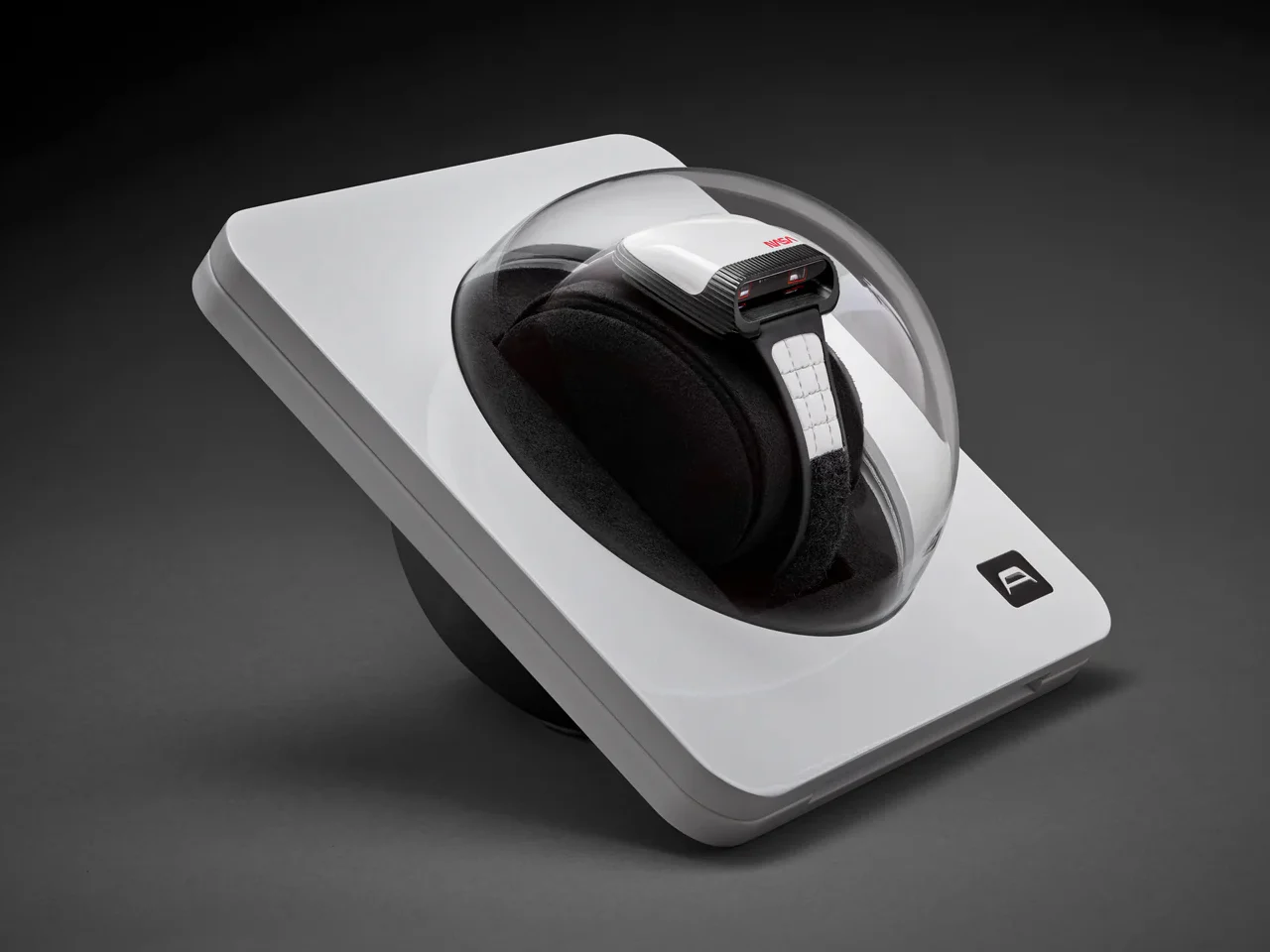
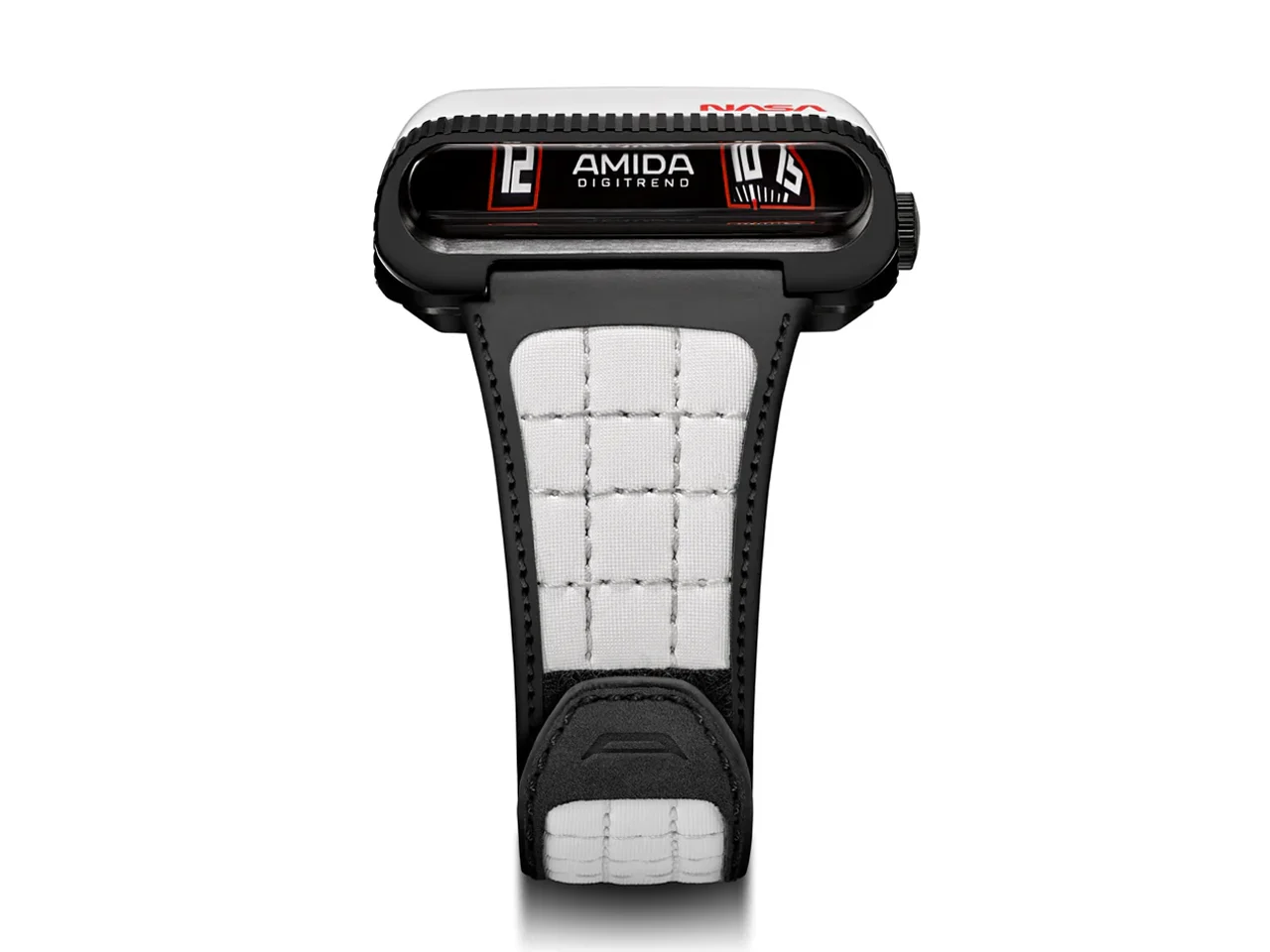
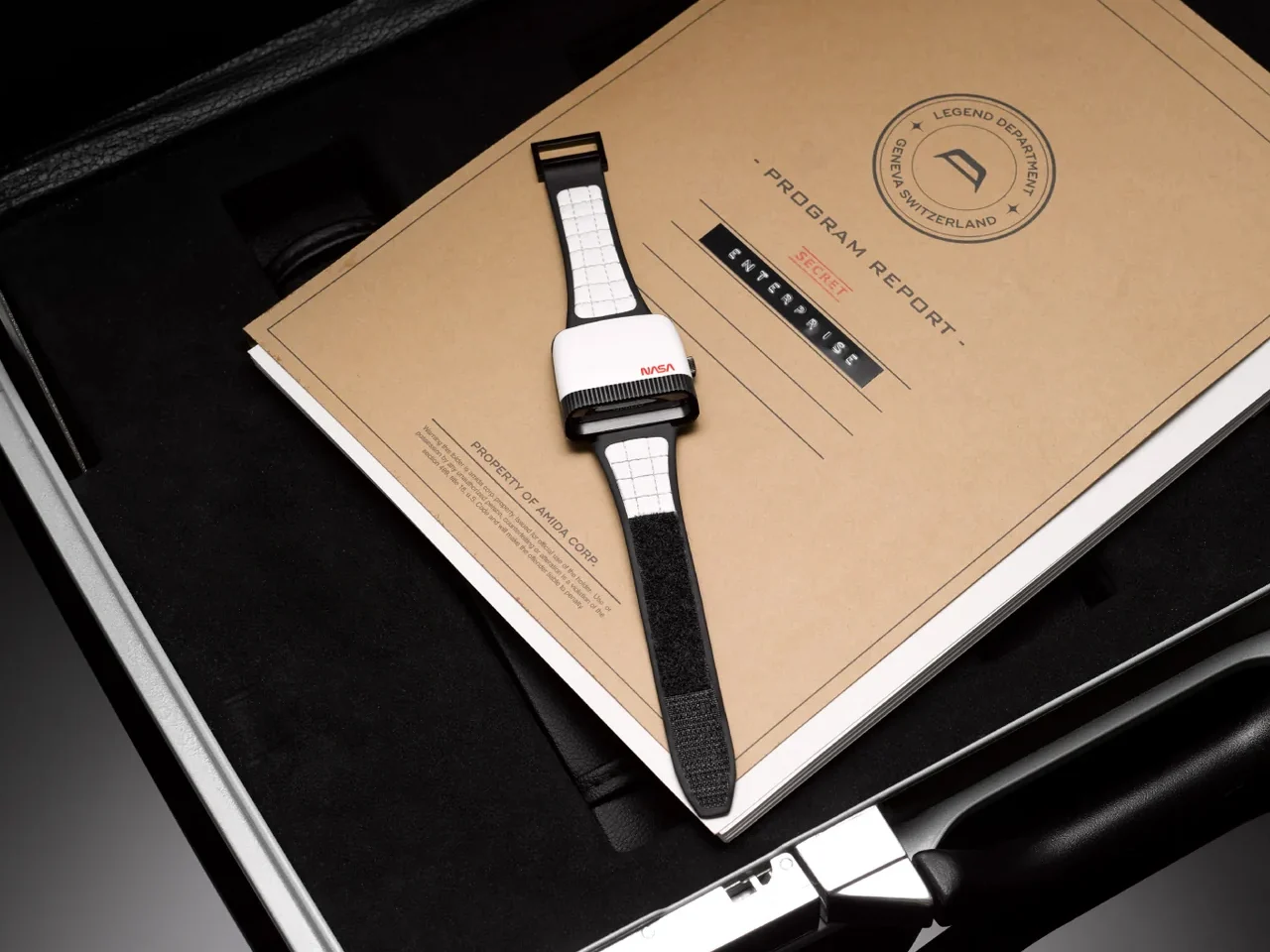
new
Time, in its most familiar form, is immediate. It is read in passing—glanced at between messages, measured in minutes, compressed into notifications. The wristwatch, historically, has served this urgency. From early pocket conversions to modern smartwatches, the objective has remained consistent: clarity at speed.
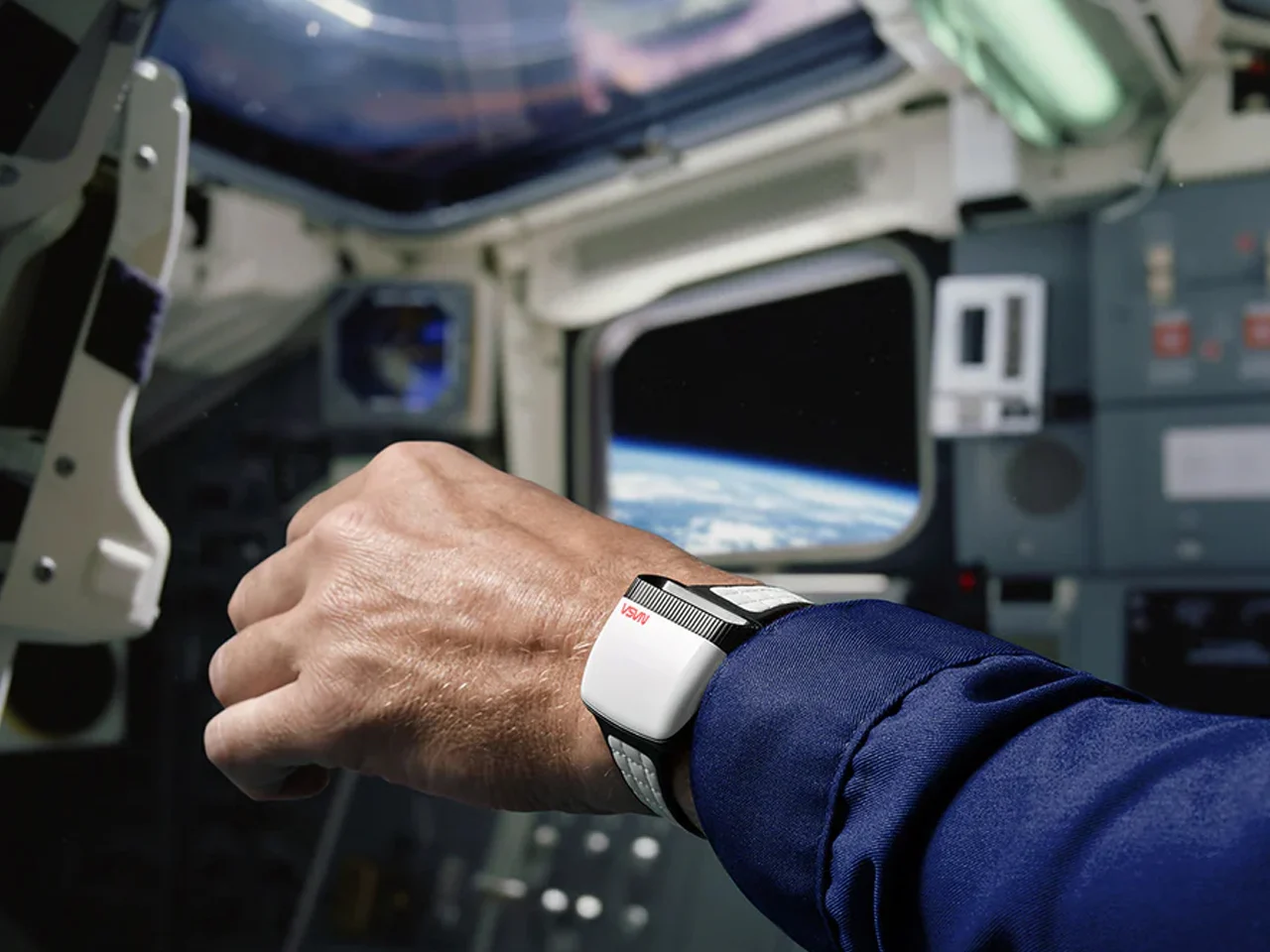
This $4,500 NASA-linked watch refuses that premise entirely.
Instead of presenting time as something to be consumed instantly, it repositions it as something to be interpreted. Through a prism-based display system, the watch refracts light to reveal the hour and minute—not directly, but through optical transformation. The result is a fundamentally different grammar of time, one that resists immediacy in favor of perception.
Limited to just 100 pieces worldwide, the watch exists less as a commodity and more as a controlled experiment—an object that invites its wearer to reconsider the act of reading time altogether.
View this post on Instagram
ethic
The reference to NASA is not superficial branding. It is embedded in the conceptual DNA of the watch.
NASA’s design language has never been about ornamentation. It is about survival, legibility, and precision under conditions where failure is not an option. Instruments designed for space must operate across extremes—light, darkness, pressure, isolation—while maintaining absolute reliability.
This watch borrows that mindset, but translates it into a civilian context. Rather than mimicking astronaut suits or spacecraft panels, it channels the logic of scientific instrumentation. The prism system evokes optical devices used in navigation, measurement, and experimentation—tools designed to manipulate light for clarity.
There is an intellectual honesty in this approach. The watch does not romanticize space; it internalizes its discipline.
idea
At the center of the watch is its defining mechanism: a micro-engineered prism embedded within the dial architecture.
Traditional watches rely on hands rotating around a fixed axis, translating mechanical movement into visual information. Digital watches convert time into numerical displays. Both systems prioritize directness.
The prism disrupts this lineage.
Light enters the watch through a carefully calibrated crystal, interacting with the prism structure beneath. As it refracts, it reveals specific markers that correspond to hours and minutes. The exact reading depends on angle, illumination, and positioning.
There is no singular “face” of the watch—only a dynamic surface that changes with context.
This transforms timekeeping into an optical event. The wearer must engage with the object, adjusting their wrist, allowing light to pass through the prism until the information resolves. It is less about checking the time and more about discovering it.
lucid
For a system dependent on light refraction, material choice becomes critical.
The case is typically constructed from aerospace-grade titanium or precision-machined steel, chosen not only for strength but for stability. Any structural distortion could compromise the alignment of the prism system, affecting legibility.
The crystal—arguably the most important component—is engineered for maximum clarity and minimal distortion. Anti-reflective coatings ensure that incoming light is not scattered or diminished. Every surface is considered in terms of how it interacts with light.
Even finishing choices are deliberate. Matte and brushed textures dominate, preventing unwanted reflections that could interfere with the prism’s function. The watch avoids high-polish surfaces, not out of restraint, but necessity.
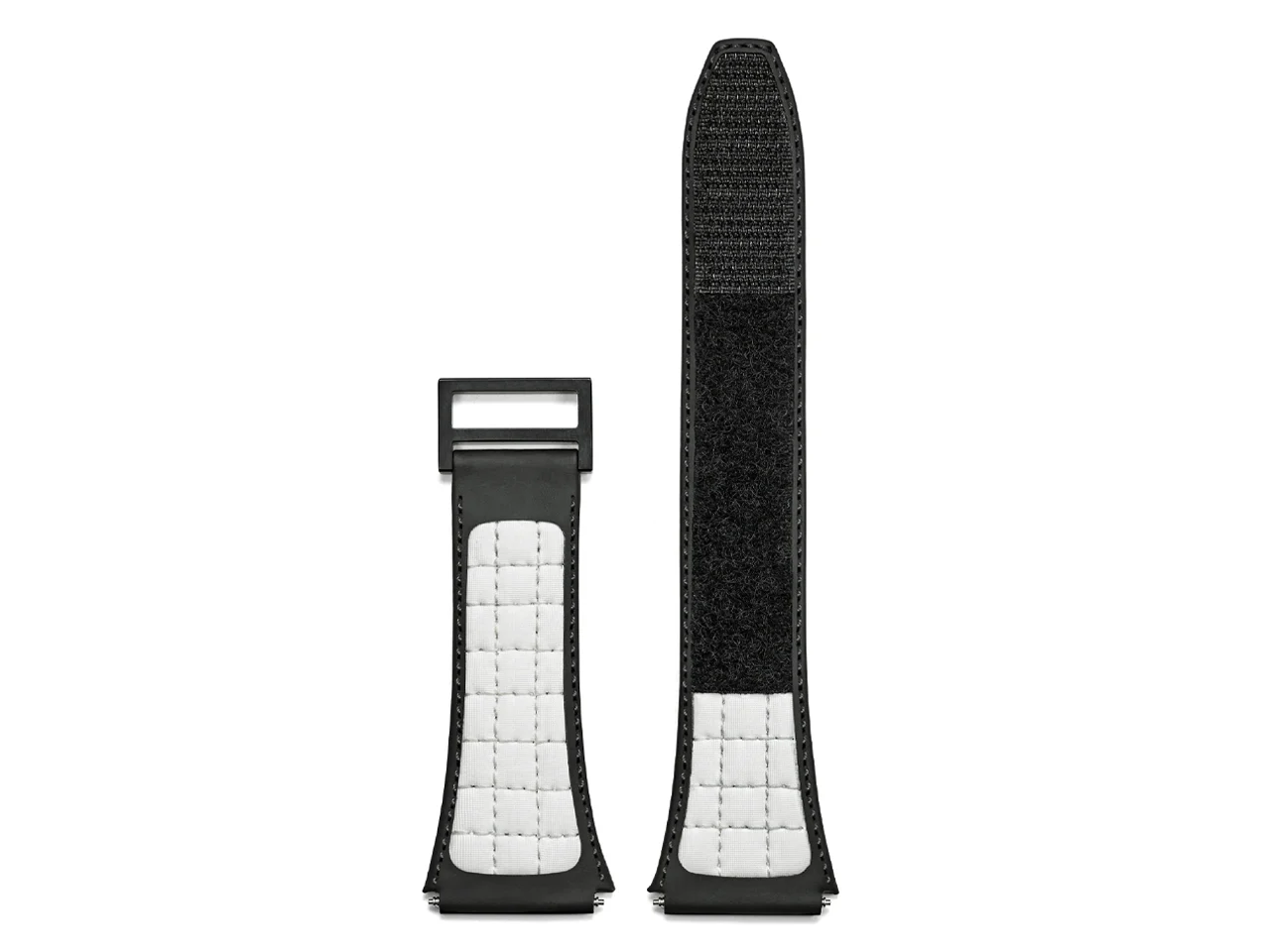
The strap, often realized in technical rubber or woven performance fabrics, reinforces the watch’s utilitarian identity. It is designed for durability and comfort, but also to complement the overall material language—functional, precise, and quietly advanced.
view
The most immediate impact of this watch is not a seen, but behavioral.
Modern life conditions us to expect instant feedback. Time, especially, is treated as a utility—something to be accessed without friction. This watch introduces friction deliberately.
To read it, one must pause. Tilt the wrist. Adjust for light. Wait for the prism to resolve into legible information.
This sequence transforms a habitual action into a conscious gesture.
Over time, this changes the wearer’s relationship with time itself. It introduces a moment of stillness into an otherwise continuous flow. The act of checking the time becomes less frequent, more intentional.
It is, in a subtle way, a critique of acceleration.
rare
Limiting the watch to 100 pieces is not simply a matter of rarity—it is an extension of its philosophy.
Mass production relies on standardization. It prioritizes efficiency, repeatability, and scale. This watch resists those principles. Its prism system, with its precise optical requirements, is inherently difficult to replicate at scale.
But beyond manufacturing constraints, the limitation serves a conceptual purpose.
By restricting availability, the watch maintains its identity as an experimental object. It avoids dilution. Each piece becomes part of a finite narrative—one that values depth over reach.
In this sense, ownership is not about exclusivity in the traditional luxury sense. It is about proximity to an idea.
horo
The current watch landscape is defined by two dominant narratives.
On one side, heritage-driven brands revisit archival designs, emphasizing continuity and tradition. On the other, high-complication watchmaking pushes technical boundaries, showcasing mechanical mastery through increasingly complex movements.
This prism-based watch aligns with neither.
It does not look backward, nor does it rely on mechanical complexity as spectacle. Instead, it introduces a new interface—one that prioritizes perception over mechanism.
While the movement itself may remain conventional, the way time is communicated is entirely reimagined. This places the watch within a niche but growing category: conceptual horology.
These are watches that function as ideas as much as instruments.
View this post on Instagram
style
What makes this watch compelling is not just what it does, but what it asks.
Why must time be immediately legible?
Why are hands and numerals considered the default?
What happens when we introduce ambiguity into a system built on precision?
The prism does not obscure time—it reframes it. It challenges the assumption that clarity must be instantaneous. It suggests that understanding can be gradual, contingent, even experiential.
In this way, the watch operates less like a tool and more like a piece of design research. It exists to explore possibilities, to test boundaries, to provoke thought.
wear
Most watches are passive objects. They perform their function regardless of the wearer’s engagement.
This watch requires participation.
The wearer becomes part of the system—adjusting, interpreting, interacting. Time is not delivered; it is revealed through mix between object and user.
This creates a different form of attachment. The watch is not just worn; it is experienced.
For collectors, this distinction matters. It transforms ownership from possession into involvement.
theory
There are no overt gestures toward luxury. No excessive branding. No decorative flourishes. The design is almost austere, focused entirely on function.
Yet within this restraint lies its radicalism.
By removing familiar elements—hands, indices, immediate legibility—the watch disrupts expectations. It does not need to announce itself loudly; its difference is inherent.
This is design that operates through subtraction.
culture
In 2026, the pace of life continues to accelerate. Devices become faster, interfaces more seamless, information more immediate. Convenience is optimized to the point of invisibility.
Within this context, the watch feels almost oppositional.
It introduces delay. It requires attention. It values process over outcome.
This aligns with a broader cultural shift—a growing interest in objects that slow us down, that reintroduce tactility and intention into daily life. From analog photography to mechanical keyboards, there is a renewed appreciation for systems that resist frictionless efficiency.
This watch belongs to that movement.
consider
The $4,500 NASA-linked prism watch is not designed to compete with traditional luxury timepieces. It does not seek to outperform them in accuracy, complexity, or prestige.
Instead, it offers an alternative.
It suggests that time can be approached differently—not as something to be consumed instantly, but as something to be engaged with thoughtfully. It proposes that design can challenge assumptions, even in domains as established as watchmaking.
In limiting itself to 100 pieces, it preserves this idea in its purest form.