
Neil Leifer and TASCHEN’s Homage to Ali: The Story Behind “Ali vs. Lyle, The Champ’s Corner (1975)”

March 15, 2026
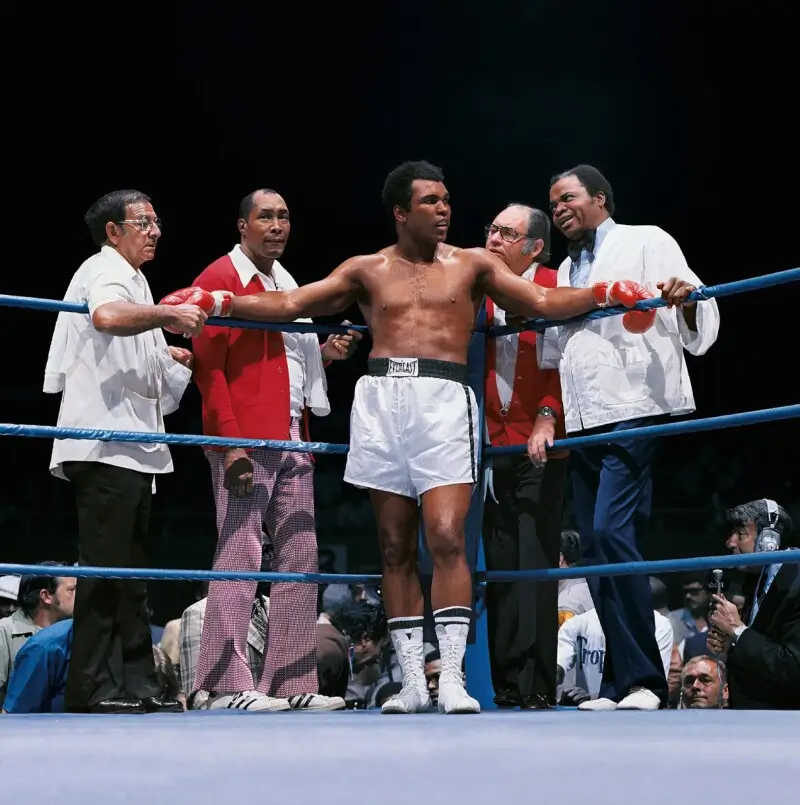
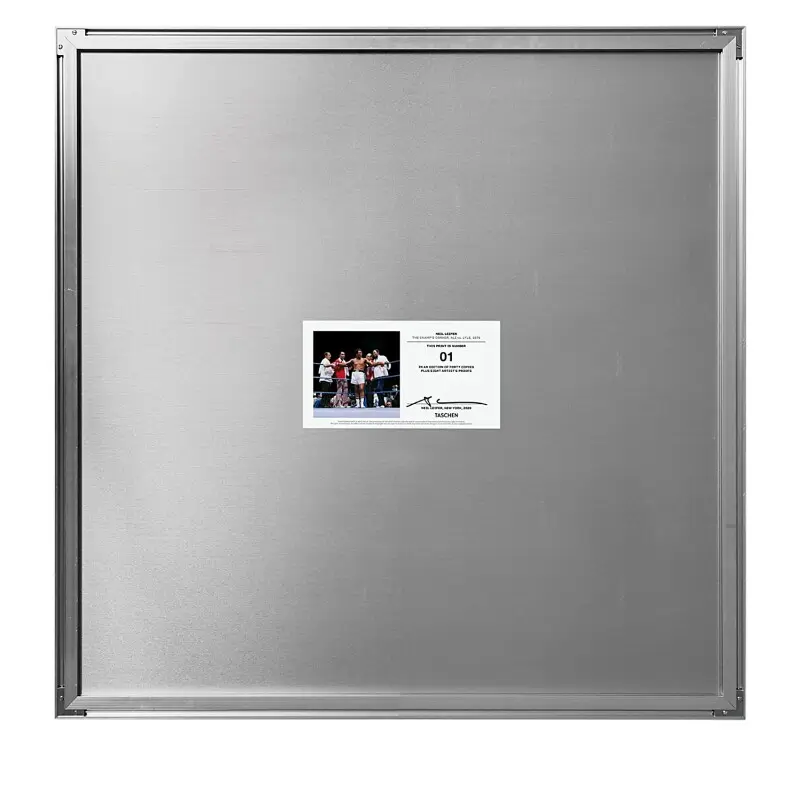


Few photographers have shaped the view memory of sports as profoundly as Neil Leifer. Over a career that spans decades and includes thousands of assignments, Leifer produced images that have become inseparable from the mythology of modern athletics. Yet among his most powerful photographs is a quiet moment captured in the chaos of a championship bout: “Ali vs. Lyle, The Champ’s Corner, 1975.”
The photograph appears in the monumental photography volume Homage to Ali, published by Taschen. More than just a sports image, it is a study of exhaustion, resilience, and the gravity of an athlete whose cultural influence transcended the ring.
Taken during the intense heavyweight fight between Muhammad Ali and Ron Lyle, the photograph shows Ali seated in his corner, surrounded by trainers and the heavy atmosphere of the arena. His face carries both fatigue and focus, the unmistakable expression of a fighter who understands the stakes of every round.
In that single frame, Leifer captured something rarely seen: the vulnerable center of an icon.
stir
The bout that produced Leifer’s image took place on May 16, 1975, at the Las Vegas Convention Center. By that point in his career, Muhammad Ali had already reclaimed the heavyweight championship and was defending his title during one of the most physically demanding phases of his career.
Ron Lyle was not a mere challenger. Known for his devastating punching power and intimidating presence, Lyle was considered one of the most dangerous heavyweights of the era. The match quickly proved that reputation justified.
From the opening rounds, the fight evolved into a brutal exchange of power. Both men landed heavy blows, with the rhythm of the bout shifting unpredictably. In the fourth round, Ali was knocked down—a moment that shocked spectators and commentators alike. Moments later, Lyle also hit the canvas.
What followed was one of the most dramatic sequences in heavyweight boxing history. Ali ultimately rallied and delivered a decisive knockout, securing the victory in the eleventh round.
But long before the final punch landed, there was the quiet moment that Leifer photographed: the champion in his corner, gathering himself between rounds.
define
To understand the significance of The Champ’s Corner, it is essential to appreciate the photographer behind the lens.
Neil Leifer began photographing boxing matches as a teenager in New York City during the early 1960s. His remarkable eye for composition quickly caught the attention of editors at Sports Illustrated, where he would become one of the magazine’s defining photographers.
Leifer was known for his fearless approach to positioning himself at the center of the action. While many photographers remained cautious around the ring, he often worked inches from the fighters, anticipating moments others might miss.
His photographs of Muhammad Ali in particular helped shape the public image of the champion. Some of the most iconic sports images of the twentieth century—Ali standing triumphantly over Sonny Liston, Ali training in Miami, Ali interacting with fans—came through Leifer’s lens.
Yet The Champ’s Corner stands apart from those more triumphant images. Instead of celebrating victory, it captures the tension before the outcome is decided.
vulner
At first glance, the photograph appears deceptively simple. Ali sits on his stool, surrounded by members of his corner team. A towel drapes across his shoulders as trainers work quickly between rounds.
But the composition reveals deeper layers.
Ali’s posture conveys exhaustion. His shoulders slump slightly, and his gaze appears focused yet distant. The sweat on his skin reflects the arena lights, emphasizing the physical toll of the fight.
The surrounding figures—cutmen, trainers, assistants—create a sense of movement around the stillness of the champion. Their gestures suggest urgency, reinforcing the idea that the fight is far from over.
Leifer framed the image so that Ali becomes the emotional center of the photograph. Despite the chaos around him, the viewer’s attention remains fixed on the champion’s face.
In that expression lies the essence of the photograph: a moment when strength and vulnerability coexist.
icon
Beyond its sporting context, the photograph also reflects the broader cultural significance of Muhammad Ali.
By 1975, Ali was already one of the most influential public figures in the world. His charisma, political activism, and refusal to conform to expectations had made him a symbol far beyond boxing.
Ali’s stance against the Vietnam War and his willingness to sacrifice his boxing license rather than serve in the military transformed him into a global icon of resistance and conviction.
In the ring, he represented a new kind of champion—one who combined athletic brilliance with theatrical confidence. His famous declarations, poetic rhymes, and psychological strategies made every fight a spectacle.
Leifer’s photograph strips away that theatrical layer. Instead of the charismatic performer, we see the man behind the myth.
legend
The photograph appears in Homage to Ali, an ambitious publication by Taschen that celebrates the visual legacy of Muhammad Ali.
Known for producing large-format art books that combine scholarly research with exceptional printing quality, TASCHEN approached the Ali archive with the same level of dedication it applies to works on architecture, art, and design.
The book gathers photographs from some of the most respected photographers who documented Ali’s career, including Leifer. Each image is presented with meticulous attention to detail, allowing readers to experience the emotional power of the original moments.
In this context, The Champ’s Corner becomes more than a sports photograph—it becomes part of a visual history of one of the twentieth century’s most influential figures.
craft
Leifer’s photograph also illustrates the unique challenges of sports photography.
Unlike studio photography or controlled portraiture, sports images must be captured in unpredictable conditions. Lighting changes, athletes move rapidly, and critical moments occur in fractions of a second.
A photographer must combine technical precision with instinct.
Leifer developed a reputation for anticipating decisive moments before they happened. His ability to read the flow of a fight allowed him to position himself in the exact place where history would unfold.
In the case of The Champ’s Corner, the decisive moment was not a knockout punch or dramatic victory. It was a pause.
Recognizing the significance of that pause required an understanding of both boxing and storytelling.
endure
Many photographs from boxing matches capture violence or victory. Few capture introspection.
That is why Leifer’s image continues to resonate decades later. It reveals something universal about human struggle: the moment between effort and outcome.
Ali sits there not yet knowing that he will eventually knock out Lyle and retain his title. In that moment, the future remains uncertain.
For viewers today, the photograph carries a powerful sense of tension. We know the history that followed, but the image exists in the fragile space before resolution.
leg
Photography conjured a crucial role in shaping Muhammad Ali’s legacy.
While film footage preserved his fights, still photography captured the emotional intensity of individual moments. These images allowed fans to reflect on the complexity of Ali’s character—his confidence, humor, defiance, and vulnerability.
Leifer’s work is particularly important because it consistently revealed new dimensions of the champion.
Some photographs showed Ali as a theatrical showman. Others depicted him as a disciplined athlete.
The Champ’s Corner adds yet another perspective: Ali as a human being confronting the limits of his endurance.
frame
The 1970s were a defining period for heavyweight boxing. Fighters such as Joe Frazier, George Foreman, Ken Norton, and Ron Lyle formed one of the most competitive eras the sport has ever seen.
Ali fought many of these opponents in legendary matches that remain part of boxing history.
Leifer’s photograph belongs to this era—a time when boxing was not just a sport but a global cultural event.
Television audiences around the world watched these fights, while photographers like Leifer documented them for magazines and newspapers.
The resulting images became visual landmarks of the decade.
sum
The enduring power of Ali vs. Lyle, The Champ’s Corner lies in its simplicity.
A champion sits on a stool.
His team surrounds him.
The fight continues beyond the edges of the frame.
Yet within that simplicity lies an extraordinary emotional narrative. The photograph captures a fleeting moment when one of the greatest athletes in history paused between rounds, gathering the strength that would soon lead him back into battle.
In doing so, Neil Leifer created an image that transcends sports.
It is a portrait of resilience, determination, and the fragile humanity that exists even within legends.

No comments yet.