new
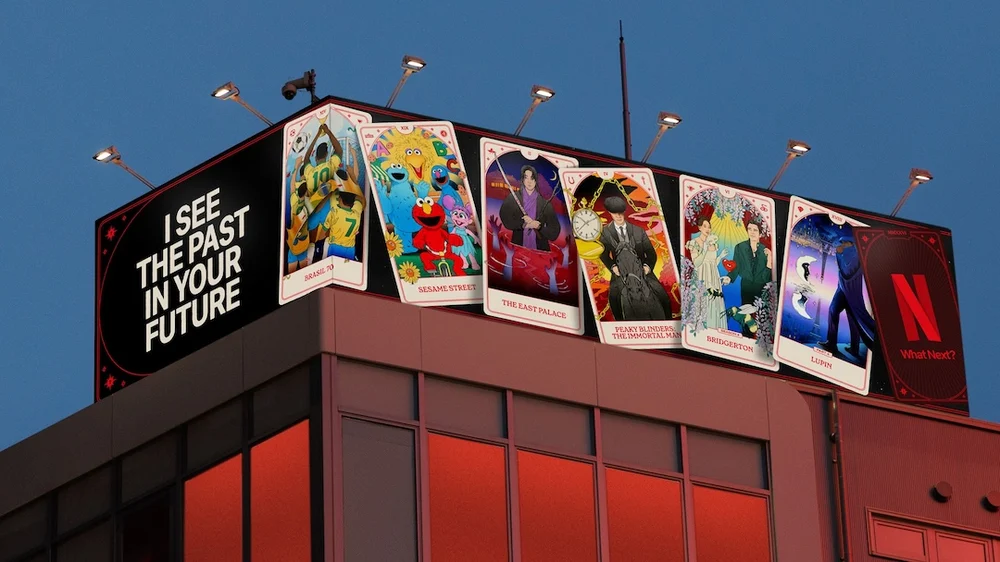
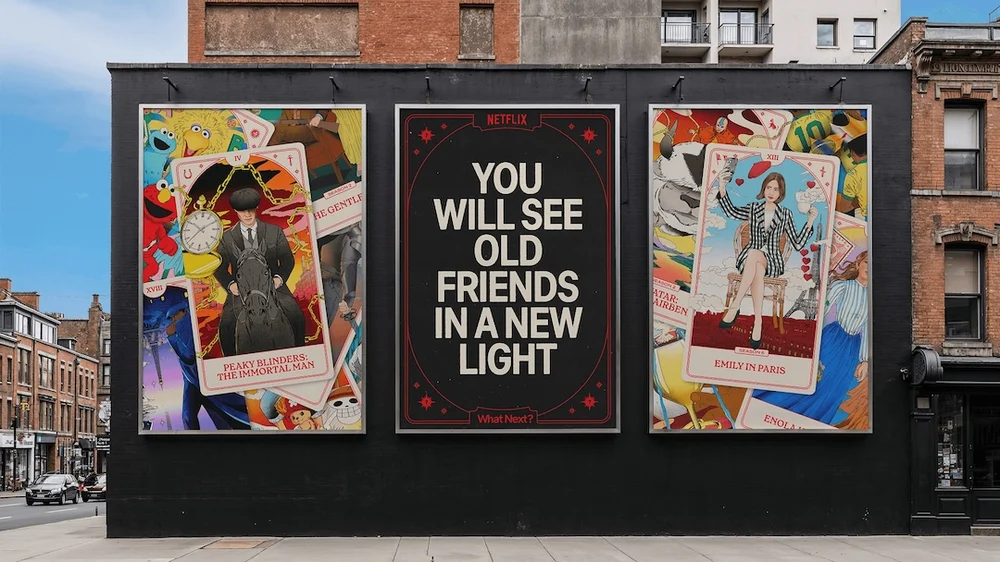
There is a quiet recalibration happening in how streaming platforms frame discovery. It is no longer enough to surface content through rows, algorithms, or even curated “Top 10” lists. The interface itself is becoming narrative—an editorial object, a symbolic language. In this shift, Netflix has begun experimenting with a more esoteric vocabulary: the tarot deck.
Not as novelty, nor as gimmick, but as a system of meaning. A way to reorganize its vast catalog into something that feels less like data and more like fate.
retro
Tarot, historically tied to divination and storytelling, is not new to visual culture. Its iconography—The Fool, The Lovers, Death, The Tower—has been absorbed into fashion, music, and art for decades. But what makes its arrival within Netflix’s ecosystem notable is not aesthetic borrowing alone. It is structural.
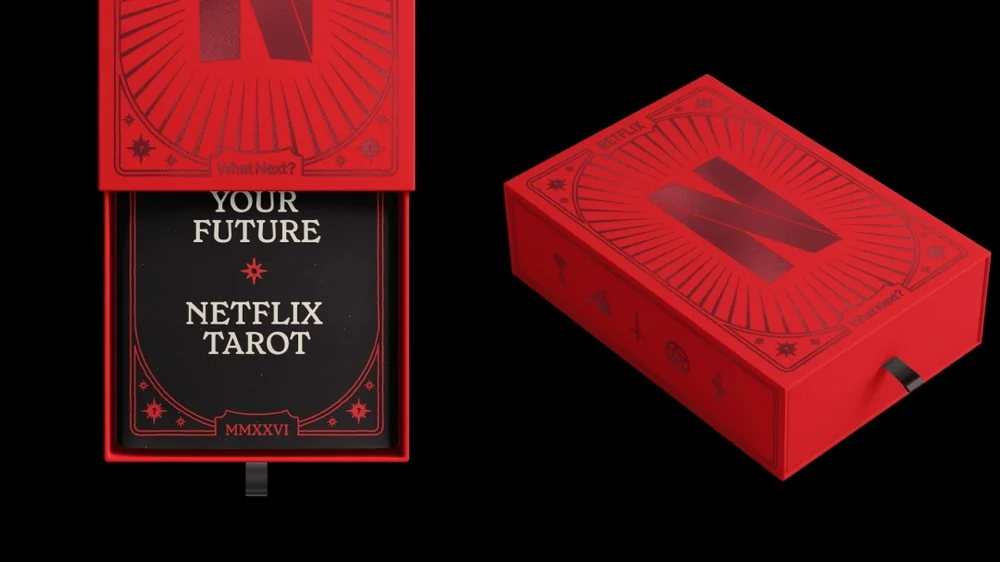
Tarot is, at its core, a sequencing device. A method of arranging narrative fragments into interpretive arcs. When Netflix leans into tarot-inspired curation, it is effectively reframing its platform not as a library, but as a deck.
Each card becomes a gateway. Each archetype, a genre refracted through mood rather than category.
Where traditional streaming menus rely on taxonomy—comedy, thriller, drama—tarot introduces ambiguity. A show might fall under The Moon not because it is literally about mystery, but because it embodies uncertainty, illusion, psychological flow. This shift is subtle, but culturally significant. It aligns with a generation increasingly fluent in symbolism, accustomed to reading meaning across layered references.
stir
For over a decade, Netflix has been defined by its algorithmic precision. The promise was simple: the platform knows what you want before you do. Yet this model, while efficient, has also flattened discovery into predictability. The algorithm optimizes for familiarity, often at the expense of surprise.
Tarot disrupts that logic.
It invites the user to relinquish control, to engage with content through intuition rather than certainty. Drawing a “card”—whether literal or metaphorical—introduces chance back into the viewing experience. It reframes selection as encounter.
This is not a rejection of data, but a re-skinning of it. The algorithm still operates beneath the surface, but its output is translated into a symbolic language that feels organic, almost mystical. The user is no longer choosing from a grid; they are interpreting a sign.
show
The timing is precise. Tarot has experienced a resurgence across multiple cultural sectors. In fashion, it appears in prints and jewelry, often stripped of overt spirituality and recontextualized as view code. In music, artists reference tarot imagery as shorthand for emotional states. In digital culture, tarot readings circulate as content—shareable, remixable, endlessly reinterpreted.
Netflix’s adoption of tarot aligns with this broader aesthetic flow toward mysticism as metaphor. It is less about belief and more about atmosphere.
This is particularly resonant in an era defined by uncertainty. Tarot offers a framework for navigating ambiguity, a language that acknowledges complexity without demanding resolution. For a platform built on serialized storytelling—where narratives unfold over hours, seasons, even years—this alignment feels natural.
idea
What emerges is a new kind of editorial layer within the platform. Instead of static categories, Netflix can deploy rotating “spreads”—curated groupings of titles organized around tarot archetypes.
A “Three-Card Spread” might juxtapose past, present, and future through a selection of films and series. A “Celtic Cross” could map a more intricate narrative journey, guiding viewers through interconnected themes.
This approach does two things simultaneously. It deepens engagement by encouraging exploration, and it extends the lifespan of existing content by reframing it within new contexts.
A series released years ago can feel newly relevant when placed under The Tower, reinterpreted through themes of collapse and transformation. A romantic drama might gain unexpected depth when aligned with The Devil, emphasizing obsession over affection.
In this way, tarot becomes a tool for narrative reactivation.
lang
What distinguishes this strategy is its reliance on layered references. Tarot is not a universal language in the traditional sense; it requires a degree of cultural literacy. Users must recognize, or at least sense, the meaning behind each card.
This creates a more active form of engagement. The viewer is not passively consuming content but decoding it.
For Netflix, this is a calculated move. It positions the platform within a more “intelligent” cultural space, appealing to audiences who value interpretation, who see media as something to be read as much as watched.
It also opens the door for cross-disciplinary collab. Artists, designers, and cultural theorists can contribute to the visual and conceptual development of these tarot interfaces, further blurring the line between platform and publication.
flow
Streaming platforms have long treated their interfaces as functional tools. But increasingly, they are becoming narrative objects in their own right.
Netflix’s tarot experiment suggests a future where the interface is not neutral, but expressive. Where the act of browsing is itself a form of storytelling.
This has implications beyond aesthetics. It changes how users relate to the platform. Instead of approaching Netflix with a specific intent—“I want to watch a thriller”—the user might approach it with a question, a mood, a sense of curiosity.
What does The Hermit have to offer tonight? What does The Star reveal?
These are not literal questions, but they frame the experience in a way that feels more personal, more reflective.
imply
From a business perspective, this shift is strategic. As competition within the streaming space intensifies, differentiation becomes critical. Content alone is no longer enough; every platform has a deep library, high-budget originals, and global reach.
What distinguishes one platform from another is increasingly the experience of using it.
By introducing tarot as a discovery mechanism, Netflix creates a unique interaction model—one that cannot be easily replicated without cultural context. It transforms browsing into a ritual, however subtle.
This has the potential to increase time spent on the platform, not just watching, but exploring. It also encourages repeat engagement, as users return to see how the “deck” evolves.
challenge
Of course, this approach is not without risk. Tarot, while widely recognized, carries associations that may not resonate with all audiences. There is a fine line between evocative and alienating.
The key lies in execution. If the tarot layer feels forced, or overly literal, it risks being dismissed as a superficial trend. If, however, it is integrated with nuance—allow for multiple interpretations, avoiding didactic explanations—it can enhance the platform’s depth without limiting accessibility.
Early responses suggest curiosity rather than resistance. Users are accustomed to experimental interfaces, particularly those that draw from broader cultural movements. The success of this approach will depend on how seamlessly it integrates with existing behaviors.
theory
What Netflix’s tarot experiment ultimately signals is a broader shift in how digital platforms conceive of themselves. They are no longer just distributors of content, but curators of meaning.
This is a subtle but important distinction. It acknowledges that audiences are not simply looking for something to watch; they are looking for something to feel, to interpret, to connect with on multiple levels.
By adopting tarot—a system built on ambiguity, symbolism, and narrative layering—Netflix aligns itself with this desire. It offers not just a selection of titles, but a framework for experiencing them.
In doing so, it reintroduces a sense of mystery into a space that has long been defined by clarity.
fin
To say that Netflix is “casting a spell” is, in this context, less metaphor than method. The platform is experimenting with ways to enchant its users—not through spectacle alone, but through structure.
The tarot deck becomes a device for this enchantment. A way of organizing content that feels both ancient and contemporary, familiar and strange.
It invites the viewer to step outside the logic of the algorithm, even if only briefly, and to engage with the platform as something more than a tool.
Something closer to an experience.
Something that, like tarot itself, reveals as much about the view as it does about the content they choose to consume.
And in that exchange—between symbol and selection, between intuition and interface—Netflix finds a new way to hold attention.
Not by telling you what to watch next, but by suggesting that the answer might already be written, somewhere in the cards.