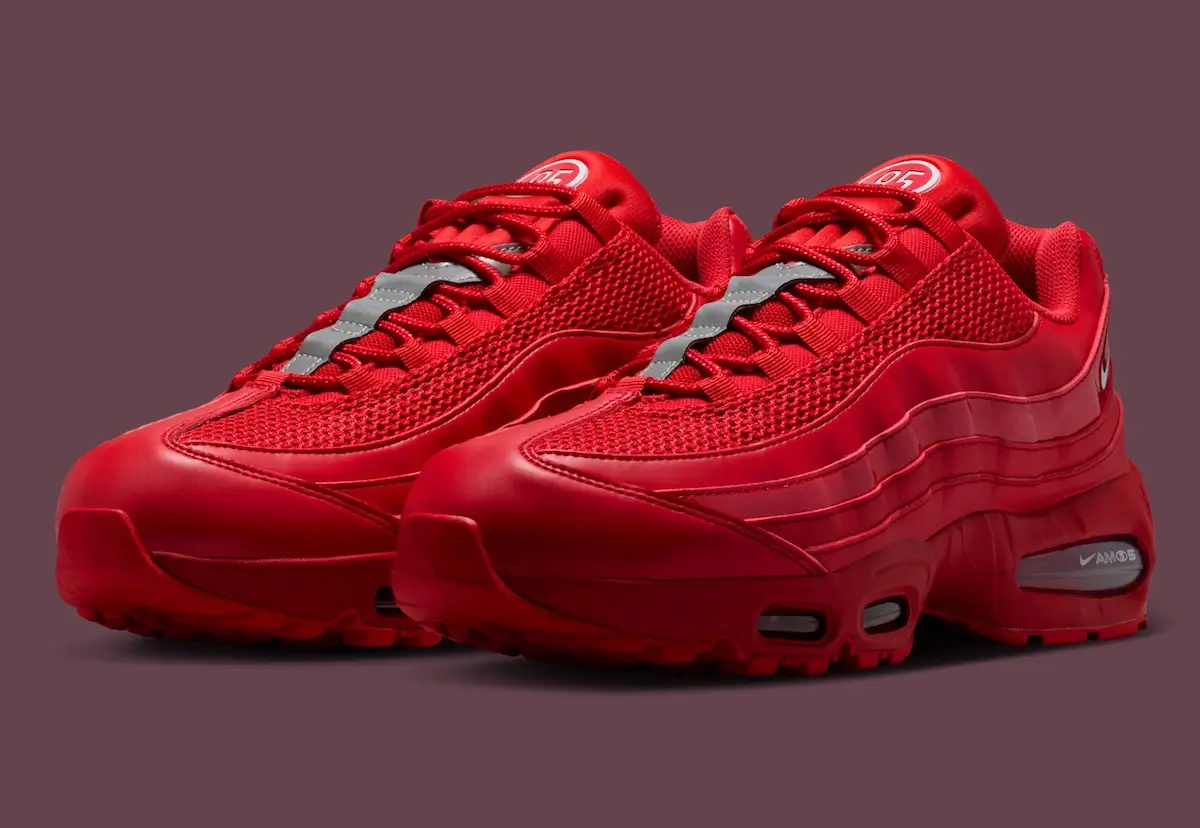
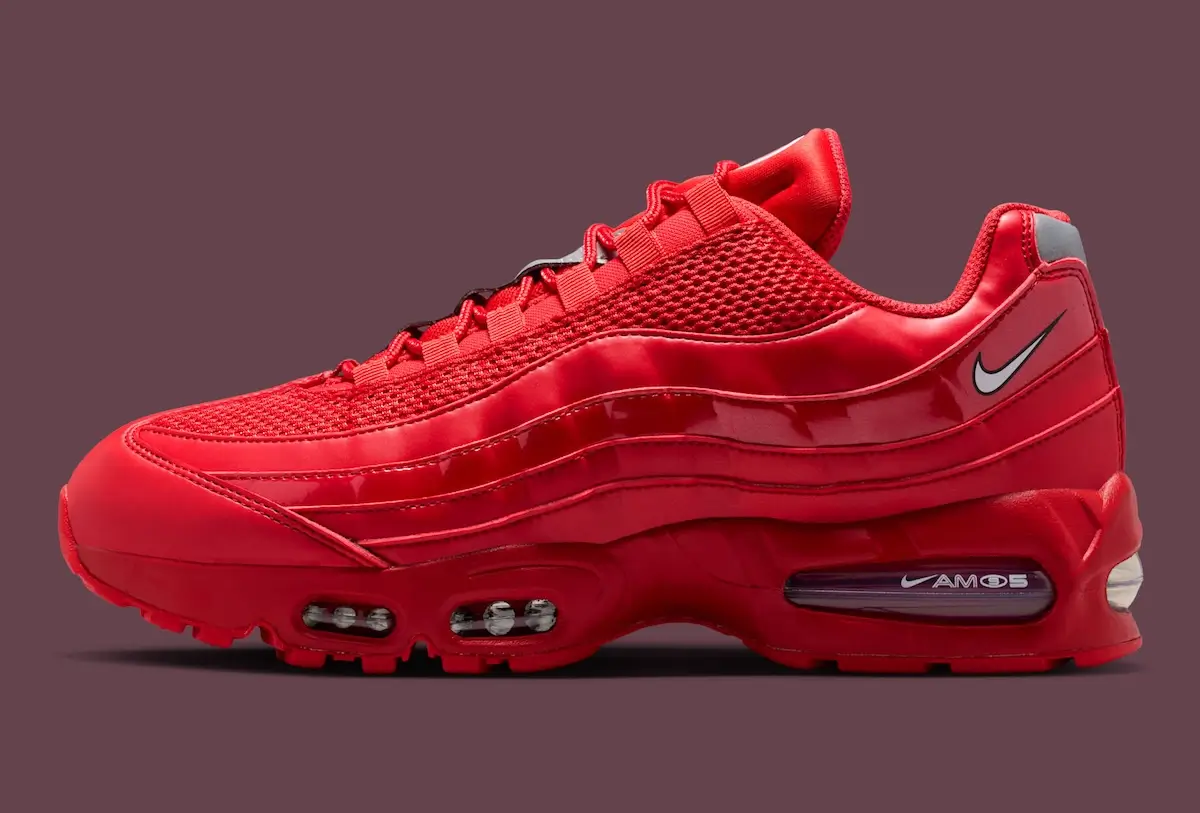
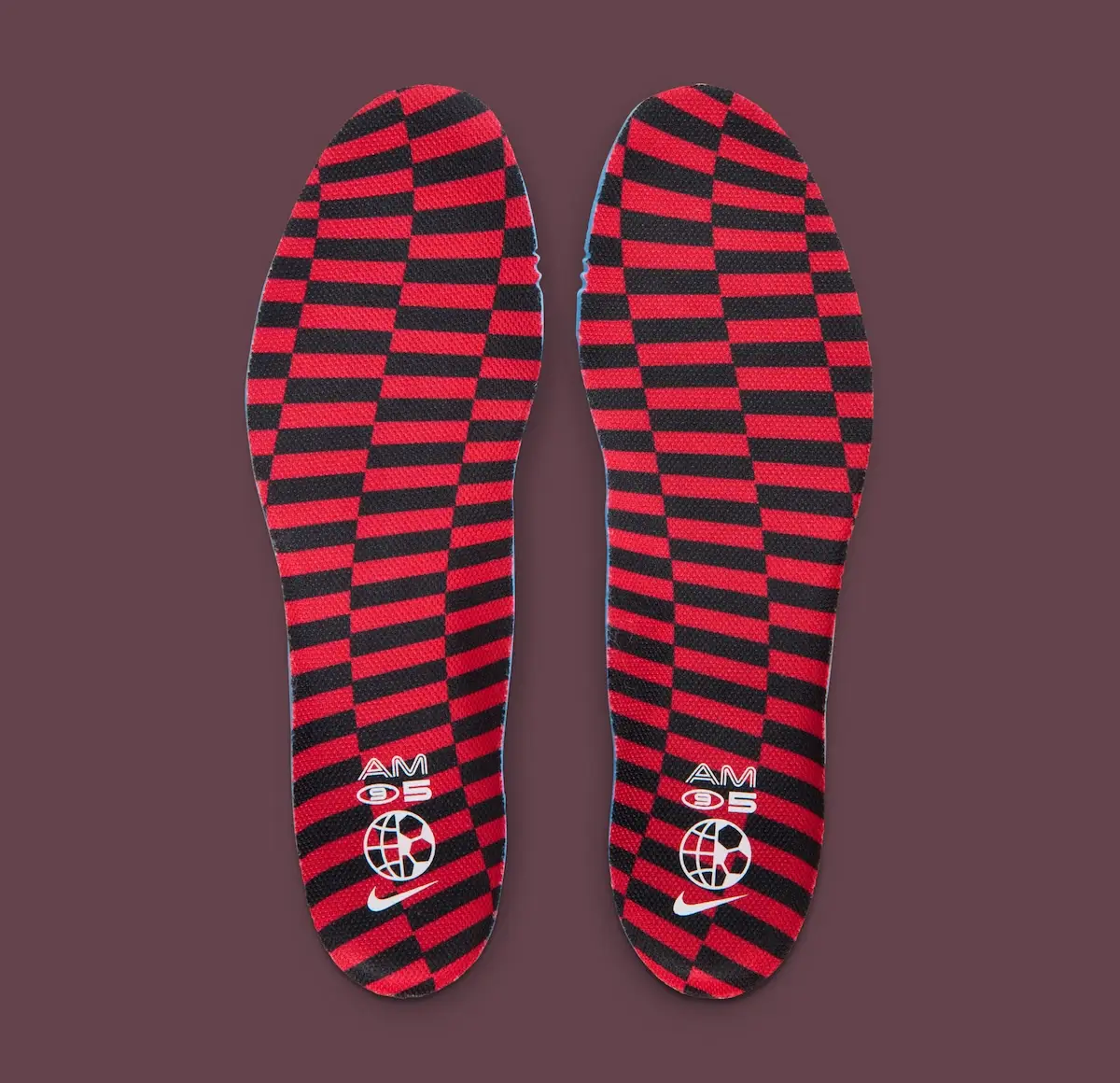
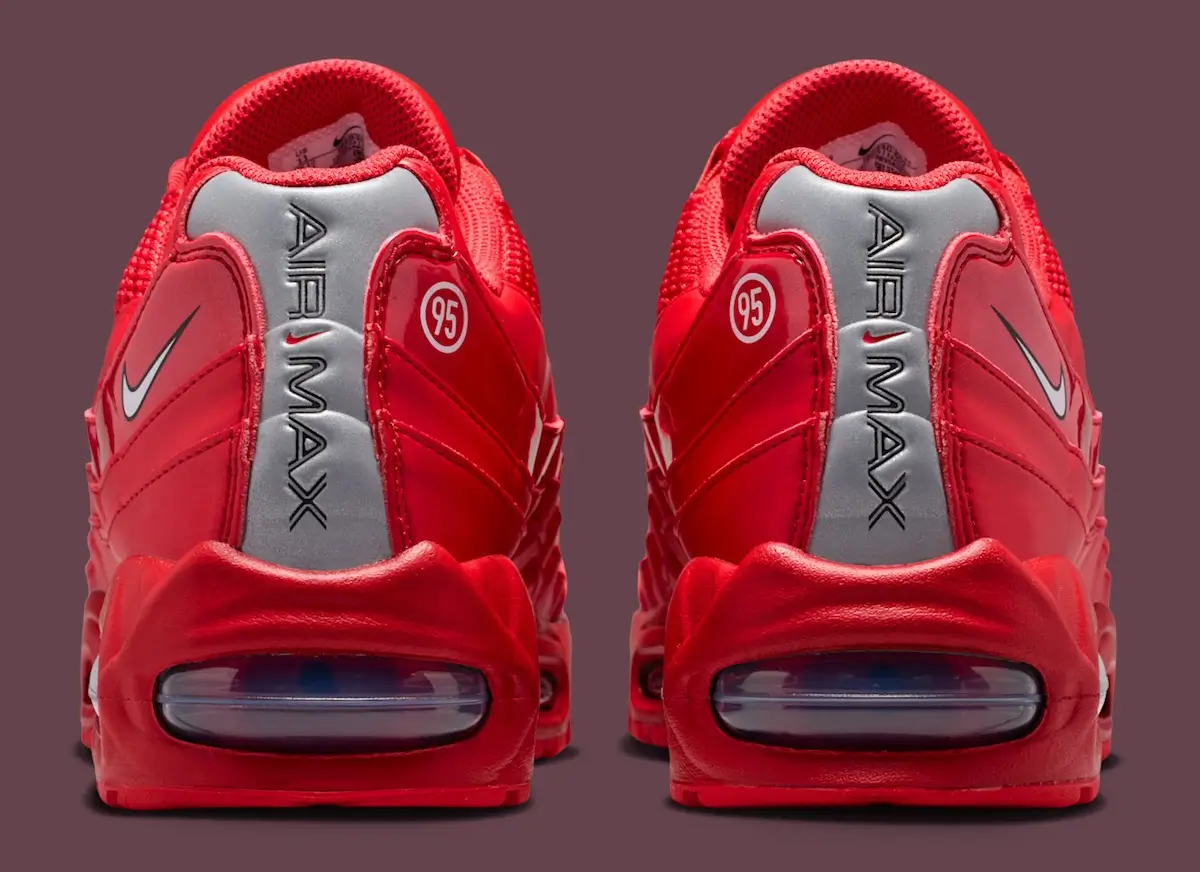
There are moments when Nike’s archive does not simply revisit itself—it recomposes. The Nike Air Max 95 Total 90 “University Red” arrives as one of those moments, where two distinct design languages—mid-’90s anatomical running and early-2000s football aggression—are brought into alignment. It is not a connection in the traditional sense, but a conceptual splice, a quiet hybrid that feels both inevitable and slightly disruptive.
At its core, the silhouette remains anchored in the DNA of the Nike Air Max 95, a design originally conceived by Sergio Lozano. The layered upper, inspired by the human body’s musculature, continues to define the shoe’s structure. Yet here, that anatomy is reinterpreted through the lens of Total 90—a line synonymous with precision, power, and a distinctly early-2000s football aesthetic.
stir
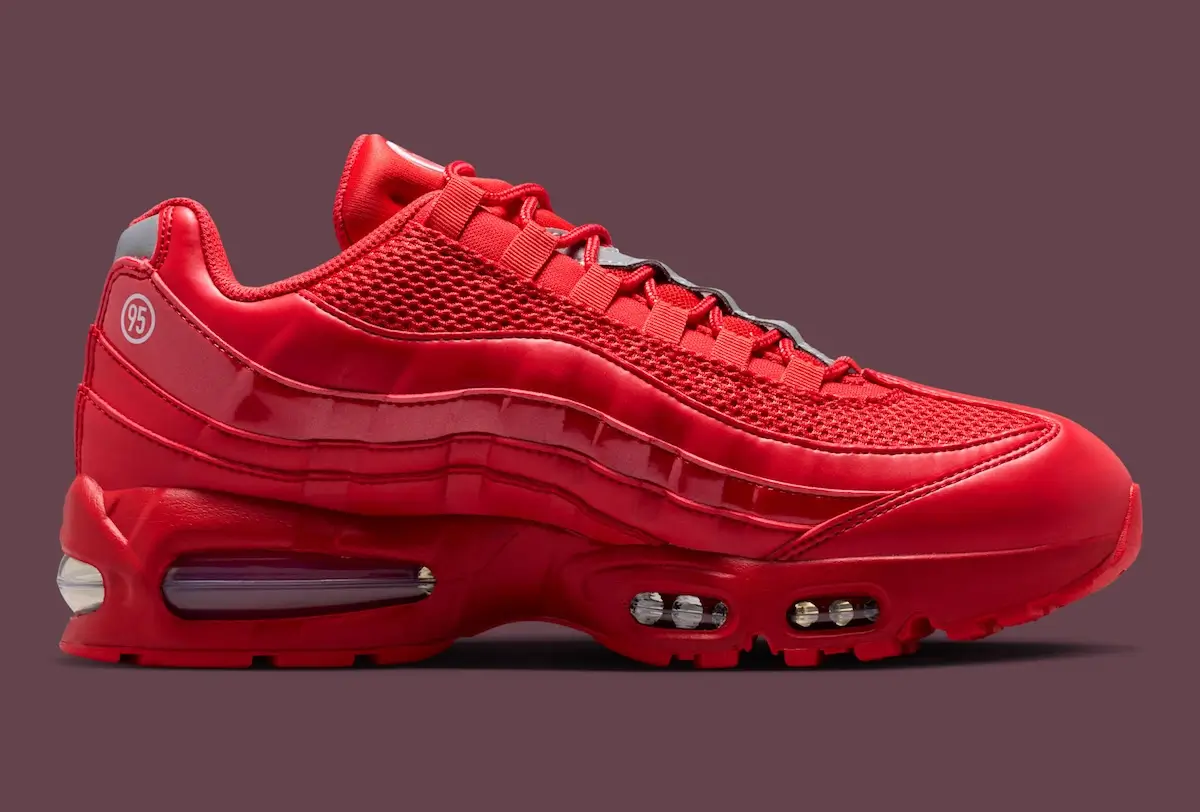
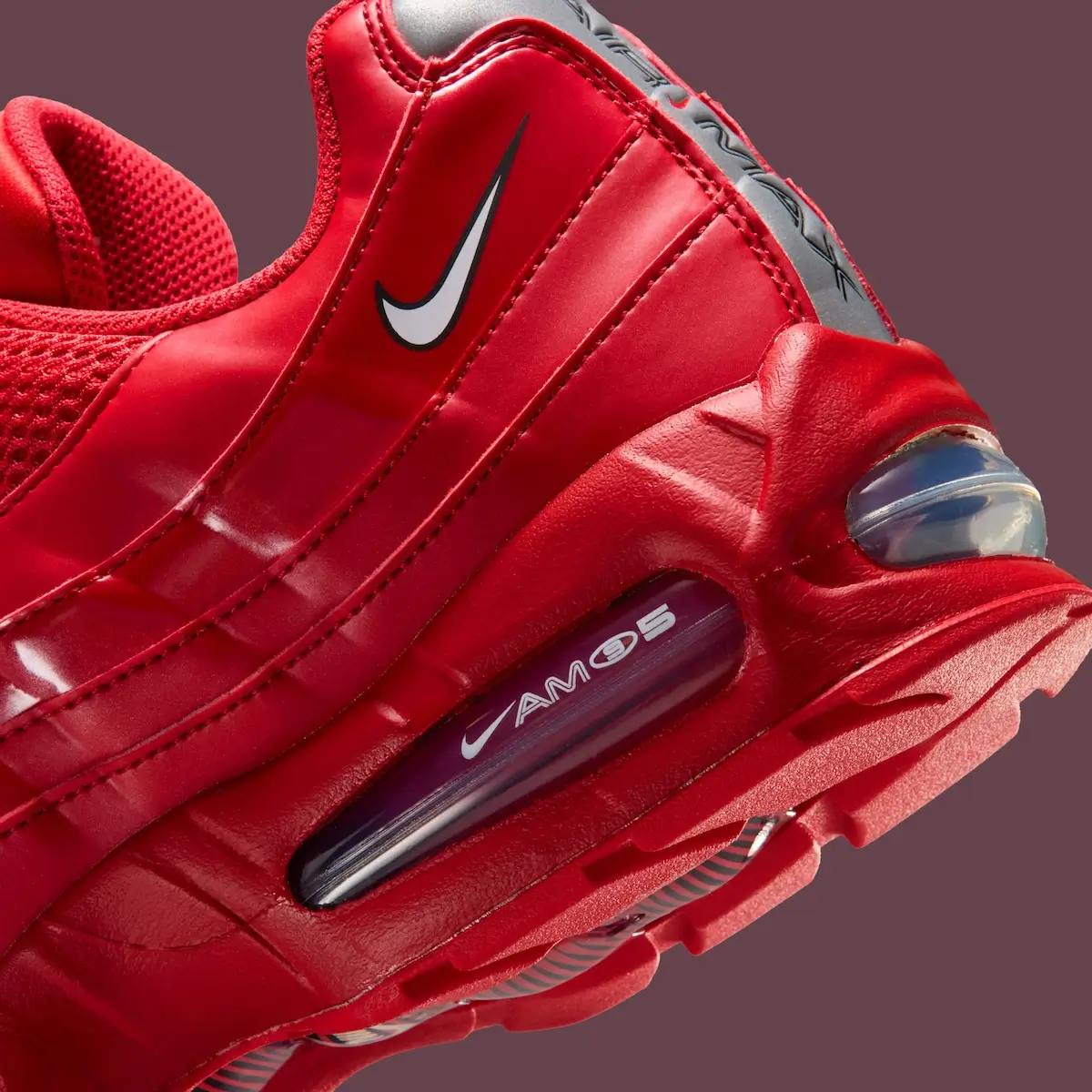
“University Red” is not deployed as accent. It is the condition. The gradient sidewalls, traditionally rendered in muted greys, are instead saturated—moving from deep crimson into near-black, creating a visual weight that feels more assertive than nostalgic.
This chromatic decision reframes the Air Max 95 entirely. Where the original leaned into natural tones and organic reference, this version introduces something sharper, more engineered. The red carries connotations of performance—speed, intensity, impression—aligning more closely with the ethos of the Nike Total 90 than with the contemplative origins of the 95.
Black overlays anchor the composition, preventing the palette from tipping into excess. There is discipline here. Even at its most saturated, the shoe retains a sense of control.
style
The integration of Total 90 cues is handled with restraint. This is not a literal transplant of football boot elements, but a translation.
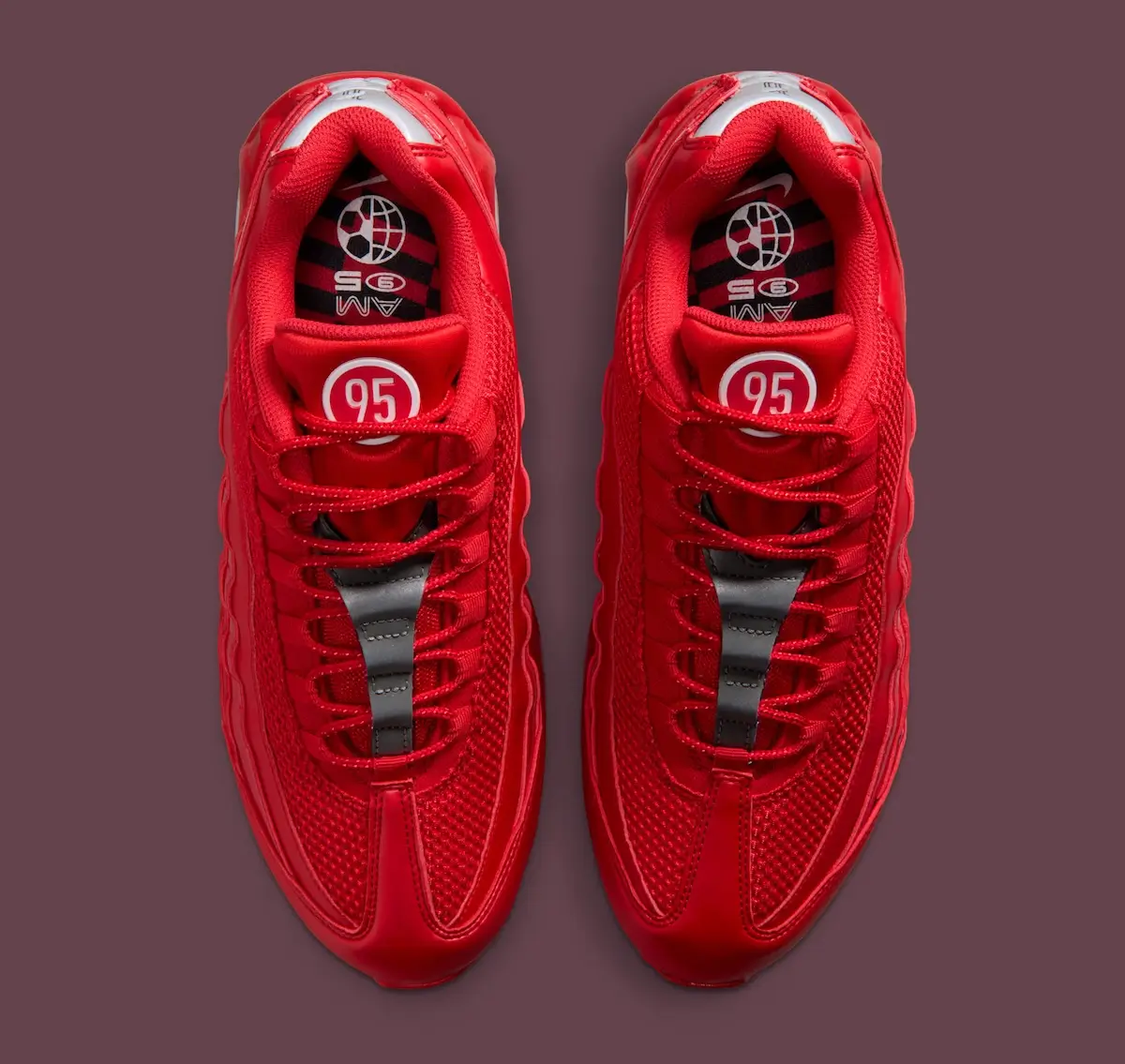
Subtle references emerge in the panel curvature, the graphic sharpness of the color blocking, and the slightly more aggressive stance of the silhouette. The lace system appears more compact, almost tightened, echoing the locked-in feel of early Total 90 boots designed for striking precision.
There is also a psychological layer at play. For a generation, Total 90 represents a specific era of football—one defined by power shots, asymmetric designs, and a certain visual boldness. By threading that memory into the Air Max 95, Nike taps into a cross-sport nostalgia that feels less about replication and more about resonance.
mat
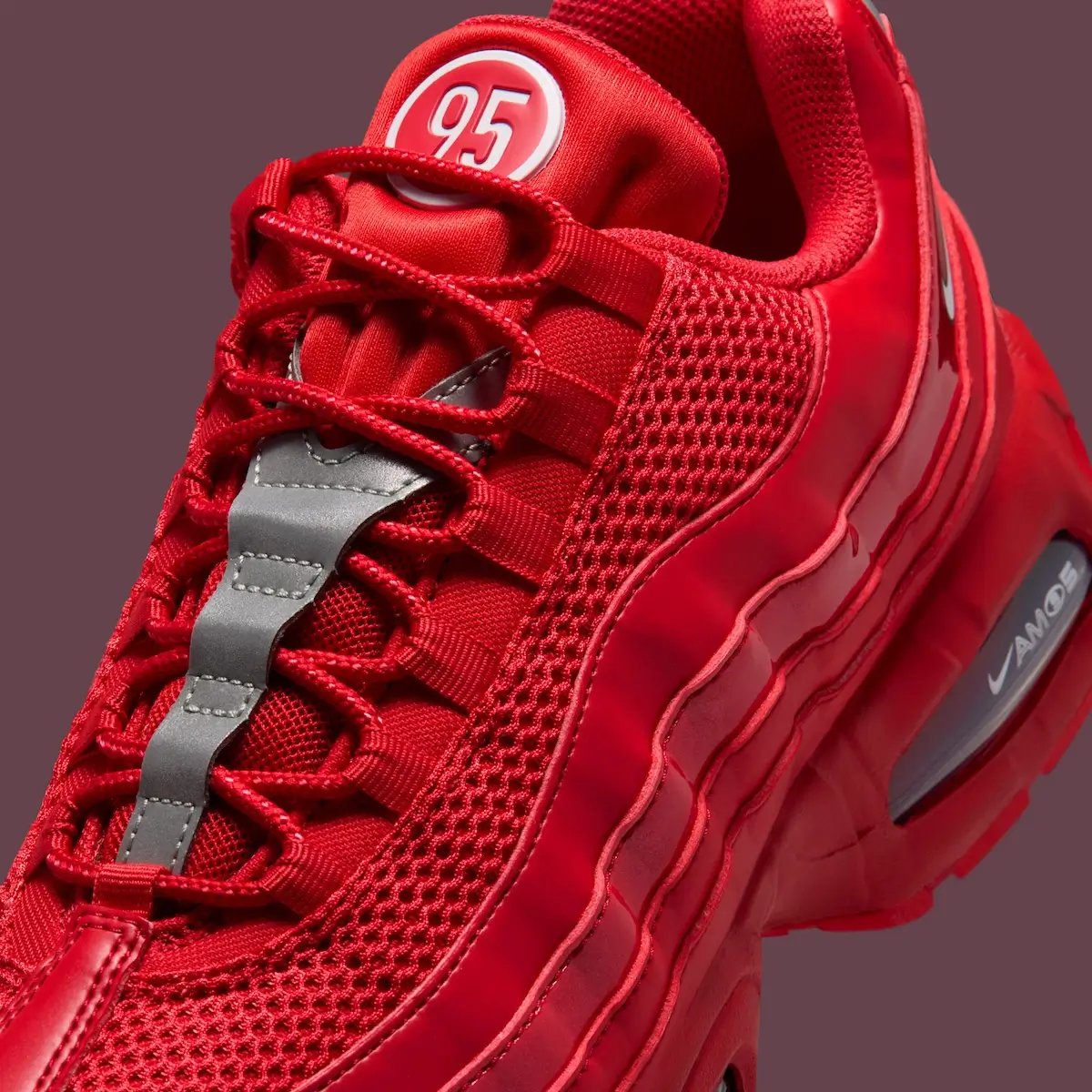
The upper maintains the Air Max 95’s signature mix of mesh, suede, and synthetic overlays, but the material interplay feels denser. The red gradients absorb light differently than the original greys, giving the shoe a slightly heavier visual presence.
Mesh panels provide breathability, while the layered suede elements reinforce the anatomical narrative. The transition between materials is smooth, almost continuous, allowing the color gradient to remain uninterrupted.
Reflective detailing—long a hallmark of the 95—adds a subtle technical edge. It does not dominate, but it punctuates the composition, catching light in motion and reinforcing the shoe’s performance lineage.
flow
Underfoot, the full-length visible Air units remain unchanged in architecture but shift in perception due to the colorway. Against the darker upper, the Air chambers feel more pronounced, almost glowing.
This is where the shoe reconnects with its running origins. The Air Max 95 was one of the first models to introduce forefoot Air cushioning, redefining how impact was distributed. That innovation remains intact here, grounding the hybrid design in functional credibility.
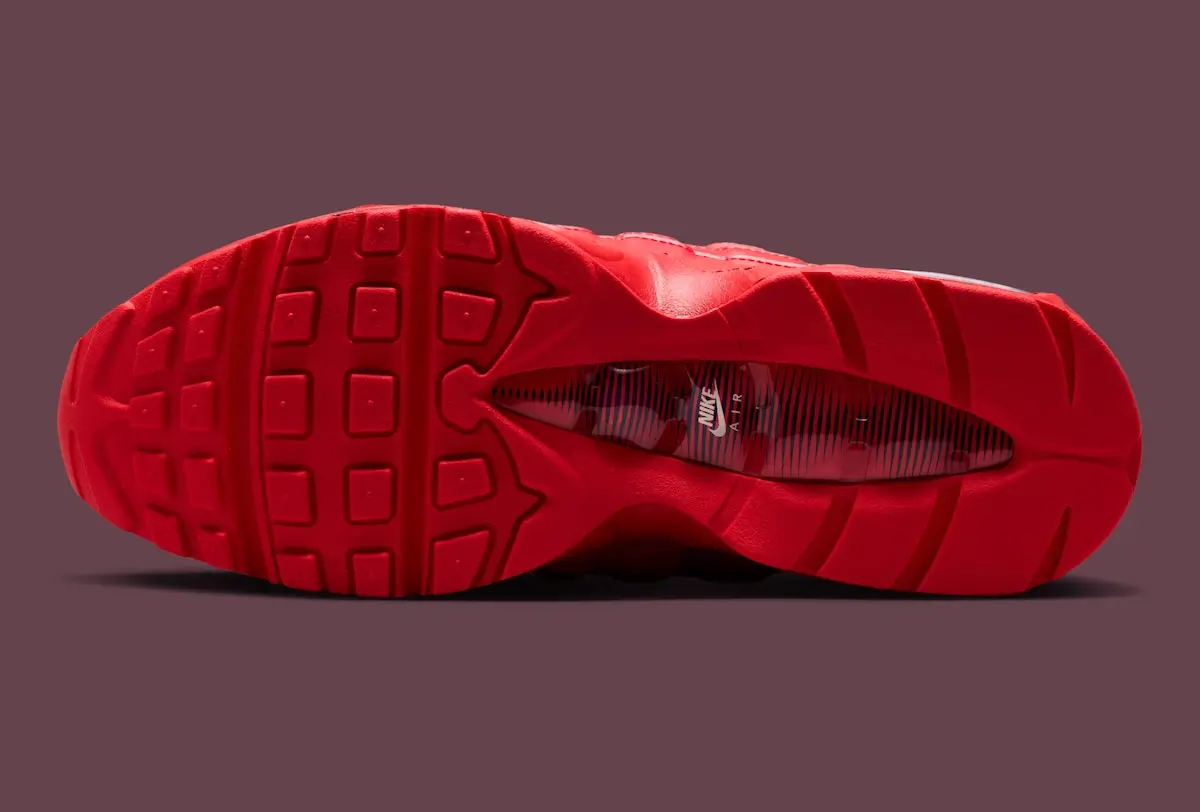
The outsole, rendered in black with red accents, mirrors the upper’s intensity while maintaining traction patterns consistent with the original model. It is a reminder that, despite the conceptual layering, the shoe remains fundamentally wearable.
stringent
What makes the “University Red” edition particularly compelling is its refusal to sit neatly within a single category. It is not purely retro, nor is it entirely contemporary. It exists between codes—running and football, ’90s and 2000s, performance and lifestyle.
This ambiguity reflects a broader shift in sneaker culture, where strict categorizations have begun to dissolve. Consumers no longer engage with footwear solely through sport-specific narratives. Instead, they move fluidly across references, assembling meaning from multiple sources.
Nike’s decision to merge Air Max 95 with Total 90 language acknowledges this shift. It suggests an understanding that the archive is not static—it is a living system, capable of recombination.
idea
For those familiar with both lineages, the shoe carries a layered sense of memory. The Air Max 95 recalls a moment when running design became expressive, almost sculptural. Total 90 evokes a different energy—one of competition, impression, and early-2000s visual boldness.
Bringing these together does not dilute either reference. Instead, it creates a tension that feels productive. The softness of the anatomical design meets the sharpness of football aesthetics, resulting in a silhouette that feels newly calibrated.
This is not nostalgia as replication. It is nostalgia as reinterpretation.
style
On foot, the shoe reads as assertive but not overwhelming. The red gradient draws attention, but the black framework contains it. It pairs naturally with darker palettes—black trousers, technical outerwear—but can also act as a focal point within more minimal styling.
There is a certain versatility embedded in the design. Despite its boldness, it does not demand a specific context. It adapts.
rel
While Nike has not positioned this model as a limited-edition spectacle, its conceptual clarity places it within a more considered tier of releases. It speaks to those who engage with the brand’s history, who recognize the references without needing them to be explicitly stated.
In a market saturated with collaborations and overt storytelling, the Air Max 95 Total 90 “University Red” feels relatively quiet. Its narrative is embedded in the design itself, rather than in external framing.
fin
The success of this release lies in its balance. It does not overstate its intentions, nor does it rely solely on archival fidelity. Instead, it operates in a space of synthesis—bringing together two distinct design languages and allowing them to coexist.
The result is a shoe that feels both familiar and recalibrated. It respects the integrity of the Air Max 95 while introducing a new layer of meaning through Total 90 influence.
In an era where the archive is often mined for quick nostalgia, this approach feels more deliberate. It suggests a willingness to engage with history not as a fixed reference point, but as material—something to be shaped, reinterpreted, and worn forward.