Air Max at a Standstill: Inside Nike’s Most Defining System Under Stymie

April 1, 2026
2 hours ago
There was a time when Air Max wasn’t a lifestyle shorthand—it was a proposition. A visible declaration that performance could be engineered, exposed, and even aestheticized. Before it became a cultural currency traded across subcultures—from London streetwear to Tokyo shoe archives—the Air Max line existed as a radical experiment in cushioning. It was running, first. Everything else followed.
Now, in a turn that feels almost too symbolic to be accidental, that same lineage faces an existential constraint: the material that defined it—pressurized gas—is no longer a given.
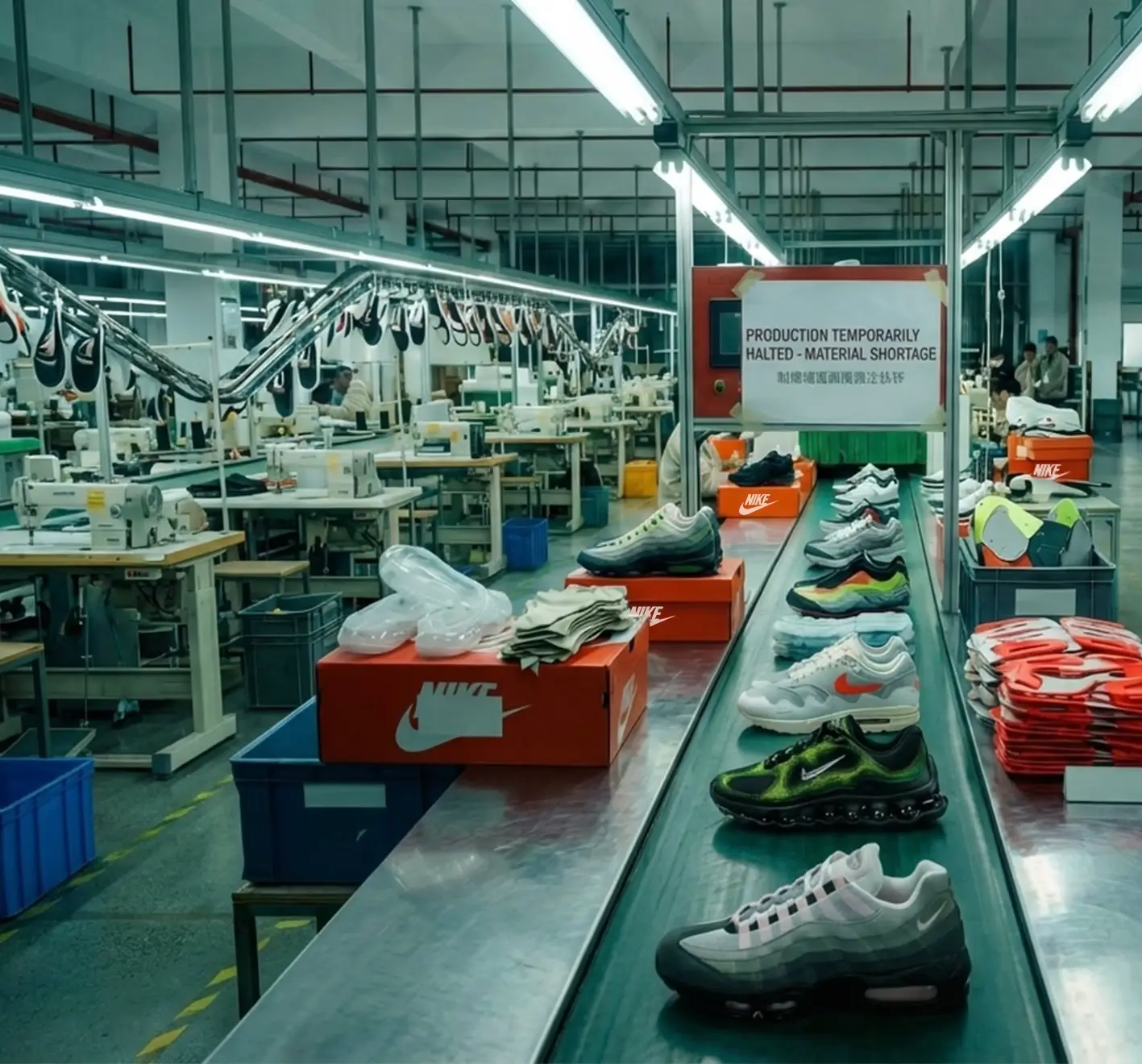
Nike, the company that built an empire on visible Air, is reportedly stepping away from full-scale Air Max production. Not as a strategic pivot toward trend cycles, nor as a seasonal recalibration, but as a response to something far less glamorous: supply. Nitrogen, the invisible backbone of the Air unit, is suddenly finite in a way that disrupts not just production timelines, but the very logic of the product.
flow
When Tinker Hatfield first cut into the midsole of the Nike Air Max 1 in 1987, the gesture was both literal and philosophical. It revealed what had previously been concealed: cushioning as structure, not abstraction. The Air unit wasn’t just a performance feature—it became a visual identity.
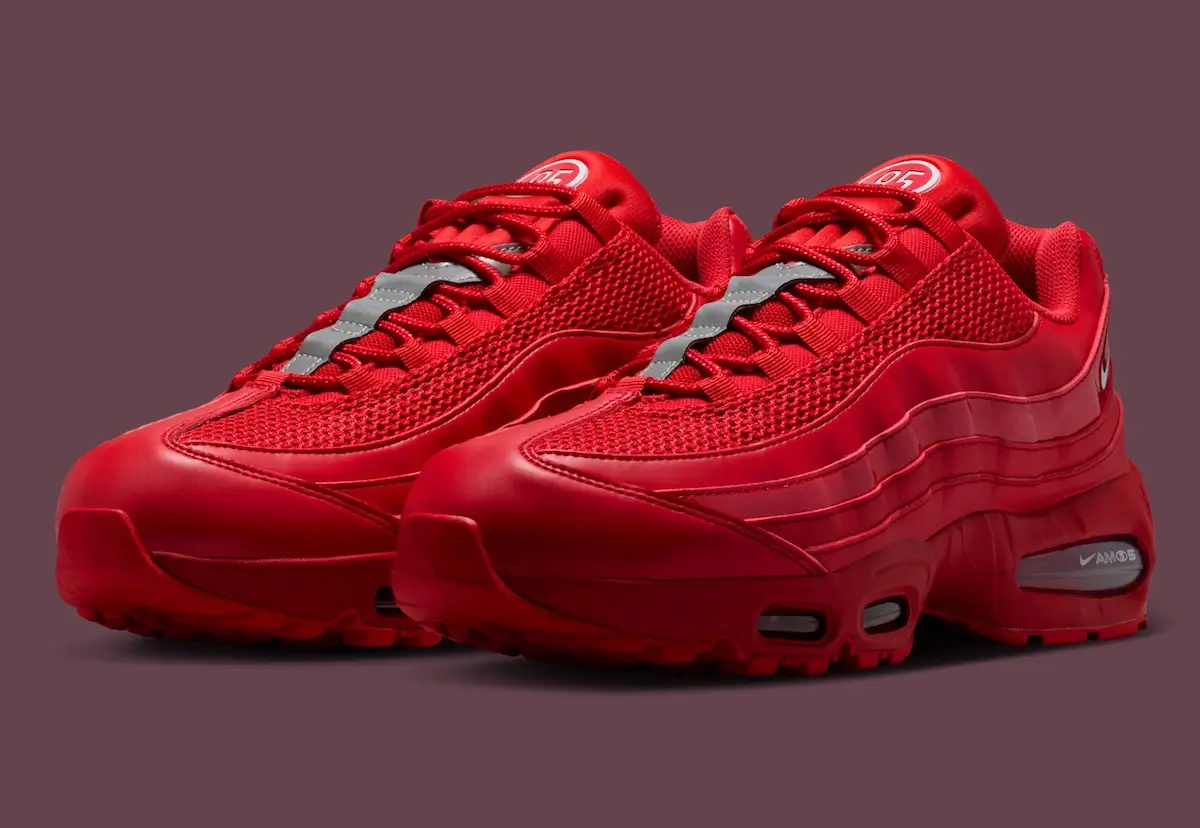
Over time, that identity expanded. The Nike Air Max 95 exaggerated the concept, layering multiple chambers into a design language that mirrored anatomy. Later iterations pushed scale and experimentation further, culminating in silhouettes that bordered on speculative design—objects as much as footwear.
Air Max evolved into a system of references. Each release carried forward fragments of the original idea while recontextualizing it for new audiences. Connections, regional exclusives, and limited runs turned the line into a decentralized archive—one that could be interpreted differently depending on where you encountered it.
But beneath the storytelling, the mechanics remained consistent. Air required containment, pressure, and material integrity. It required nitrogen.
stir
The phrase feels almost too on-the-nose: out of Air. Yet the current situation suggests precisely that. With rising import fees and a tightening supply of nitrogen gas cylinders, the economics of Air Max production have shifted. What was once scalable is now constrained.
For a brand like Nike, whose operational model depends on balancing innovation with volume, this creates a contradiction. Air Max is not a niche product; it is a cornerstone. Yet if the cost of producing its defining feature outweighs its return, even legacy lines become negotiable.
This is where the narrative becomes less about shoe and more about infrastructure. Supply chains, often invisible in consumer-facing storytelling, assert themselves in moments like this. The romance of innovation collides with the reality of logistics.
The idea that a global icon could be limited by something as elemental as gas feels almost poetic. Air, after all, was always the unseen hero of the design. Now, its absence becomes the defining condition.
rel
The timing amplifies the tension. Air Max Day, long positioned as a celebratory marker within Nike’s calendar, arrived this year with an unusually dense lineup. Releases like the Patta x Air Max 1 Waves ‘Hyper Crimson’, the Air Max 1000 ‘Black/Volt’, and the experimental Air Liquid Max suggested not a winding down, but a crescendo.
Each model pushed the concept in different directions. Patta’s connection leaned into cultural continuity, reinforcing the Air Max 1’s enduring relevance. The Air Max 1000 hinted at scale and futurism, while the Liquid Max flirted with a post-Air aesthetic—fluid, adaptive, less reliant on traditional chamber structures.
In hindsight, the lineup reads differently. Not as a preview of what’s next, but as a closing statement. A final articulation of what Air Max could be before the conditions that enabled it began to erode.
hatfield
In a now-deleted Instagram story, Hatfield reportedly expressed a mix of pride and unease. His words, understated but pointed, reframed the moment:
“Back when we first cut open the Air Max 1, we were just trying to show people what was inside. We didn’t consider that one day we might actually run out of it… Proud of what Air became. Slightly concerned about everyone still jumping in their pairs today.”
The comment carries a quiet irony. Air Max was always about visibility—about making the invisible visible. Yet its dependence on an unseen resource was never part of the narrative. Until now.
Hatfield’s reflection also underscores a broader tension within design: innovation often assumes continuity. Materials are treated as stable, systems as scalable. When those assumptions shift, even the most iconic ideas must be reconsidered.
show
There is a deeper question embedded in this moment: what does performance mean without Air?
Air Max, despite its lifestyle dominance, never fully abandoned its athletic origins. Its cushioning system, while sometimes exaggerated for aesthetic effect, remained grounded in functional intent. To remove or limit that system is to challenge the foundation of the line.
Yet Nike has navigated similar transitions before. Foam technologies, plate systems, and hybrid constructions have all expanded the definition of performance. It is conceivable that the brand will reframe cushioning once again—less reliant on pressurized gas, more aligned with alternative materials.
In that sense, the end of Air Max production (if it holds) is not an endpoint but a pivot. A moment that forces the brand to articulate what comes after visibility.
shock
What happens to a silhouette when its production stops?
Air Max exists not only as a product but as a cultural artifact. Its influence is embedded in music, fashion, and urban identity. Entire communities have built narratives around specific models, colorways, and release moments.
To cap production is to freeze that archive. Existing pairs become finite, their value shifting from functional to historical. The sneaker, once designed for movement, becomes an object of preservation.
This transition is not unfamiliar in fashion. Garments, accessories, and even entire lines often gain significance precisely because they are no longer produced. Scarcity reframes meaning.
For Air Max, the effect could be profound. The line’s ubiquity has always been part of its identity. To remove that ubiquity is to alter its relationship with its audience.
fwd
If there is a lesson in this moment, it is that innovation is rarely static. The conditions that enable it—materials, technologies, economics—are always in flux.
Air Max, in its original conception, was about revealing what was possible. Its current predicament reveals something else: the limits of possibility are not fixed. They shift, sometimes abruptly, reshaping even the most established ideas.
Nike’s next move will likely reflect this understanding. Whether through new cushioning systems, reengineered structures, or entirely different approaches to performance, the brand will continue to iterate. It has to.
But whatever comes next will inevitably be measured against Air. Not just as a technology, but as a moment—a point when design, engineering, and culture aligned to create something enduring.
sum
There is a final, quieter dimension to consider. Air Max was never just about height or bounce. It was about perception—the feeling that something intangible could be made tangible, that performance could be seen as well as felt.
That idea does not disappear with the material that enabled it. It lingers, informing how future designs are imagined and understood.
If this is indeed the end of Air Max production, it arrives not as a collapse, but as a transition. A shift from one form of visibility to another, from one set of constraints to the next.
And perhaps that is the most fitting conclusion. Air, after all, was always about movement—about the space between states. Even now, as the line faces its most uncertain moment, it continues to move.