Inside StockX’s Most Traded Kick: The Nike Dunk Low ‘Black White Panda’

March 30, 2026
1 minute ago
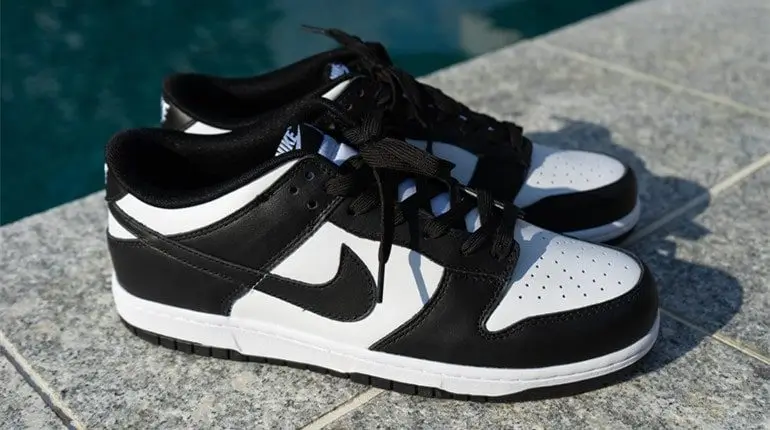
The black-and-white Nike Dunk Low ‘Black White Panda’—universally dubbed the “Panda”—has quietly rewritten the economics of modern footwear culture. What began as a straightforward general-release colorway has, over the past few years, transformed into what platforms like StockX consistently identify as one of the most traded—and arguably most resold—shoe of all time.
This is not a story about hype in the traditional sense. The Panda Dunk didn’t erupt from scarcity, celebrity co-signs, or limited-edition theatrics. Instead, it built its dominance through availability, repeat restocks, and algorithmic desirability—a new model of sneaker success shaped as much by resale platforms as by Nike’s own distribution logic.
stir
Originally introduced as part of Nike’s broader Dunk revival, the Panda Dunk arrived in a deceptively simple format: white leather base, black overlays, black Swoosh. The color blocking mirrored archival basketball pairs from the 1980s, but its timing—landing amid a global resurgence of the Dunk silhouette—proved decisive.
Unlike limited union or boutique exclusives, the Panda was released as a general release (GR). Yet what followed diverged from historical norms. Rather than fading into retail obscurity, the shoe was restocked repeatedly across multiple regions and retail channels, creating a paradox: constant availability paired with constant sell-outs.
This loop—drop, sell-out, restock, repeat—became the foundation of its resale dominance.
flow
According to publicly shared insights and reporting tied to StockX, the Panda Dunk has ranked among the most traded sneakers on the platform for multiple consecutive years, often topping charts in total transaction volume.
What distinguishes the Panda is not peak resale price, but sheer liquidity. On StockX, liquidity—how often a product is bought and sold—is a stronger indicator of cultural penetration than hype-driven spikes.
Key dynamics reflected in StockX data trends:
- High transaction volume: The Panda Dunk has recorded hundreds of thousands of trades globally, outperforming many limited sneakers.
- Stable resale margins: Prices typically hover close to retail, often between $110–$160 depending on size and timing.
- Continuous demand cycles: Each restock triggers renewed resale activity rather than market saturation.
This combination effectively positions the Panda Dunk as a “blue-chip commodity sneaker”—not rare, but endlessly tradable.
base
The Panda Dunk’s success is rooted in something deceptively basic: black and white goes with everything.
In a landscape often driven by maximalism—neon palettes, experimental materials, celebrity narratives—the Panda offered neutrality. It functioned as:
- A daily wear show
- A uniform staple
- A fallback purchase for casual buyers
- A safe entry point for new shoe consumers
This universality expanded its audience beyond traditional sneakerheads into mass-market fashion consumers, dramatically increasing turnover.
Unlike limited Jordans or hyped collaborations, the Panda Dunk doesn’t require cultural literacy to appreciate. It’s instantly legible.
shape
Historically, resale markets thrived on scarcity. Sneakers gained value because they were difficult to obtain. The Panda disrupts that model.
Here, resale is driven not by rarity but by friction in access:
- Consumers miss drops due to timing or bot activity
- Retail stock sells out quickly despite high production
- Buyers turn to resale for convenience rather than exclusivity
This creates a constant baseline demand on platforms like StockX and GOAT, even when the shoe is technically “widely available.”
The result is a shoe that behaves more like a retail arbitrage product than a collectible artifact.
role
Nike’s strategy with the Panda Dunk has been unusually deliberate. Rather than allowing resale prices to skyrocket, the brand has:
- Issued frequent restocks across global markets
- Expanded sizing runs
- Maintained consistent pricing
This approach achieves two things simultaneously:
- Keeps the silhouette culturally visible
- Ensures resale remains active but controlled
Each restock injects new supply—but also renews attention. The cycle reinforces itself.
culture
By 2024–2026, the Panda Dunk reached a level of ubiquity rarely seen in sneaker culture. It became, in many cities, a default footwear—worn across demographics, from students to creatives to office workers.
This saturation has led to mixed reactions:
- Some view it as overexposed
- Others embrace it as a modern classic
Yet from a resale perspective, saturation is not a weakness—it’s a strength. The more people wear a sneaker, the more replacement demand it generates. Pairs wear out, new buyers enter the market, and resale continues.
compare
To understand the Panda’s position, it helps to contrast it with previous resale icons:
- Air Jordan 1 ‘Chicago’ — driven by heritage and scarcity
- Yeezy Boost 350 V2 — driven by hype cycles and celebrity influence
- Nike Dunk SB collaborations — driven by limited releases and storytelling
The Panda differs fundamentally. It is not the most expensive, rare, or culturally mythologized—but it is arguably the most consistently transacted.
In financial terms, it behaves less like a speculative asset and more like a high-volume index product.
market
The Panda Dunk also reflects a broader shift in who participates in resale markets.
Because of its relatively low price point and consistent demand, it has become:
- A common entry point for first-time resellers
- A low-risk flip for casual sellers
- A staple inventory item for small sneaker businesses
This democratization expands the ecosystem, increasing transaction volume further.
Platforms like StockX benefit from this dynamic, as high-frequency, lower-margin trades generate sustained platform activity.
critique
Despite its commercial success, the Panda Dunk is not without criticism. Within core sneaker communities, it is sometimes labeled as:
- Overproduced
- Overworn
- Lacking individuality
Yet these critiques often miss the point. The Panda was never designed to be exclusive. Its power lies precisely in its lack of pretense.
It is, in many ways, the anti-hype sneaker that became the ultimate resale product.
fwd
The success of the Panda Dunk raises a larger question: Is this the future of shoe resale?
Instead of chasing scarcity, brands may increasingly focus on:
- High-volume, repeatable releases
- Broad consumer appeal
- Controlled resale ecosystems
Nike has already applied similar strategies to other silhouettes, but none have matched the Panda’s scale.
sum
The Nike Dunk Low ‘Black White Panda’ stands as a defining case study in modern shoe economics. Its dominance on platforms like StockX is not accidental—it is the result of a uniquely calibrated balance between availability and demand.
Where past icons relied on scarcity, the Panda thrives on repetition. Where others spike, it endures.
In doing so, it has quietly become the most resold shoe of its era—not because it is rare, but because it is everywhere.