Nike Total 90 Mule x Kids of Immigrants: Football Heritage Reworked as Everyday Form

April 5, 2026
2 hours ago
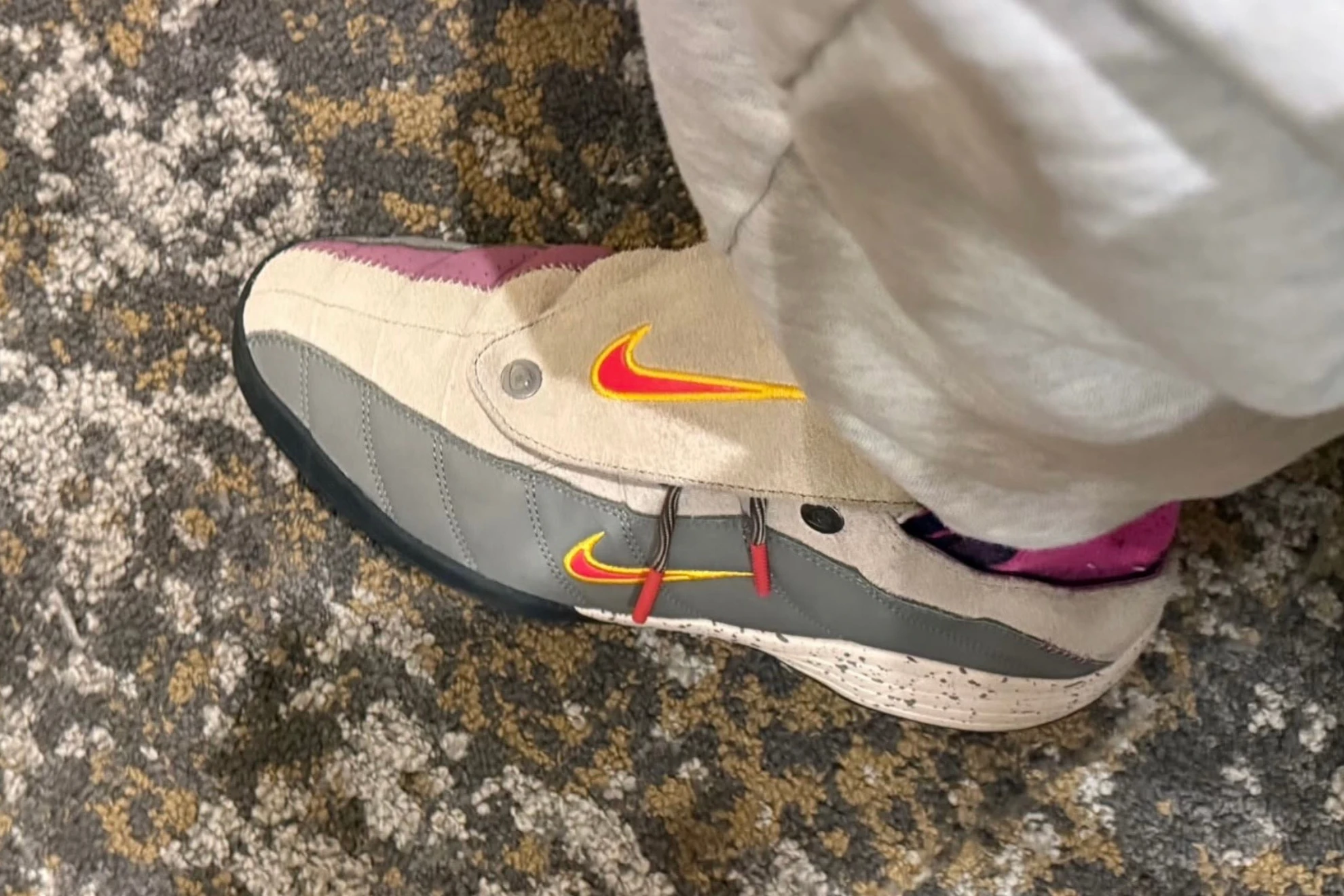
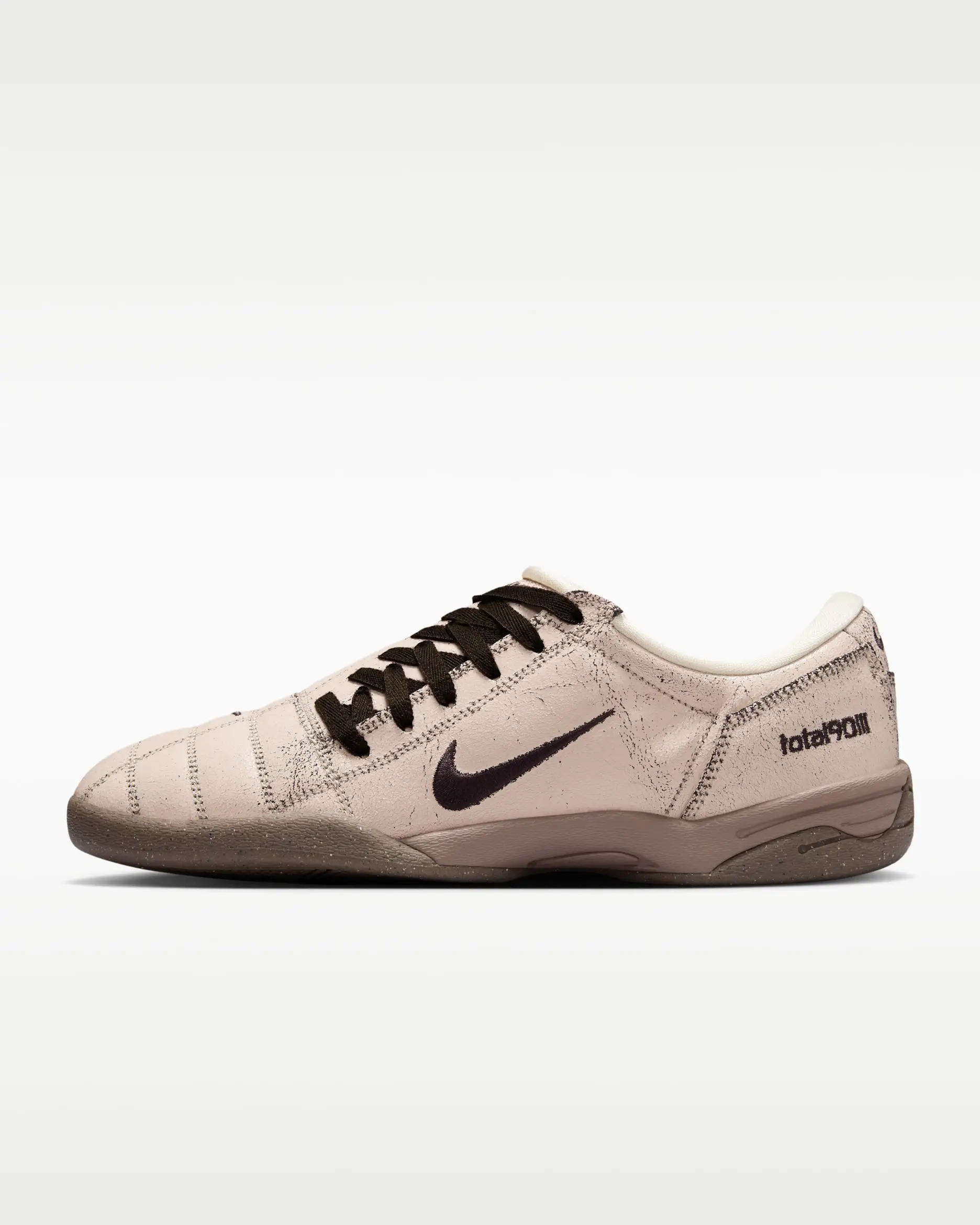
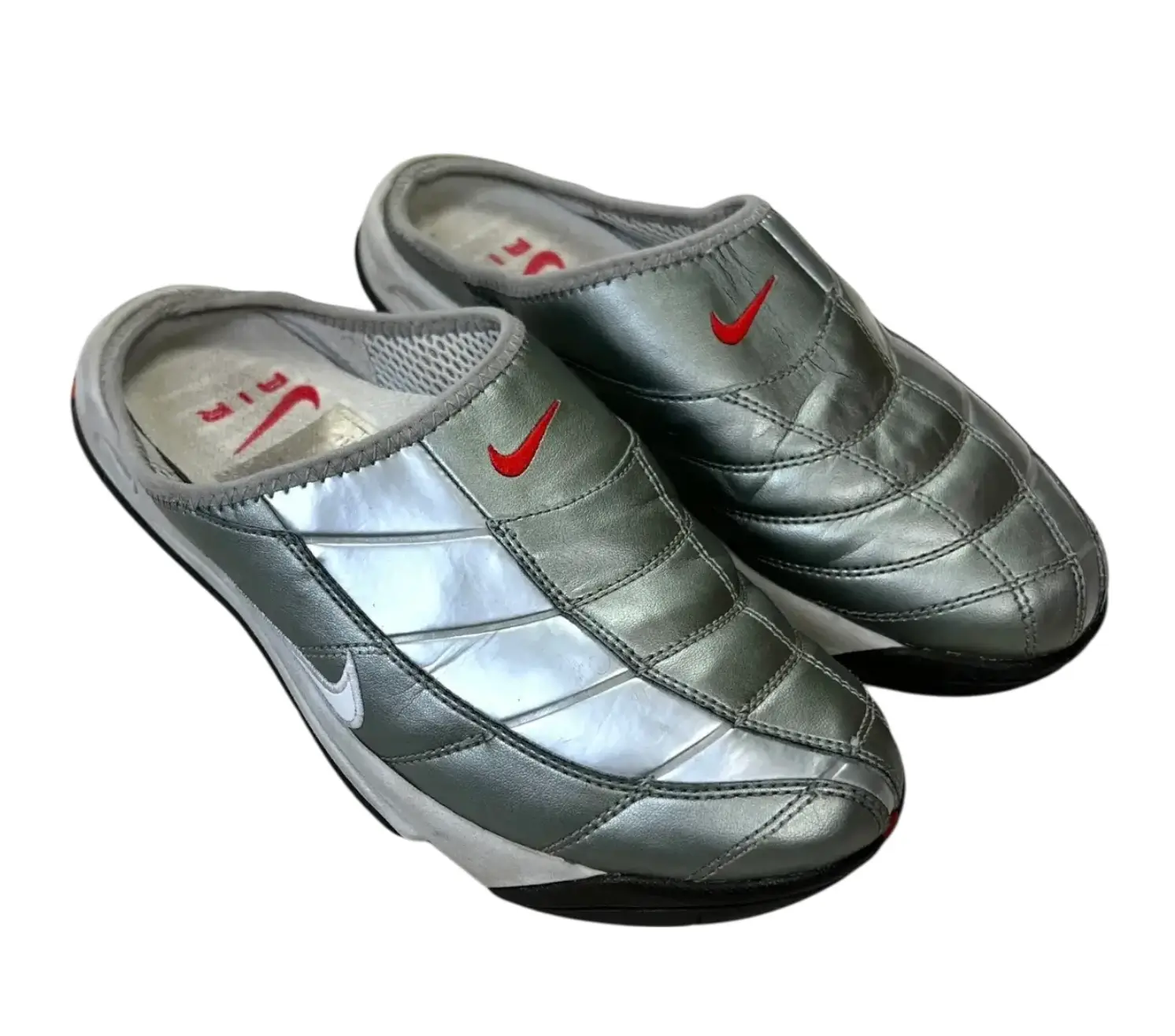
There’s something quietly subversive about taking a performance relic and flattening its urgency into something more deliberate. The Nike Total 90 was never meant to linger. It was built for velocity—angled lacing, aggressive paneling, a silhouette tuned for striking rather than strolling. And yet, here it is again, reassembled as a mule, stripped of its forward lean and reintroduced as something closer to a pause.
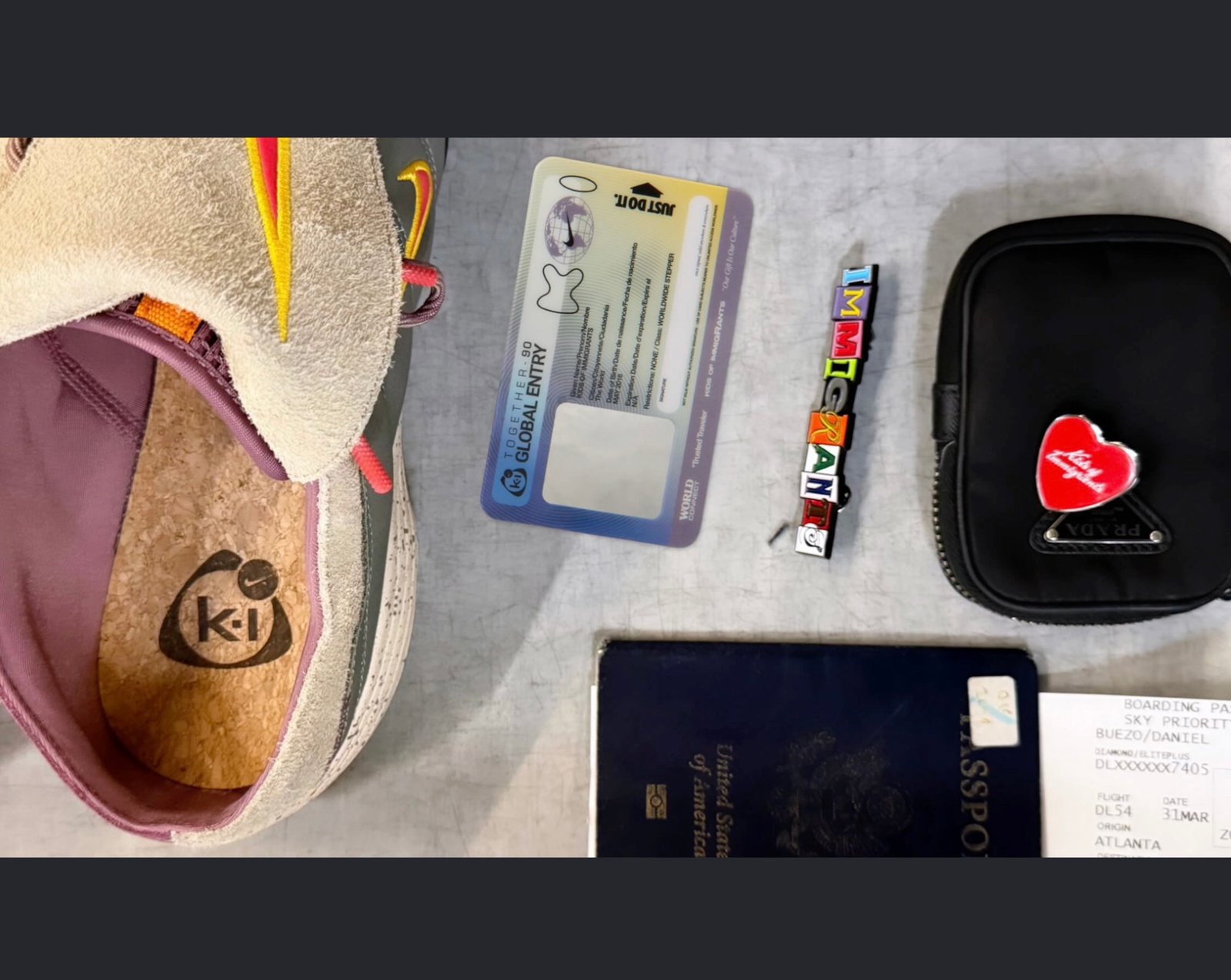
The latest glimpse arrives through Daniel Buezo, co-founder of Kids of Immigrants, who steps into the frame wearing the upcoming collision like it’s already lived-in. Not staged, not overly announced—just worn. That alone says enough. Because this isn’t simply a retro revival; it’s a recalibration of what football footwear meant, and what it can be when removed from the pitch.
consider
The Nike Total 90 was always defined by asymmetry and force. Designed in the early 2000s for power strikers, it carried an unmistakable visual language: offset lacing to create a cleaner striking surface, bold circular branding, a sense of engineered imbalance that somehow made perfect sense in motion.
Turning that into a mule is not an obvious move. It removes the heel—the anchor—and with it, the urgency. What remains is the upper, the identity, the memory of performance rather than the act itself. And in that absence, something else forms: ease, adaptability, a kind of quiet after the game.
The collide doesn’t try to over-explain this transformation. It lets the design speak in fragments.
View this post on Instagram
story
What emerges most clearly in Buezo’s on-foot preview is the material contrast. Khaki suede sets the tone—earthy, grounded, almost utilitarian. It feels closer to outerwear than sport, more aligned with field jackets than football kits. Against it, grey and mauve-toned leather panels introduce a softer, more nuanced palette. Not quite nostalgic, not entirely modern either.
This tri-colour composition resists the binary of retro vs. contemporary. Instead, it sits somewhere in between—like an object that has aged forward rather than back.
The suede absorbs light. The leather reflects it. Together, they create a shifting surface that feels less like a shoe and more like a layered object. Something assembled rather than manufactured.
idea
The most telling detail, however, is the tongue.
In its original form, the Total 90 tongue was functional excess—wide, padded, often folded over, sometimes secured with elastic. It carried branding, but also intention. It was part of the boot’s architecture, not decoration.
Here, that language is preserved but altered through a snap button system. A small intervention, but one that changes everything. The tongue can be fixed or left to move, structured or relaxed. It introduces modularity into a silhouette that was once rigidly defined.
This is where the collaboration becomes more than aesthetic. It introduces choice. The wearer decides how much of the original form remains intact.
Folded, it recalls the boot. Unfolded, it becomes something else entirely—looser, less resolved, more aligned with the mule’s inherent informality.
flow
What Kids of Immigrants brings to this project isn’t overt branding or heavy narrative cues. Instead, it’s a sensibility—one that understands cultural layering without needing to announce it.
The brand has always operated in the space between identity and expression, often referencing heritage, movement, and belonging without reducing them to slogans. That approach carries through here.
There’s no need for loud co-branding or exaggerated storytelling. The shoe itself becomes the statement: a football artifact reinterpreted through a lens that values transition, hybridity, and quiet reinvention.
It’s not about where the Total 90 came from. It’s about where it can exist now.
conflation
The mule, as a format, has steadily moved from fringe to foundational. Once considered a niche or even impractical silhouette, it now occupies a central position in contemporary footwear—precisely because it resists categorization.
It’s not performance. It’s not entirely lifestyle. It sits somewhere in between, much like this collaboration.
By converting the Total 90 into a mule, Nike—and by extension Kids of Immigrants—acknowledges a broader shift in how footwear is used. The boundaries between sport and everyday wear have already dissolved. What remains is the question of how far that dissolution can go.
This answers it, quietly.
show
Buezo’s image does more than preview the shoe—it situates it. Worn casually, without staging, the mule integrates into a daily context with surprising ease. It doesn’t feel like a concept piece or a collector’s item. It feels usable.
That’s where the design succeeds most. Despite its conceptual underpinnings, it doesn’t demand attention. It earns it gradually.
The proportions are key here. The absence of a heel shortens the visual length, making the shoe feel more compact. The materials add weight, but not bulk. The result is balanced—something that can exist within a wardrobe rather than outside it.
accept
There’s a tendency, especially in sneaker culture, to treat archival revivals as exercises in fidelity. To reproduce, to preserve, to honor.
This isn’t that.
The Total 90 Mule doesn’t attempt to recreate the past. It abstracts it. It takes recognizable elements—the tongue, the paneling, the overall silhouette—and repositions them within a new framework.
It’s nostalgia, but without sentimentality. Memory, without fixation.
theory
More than anything, this collision signals a shift in how legacy models are approached. Instead of asking how they can be brought back, it asks how they can be transformed.
The answer, in this case, is subtle. Remove the heel. Rework the tongue. Adjust the materials. Let the rest remain.
It’s a minimal intervention, but one that produces a completely different object.
And that might be the point. Not to overwhelm the original, but to gently redirect it.
sum
The Nike Total 90 Mule doesn’t arrive as a statement piece. It arrives as a continuation—of design, of culture, of movement between categories.
Through Daniel Buezo’s quiet reveal, the collaboration feels less like a launch and more like an introduction. Something already in motion.
Football, reinterpreted not as sport, but as structure. As memory. As material.
And perhaps most importantly—as something that can still change.