Nintendo’s Hardware Rhythm: A Reframe Pace For Next-Gen Play

March 25, 2026
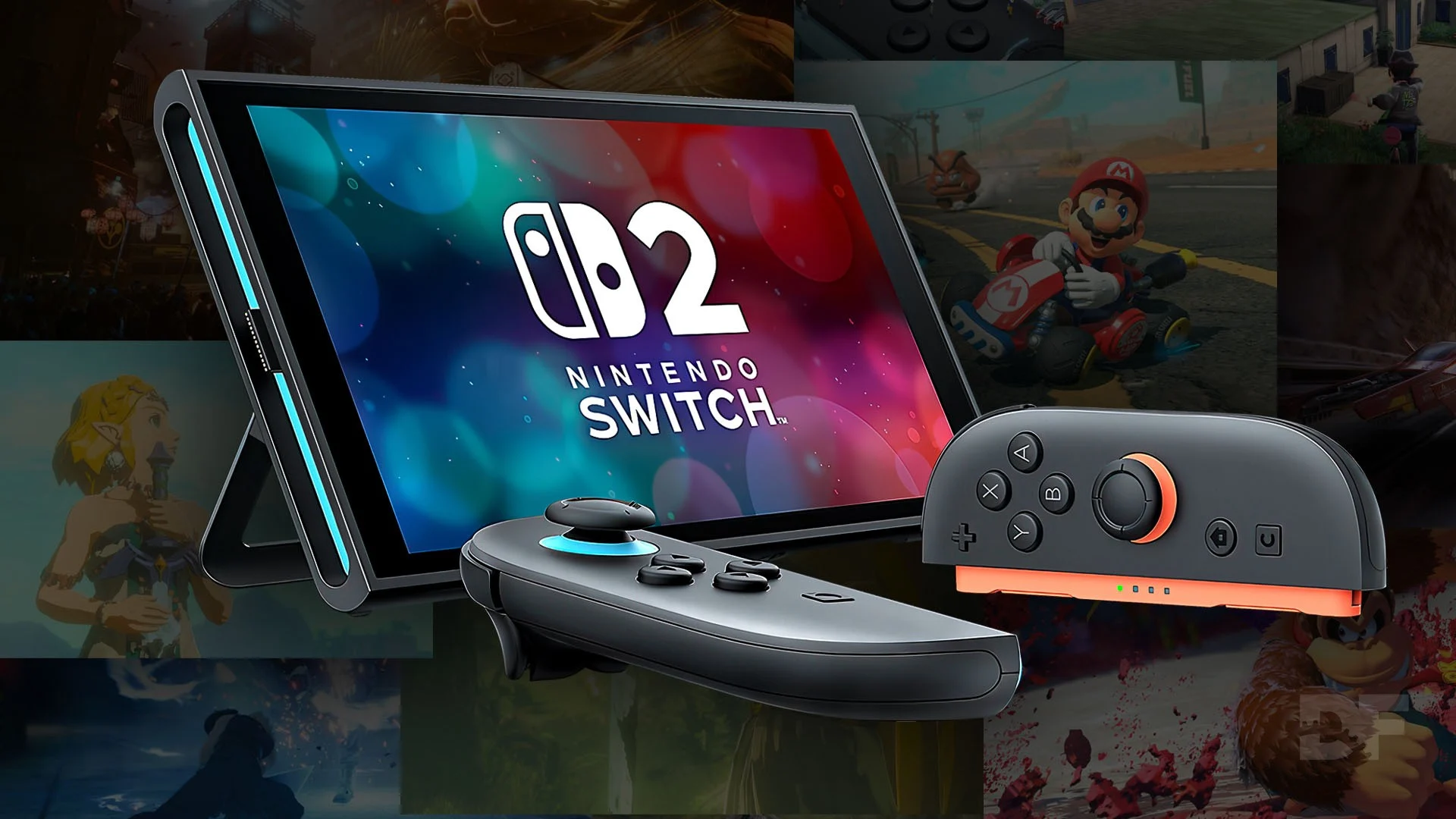
There is a particular kind of silence that precedes a major release—an industry-wide inhale where speculation sharpens into expectation. For Nintendo, that silence has taken on a different texture. Reports that the company has scaled back production of its next-generation console—colloquially framed as “Switch 2”—have been interpreted as hesitation, even weakness. But within the choreography of contemporary consumer culture, restraint can be more expressive than acceleration. In fashion, as in technology, the absence of excess often signals intent.
stir
The gaming industry, once defined by clear generational turnover, now resembles a wardrobe already full. Players are not lacking for options; they are navigating abundance. Between mobile ecosystems, subscription libraries, and persistent digital backlogs, the need for a new device must compete with an environment that already feels complete.
This is where the idea of “weakening demand” becomes less a diagnosis and more a misreading. Demand has not disappeared—it has become editorial. Consumers curate their purchases with the same selectivity they bring to fashion: fewer, better, more considered. A console is no longer an automatic upgrade; it is an acquisition that must justify its presence within an already saturated rotation.
It takes a lot of star power to save the galaxy. Don’t miss The Super Mario Galaxy Movie. In theaters April 1. pic.twitter.com/KnKYA9aX6q
— Nintendo of America (@NintendoAmerica) March 9, 2026
flow
Since its debut in 2017, the Nintendo Switch has functioned less like a product and more like a staple piece—adaptable, enduring, and quietly transformative. Its hybrid form blurred boundaries in a way that felt intuitive rather than disruptive. It did not ask players to change their habits; it slipped into them.
That ease of integration has extended its lifecycle far beyond industry norms. The Switch is still worn, still relevant, still capable. And like any well-designed garment, it resists replacement not because it is irreplaceable, but because it continues to perform.
This is the paradox Nintendo now faces. The stronger the existing piece, the harder it is to justify the next one.
rare
In fashion, overproduction is a cardinal sin. It dilutes exclusivity, erodes value, and transforms desire into indifference. The most influential brands understand that scarcity is not simply about limitation—it is about control. To release less is to say more.
Nintendo’s reported production cuts can be read through this lens. By scaling back output, the company is not retreating from demand; it is shaping it. A measured supply creates tension, anticipation, and ultimately, cultural weight. The console becomes not just available, but awaited.
show
Where competitors like Sony and Microsoft pursue performance as a primary narrative—resolution, frame rates, computational power—Nintendo operates in a different register. Its hardware is not a statement of capability, but of experience.
This distinction matters more than ever. In a market where technical improvements are expected, they are no longer sufficient to generate excitement. The question is not how much better a console is, but how different it feels. What does it change? What does it allow?
Without a clear answer, even the most advanced device risks feeling like a revision rather than a revelation.
archive
Nintendo’s greatest strength—its archive of iconic franchises—also complicates its future. These are not simply games; they are cultural artifacts with enduring relevance. The Legend of Zelda, Super Mario, Animal Crossing—each operates as a world unto itself, capable of sustaining engagement across years, even decades.
But this continuity reduces urgency. When the archive remains accessible, the future must offer more than continuation. It must offer transformation.
eco
The broader economic climate reinforces this shift toward selectivity. Consumers are increasingly attuned to value, less inclined toward impulse, more willing to wait. The rapid adoption curves that once defined console launches have flattened into longer, more deliberate arcs.
This is not a sign of disinterest; it is a sign of maturity. The audience has evolved, and with it, the conditions of demand. A new console must now earn its place not through novelty alone, but through necessity.
ship
Even production decisions carry symbolic weight. In an era shaped by supply chain volatility, adjusting output is as much about perception as logistics. It signals awareness, discipline, and control—qualities that resonate beyond the factory floor.
Nintendo’s cautious approach contrasts with the excess that has defined other hardware cycles. Where overproduction can lead to discounting and diminished prestige, restraint preserves the aura of value.
[任天堂HP]『ザ・スーパーマリオギャラクシー・ムービー』特設ページを公開しました。
『ザ・スーパーマリオギャラクシー・ムービー』は、2026年4月24日(金)より全国の映画館でロードショー。
さあ、想像を超える宇宙へ。 #TheSuperMarioGalaxyMovie https://t.co/2Yxma24Rij— 任天堂株式会社 (@Nintendo) March 10, 2026
anticip
Nintendo’s history is marked by an almost instinctive sense of timing. Its most successful platforms have arrived not when the market expected them, but when they were ready to be understood. This patience is part of its identity—a refusal to conform to external pressure.
The reported production cuts suggest that this instinct remains intact. Rather than rushing to meet an assumed demand, Nintendo appears to be waiting for alignment: between hardware, software, and audience.
culture
To frame the next Switch purely as a gaming device is to miss its broader significance. Like a well-designed piece of fashion, it will function as an object within culture—something that signals taste, identity, and participation.
Its success will depend not only on what it does, but on what it represents. Does it feel necessary? Does it feel new? Does it feel like the next chapter, rather than a continuation of the last?
imply
The language of attenuating demand implies a lack of interest, a fading relevance. But the reality is more complex. Demand has not weakened; it has become selective, conditional, and deeply tied to meaning.
Nintendo’s challenge is not to generate demand, but to meet it on these new terms.
fin
In a culture that often equates speed with success, Nintendo’s restraint reads as counterintuitive. Yet it is precisely this resistance to urgency that has defined the company’s most significant moments. By cutting production, it is not stepping away from the future—it is refining it.
The next console will arrive eventually. The question is not when, but how. And in that distinction lies the difference between a product that sells and one that resonates.
For Nintendo, as in fashion, the most powerful statement is sometimes the one that waits.