ODULAR FREQUENCY: Shepard Fairey @ Subliminal Projects, Los Angeles Subliminal Projects, Los Angeles — February 28, 2026 – April 11, 2026

March 4, 2026
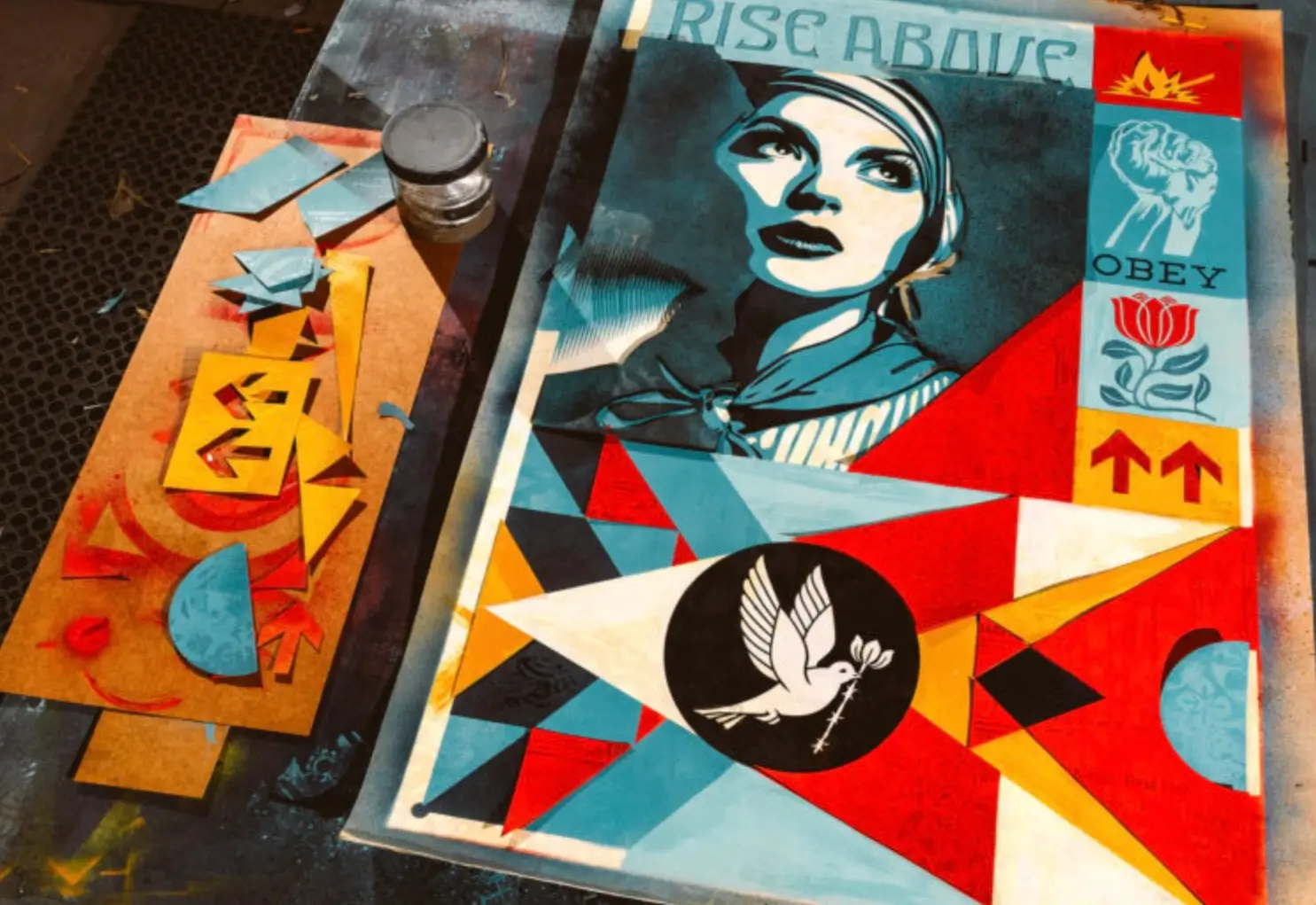
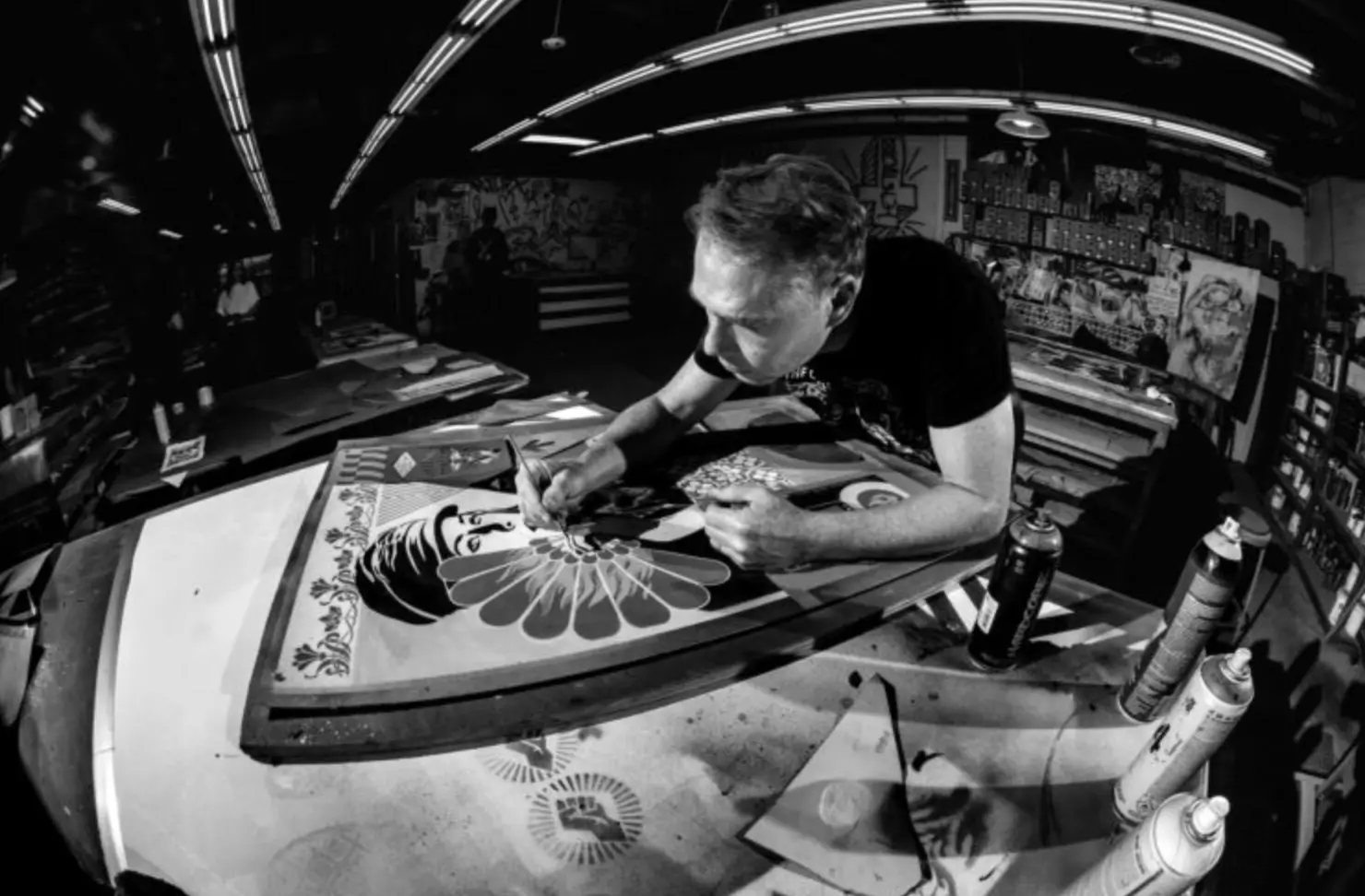
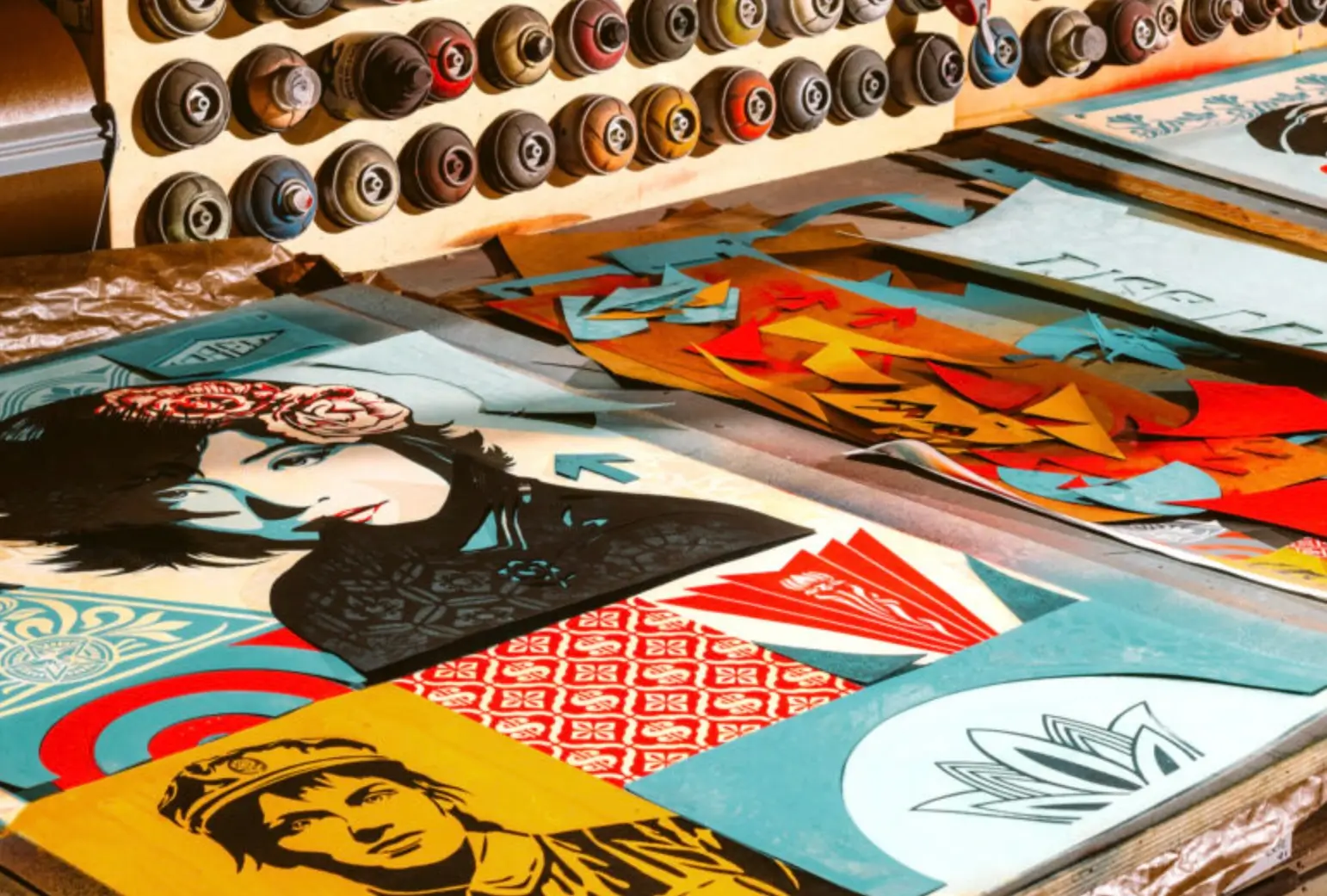
In an mode defined by constant visual saturation, Shepard Fairey continues to explore the power of imagery as a form of communication, resistance, and cultural memory. His 2026 exhibition “ODULAR FREQUENCY” at Subliminal Projects expands upon decades of work rooted in street art, political activism, and graphic design. The exhibition runs from February 28 through April 11, 2026, bringing together a new body of prints, mixed-media works, and conceptual experiments that reflect on the rhythms of culture, ideology, and media.
“ODULAR FREQUENCY” (often interpreted as “Modular Frequency” in references to the show) frames Fairey’s practice as a kind of broadcast system. Visual symbols operate like signals transmitted across public space—icons repeating, evolving, and refracting through society’s political and cultural circuitry. This approach aligns closely with Fairey’s career-long investigation into iconography, repetition, and mass communication, strategies that have defined his work since the late 1980s.
For Los Angeles audiences, the exhibition also marks a homecoming moment. Fairey has long maintained a deep relationship with the city’s creative communities, and his gallery Subliminal Projects has served as a cultural hub for more than two decades.
lab
Before understanding the exhibition itself, it helps to understand the space hosting it. Subliminal Projects is not simply a gallery but an extension of Fairey’s worldview. Founded in 1995 by Shepard Fairey and Blaize Blouin, the space was originally conceived as a platform to bridge the worlds of skateboarding, street culture, music, and contemporary art.
At the time, these cultural ecosystems were often dismissed by traditional art institutions. Subliminal Projects positioned itself as an alternative venue where emerging artists could experiment without the constraints of the mainstream gallery system.
Located in Echo Park, Los Angeles, the gallery has hosted exhibitions from influential street artists, printmakers, illustrators, and multidisciplinary creatives. The space reflects Fairey’s belief that art should be accessible across mediums—whether on a canvas, skateboard deck, mural wall, or record sleeve.
In this sense, the gallery itself mirrors the philosophy behind “ODULAR FREQUENCY.” It is a place where signals converge—visual, cultural, and political.
arch
To fully appreciate the conceptual weight of the exhibition, one must consider the trajectory of Shepard Fairey.
Born in Charleston, South Carolina, Fairey studied illustration at the Rhode Island School of Design. During his time as a student in 1989, he created the now legendary “Andre the Giant Has a Posse” sticker campaign. What began as an inside joke among skateboarders quickly evolved into the global OBEY Giant street art phenomenon.
The project transformed public space into a decentralized gallery. Posters, stickers, and murals appeared on walls worldwide, using repetition to create recognition and curiosity. This strategy later informed Fairey’s most famous works.
Among them:
-
The 2008 “Hope” portrait of Barack Obama, now housed in the Smithsonian’s National Portrait Gallery
-
The “We the People” poster series, widely circulated during the 2017 Women’s March
-
Over 130 large-scale murals worldwide addressing themes of justice, peace, and environmental responsibility
Fairey’s art operates at the intersection of propaganda, graphic design, and activism. Borrowing aesthetic language from Soviet constructivism, punk rock flyers, and advertising, he distills complex ideas into bold, memorable images.
In “ODULAR FREQUENCY,” this methodology is pushed into a new conceptual territory.
stir
The title itself offers a clue.
“Frequency” implies signal transmission—waves traveling through space. “Modular,” meanwhile, suggests a system of interchangeable parts.
Together, the concept hints at a visual language composed of repeatable components: symbols, portraits, patterns, and typography that can be rearranged into new configurations.
This idea aligns with Fairey’s long-standing approach to art-making:
-
Layered collage elements
-
Stencil-based repetition
-
Screen-printed color blocks
-
Iconographic symbolism
Each piece becomes a modular unit within a larger cultural broadcast.
The exhibition therefore operates less like a collection of individual works and more like a network of interconnected visual messages.
style
Visitors entering the exhibition encounter a striking array of new compositions.
Recurring motifs include:
-
portraits of civil rights figures
-
symbolic imagery referencing peace and resistance
-
stylized botanical and ornamental patterns
-
geometric structures reminiscent of propaganda posters
One notable work references Martin Luther King Jr., inspired by a mural Fairey created in Los Angeles. The piece reflects his ongoing fascination with figures whose messages resonate across generations.
By placing these icons within intricate pattern systems, Fairey creates a visual tension between individuality and collective identity. The portraits act as anchors within swirling fields of typography and design.
The effect is both hypnotic and confrontational.
flow
Repetition is central to Fairey’s work.
Critics often compare his style to advertising—deliberately so. By borrowing the visual grammar of propaganda and marketing, Fairey exposes how imagery shapes public perception.
In “ODULAR FREQUENCY,” repetition becomes a political strategy.
Icons appear across multiple works in slightly altered configurations, suggesting how ideas evolve as they circulate through society. The viewer begins to notice subtle changes: a shift in color, a new slogan, a different portrait layered over familiar patterns.
These variations mirror how messages mutate within media ecosystems.
The result is a visual metaphor for information flow in the digital age.
craft
Another defining element of the exhibition is its focus on process.
Fairey has long championed screen printing as both an artistic and political tool. The technique allows for the mass production of images—mirroring the democratic distribution methods of posters and protest graphics.
Many works in “ODULAR FREQUENCY” combine:
-
screen print layers
-
hand-painted embellishments
-
collage fragments
-
metallic inks and textured paper
These materials emphasize the tactile quality of printmaking. In a world dominated by digital images, Fairey insists on the importance of physical objects.
The layered surfaces also echo the visual chaos of urban environments, where posters overlap, tear, and reappear over time.
sustainable
Hosting the exhibition in Los Angeles adds another layer of significance.
The city has long served as a canvas for street art, from early graffiti movements to contemporary mural culture. Fairey himself has contributed numerous public murals throughout the city, embedding his imagery into the urban landscape.
Echo Park, the neighborhood where Subliminal Projects resides, reflects this cultural hybridity. Music venues, record shops, art studios, and vintage stores coexist alongside immigrant communities and historic architecture.
In this environment, the gallery becomes both an exhibition space and a community meeting point.
Opening nights at Subliminal Projects often resemble cultural gatherings as much as art events—bringing together artists, musicians, activists, and collectors.
leg
The visual style present in “ODULAR FREQUENCY” is instantly recognizable.
The palette of red, black, and cream, combined with bold typography and symmetrical compositions, has become synonymous with the OBEY aesthetic.
Yet beneath the stylistic consistency lies an evolving conceptual framework.
Early OBEY works thrived on ambiguity—encouraging viewers to question authority without offering clear answers. Later works embraced overt political messaging, addressing issues like climate change, inequality, and civil rights.
“ODULAR FREQUENCY” sits somewhere between these phases.
The imagery remains political but also philosophical. Rather than presenting direct slogans, the works encourage contemplation about how symbols influence collective consciousness.
show
Few contemporary artists have crossed as many cultural boundaries as Shepard Fairey.
His influence extends far beyond galleries:
-
street art and graffiti culture
-
graphic design
-
fashion and apparel
-
music poster design
-
political campaign imagery
The OBEY Clothing brand translated his visual language into wearable graphics, bringing street art aesthetics into mainstream fashion.
Meanwhile, museums including MoMA, the Victoria and Albert Museum, and the Smithsonian hold his works in their permanent collections.
This dual presence—both underground and institutional—has defined Fairey’s career.
“ODULAR FREQUENCY” acknowledges this hybrid identity.
fwd
Perhaps the most compelling aspect of the exhibition is its invitation to dialogue.
Subliminal Projects was founded on the belief that art should spark conversation about culture and society.
Each piece in the show acts as a prompt.
Some works question political systems. Others explore the role of imagery in shaping belief. Still others reflect on the responsibilities of artists in times of social upheaval.
The gallery becomes a forum where viewers confront their own interpretations.
fin
“ODULAR FREQUENCY” is more than an exhibition.
It is a reflection on the systems that shape modern perception—media networks, political symbolism, and cultural memory.
By assembling a constellation of prints, portraits, and visual patterns, Shepard Fairey creates a gallery environment that feels like a transmission in progress.
Visitors do not simply observe the work; they participate in decoding it.
And in doing so, they become part of the broadcast.
From the streets of Los Angeles to the walls of museums around the world, Fairey’s imagery continues to circulate—repeating, evolving, and transmitting ideas across cultural frequencies.
The signal remains strong.

No comments yet.