Medusa Grounded: Onitsuka Tiger x Versace and the Tai-Chi Sakura Shoe

April 2, 2026
1 hour ago
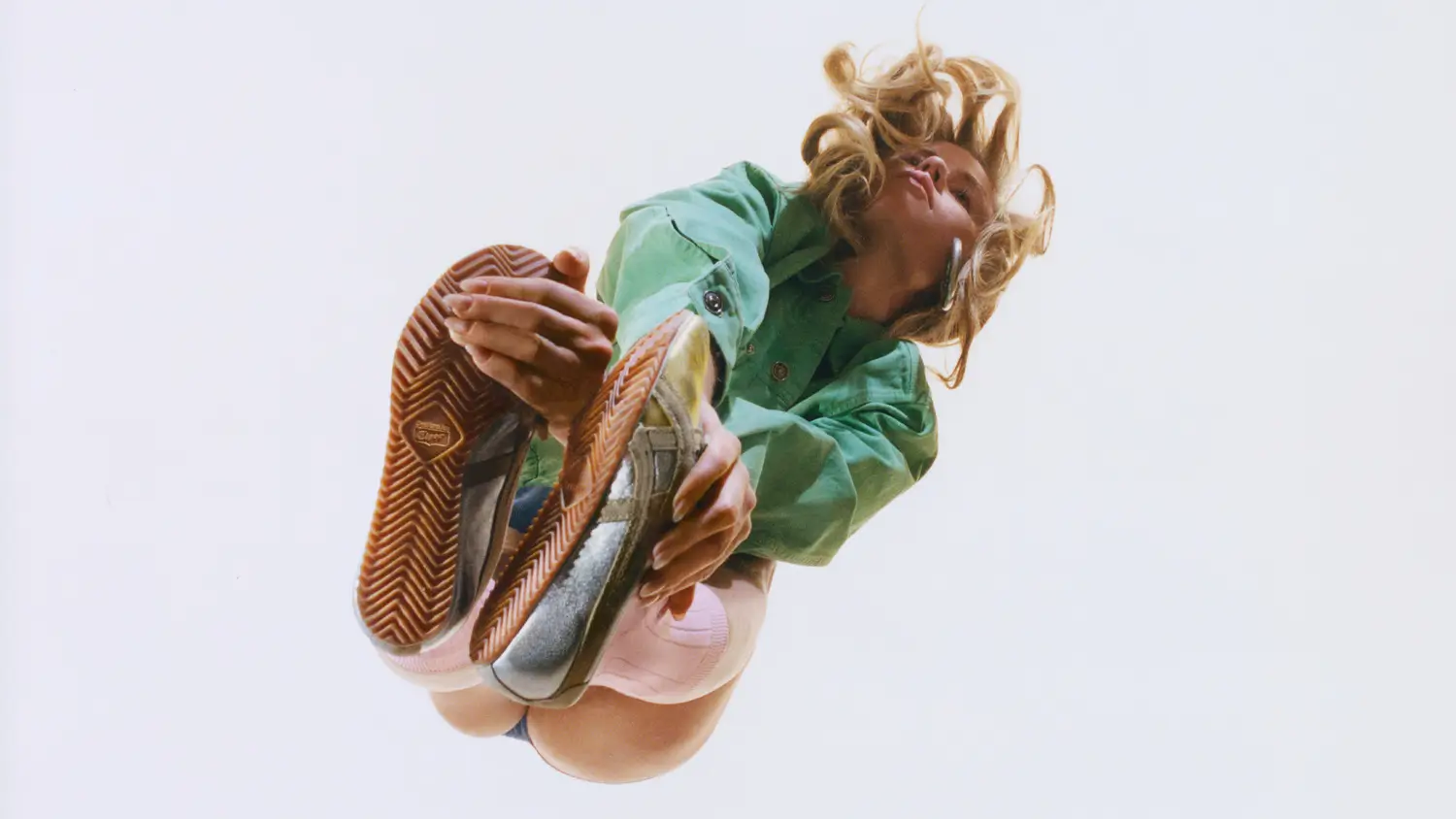
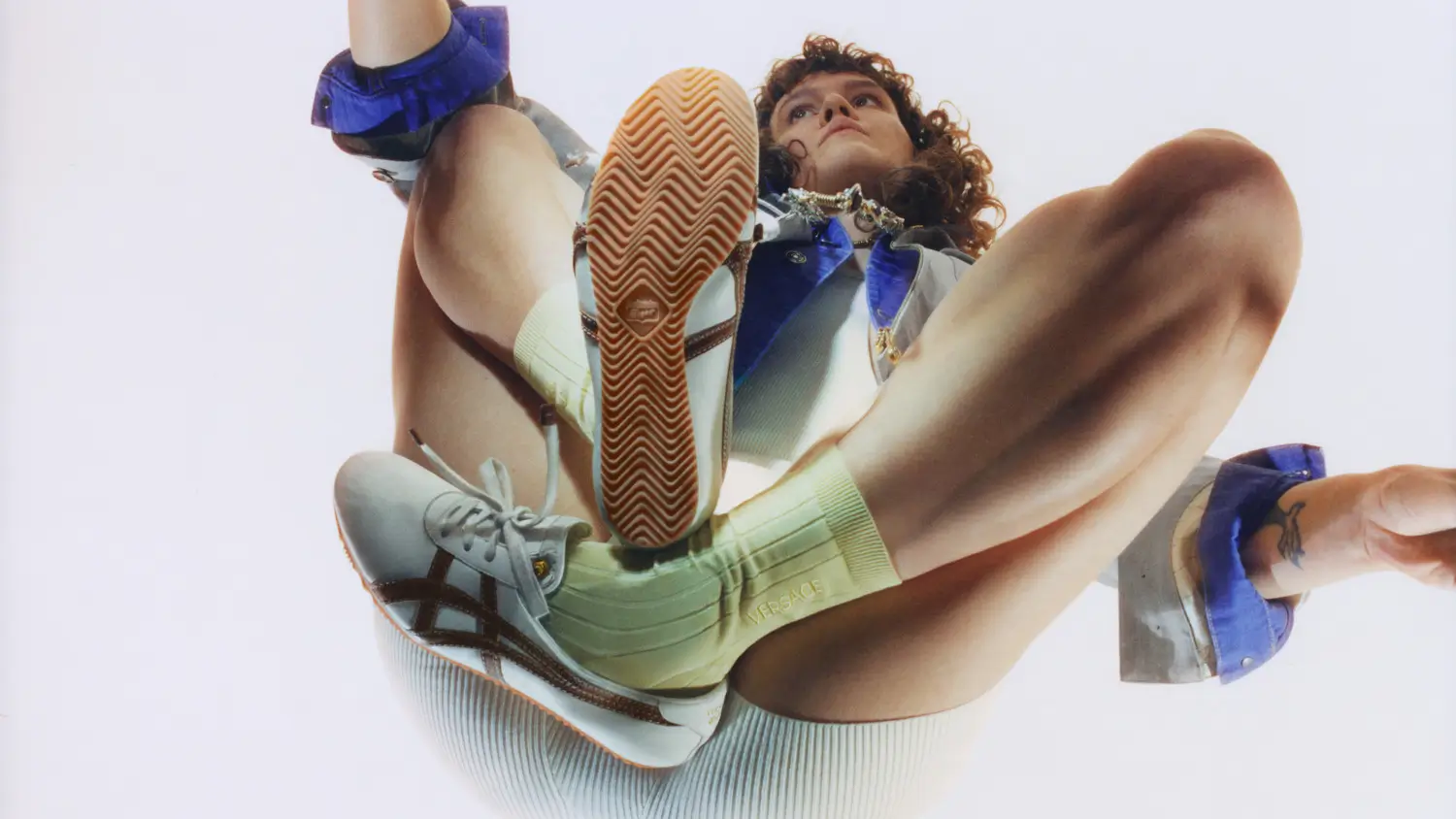
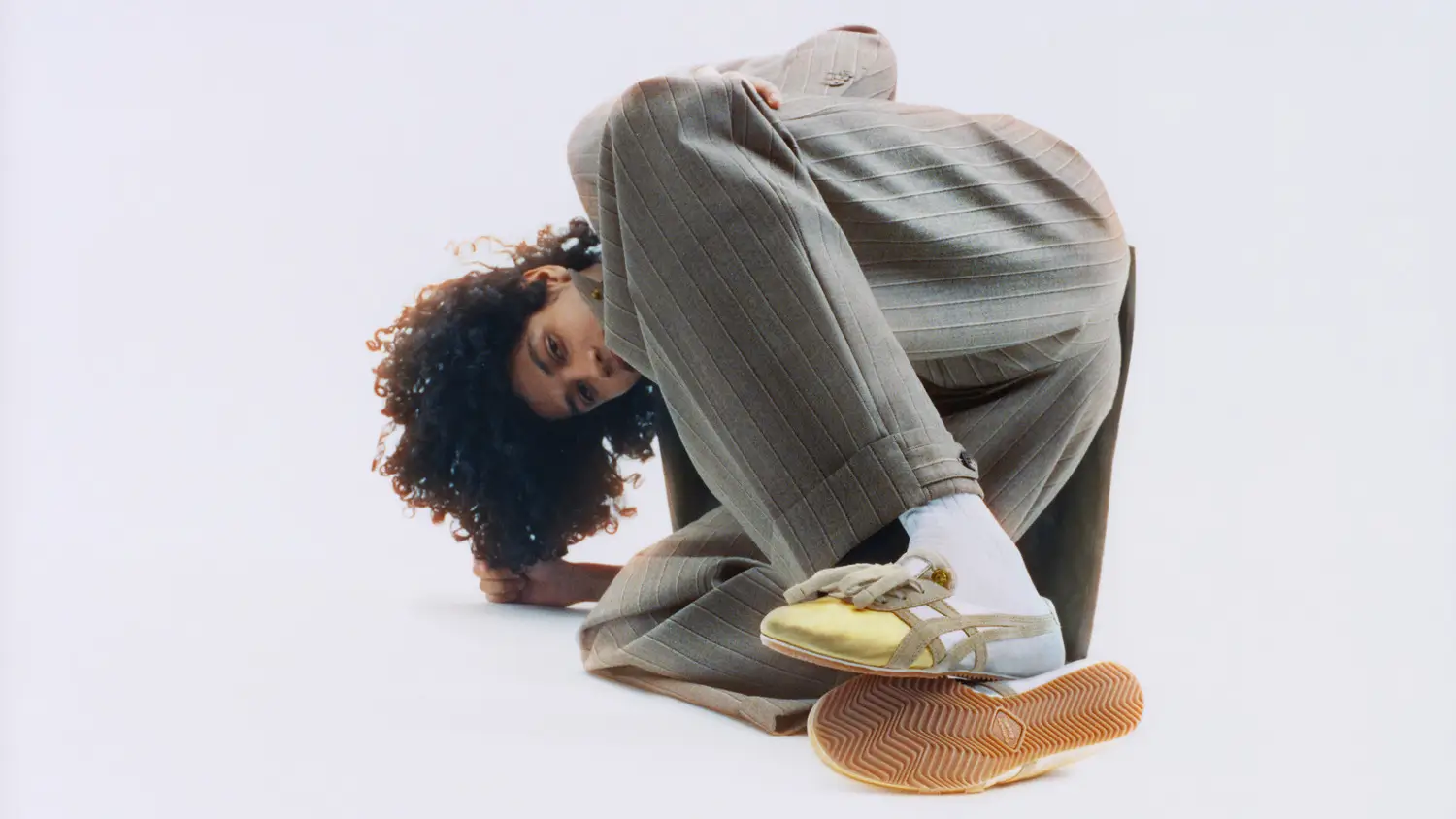
a study
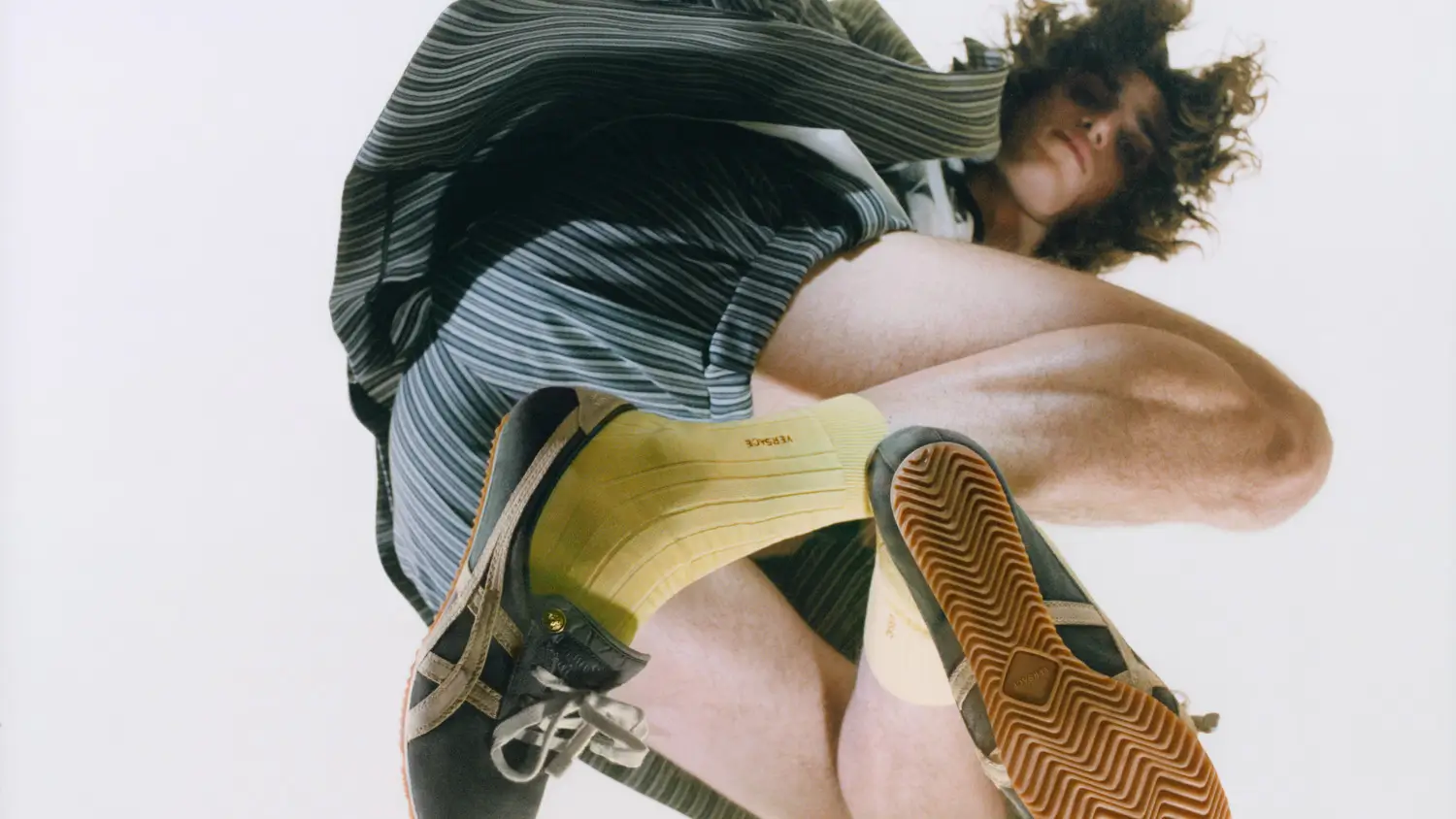
There is a quiet recalibration underway in how haute footwear communicates itself, and the Tai-Chi Sakura arrives as a precise articulation of that shift. The collide between Onitsuka Tiger and Versace does not attempt to dominate the visual field or overwhelm with layered references. Instead, it narrows its focus. It removes. It edits. What remains is a silhouette that feels intentional in every line, as though each decision has been filtered through a process of elimination rather than accumulation.
The Tai-Chi, historically rooted in martial arts training, carries with it a functional clarity that resists excess by design. Its low profile, its near-flat sole, its elongated posture—these are not stylistic inventions but inheritances. In 2026, those inheritances read as contemporary. They align with a broader appetite for restraint, where proportion and material carry more weight than overt design gestures.
idea
What makes this collide to an exact compel is how Versace chooses to appear within it. There is no abandonment of identity, but there is a noticeable shift in tone. The Medusa, one of fashion’s most immediately recognizable emblems, is present yet controlled, positioned with an awareness of scale and balance rather than dominance. It functions less as decoration and more as a point of focus.
Material becomes the primary vehicle for expression. Leather is treated not as a surface but as a medium, allowed to fold, reflect, and age with subtlety. Suede introduces a muted depth, absorbing light rather than projecting it. Metallic finishes, when they appear, do so with restraint, catching movement instead of demanding attention. This is Versace distilled into its most refined elements, operating in a quieter register that feels aligned with the current moment.
View this post on Instagram
flow
For Onitsuka Tiger, the Tai-Chi Sakura represents a continuation of a longer evolution. The brand has spent years repositioning itself, moving from a strictly performance-oriented identity into a space where heritage and fashion intersect with greater fluidity. This collaboration does not disrupt that trajectory. It sharpens it.
The integrity of the original silhouette remains intact. The construction retains its lightweight sensibility. Even as materials shift toward luxury, the underlying logic of the shoe is preserved. This balance—between elevation and authenticity—is what allows the Tai-Chi Sakura to feel credible rather than contrived. It does not perform opulence; it absorbs it.
ratio
The most striking aspect of the Tai-Chi Sakura is its relationship to proportion. In contrast to the volumetric excess that defined much of the previous decade’s sneaker landscape, this silhouette operates close to the ground. It elongates rather than expands. It refines rather than exaggerates.
This proportional shift carries broader implications. It signals a movement away from footwear as statement object toward footwear as integrated element. The shoe becomes part of a larger composition rather than its focal point. It allows clothing, posture, and movement to reassert themselves within the visual hierarchy.
In this sense, the Tai-Chi Sakura is not simply a design object. It is a recalibration of how attention is distributed.
story
Without reliance on overt branding or structural complexity, the narrative of the shoe is carried through material. The tactility of leather, the softness of suede, the controlled gleam of metallic finishes—these elements create a layered experience that reveals itself gradually.
Up close, the details become more pronounced. Stitching lines articulate the structure without interrupting it. The surface variations in suede introduce a sense of individuality, ensuring that no two pairs feel entirely identical. The metallic accents, restrained in their placement, create moments of contrast that shift depending on light and movement.
This is a form of storytelling that does not rely on imagery or text. It is embedded in the object itself.
cognizant
The arrival of the Tai-Chi Sakura feels particularly attuned to the current cultural and aesthetic climate. There is a growing preference for objects that do not announce themselves immediately, that require a second look, that reward attention rather than capture it outright.
This shift is evident across fashion, where silhouettes are becoming slimmer, palettes more controlled, and branding more discreet. It reflects a broader desire for longevity over immediacy, for pieces that integrate rather than disrupt.
Within this context, the Tai-Chi Sakura does not feel reactive. It feels anticipatory. It aligns with where the conversation is moving rather than where it has been.
View this post on Instagram
wear
Beyond its visual qualities, the shoe carries a distinct sensorial experience. Its lightweight construction allows for a kind of ease that contrasts with more structured footwear. Movement feels unencumbered, almost intuitive, echoing the shoe’s original purpose within martial arts practice.
This sense of ease extends into its versatility. The Tai-Chi Sakura adapts across contexts without friction. It can sit within tailored looks without disrupting their line, or within more relaxed compositions where its subtlety becomes an asset rather than a limitation.
There is a fluidity to how it exists within a wardrobe. It does not dictate. It responds.
xp
What ultimately defines this release is its refusal to adhere to the conventional expectations of a collision occur. There is no overt merge of identities, no exaggerated mixup of codes. Instead, there is a measured alignment.
Onitsuka Tiger provides the structure, the discipline, the historical grounding. Versace introduces a layer of refinement, a controlled opulence that enhances without overwhelming. Together, they create something that feels coherent rather than composite.
This coherence is what allows the Tai-Chi Sakura to resonate beyond its immediate context. It is not dependent on novelty or spectacle. It is sustained by its clarity.
sum
The Tai-Chi Sakura suggests a broader redefinition of luxury—one that is less concerned with visibility and more invested in precision. It proposes that value can be communicated through proportion, through material, through restraint.
In this framework, luxury becomes less about being seen and more about being understood. It operates through nuance rather than declaration. It invites engagement rather than demands it.
The collaboration between Onitsuka Tiger and Versace does not attempt to resolve this shift. It embodies it.