OVO x Harlem Globetrotters: A Century of Showmanship, Style, and Global Influence

April 3, 2026
2 hours ago
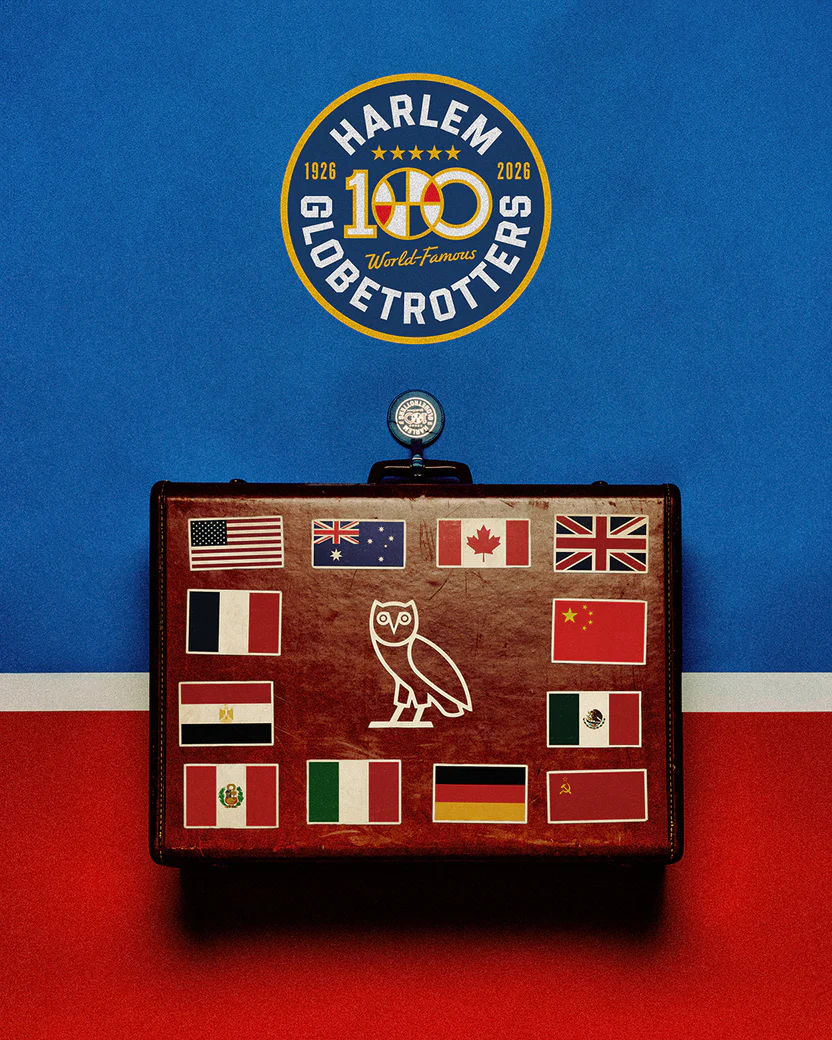
100
There are anniversaries that pass quietly, and then there are centennials that demand reinterpretation. The 100-year legacy of the Harlem Globetrotters belongs firmly to the latter. Few institutions in sport—or culture at large—have sustained relevance across a full century while continuously reshaping their identity. The Globetrotters were never just a basketball team; they were translators of the game, converting athleticism into spectacle, discipline into joy, and competition into narrative.
Enter October’s Very Own—the Toronto-born label founded by Drake—a brand that has built its own mythology around cultural fluency, global reach, and a precise understanding of symbolism. The collect between OVO and the Globetrotters is less about merch and more about dialogue: two entities separated by time but united by influence, bridging eras through a shared language of movement, identity, and performance.
To celebrate 100 years of the Harlem Globetrotters is to revisit the foundations of modern basketball culture itself—and to examine how that legacy continues to echo through contemporary fashion, music, and global storytelling.
stir
Despite their name, the Harlem Globetrotters were not born in Harlem. Founded in 1926 in Chicago, the team adopted the Harlem moniker to signal Black excellence at a time when segregation defined the boundaries of American life. It was both a geographic fiction and a cultural truth—Harlem representing a center of Black artistry, intellect, and resistance.
From the beginning, the Globetrotters operated outside conventional structures. They barnstormed across the United States and internationally, conjuring hundreds of games a year. But what distinguished them was not simply their schedule—it was their approach. Where others played strictly to win, the Globetrotters played to communicate. Trick shots, choreographed routines, comedic timing—these were not distractions from the game, but extensions of it.
Players like Wilt Chamberlain, who briefly wore the Globetrotters jersey, and later icons like Meadowlark Lemon transformed basketball into performance art. The team became ambassadors—not just of the sport, but of possibility—traveling to countries where basketball was still unfamiliar and introducing it through joy rather than intimidation.
This is the foundation upon which the centennial sits: not just longevity, but transformation.
show
What the Globetrotters achieved culturally mirrors what OVO has refined aesthetically. Both operate within familiar frameworks—basketball, streetwear—but elevate them through subtle shifts in presentation.
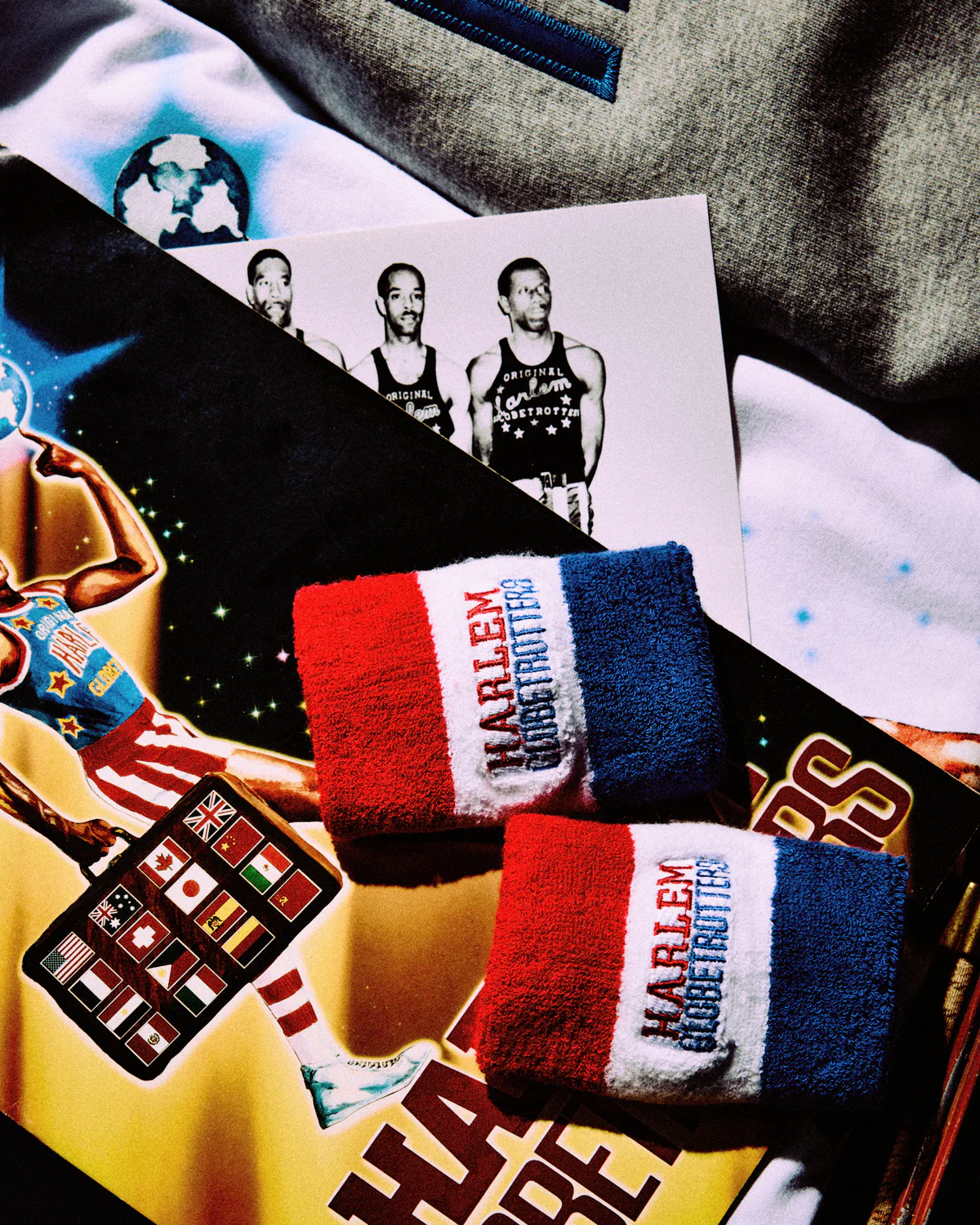
The Globetrotters’ signature red, white, and blue uniforms are instantly recognizable, yet their true aesthetic lies in motion. The spin of a ball on a fingertip. The illusion of effortlessness. The rhythm of a perfectly timed pass. These are view codes that transcend sport.
OVO, similarly, has built its identity through restraint. The owl logo, understated palettes, and carefully curated connections reflect a philosophy that values clarity over noise. When applied to a centennial collection, this approach becomes particularly potent.
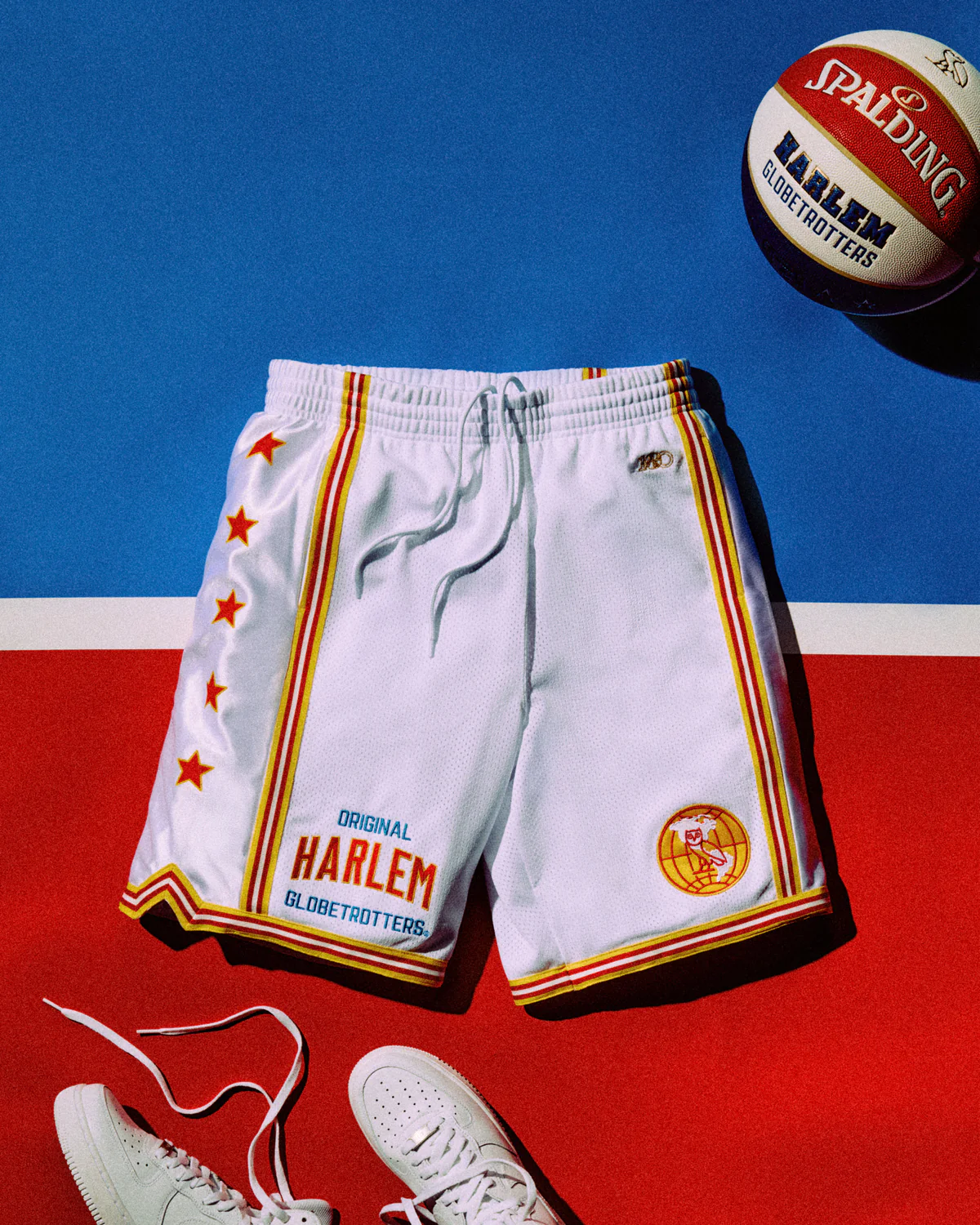
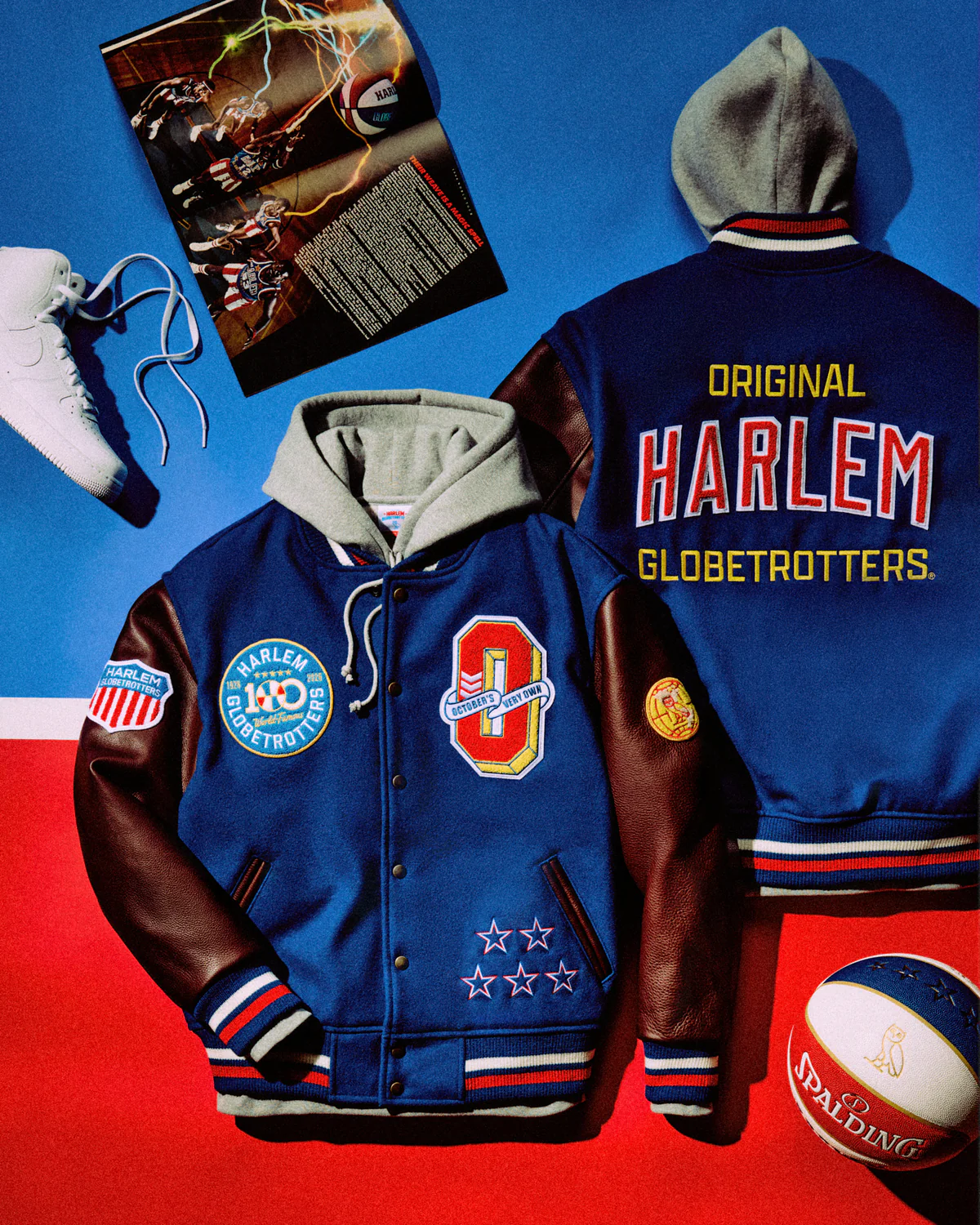
Rather than overwhelming the legacy with reinterpretation, OVO’s alignment with the Globetrotters suggests refinement. Think archival references reimagined through contemporary cuts. Think materials that elevate rather than obscure. Think graphics that nod rather than shout.
The result is not nostalgia—it is continuity.
spread
If there is a single thread that binds OVO and the Harlem Globetrotters, it is global reach—not as expansion, but as connection.
The Globetrotters were among the first American sports teams to tour internationally on a massive scale, playing in over 120 countries. They brought basketball to audiences who had never seen it before, often performing in regions where access to organized sport was limited. Their impression was not measured in wins or losses, but in inspiration.
OVO, through Drake’s music and cultural positioning, has achieved a parallel form of global resonance. The brand’s presence extends from Toronto to London, from Paris to Tokyo, reflecting a network of influence that is both localized and universal.
In this context, the union becomes a convergence of two global systems. The Globetrotters represent the analog era of cultural transmission—traveling physically, engaging directly. OVO represents the digital era—instantaneous, omnipresent. Together, they map a continuum of how culture moves.
flow
There is a tendency to separate sport from entertainment, to view one as pure competition and the other as spectacle. The Harlem Globetrotters dismantled that distinction long before it became fashionable.
Their games were performances, yes—but performances grounded in mastery. Every trick shot required precision. Every comedic beat required timing. The humor was never a mask for lack of skill; it was a demonstration of control.
This know resonates deeply with OVO’s approach to culture production. Drake’s career, much like the Globetrotters’ legacy, is built on versatility—the ability to shift between modes without losing coherence. Either through music, fashion, or branding, the emphasis remains on control of narrative.
The centennial collaboration, then, is not simply about celebrating history. It is about recognizing showmanship as a form of identity—one that continues to shape how audiences engage with sport and culture.
form
Anniversaries often risk becoming exercises in replication. Reissuing old designs, revisiting familiar motifs—these gestures can feel static. What distinguishes a meaningful centennial project is its ability to translate archival memory into contemporary form.
For OVO x Harlem Globetrotters, this likely manifests in a balance between preservation and reinterpretation. The globe iconography, the team’s distinctive typography, the visual rhythm of their branding—all serve as anchors. Around them, OVO introduces material innovation, silhouette refinement, and subtle detailing.
The challenge is not to modernize the Globetrotters, but to reveal their inherent modernity. After all, their approach to basketball—fluid, expressive, audience-centered—aligns closely with contemporary values in sport and culture.
influ
The Harlem Globetrotters’ influence extends far beyond basketball. They have appeared in films, television shows, and cultural events, embedding themselves into the broader fabric of entertainment. Their presence in cartoons, variety shows, and international exhibitions positioned them as cultural icons long before the term became ubiquitous.
This cross-disciplinary impact mirrors OVO’s own trajectory. What began as a music-adjacent brand has evolved into a lifestyle ecosystem, encompassing fashion, retail, and cultural partnerships.
The collection, therefore, is not confined to apparel. It represents a broader conversation about influence—how it is built, sustained, and translated across mediums.
psych
What allows an institution to remain relevant for 100 years? The answer lies not in consistency alone, but in adaptability.
The Harlem Globetrotters have navigated shifting cultural landscapes—from segregation to globalization, from analog media to digital platforms—without losing their core identity. Their willingness to evolve while maintaining foundational principles offers a blueprint for longevity.
OVO, though younger, operates with a similar awareness. The brand’s collaborations are selective, its releases measured, its identity carefully managed. This restraint ensures that each project carries weight.
In celebrating the Globetrotters’ centennial, OVO aligns itself with a model of endurance that extends beyond fashion cycles.
trib
To mark 100 years is to acknowledge history, but also to project into the future. The Harlem Globetrotters continue to tour, to perform, to inspire. Their story is not complete—it is ongoing.
The OVO collaboration serves as both tribute and extension. It invites a new generation to engage with the Globetrotters’ legacy, not as distant history, but as living culture.
In this sense, the project is less about looking back and more about sustaining momentum. It recognizes that the true measure of a legacy is not its age, but its ability to remain in motion.
fin
The Harlem Globetrotters changed the way basketball is seen. OVO changed the way cultural branding is executed. Together, they offer a study in influence—how it is created, how it travels, and how it endures.
A century after their founding, the Globetrotters remain a symbol of possibility. Their style of play—creative, expressive, inclusive—continues to resonate in a world that increasingly values individuality within structure.
OVO’s role in this centennial moment is not to redefine that legacy, but to frame it within a contemporary context. To remind us that influence is not static. It evolves, adapts, and finds new forms.
One hundred years in, the message remains clear: the game is never just the game. It is everything that surrounds it—the culture, the movement, the story.
And in that space, the Harlem Globetrotters have always been ahead.