P.O.N.D. 2024 at Shibuya PARCO: “Side by Side”

May 3, 2025
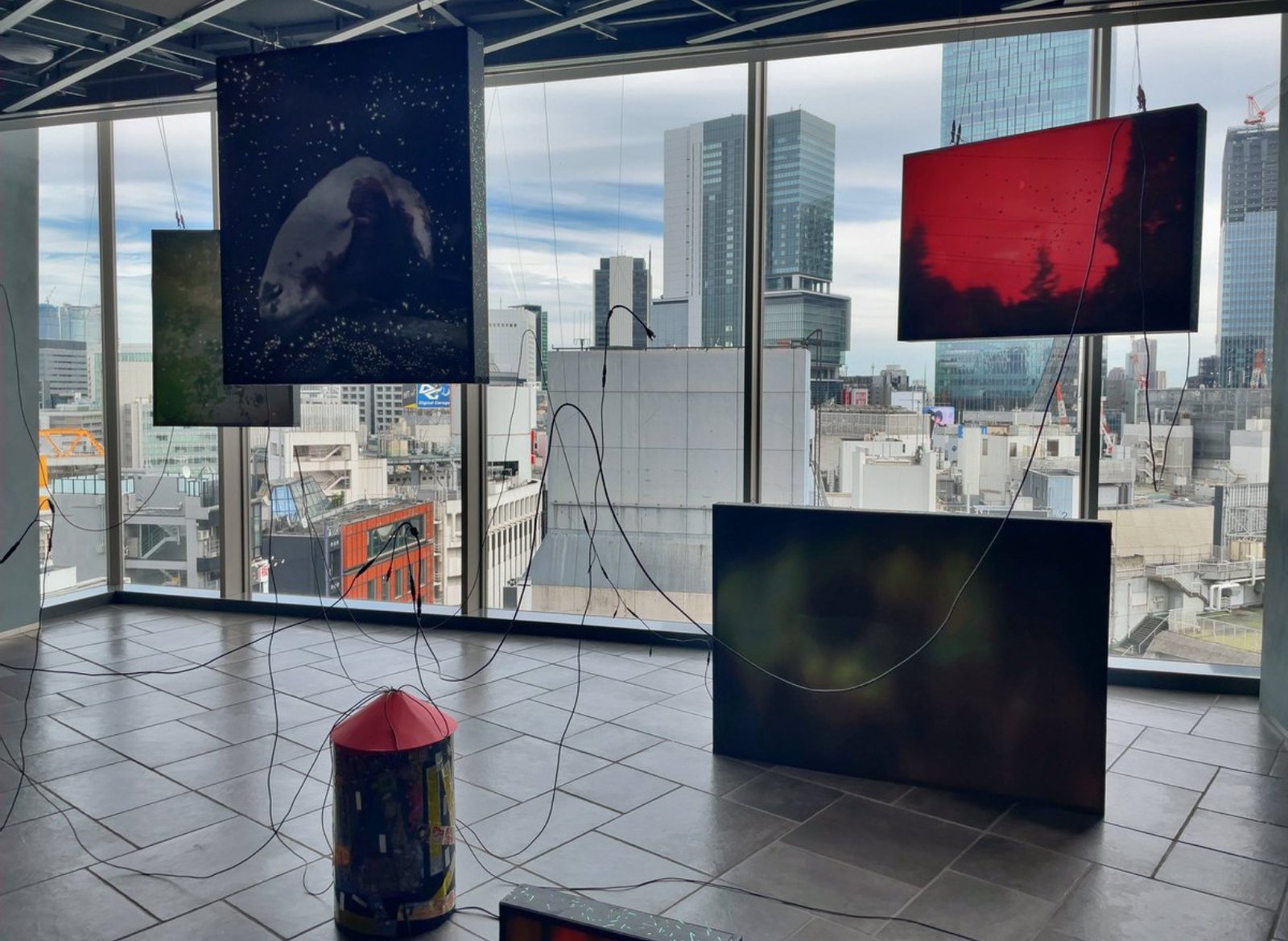
A Radical Celebration of Coexistence and Cultural Expansion
In an age increasingly defined by fracture — digital silos, cultural segmentation, and global uncertainty — P.O.N.D. 2024 offered something rare: the architecture of connection. Held across Shibuya PARCO from October 4th to 14th, the 11-day cultural festival marked its fourth iteration with a poignant theme: “Side by Side / となり合う、広がる。” A gentle yet insistent invocation of proximity, interrelation, and the expansive power of adjacency.
More than a showcase of contemporary Japanese creativity, P.O.N.D. is a multi-genre constellation. It dissolves the disciplinary boundaries between art, fashion, music, technology, and storytelling to stage a dynamic, living dialogue between makers and publics. For 2024, this dialogue took on an especially intimate and cooperative tone, drawing attention to the in-between — the psychic and physical spaces that emerge when things are placed next to one another, allowed to breathe, to spark, to bleed into each other.
Hosted once again by PARCO, Japan’s avant-garde incubator of fashion and urban subculture since the 1970s, P.O.N.D. continues to redefine what a department store can be. With installations sprawled across multiple floors, including the 4th-floor PARCO MUSEUM TOKYO and the 1st-floor entrance atrium, the festival reimagined the mall as a fluid cultural organism — not a consumer corridor, but a canvas for collaborative imagination.
A THEME OF COEXISTENCE: “Side by Side”
This year’s theme wasn’t merely aesthetic — it was philosophical. “Side by Side / となり合う、広がる。” explores how adjacency nurtures potential. In a world fixated on hierarchy and opposition, P.O.N.D. 2024 invited creators to think horizontally: to find beauty in coexistence, discovery in contradiction, and expansion in empathy.
Each participating artist and collective responded to this thematic core in ways that were both literal and abstract. Works were arranged in dialogue — not just next to one another, but designed to interact, even interrupt. The fourth floor’s sprawling gallery space became a network of micro-encounters: soft textile installations leaned into digital projections, handcrafted ceramics jostled beside sound-reactive sculptures, and films were looped beside interactive displays. Viewers weren’t passive — they were participants in adjacency, activating the very relationships the exhibition sought to explore.
Notably, this year’s programming leaned further into cross-generational and cross-cultural collaboration than previous editions. Veteran artists shared walls with emerging voices. International guests were integrated seamlessly into Japan’s contemporary creative ecosystem. In a way, P.O.N.D. acted less like a curated exhibition and more like an ecosystem — one where contrast was not a threat but a source of nourishment.
SPATIAL POETICS: THE BUILDING AS MEDIUM
Shibuya PARCO has always been more than retail. With its brutalist-meets-postmodern architecture and deeply embedded role in Tokyo’s fashion avant-garde, it’s the ideal host for a project like P.O.N.D., which turns physical space into an aesthetic tool.
In 2024, the exhibition extended beyond the confines of the PARCO MUSEUM TOKYO on the fourth floor. Artworks were staged across unexpected locations — corridors, stairwells, shopfronts, and even elevators. A digital waterfall poured down a stairwell wall; floating sculptures rotated in lightboxes beside escalators; audio works played beneath handrails, audible only to those who paused.
This site-specific integration was more than decorative. It was integral to the exhibition’s central proposition: that meaning emerges not in isolation, but in relation. By integrating works into daily movement, P.O.N.D. challenged viewers to become more aware of their surroundings and more attuned to how things — and people — can coexist in space.
Even the event’s ephemera was immersive. Floor maps doubled as folded zines, each printed with abstract poetry and artist statements. Posters changed colors depending on the time of day. P.O.N.D. wasn’t just something to visit — it was something to inhabit.
VOICES & VISIONARIES
Among the artists featured in P.O.N.D. 2024 were a mix of iconic names and breakthrough talents. Noteworthy contributors included:
- Noritaka Minami, whose photographic study of post-war architecture offered a visual meditation on physical proximity and social memory.
- Mariko Saito, known for her wearable sculpture, debuted an installation of cloth “twins” — soft-body forms stitched from repurposed garments donated by Shibuya locals.
- Kid Fresino, musician and beatmaker, collaborated with visual artist Uta Takeuchi to create an immersive AV room that explored the theme of kinship through rhythm and visual delay.
- Arata Isozaki Archives, which shared never-before-seen sketches and urban blueprints that reflected on the architect’s belief in heterotopia — a parallel philosophy to Side by Side.
A standout moment was the live mural performance by calligrapher Murasaki Shikibu III, who painted a wall-length scroll across the museum space, spelling out an evolving haiku that incorporated live audience prompts. Each stroke was broadcast via overhead projection, with sound accompaniment by ambient composer Rie Ishii.
CLOSING THE GAP BETWEEN ART & LIFE
A signature feature of P.O.N.D. since its inception has been its integration of fashion, not just as design but as performance. This year, that tradition deepened. Daily pop-ups and wearable art installations turned Shibuya PARCO into a catwalk of the avant-garde. Shoppers were not merely consumers — they became mergers in an ongoing visual narrative.
The fashion-forward label bodysong. hosted a spontaneous runway performance in the atrium, while cult Tokyo brand PHINGERIN built a pillow-lined “soft zone” that doubled as a dressing room, meditation pod, and video lounge. It was emblematic of the way P.O.N.D. invites its audience to not merely observe culture, but feel it, wear it, live inside it.
MORE THAN AN EVENT — A WAY OF SEEING
In keeping with its name, P.O.N.D. is more than an acronym or brand. It is a metaphor. A pond is a container for reflection. Still and clear, it allows for self-observation, for symmetry and surprise. At times, it ripples. Other times, it mirrors.
This year, the metaphor expanded: the pond as shared surface, where different kinds of life cohabitate — in layers, in harmony, sometimes in quiet friction. The curators encouraged attendees not to merely look at works, but to consider their adjacency — what happens when things are placed together? When opposites meet? When strangers share a bench?
“Side by Side” is not a utopian cry. It acknowledges difference and encourages curiosity in the face of ambiguity. It’s an ethic, a method, a suggestion for how to be in the world: next to, not over. With, not against.
LOOKING AHEAD
As P.O.N.D. edges toward its fifth anniversary in 2025, it continues to evolve — not as a static exhibition series, but as a living conversation about the future of culture in Japan and beyond. In an era when culture often gets flattened into trends and monetization, P.O.N.D. remains a place of experimentation, intimacy, and trust.
Its mission — to bring people and disciplines into new relation — is more vital than ever. In the heart of Shibuya, one of the most hyperstimulated urban environments on Earth, P.O.N.D. 2024 proved that stillness, slowness, and side-by-side thinking can, in fact, change how we see.
And perhaps, more importantly, how we see each other.