Two Champions, One Studio: Papoose’s New Album and the Claressa Shields

November 29, 2025
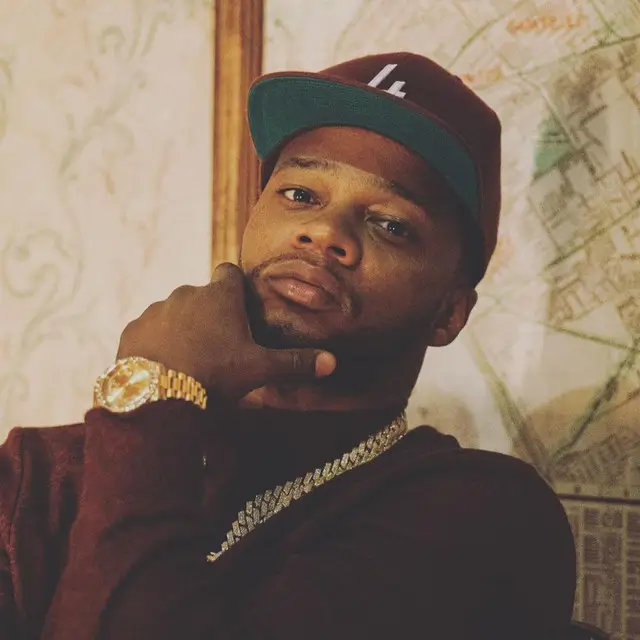
Some artists spend their careers protecting a legacy; others keep building it. Papoose has always belonged to the second category. Two decades after he first became a fixture in New York’s mixtape boom—earning a reputation for being one of rap’s most technically ferocious writers—the Brooklyn MC is entering a new era. He’s older, certain of his place in the culture, and uninterested in chasing relevance. Yet he’s also restless, drawn to new collaborators, new textures, and new ideas that push him out of the zones he once mastered.
His upcoming album, teased through cryptic posts and a few scattered studio snippets, has already become one of the most discussed projects of his recent career. Not because he’s reinventing the wheel, but because he’s exploring a set of themes and partnerships that feel unusually personal. Among them: an unexpected collaboration with two-time Olympic gold medalist and undefeated boxing champion Claressa Shields.
For Papoose, the project isn’t a pivot so much as a refinement—an album shaped by hunger, discipline, and a lifetime of fighting through odds that mirror the very DNA of boxing culture. For Shields, it’s a way of extending her competitive fire into a new creative discipline. Together, they form one of the year’s most unpredictable artistic pairings: a master MC and a world champion athlete building something that lives somewhere between rap, motivation, and storytelling.
arch
Papoose describes the forthcoming LP as a “strategized album,” a phrase that sounds simple until you hear him explain what he means. He’s not talking about recording schedules or marketing rollouts—he’s talking about thematic discipline, the same kind boxers use when tailoring every aspect of their training around a desired outcome. Each track, he says, is tied to a purpose. Each verse is built with intention rather than improvisation. The sequencing is designed to reflect a psychological arc rather than a collection of unrelated moments.
In recent interviews, he’s alluded to the album drawing from “one core emotion: resolve.” It isn’t just about bars or punchlines this time; it’s about clarity, a distillation of who he has become. The production is reportedly more mature, more sculpted, and less bound by regional expectations. There are live instruments, subtle jazz textures, and a heavy emphasis on rhythm patterns that bend rather than follow traditional boom-bap grids. What emerges is a sound that honors New York without being confined by it. It’s not revivalist, and it’s not modern-pop pandering—it’s lived-in, worldview-first hip-hop.
Papoose has spoken about wanting to approach the album as a process of “spiritual strength training.” There are references to his daughter, to fatherhood, to marriage, and to the responsibility of carrying his name forward. But there are also narrative threads about ambition, criticism, and how his decades in the industry have shaped his understanding of loyalty, truth-telling, and trust.
It reads almost like a veteran’s memoir disguised as a rap album, one where the guest features are chosen as carefully as sparring partners.
how
The most surprising feature on the project—one Papoose has openly celebrated—is the presence of Claressa Shields. To understand this collaboration, you have to understand how the two speak about each other. Papoose has been praising Shields for years, calling her “one of the purest competitors in the world,” someone whose mindset embodies everything he considers sacred: discipline, self-belief, and refusal to let the world write your storyline.
Shields, for her part, has long admired rap culture. She walks to the ring with hip-hop blasting, often using specific songs to shape her pace and psychological edge. She’s spoken openly about wanting to treat music as another avenue to express her ambitions, especially as women’s boxing continues to fight for coverage, funding, and respect.
The collaboration began with conversation, not recording. Papoose was invited to a Shields training session while she was preparing for a title defense. He watched her spar, watched her footwork, watched her mental approach. Something about the silence between rounds—the calm before explosive action—stuck with him. He later joked that it reminded him of writing bars at 3 a.m., headphones off, phone flipped over, searching for the next set of lines that mean something.
When Shields mentioned in passing that she occasionally scribbled lyrics—mostly motivational, rhythmic, introspective thoughts—Papoose encouraged her to try recording. Not because he needed a viral moment, but because he saw the spark of someone who could translate athletic drive into artistic practice.
stu
Their sessions together were surprisingly smooth. Shields wasn’t intimidated by the studio environment; she approached it the way she approaches training: with drills, repetition, and relentless focus. According to Papoose, she adapted quickly to rhythm counts, vocal timing, and breath control—skills that aren’t entirely foreign to athletes who understand cadence and explosiveness.
What emerged wasn’t a novelty track. It was a hybrid—part narrative monologue, part rhythmic cadence, part spoken-word affirmation. Shields delivers her verses with the vocal tone of someone used to speaking to crowds and commanding rooms. She raps about her upbringing in Flint, about the resilience embedded in her childhood, about the weight of being a pioneer in a sport that still underestimates women. Papoose builds around her, weaving bars that echo her story without overshadowing it.
The song feels like a psychological anthem, something that belongs both in a boxing gym at 6 a.m. and inside the headphones of anyone fighting their own battles.
stir
Papoose has always loved boxing metaphors, but working directly with Shields pushed him to take the comparison further. He sees parallels everywhere: the discipline of repetition, the pressure of performance, the reality that one mistake can cost you everything.
For Papoose, bars are combinations—jabs, crosses, uppercuts arranged with technique and flair. Delivery is footwork, shaping angles, controlling space. Album structure is strategy: you come in with a game plan, but you have to adapt mid-round.
Shields offered her own perspective. She told Papoose that boxing isn’t just physical—it’s narrative. Every fighter carries a story into the ring, and every fight adds a new chapter. In the studio, she applied the same logic: pick the emotional arc, build the tension, deliver the impact.
Their partnership is built on mutual respect, but also on shared philosophy. Both have spent their lives navigating skepticism, proving themselves repeatedly, refusing to let public perception dictate their limits. That alignment forms the backbone of the track, making it feel less like a gimmick and more like a fusion of two worlds powered by conviction.
culture
This album arrives at a moment when Papoose’s legacy is increasingly being acknowledged by younger audiences discovering him through social media, freestyle clips, and archival mixtape uploads. It places him in an interesting position: elder statesman, yet still hungry; mentor, yet still innovating; an artist who has outlasted waves of trends without ever bending to them.
He has spoken with pride about how his daughters view his career, how he wants them to see not just the accolades but the endurance. Working with someone like Shields allows him to model that endurance in real time, showing that evolution never ends and that creativity can thrive at any stage.
The album also marks his growth as an executive and curator. For the past several years, Papoose has balanced recording with his leadership role in shaping digital content, collaborating with platforms and helping guide newer voices. These experiences inform the album’s tone, giving it an almost documentary quality—half rap record, half cultural journal.
claressa
The broader significance of Shields appearing on a hip-hop album shouldn’t be underestimated. Boxing is one of the world’s most narrative-driven sports, yet female fighters rarely receive the storytelling platforms afforded to their male counterparts. Music becomes a way of rewriting that imbalance—an avenue for Shields to express the emotional weight behind her victories, rivalries, and battles outside the ring.
Her verse on the track isn’t simply a motivational speech laid over drums. It’s a grounded telling of her life in Flint, her frustrations with being underpaid compared to male fighters, and her drive to become an undisputed champion across multiple divisions. The language is raw without relying on profanity, direct without slipping into cliché. You can hear the cadence of a fighter who knows how to speak to herself when the lights are off and the gloves are off.
Papoose’s role is to give her structure, space, and artistic direction—not to mold her into a rapper, but to capture her voice in a setting that honors her story. Their chemistry is surprisingly natural, and early listeners have noted that the energy feels more like a creative partnership than a cameo.
why
Hip-hop and boxing have always shared DNA. Both emerged from working-class neighborhoods. Both reward discipline as much as talent. Both have long histories of artists and fighters trading inspiration. But rarely does a world champion step directly into the studio with a veteran MC known for precision lyricism.
This is why the project feels culturally significant. It arrives at a moment when athletes are expanding their identities through media, music, and content creation. It also arrives at a moment when hip-hop is rediscovering its grounding in personal storytelling, pushing past commercial formulas to embrace sincerity and grit.
Papoose and Shields represent two eras and two disciplines that are finally intersecting in a meaningful way. Their collaboration suggests that the lines between creative fields are more permeable than ever—that a fighter can rap, a rapper can train, and both can shape narratives that resonate beyond their immediate audiences.
leg
As anticipation builds, Papoose has made it clear that the album isn’t about reinventing himself but rather crystallizing who he has always been. The collaboration with Shields is just one of many carefully curated choices. The production roster is rumored to include veteran New York beatmakers alongside younger experimental producers. The topics range from personal growth to social commentary to pure skill flexes. And the emotional spine of the project is unmistakably grounded in gratitude, discipline, and endurance.
If the album lands the way early listeners expect, it may become a defining moment in his late-career catalog—an artistic statement that cements his status as a craftsman whose best writing might still be ahead of him.
For Shields, the track marks a bold step into a new form of cultural expression. It gives fans a glimpse into her interior world and positions her not just as an athlete, but as a multidimensional figure capable of speaking through art as powerfully as she fights in the ring.
two
What makes this collab resonate isn’t just novelty. It’s the shared energy of two people who understand that greatness is built, not inherited. Papoose brings the pen, the technical discipline, and the veteran clarity. Shields brings the hunger, the narrative weight, and the lived experience of someone who has fought for every inch of recognition.
Their intersection feels refreshing because it’s real—rooted in mutual admiration, aligned values, and the belief that storytelling is universal no matter where you come from. The album captures that spirit, offering listeners not just bars and basslines, but a meditation on ambition, survival, and the unshakeable belief that you are what you fight for.
If this project proves anything, it’s that Papoose is still evolving, still stretching his craft, and still willing to collaborate beyond the borders of his genre. And Claressa Shields, once again, shows that she refuses to be limited by anyone’s definitions—inside the ring or out of it.